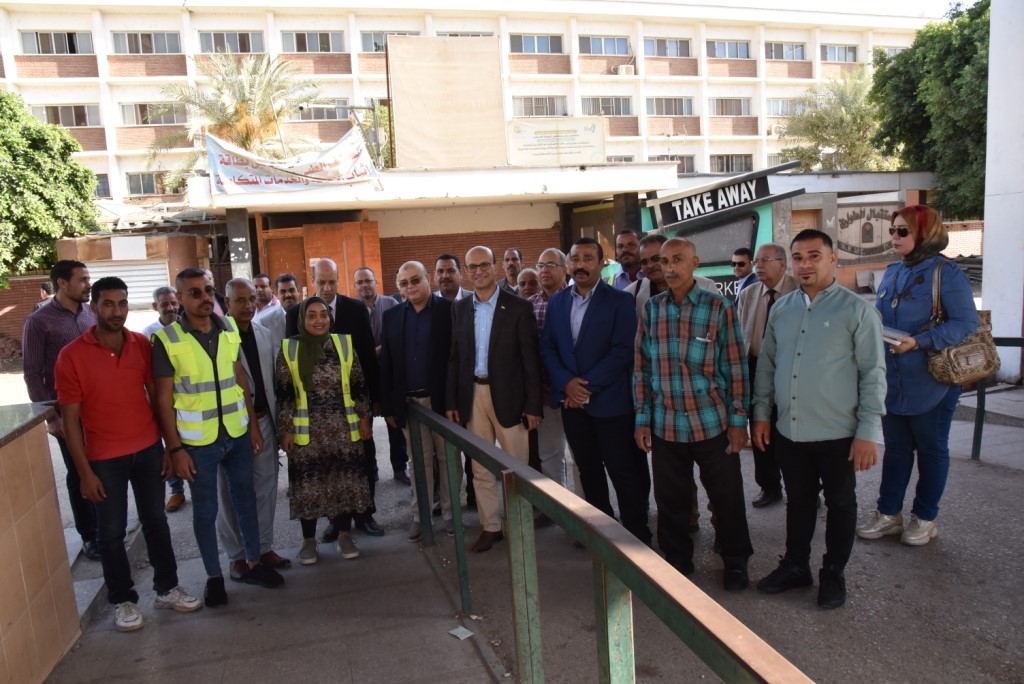
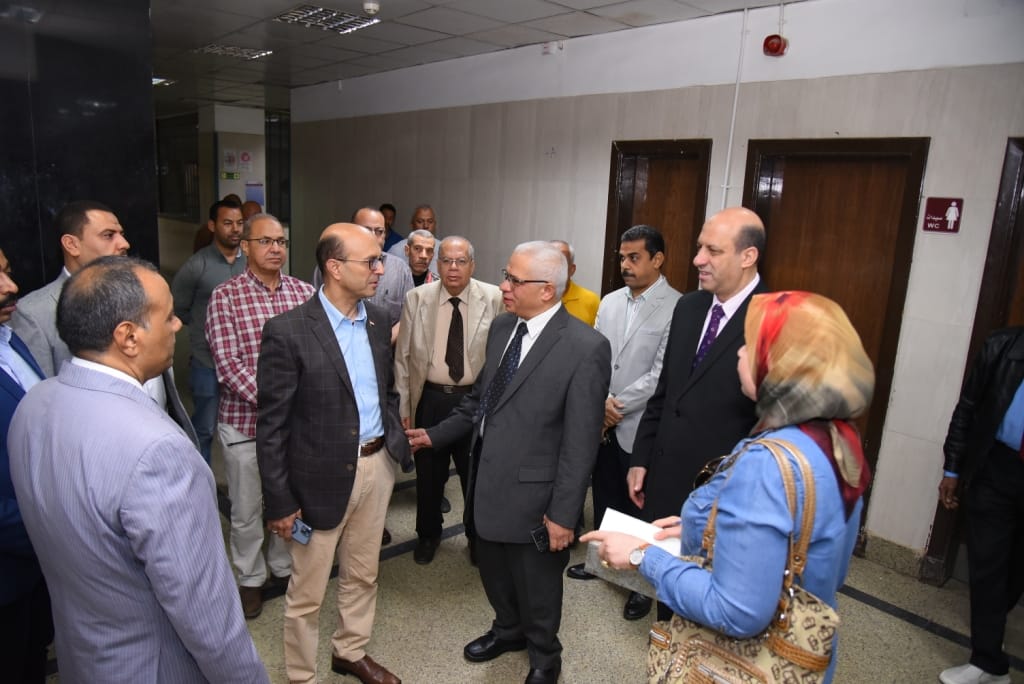
Medical College Council - April 2023

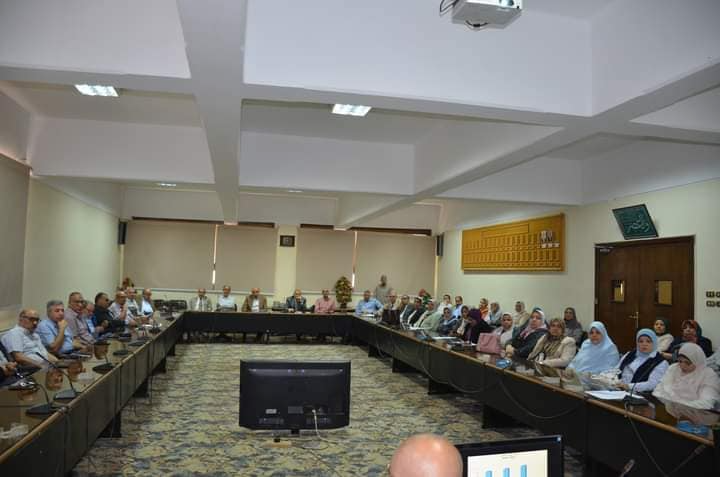
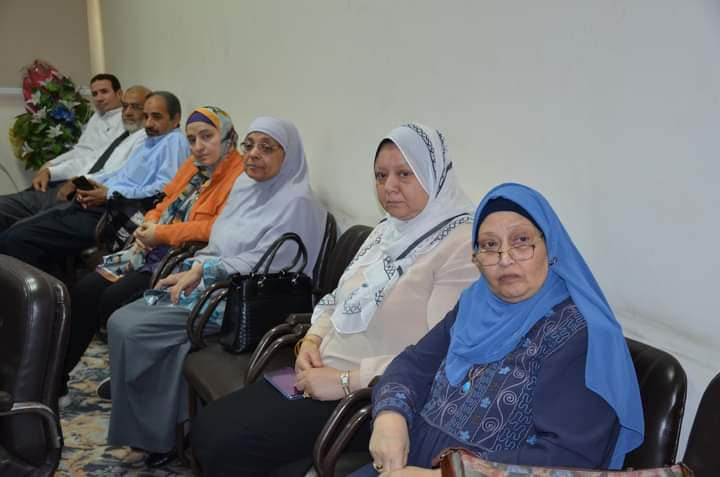
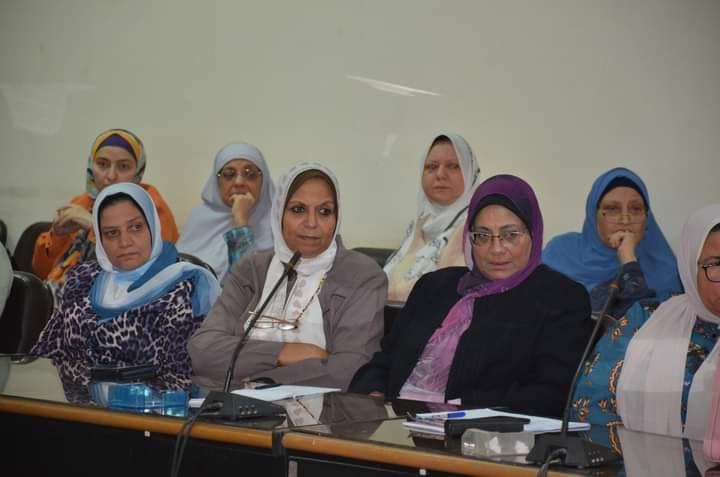
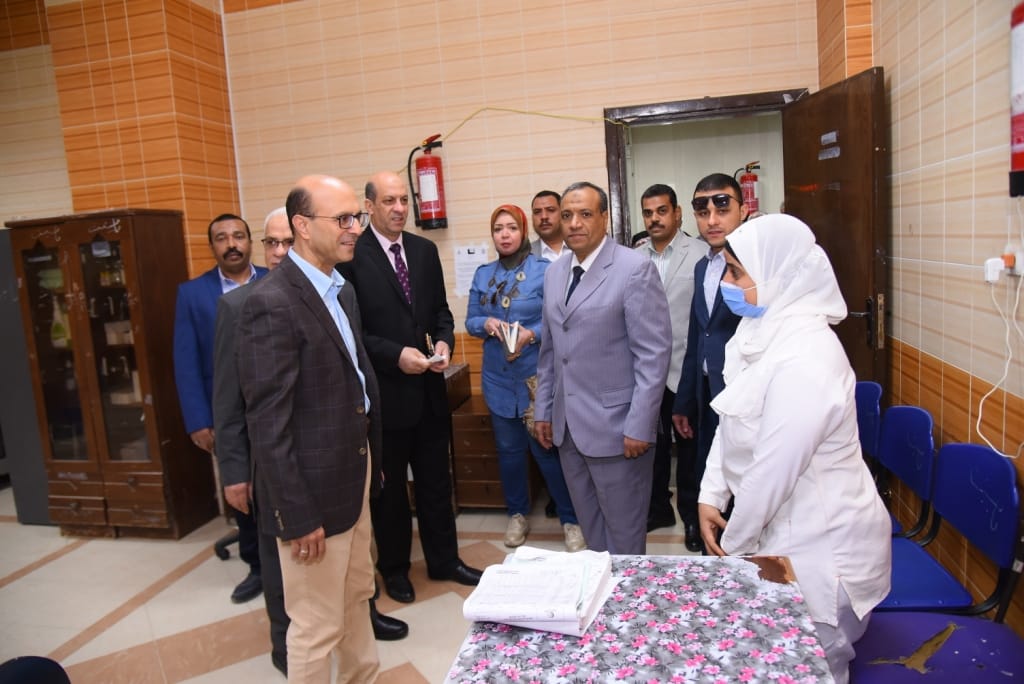
اجتماع

     مجلس الكلية اليوم الثلاثاء الموافق ١٨ ابريل ٢٠٢٣

             برئاسة الاستاذ الدكتور عميد الكلية

و بحضور السادة وكلاء الكلية ورؤساء الأقسام والمدير التنفيذي للمستشفيات الجامعية ووكيل وزارة الصحة ونقيب اطباء اسيوط ولفيف من أعضاء هيئة التدريس بالكلية .

حيث تضمن اجتماع المجلس مناقشة عدد من الموضوعات الأكاديمية والإدارية الخاصة بسير العمل داخل الكلية.

111

1-Influence of chemically and biosynthesized silver nanoparticles on in vitroviability and infectivity of Trichinella spiralismuscle larvae

Research Abstract

ABSTRACT. Trichinellosis  is  a  serious  worldwide  parasitic  zoonosis. The  available  therapy  for  the  treatment  of
Trichinella spiralisis not satisfactory. Therefore, the recovery of effective treatment is required. This work aimed at
evaluating of the in vitro effect of silver nanoparticles (AgNPs) on muscle larvae of Trichinella. The present study
investigated the larvicidal properties of chemical and myrrh AgNPs on muscle larvae (ML) of T. spiralis. The used
AgNPs were chemically prepared using NaBH4
as reducing agentand biosynthesized using methanolic myrrh extract.
Characterization  of  synthesized  AgNPs  was  monitored  via UV-vis  spectrophotometry,  Fourier  transform  infrared
spectroscopy and transmission electron microscopy (TEM) studies. The ML incubated with AgNPs at concentrations
ranged from 1 μg/ml to 20 μg/ml. Chemical and biosynthesized AgNPs revealed marked larvicidal effect against ML of
Trichinella. Additionally, this in vitro study showed degenerative changes affecting the cuticle of AgNPs treated ML.
The  effectiveness  of AgNPs  on  the  infectivity  of TrichinellaML  was  also  assessed.  The  results  showed  complete
inhibition of the infectivity of ML exposed to sublethal doses of chemical and myrrh prepared AgNPs when used to
infect animal models. This is the first report where myrrh synthesized AgNPs have been tested for their anthelminthic
activity against Trichinellain an in vitromodel.
Keywords: Trichinella spiralis, muscular larvae, silver nanoparticles, infectivity, viability

Research Authors
Ahmed Kamal DYAB
Research Date
Research Department
Research Journal
Annals of Parasitology
Research Member
Research Pages
591–602
Research Publisher
Polish Parasitological Society
Research Rank
international
Research Vol
67(4)
Research Website
doi: 10.17420/ap6704.375
Research Year
2021

Evaluation of Different Modalities of anterior Cervical Discectomy for Treatment of Single and Double Level Cervical Disc Herniation

Research Abstract

Abstract

Cervical disc herniation and degenerative disease of the cervical spine are the most common causes of cervical cord and nerve root dysfunction. It is found that after the age of 40 almost 60% of the population will have radiographic evidence of degenerative changes, and after the age of 65, 95% of men and 70% of women have radiographic evidence of degenerative changes [1]. Since the first description of the anterior cervical discectomy with fusion by Cloward and Smith in 1958 respectively in 1955, and the cervical anterior discectomy without fusion in 1960 by Hirsch a debate is started which of both methods is the best. While this discussion is still not closed, the advent of the cervical disc prosthesis has contributed to extra confusion. Instead of two possibilities, nowadays three possible treatments concur with each other: anterior cervical discectomy without implantation of any structure, anterior cervical discectomy with fusion, and finally, cervical discectomy with implantation of disc prosthesis [2]. Nowadays anterior cervical discectomy and fusion (ACDF) may be considered the standard procedure for treatment of degenerative disc disease of the cervical spine. However, there is evidence that ACDF may result in progressive degeneration of the adjacent segments [3].

Research Authors
Mohamed Khallaf
Research Date
Research Journal
Open Access Journal of Neurology & Neurosurgery
Research Year
2018

Epidemiological Features of Patients with Craniomaxillofacial Fractures: A Single Centre Study

Research Abstract

ABSTRACT

Purpose: It has been shown that cranial injuries associated with facial fractures may cause a great risk of mortality and neurological morbidity, which mainly occurs in young adults. Various studies have been carried out in various countries to study the epidemiology of the cranio maxillofacial injuries but the studies from Egypt are few. The aim of this study was therefore to assess the prevelance, etiology, type of injury, and site of fractures among patient attending Assiut University Hospitals. Material and Methods: Retrospective hospital study was carried out at Trauma unit, Assiut University Hospitals (Single Tertiary Hospital) between January 2010 and December 2017. Radiographs and hospital data of 1745 patients with craniomaxillofacial trauma were gathered and analyzed. The identified fractures, such as, age, gender, etiology of injury, and anatomical sites of fractures were classified as: frontal/skull base, naso-orbital, maxilla, zygoma, and mandible. According to GCS, patients were classified into 3 grades: mild, moderate and severe. Gathered data was coded and entered into a computer and analyzed using SPSS version 22. Result: Overall prevalence of cranio maxillofacial injuries was 3%. Age ranged from 1 - 90 with mean ± SD 25.75 ± 15.5. The greatest number of the patients had 18 to 40 years old (48.4%) and most of them were male (M/F ratio was 7:1). The most prevalent causes of the trauma in this study were the road traffic accidents (67.7%) and accidental fall (15%), respectively. Firearm injuries accounted for fractures in 86 patients (4.9%). The most common bone fracture among the patients was the mandibular bone (47.7%). 837 patients (48%) required surgical intervention. Conclusions: This retrospective population study demonstrates an insight into the demographics and fracture patterns in craniomaxillofacial trauma patients. The most common etiology of craniomaxillofacial injury was road traffic accidents followed by falls and assaults, suggesting that interventions addressing the prevention of this mechanism, and treatment of the associated injury patterns, have not been sufficient and require to be revised. The majority of victims were young adult males between the ages of 18 to 40 years. The mandibular bone and maxilla were the most common sites of fracture.

Research Authors
Mohamed Khallaf
Research Date
Research Department
Research Journal
Open Journal of Modern Neurosurgery
Research Year
2019

Supratentorial cavernoma and epilepsy: Experience with 23 cases and literature review

Research Abstract

Background:

The current study aimed to assess the role of microsurgical treatment of patients with supratentorial cavernoma with epilepsy based on analysis of our patients.

Methods:

This retrospective study included 23 patients with supratentorial cavernoma on computed tomography (CT) scan and magnetic resonance imaging (MRI) of the brain admitted to the Department of Neurosurgery, Assiut University Hospitals (single tertiary hospital) between January 2014 and January 2018 (minimum 12-month follow-up). Deep-seated hemispheric and multiple cavernomas were excluded. Radiographs and hospital data of the patients were gathered and analyzed. All patients underwent the surgical procedure by one experienced neurosurgeon and the diagnosis was confirmed by pathologic evaluation.

Results:

A total of 23 patients underwent surgical intervention consist of 15 (65%) men and 8 (35%) women. Their age varies from 11 to 59 year with an average of 36.6 years. All patients presented with seizure. The supratentorial cavernomas were located commonly in temporal lobes; 9 patients (39.1%). 19 (83%) of cavernoma located in the left side. 18 (78%) of cavernoma had a size <2 cavernoma. Complete excision was confirmed in postoperative investigations (CT and MRI brain images). All 10 patients with only one seizure preoperatively were seizure free at follow-up. Of nine patients who had experienced between two and five seizures preoperatively, 7 (78%) were seizure free, and of four patients with numerous seizures preoperatively, 3 (75%) were seizure free.

Conclusion:

Our retrospective population study demonstrates an insight into the supratentorial cavernoma and suggests that microsurgical removal of the symptomatic cavernoma is generally accepted as the most effective and safe method.

Research Authors
Mohamed Khallaf
Research Date
Research Department
Research Journal
surgical neurology international
Research Year
2019
Subscribe to