 Do you have any questions?

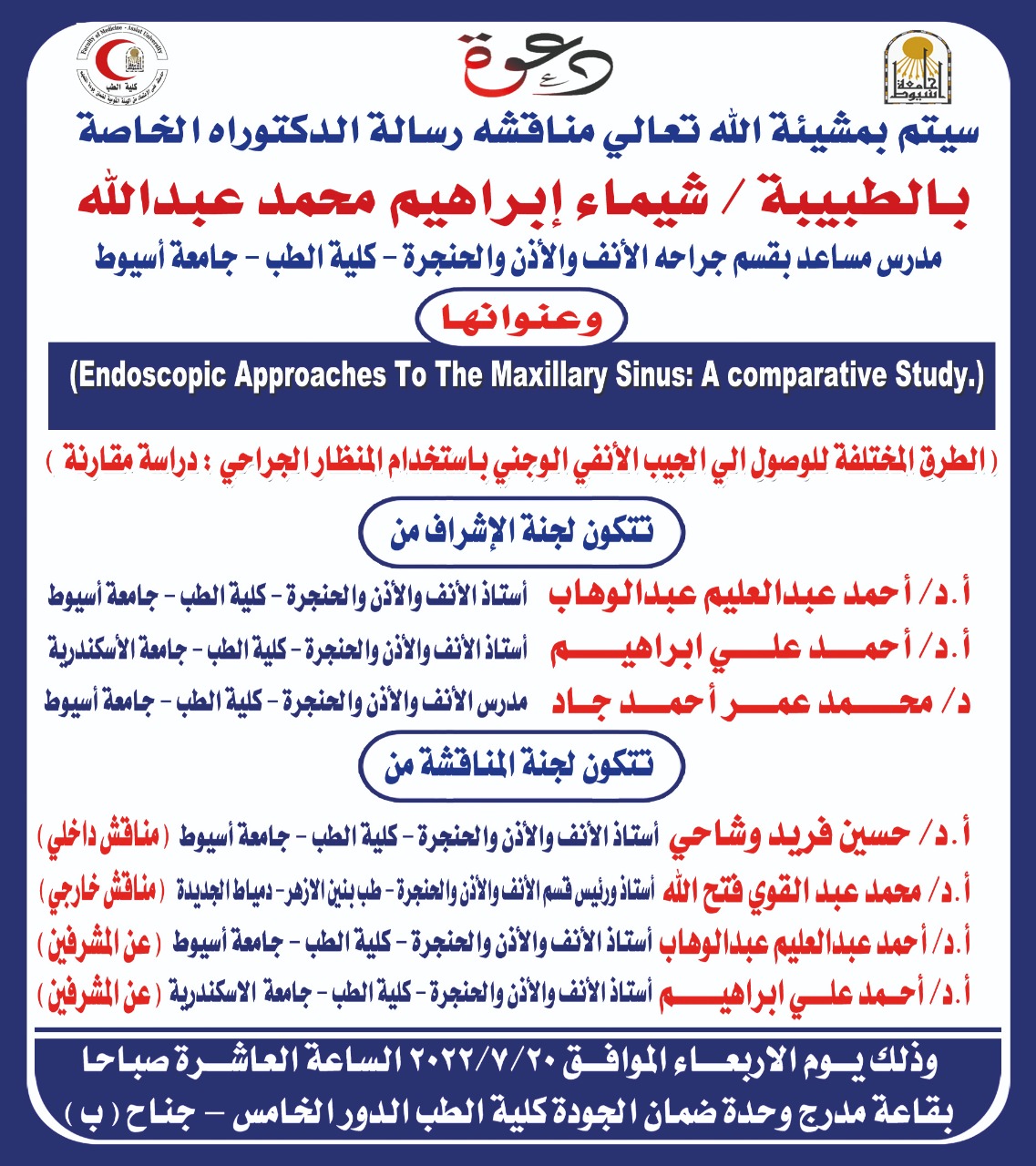
Invitation to discuss the doctoral thesis of Dr. Shaima Ibrahim Mohamed - Assistant Lecturer, Department of Otolaryngology
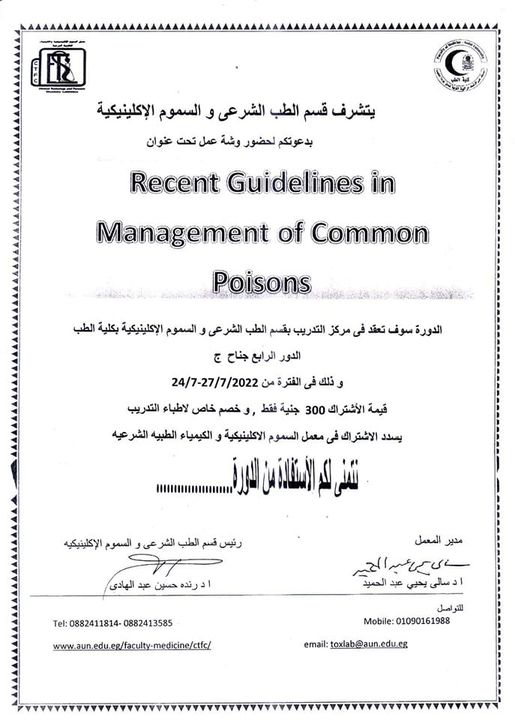
Workshop - Department of Forensic Medicine
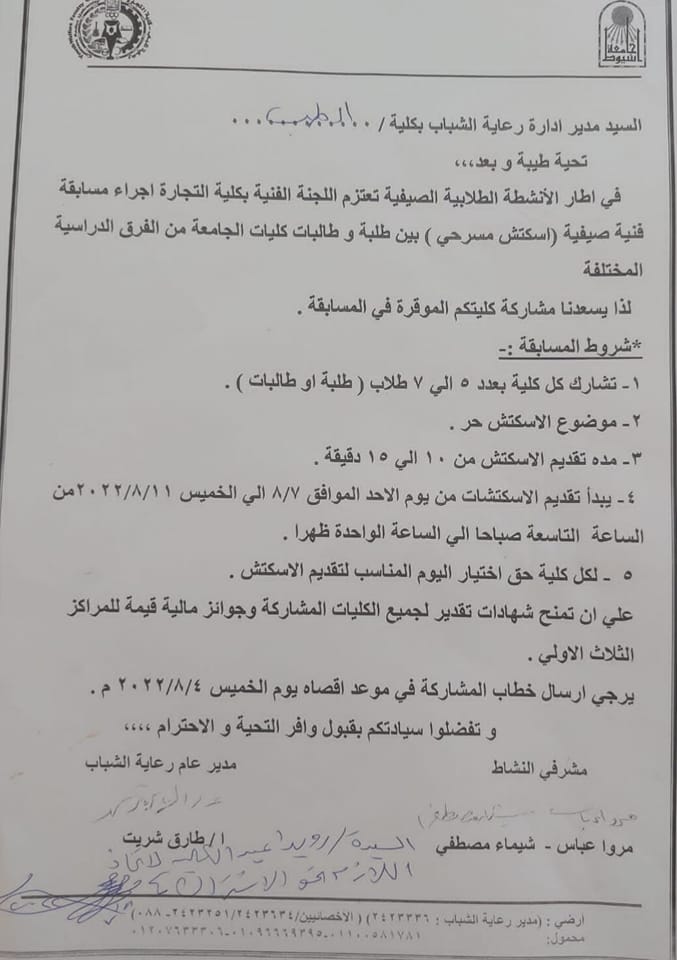
Announcement - Youth Welfare Department
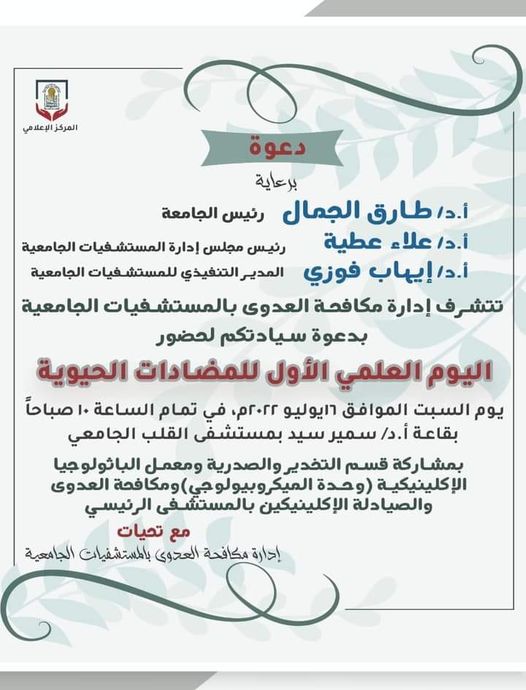
Initiation of the Catheter Aortic Valve Implantation Program - TAVI- at Assiut University Heart Hospital

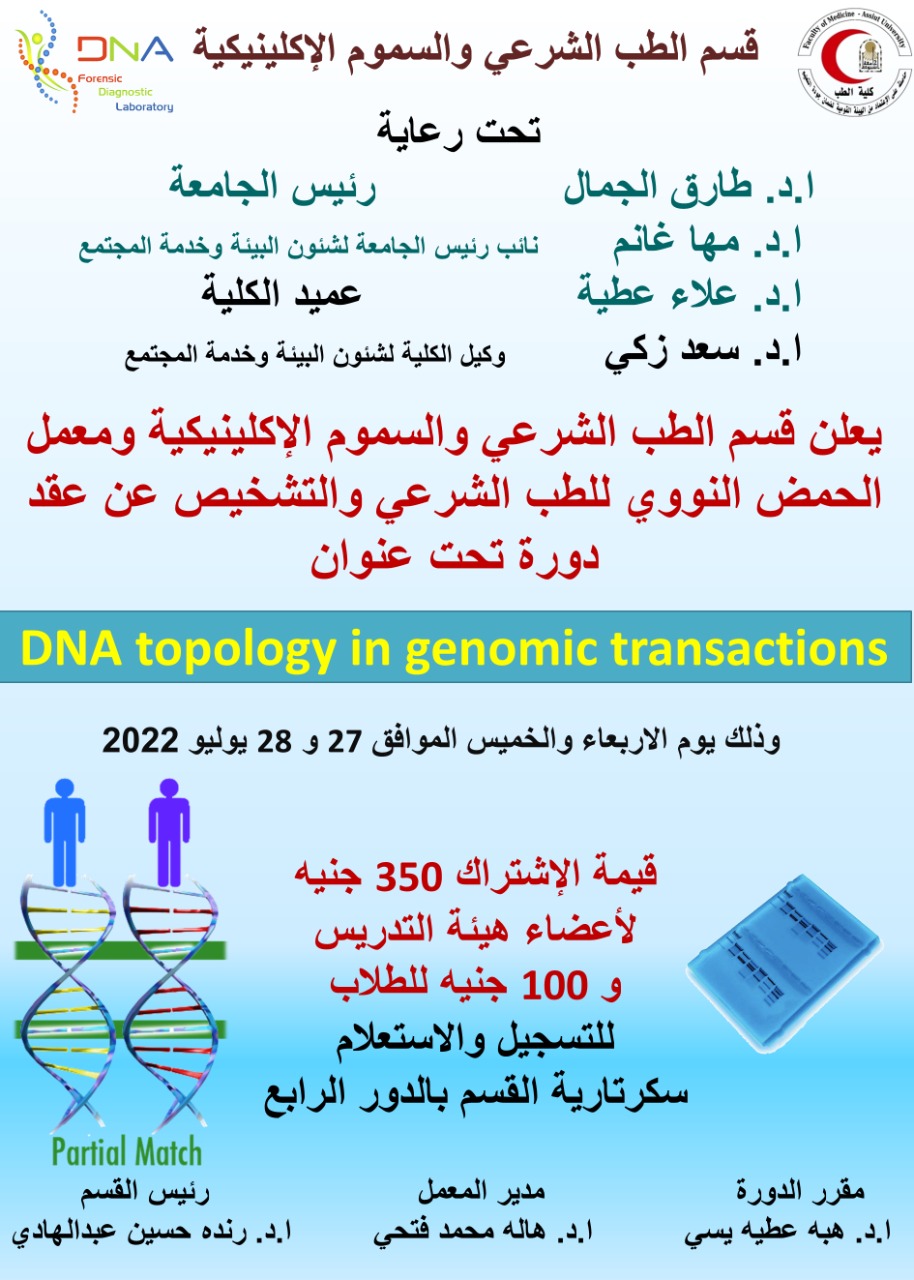
Announcement of the course of the Forensic Medicine Department - DNA topology in genomic transactions
Current iodine nutrition status and progress toward elimination of iodine deficiency disorders in Jazan, Saudi Arabia
Research Date
Research Department
Research Journal
BMC public health
Research Member
Research Year
2012
The emerging therapeutic role of some pharmacological antidotes in management of COVID-19
Research Abstract
Background A novel RNA coronavirus was identified in January 2020 as the cause of a pneumonia epidemic affecting the city of Wuhan; it rapidly spread across China. Aim of the review The aim is to discuss the potential efficacy of some pharmacologically known pharmacological antidotes (N-acetylcysteine; hyperbaric oxygen; deferoxamine; low-dose naloxone) for the management of COVID-19-associated symptoms and complications. Method An extensive search was accomplished in Medline, Embase, Scopus, Web of Science, and Central databases until the end of April, 2021. Four independent researchers completed the screening, and finally, the associated studies were involved. Conclusion The current proof hinders the experts for suggesting the proper pharmacological lines of treatment of COVID-19. Organizations, for example, WHO, should pursue more practical actions and design well-planned clinical trials so that their results may be used in the treatment of future outbreaks.
Research Date
Research Department
Research Journal
The Egyptian Journal of Bronchology volume
Research Member
Research Publisher
springeropen
Toxicological Analysis of Synthetic Cannabinoids (Strox) Seized in Assiut Governorate Using Gas Chromatography/ Mass Spectrophotometry (GC/MS)
Research Abstract
Background: In recent years many unknown synthetic cannabinoids (SCs) and other components have appeared on the market as constituents of herbal mixtures known as (Strox) which is posing a major public health and legal risk for society. Additionally, there is no adequate data on the ingredients of the illegally available ‘Strox’ and their pharmacological properties .Aim: this study was conducted to to detect active principles of some SCs products and to investigate the diversity of available synthetic cannabinoids (Strox) in Assiut governorate in 2020. Methodology: analysis of synthetic cannabinoid extract from 3 different seized samples (Strox) was conducted using Gas chromatography/ mass Spectrophotometry (GC/MS). Results: The Gas chromatography/ mass Spectrophotometry (GC/MS) analysis revealed that the different seized SCs samples were significantly different in terms of the active ingredients. Those ingredients included fatty acids, tobacco derivatives, cannabis sativa derivatives, benzodiazepines, quinazoline derivatives, piperine, indoles, analgesic agents, alkanes, melatonin derivatives, arsenic, solvents, and benzoic acid. Conclusion: The illegally available SCs samples have different ingredients which reflect the difference in the expected effects on users and making diagnosis of SCs use is challenging. Thus, leading to unpredictability of experienced symptoms and clinical presentation. Recommendations: Given the continuous emergence of variable mixtures containing new synthetic cannabinoids, a widespread cooperation system is necessary for sharing analytical information and improving drug market monitoring. This cooperation is mandatory to keep an up-to-date list of controlled substances
Research Date
Research Department
Research Journal
Zagazig Journal of forensic medicine and toxicology
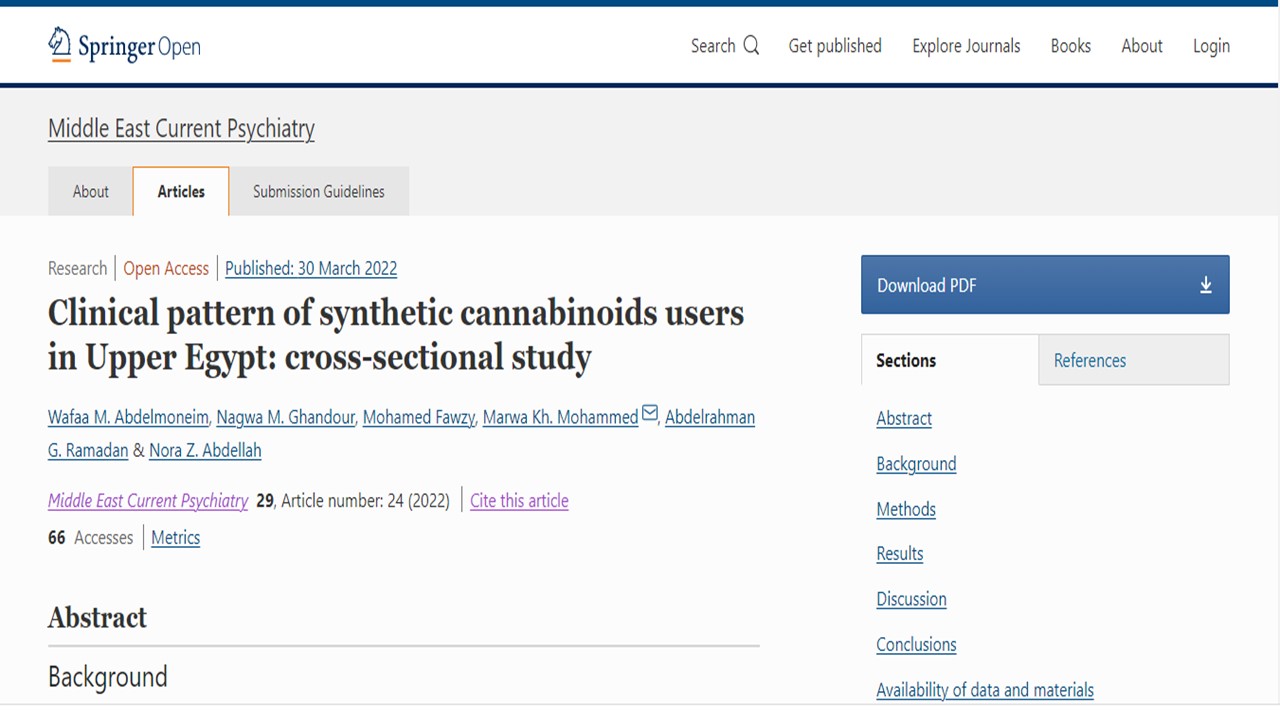
Clinical pattern of synthetic cannabinoids users in Upper Egypt: cross-sectional study
Research Abstract
Background There is an expanding use of new psychoactive substances containing synthetic cannabinoids in the last years. This study was conducted to identify the epidemiologic data of acute and chronic toxicity by synthetic cannabinoids in Upper Egypt patients. Results All cases included in the presenting study were fifty males. Most users of synthetic cannabinoids were in the adolescence and middle age group (15–< 35) representing 68%. Curiosity was the most common motivator for using synthetic cannabinoids. Alteration of perception was reported in 68% of subjects after synthetic cannabinoids use. Additionally, dizziness, loss of consciousness, convulsion, and panic attacks were also reported. Cardiovascular adverse effects experienced by users were palpitations (76%) and chest pain (12%). Half of included subjects (50%) reported financial problems and about one-third (32%) got involved in domestic violence. Abnormal routine laboratory findings that were found in included cases were in the form of 12% anemia, 10% leukocytosis, and 6% leucopenia. Also, liver and kidney functions were elevated in 8% and 4% of the cases, respectively. While 22% and 4% of cases were positive for hepatitis C and HIV respectively. Conclusions This study can be concluded that adolescence are the most common users of SCs; neuro-psychiatric and cardiovascular side effects were the most experienced by subjects. Violence in many forms, especially domestic violence, was associated with synthetic cannabinoids abuse. Trial registration Registered in clinical trial under name syntheticcannabinoidsAssiut and ID NCT03866941 and URL.
Research Date
Research Department
Research File
s43045-022-00188-y.pdf
(933.07 KB)
Research Image
Research Journal
Middle East Current Psychiatry
Research Member
Research Publisher
springeropen