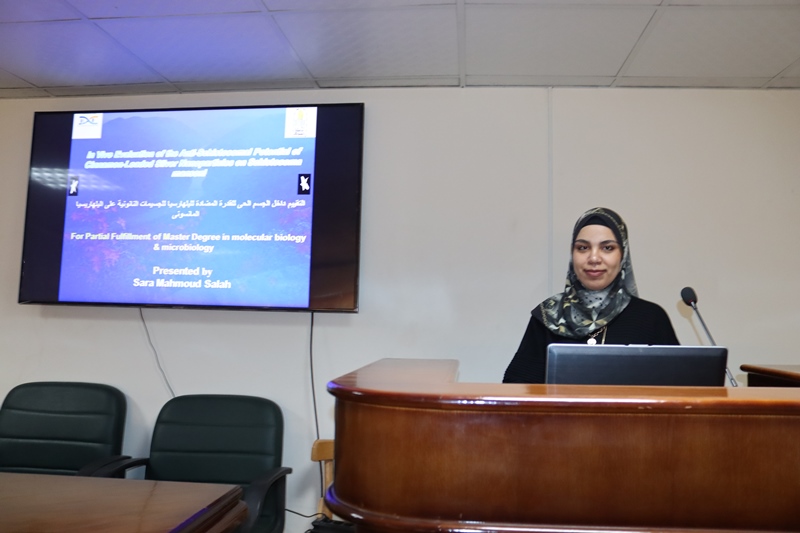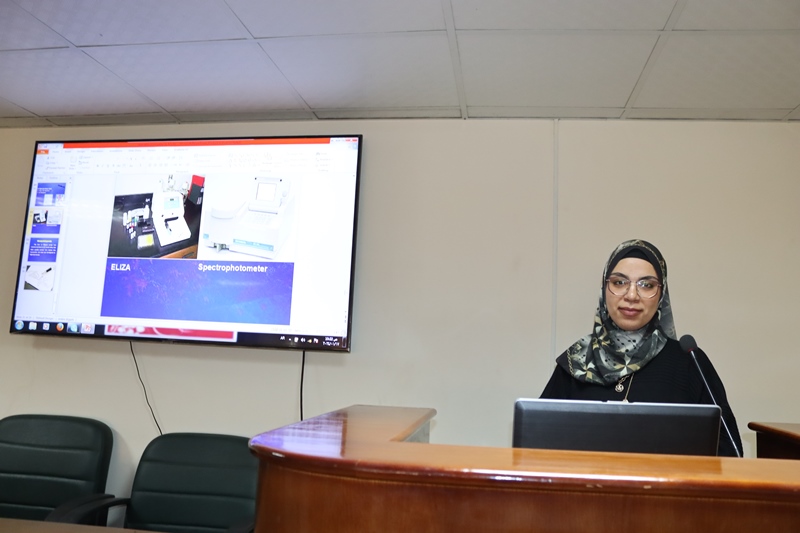
Announcement for the Community Service and Environmental Development Committee – December 2023
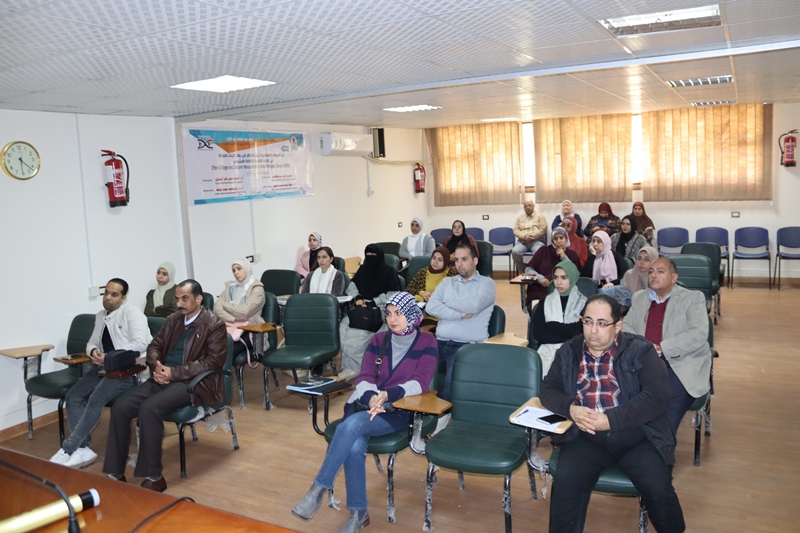
The Community Service and Environmental Development Committee will be held at 11.00A.m. on Sunday 10/12/2023
The Molecular Biology Department Council held its session No. (12) in the institute's council will be held at 11:00 A.m. on Wednesday, 6/12/2023, headed by Prof. Dr. Michael Nazmy Agban, Head of the Department, and the membership of both gentlemen:
Prof. Dr. Ghada Ahmed Mohammed Abu Al-Ela
Prof. Dr. Khaled Muhammad Ahmed Hassanein
Dr. Omnia Hassan Bakr
Dr. Mona Hussein Muhammad Abdel Rahim
The Molecular Biology Department Council will be held at 11:00A.m. on Wednesday, 6/12/2023.
The Applied Biotechnology Department Council held its session in the institute's council hall in at 10:00 A.m. on Tuesday, 5/12/2023, Under the chairmanship of Prof. Dr. Muhammad Ahmad Almolakab Belkhirshy, Head of Department, and the membership of the following:
Prof. Dr. Heba Atia Yassa
Dr. Hesham Youseef Awad Darwish
The Council of the Department of Applied Biotechnology will be held at 10:00 A.m. on Tuesday, 5/12/2023.
It is not uncommon for some individuals to retain certain primitive characteristics even after domestication or long-term intensive selection. Wild ancestors or original varieties of animals typically possess strong adaptability to environmental preservation, a trait that is often lacking in highly artificially selected populations. In the case of the Merino population, a world-renowned fine wool sheep breed, a phenotype with primitive coarse wool characteristic has re-emerged. It is currently unclear whether this characteristic is detrimental to the production of fine wool or whether it is linked to the adaptability of sheep. The underlying genetic/epigenetic mechanisms behind this trait are also poorly understood.
This study identified lambs with an ancestral-like coarse (ALC) wool type that emerged during the purebred breeding of Merino fine wool sheep. The presence of this primitive sheep characteristic resulted in better environmental adaptability in lambs, as well as improved fine wool yield in adulthood. Reciprocal cross experiments revealed that the ALC phenotype exhibited maternal genetic characteristics. Transcriptomic SNP analysis indicated that the ALC phenotype was localized to the imprinted Gtl2-miRNAs locus, and a significant correlation was found between the ALC wool type and a newly identified short Interstitial Telomeric Sequences (s-ITSs) at this locus. We further confirmed that a novel 38-nt small RNA transcribed from these s-ITSs, in combination with the previously reported 22-nt small RNAs cluster from the Gtl2-miRNAs locus, synergistically inhibited PI3K/AKT/Metabolic/Oxidative stress and subsequent apoptotic pathways in wool follicle stem cells, resulting in the ALC wool type. The necessity of Gtl2-miRNAs in controlling primary hair follicle morphogenesis, as well as the wool follicle type for ALC wool lambs, was verified using intergenic differentially methylated region-knockout mice.
The ALC wool type of Merino sheep, which does not reduce wool quality but increases yield and adaptability, is regulated by epigenetic mechanisms in the imprinted Gtl2-miRNAs region on sheep chromosome 18, with the maternally expressed imprinted gene responsible for the ALC phenotype. This study highlights the significance of epigenetic regulation during embryonic and juvenile stages and emphasizes the advantages of early adaptation breeding for maternal parents in enhancing the overall performance of their offspring.
Endometrial immune response is highly associated with the homeostatic balance of the uterus and embryo development; however, the underlying molecular regulatory mechanisms are not fully elucidated. Herein, the porcine endometrium showed significant variation in mucosal immunity in proliferative and secretory phases by single-cell RNA sequencing. The loose arrangement and high motility of the uterine epithelium in the proliferative phase gave opportunities for epithelial cells and dendritic cells to cross talk with colonizing microbial community, guiding lymphocyte migration into the mucosal and glandular epithelium. The migrating lymphocytes were primarily NK and CD8+ T cells, which were robustly modulated by the chemokine signaling. In the secretory phase, the significantly strengthened mechanical mucosal barrier and increased immunoglobulin A alleviated the migration of lymphocytes into the epithelium when the neuro-modulation, mineral uptake, and amino acid metabolism were strongly upregulated. The noticeably increased intraepithelial lymphocytes were positively modulated by the bacteria in the uterine cavity. Our findings illustrated that significant mucosal immunity variation in the endometrium in the proliferative and secretory phases was closely related to intraepithelial lymphocyte migration, which could be modulated by the colonizing bacteria after cross talk with epithelial cells with higher expressions of chemokine.
The eggshell blueness is an interesting object for chicken genetic studies and blue-shelled chicken industry, especially after the discovery of the causative mutation of chicken blue eggshell. In the present study, genome wide association study (GWAS) was conducted in Chinese Dongxiang blue-shelled chicken underlying four traits of blue eggshell pigments: quantity of biliverdin (QB), quantity of protoporphyrin (QP), quantity of total pigment (QT), and color density trait (CD). A total of 139 individuals were randomly collected for GWAS. We detected two SNPs in genome-wise significance and 35 in suggestive significance, 24 out of the 37 SNP were located either within intron/exon or near 15 genes in a range of ~1.17 Mb on GGA21. For further confirmation of the identified SNP loci by GWAS, the follow-up replication studies were performed in two populations. A total of 146 individuals of the second generation derived from the former GWAS population, as well as 280 individuals from an alternative independent population were employed for genotyping by MALDI-TOF MS in a genotype-phenotype association study. Eighteen SNPs evenly distributed on the GGA21 significant region were successfully genotyped in the two populations, of which 4 and 6 SNP loci were shown significantly associated with QB, QT and QP in the two repeat populations, respectively. Further, the SNPs were narrowed down to a region of ~ 653.819 Kb on GGA21 that harbors five candidate genes: AJAP1, TNFRSF9, C1ORF174, CAMTA1, and CEP104. Shell gland of chickens laying dark and light blue eggshell was chosen for detection of mRNA expression of the five candidate genes. The results showed differential expression levels of these genes in the two groups. The specific function of these genes has not yet been defined clearly in chickens and further in-depth studies are needed to explore the new functional role in chicken eggshell blueness.