Do you have any questions?

Introduction: The laundry of Assiut university hospitals receives huge amount of linen daily. Laundry workers are exposed to many occupational health hazards which affect the respiratory system. Chemical hazards include detergents, proteolytic enzymes, cotton dusts, fumes and disinfectants. Physical hazards include heat and vapor. Biological hazards include infectious materials.
Objectives: To determine respiratory affection among the laundry workers.
Methods: Cross-sectional study, total coverage of all the 53 laundry workers. The study instruments were: a respiratory symptoms questionnaire, chest examination, pulmonary function tests and environmental observation of the laundry.
Results: 92.5% were males, Smokers represented 58.5% and 35.5% of them were heavy smokers. 9.4% of the laundry workers used masks. Chest symptoms as cough, expectoration, dyspnea and wheezes were found in 34% of the workers and these symptoms worsened by work in 77.8% of them. Pulmonary function tests showed obstructive disorder in 7.5%, restrictive disorder in 3.8% and mixed disorder in 1.9%. Combining history, examination and pulmonary function testing revealed that 9.4% had bronchial asthma and 5.7% had COPD.
Conclusion: Laundry workers are at risk of developing chest symptoms, impairment of pulmonary function, bronchial asthma and COPD which may, in part, be due to their exposure to occupational hazards.
Background Working environment should not present a risk of injury or disease but many thousands of workers
worldwide remain exposed to hazardous substances particularly in developing countries. Flour dust is one of those
hazardous substances to which the flour mills workers are exposed to, inhalation of flour dust may cause diverse lung
diseases with different severity of symptoms ranging from simple irritation to allergic reaction and chronic respiratory
disorders, including asthma. Therefore, the present study was done to detect the prevalence of respiratory problems
among flour mills workers.
Methods The study was carried out in the flour mills of Assiut, it was a cross-sectional study among 203 workers. The
study instruments were a semi-structured questionnaire about respiratory symptoms, chest examination and pulmonary
function tests (PFT).
Results The age of the study workers ranged from 19 to 60 years old, 94.1% were males, 50.7% were from urban
regions. Pulmonary function abnormalities were found in 36.4% of them and 20.7% were diagnosed with bronchial
asthma. Significant relationships were detected between abnormal pulmonary function tests and workers ≥ 40 years
old, low educational level and those who worked in the flour mills for ≥ 10 years.
Conclusions Flour dust cause respiratory symptoms and impair the pulmonary function of the flour mills workers
and they may develop bronchial asthma which affect their work efficiency.
Recommendations Medical care must be provided regularly to the flour mills workers and safety measures are
mandatory.
Trial registration ClinicalTrials.gov. NCT03678519. Registered August 10, 2022.
Keywords Flour mills workers, Respiratory symptoms, Occupation, Asthma, Pulmonary Functions Tests
Tribulus terrestris saponins (TTS) have been longley used as an overall tonic and recent studies showed they influence inflammatory conditions. We examined the ameliorative effect of a commercial formula of a saponin-rich extract of TT in a model of dietary obesity in female rats focusing on their ability to control the inflammatory burden, insulin resistance (IR), adipokine expression and the related reproductive system pathologies. Female rats were fed with high fat diet (HFD) for 14 weeks to launch diet-induced obesity; they were assigned as: the obese control female rats (OFR) which received no treatment and TTS (5 and 10 mg/kg/day) treated rats; they were compared to a normal rat group. We determined the IR index, serum/tissue inflammatory cytokines, and adipose tissue adipokine expression and examined the secondary ovarian pathologies. Body weight gain, serum triglycerides and IR (>5-fold) in the OFR group were greater than the normal group; TTS lessened these parameters compared with the OFR group. TTS, at 10 mg/kg dose, ameliorated mRNA expression of leptin and visfatin genes in addition to serum inflammatory cytokine levels. Moreover, TTS corrected the hyperprolactinemia and other hormonal disturbances and ameliorated the ovarian pathologies. This study highlighted that the anti-inflammatory properties of TTS helped in alleviation of IR and body weight gain in OFR. Upon correction of obesity manifestations, the gonadal hormone dysregulations and ovarian pathologies were subsequently ameliorated. We can consider TTS as a promising candidate that may alleviate the inflammatory burden, IR and adipokine expression in obesity and hence prevent the secondary gonadal complications in female subjects if appropriate clinical studies are available.
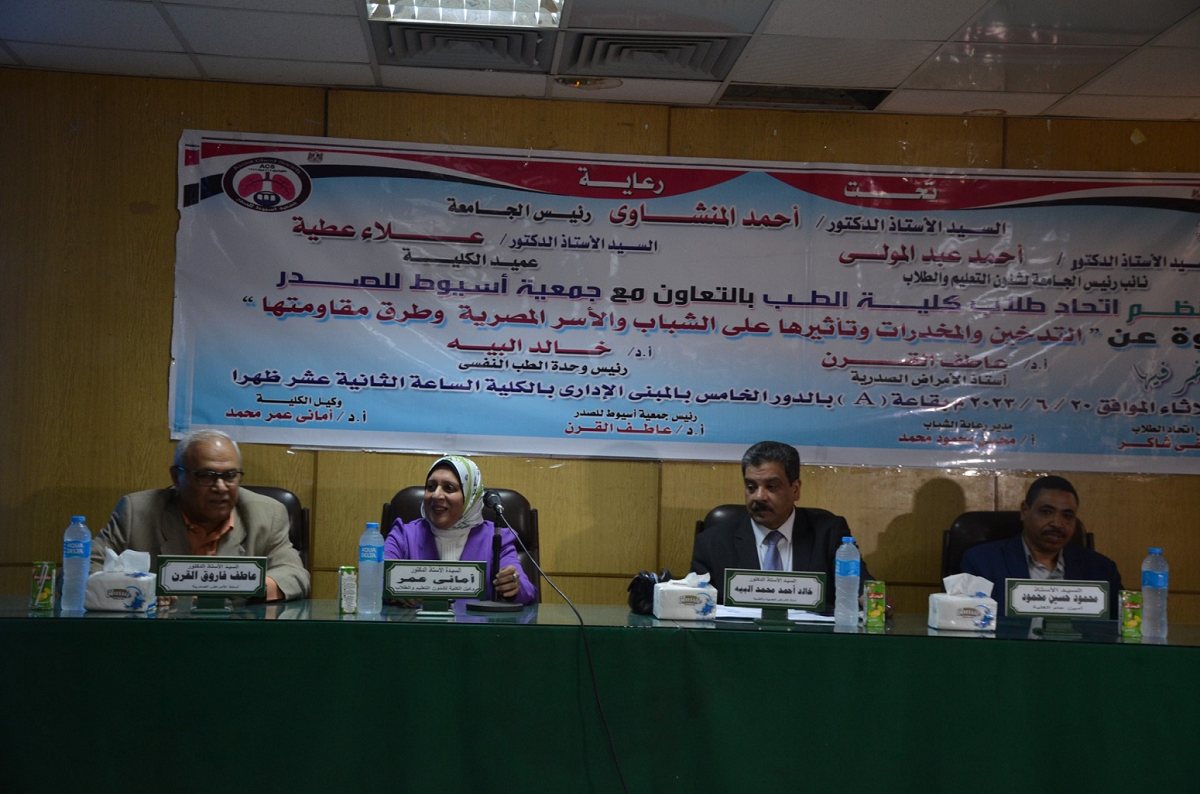


 تضمن اليوم شرح لمضخة الأنسولين مع تدريب عملي عن كيفيه استخدامها. ألقت د/ شيماء كمال مدرس طب الأطفال والغدد الصماء "نظرة عامة على مرض السكري من النوع الاول"