

 Do you have any questions? (088) 2080369 - 2345622 Pharmacy_QAAU@pharm.aun.edu.eg
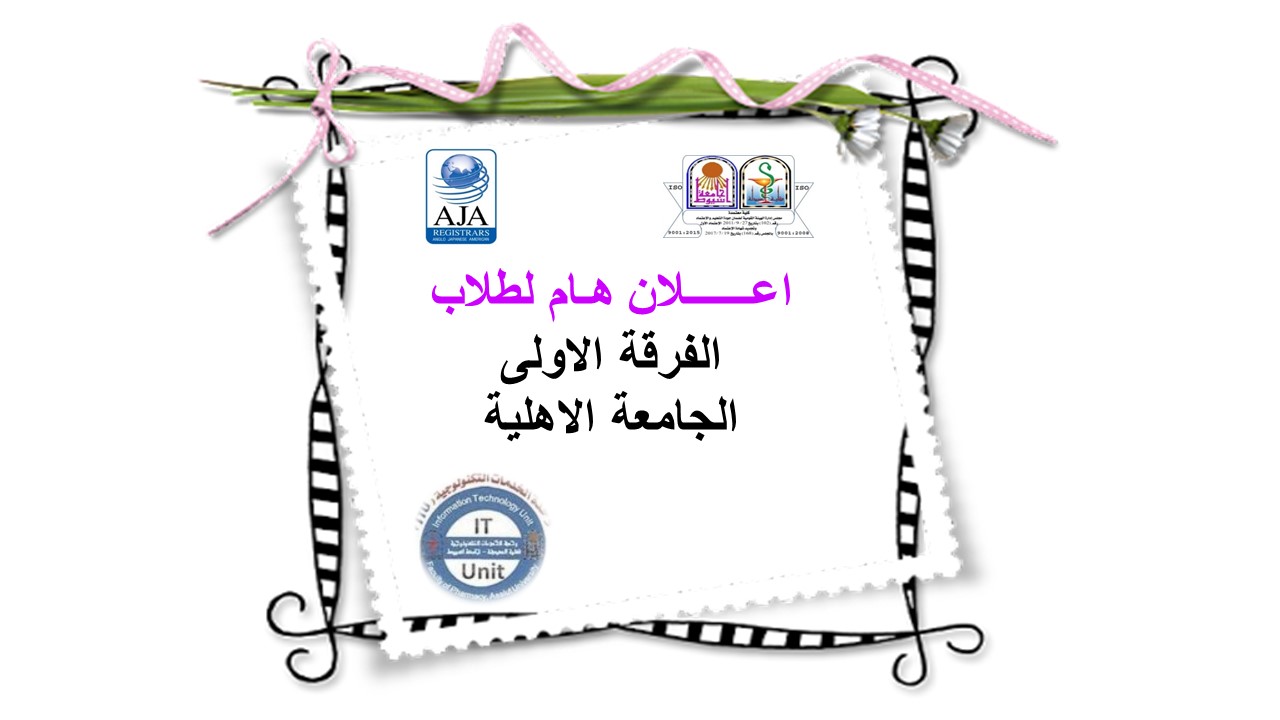
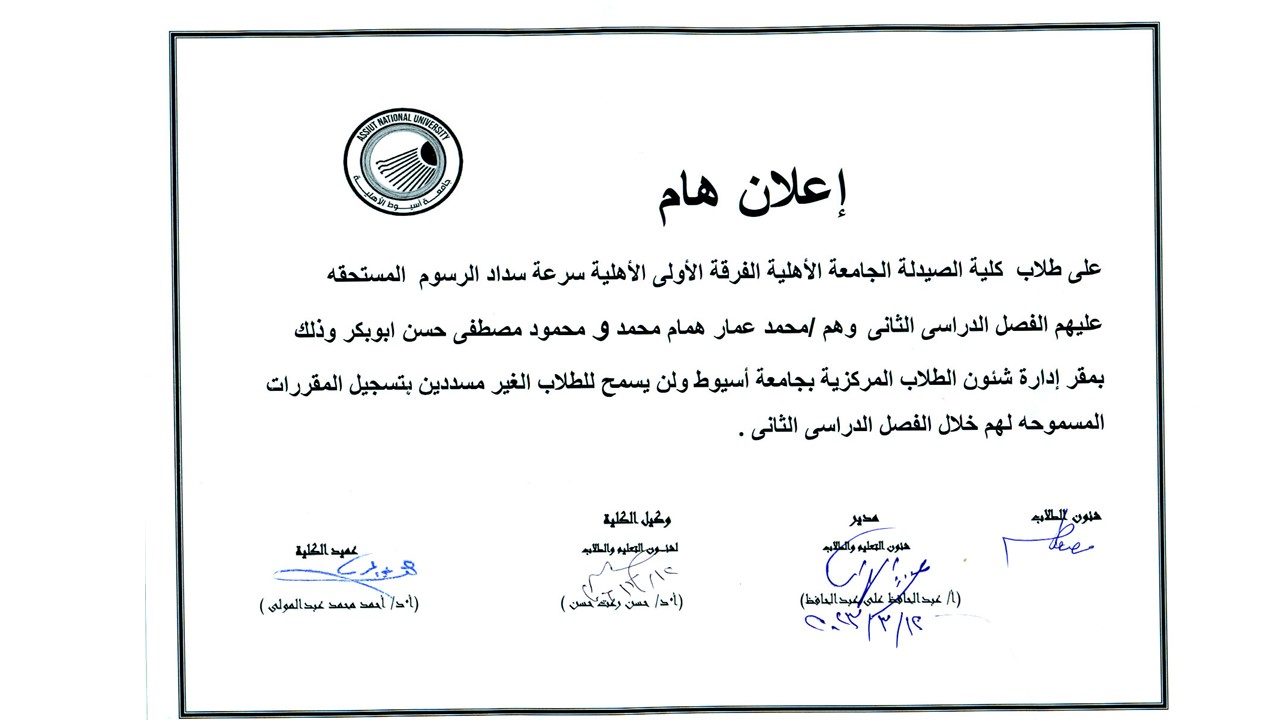
An important announcement for the students of the first year of the Ahlia University who did not pay the fees
A symposium on the activities of the Scientific Research Ethics Committee at the Faculty of Pharmacy
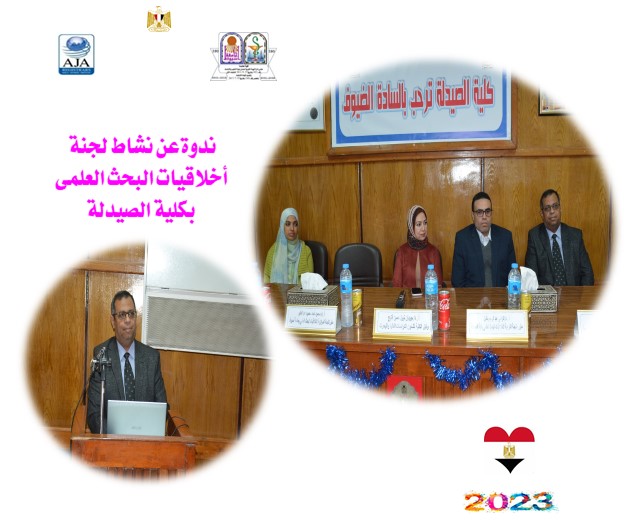
Under the auspices of Prof. Dr. Ahmed Mohamed Abdel Mawla - Dean of the Faculty and Acting Vice President for Student Affairs and Education, the Committee on Scientific Research Ethics at the Faculty of Pharmacy organized an introductory symposium on the committee's activities and the method of obtaining the committee's approval to conduct research, research projects, scientific thesis, and the mechanism for examining applications, in the presence of Prof. Dr. Gehan Nabil Hassan - Vice Dean for Postgraduate Studies and Research Affairs, Prof. Dr. Hassan Refaat Hassan - Vice Dean for Education and Student Affairs, and a distinguished presence of faculty members, their assistants and postgraduate students in the Faculty, where both Prof. Dr. Mahmoud Ahmed Mahmoud Abdel-Aleem - Rapporteur of the Central Committee for Ethics of Scientific Research at Assiut University, and Prof Dr. Ikramy Abdel Rahim Khalil - Rapporteur of the Committee for Ethics of Scientific Research at Faculty of Pharmacy and Prof. Dr. Khaled Salah Saeed - Secretary of the Central Committee for Ethics of Scientific Research at Assiut University Dr. Sarah Ahmed Abul Magd - Secretary of the Committee on Scientific Research Ethics at Faculty of Pharmacy in each pharmacology
This took place on Wednesday, 3/8/2023, in the Faculty Celebration Hall

news category
خبر عام
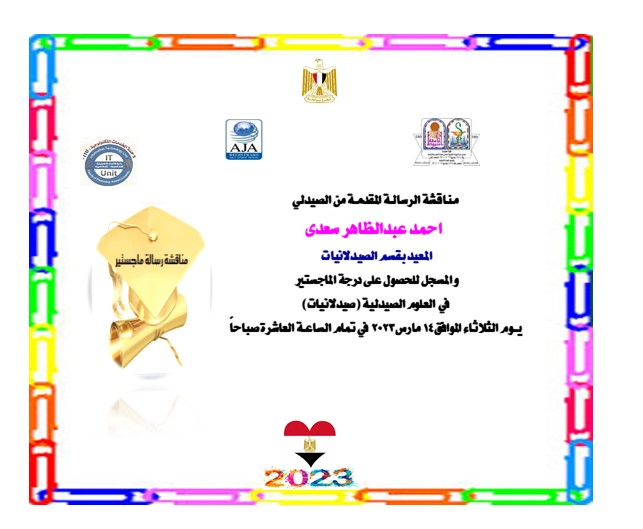
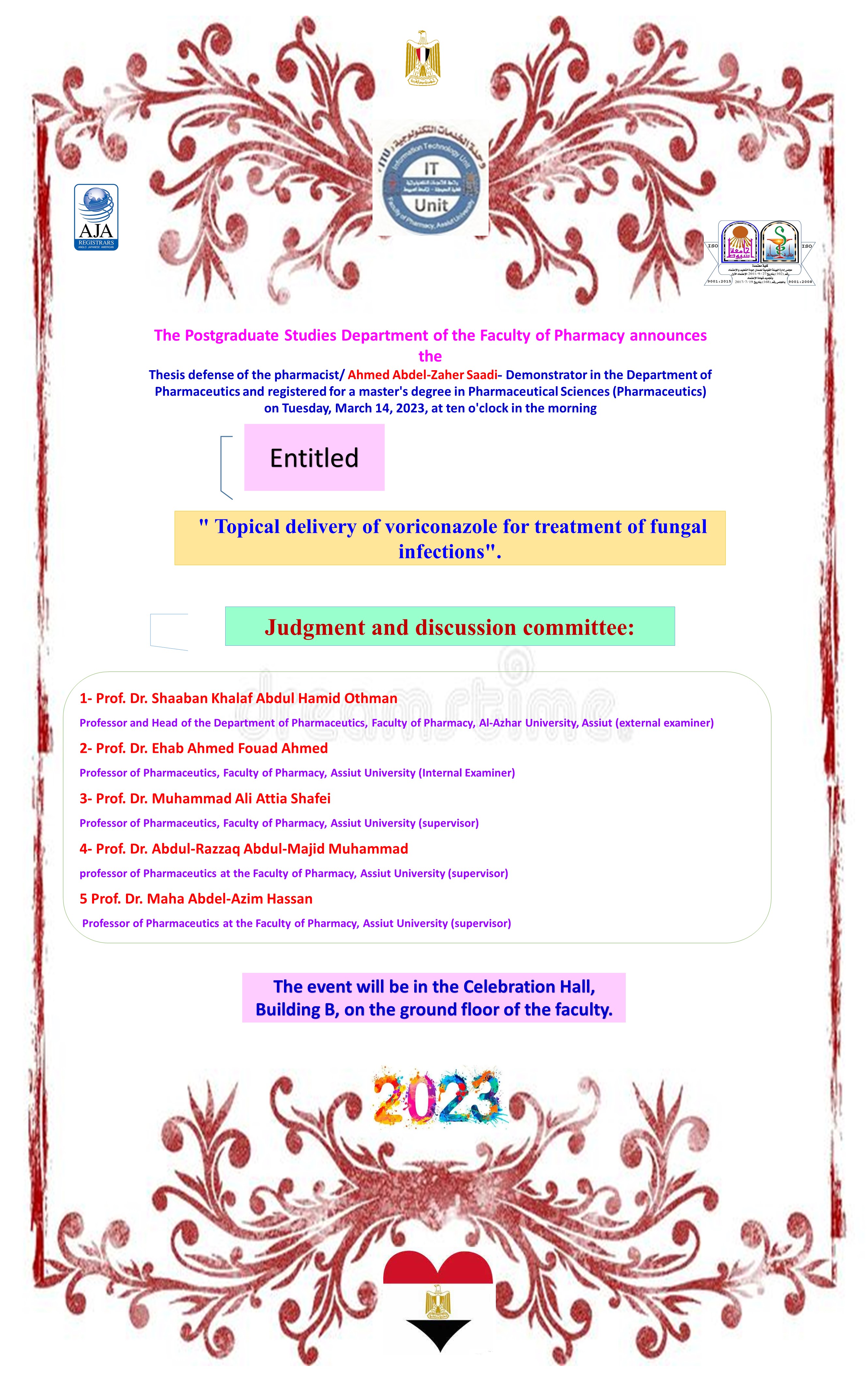
Thesis defense of the pharmacist / Ahmed Abdel-Zaher Saadi - Teaching Assistant in the Department of Pharmaceutics and registered for a master's degree in Pharmaceutical Sciences (Pharmaceutics)
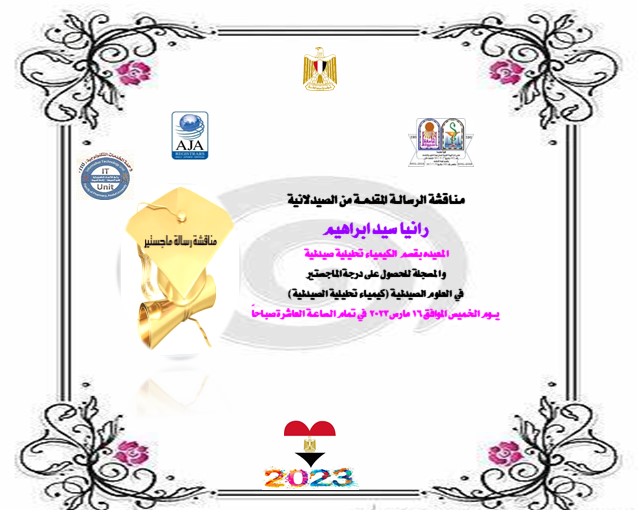
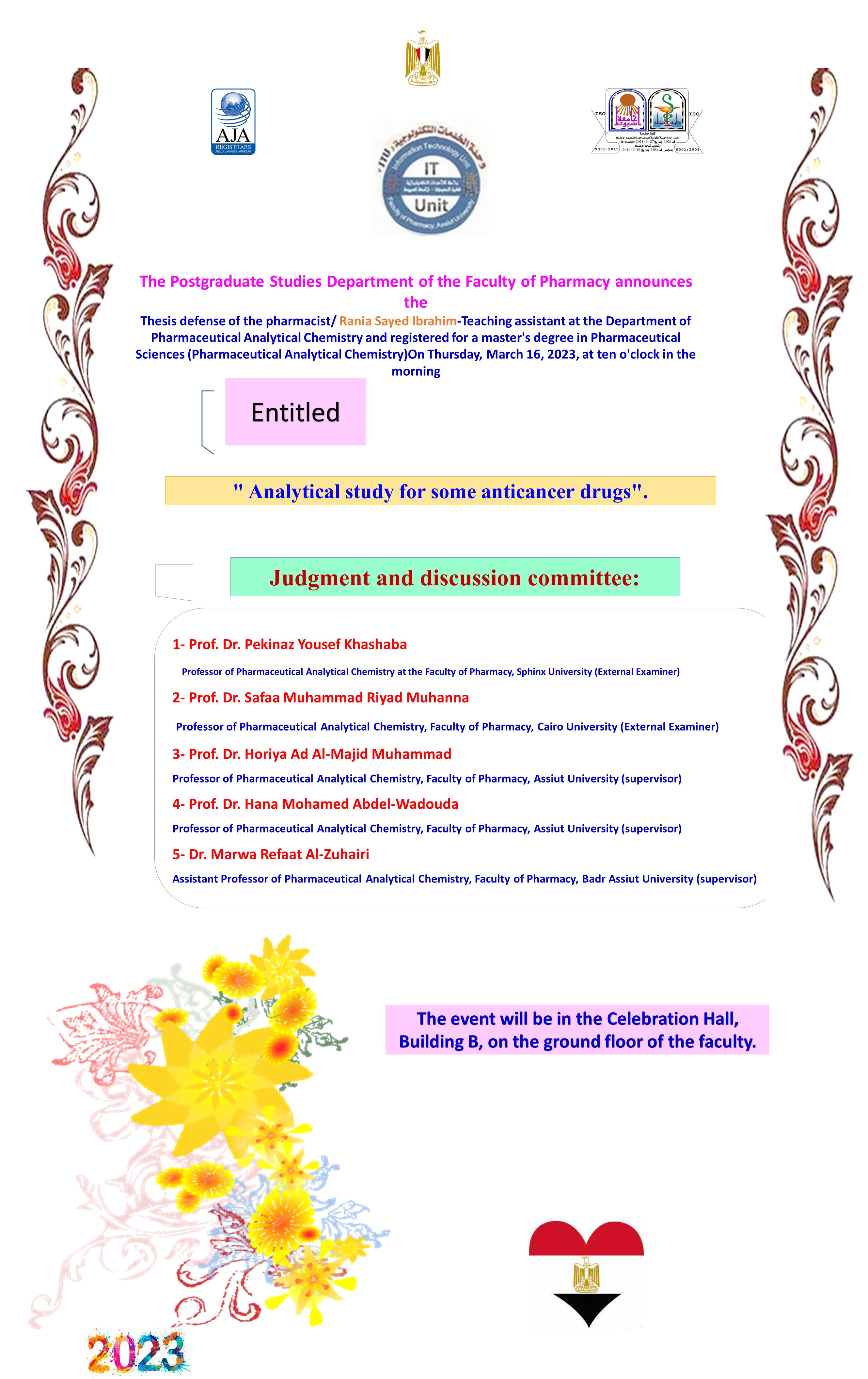
Thesis defense of the pharmacist / Rania Sayed Ibrahim - Teaching Assistant in the Department of Analytical Chemistry and registered for a Master's degree in Pharmaceutical Sciences (Pharmaceutical Analytical Chemistry)
An important announcement for students of the fifth year, semester (10), clinical pharmacy program, second semester of the academic year 2022/2023
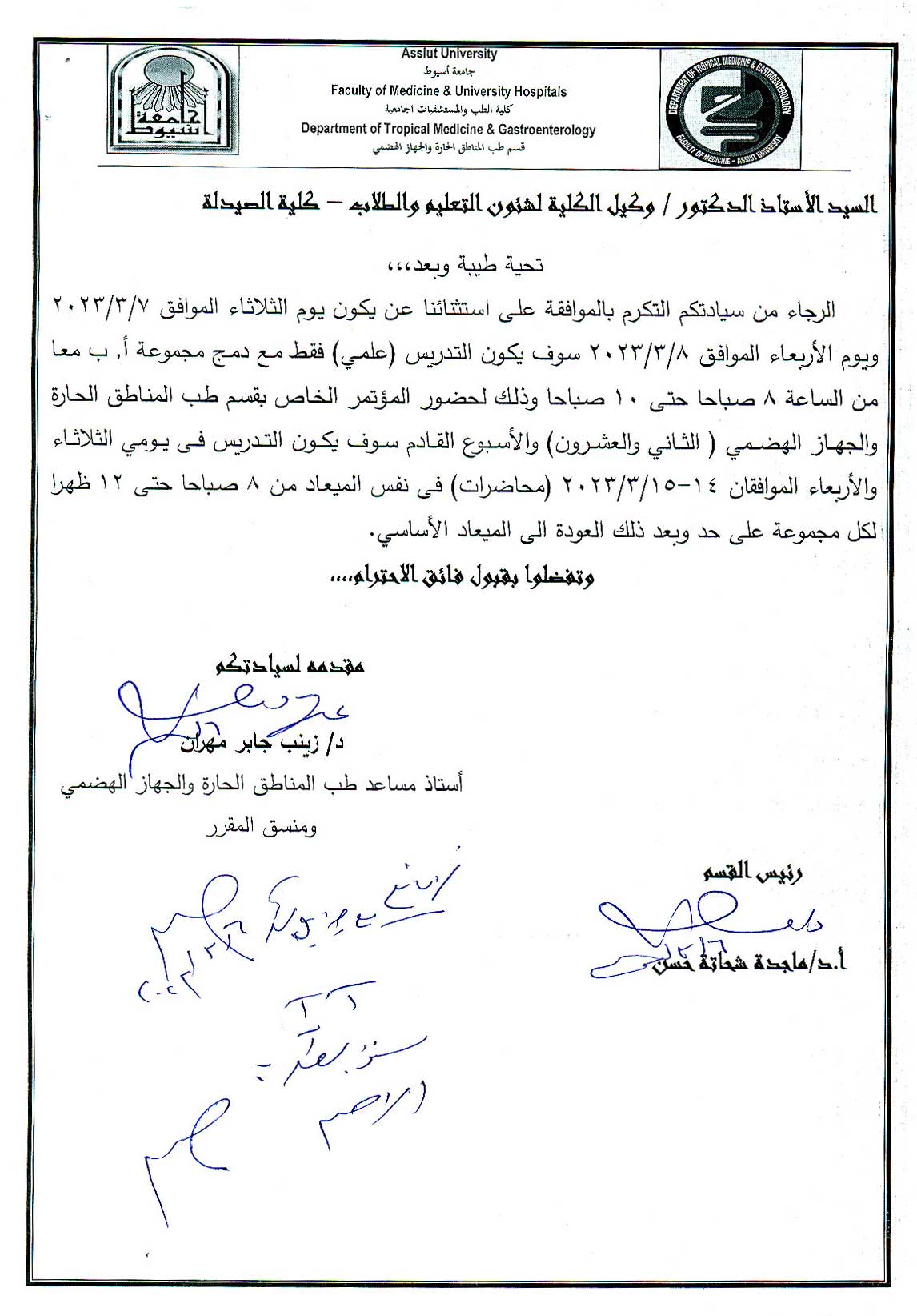
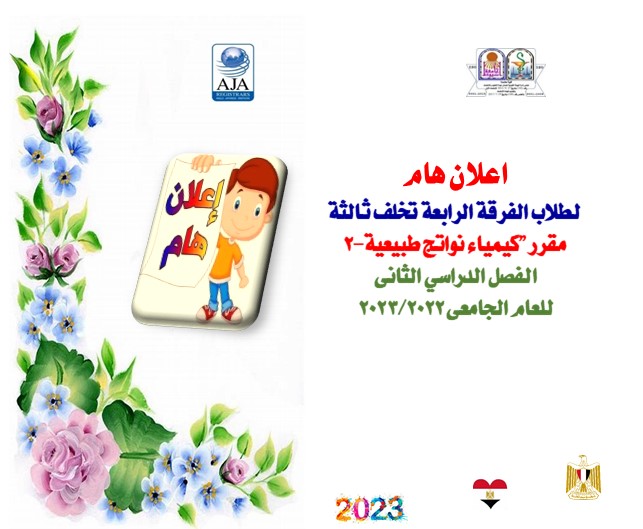
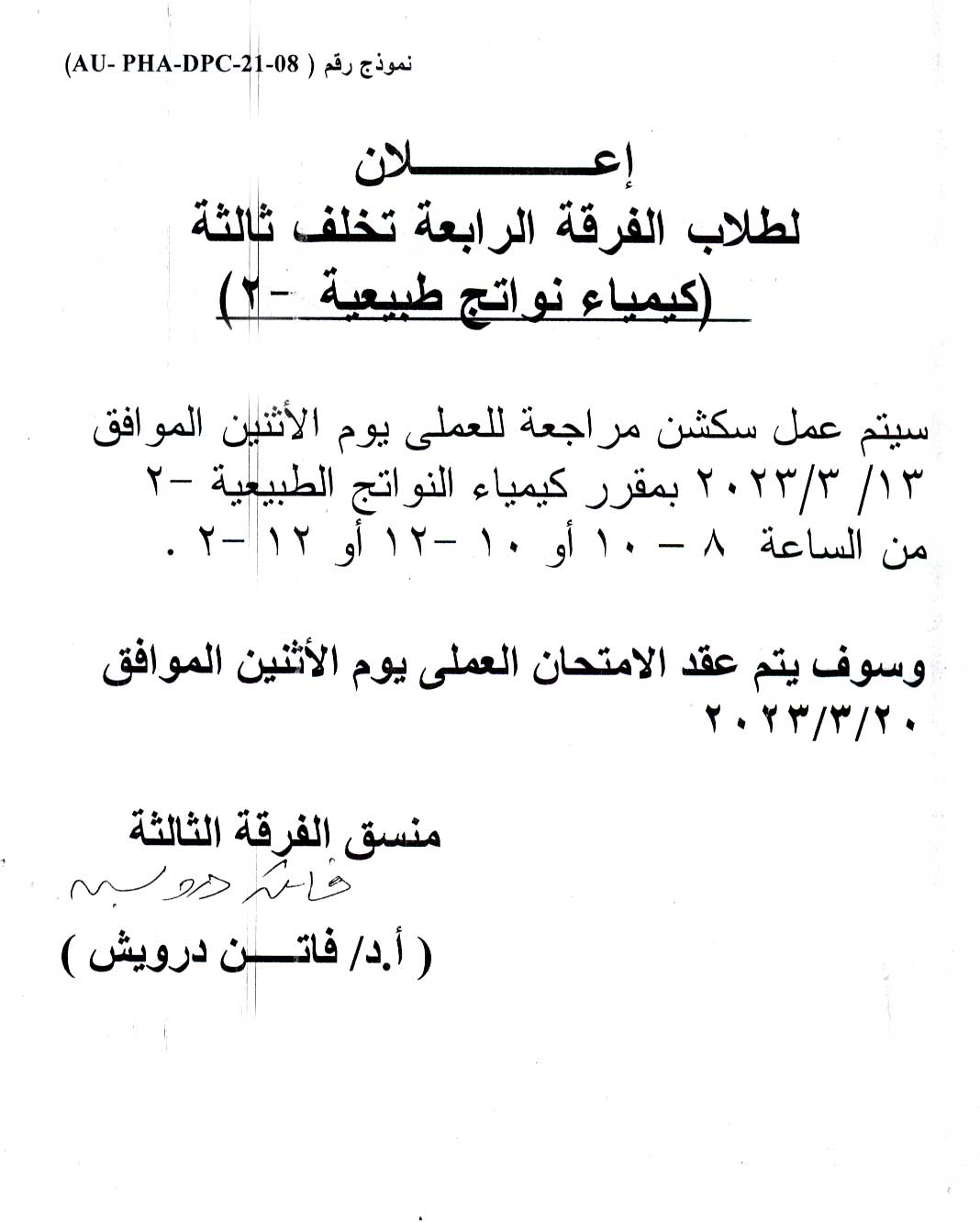
An important announcement for the students of the fourth year, "Chemistry of Natural Products2 - 2nd semester of the academic year 2022/2023
Phytochemical investigation, molecular docking studies and DFT calculations on the antidiabetic and cytotoxic activities of Gmelina philippensis CHAM
Research Abstract
Ethnopharmacological relevance
Gmelina philippensis CHAM is an ornamental plant that is distributed in South Asia and warm regions of the Mediterranean area. The plant is traditionally applied in folk medicine for the treatment of diabetes.
Aim of the study
To evaluate the cytotoxic and the antidiabetic activities of the ethanolic extract of G. philippensis aerial parts. To isolate the metabolite(s) responsible for these activities and to elucidate the mechanism of action by molecular docking study.
Materials and methods
Compounds (1–11) were isolated using various chromatographic techniques and their structures were determined by NMR spectroscopic and mass spectrometric analysis. The cytotoxic effect was tested using viability test and MTT assay. Antidiabetic activity was evaluated by measuring the inhibitory activity of the ethanolic extracts and compounds against α-glucosidase and α-amylase activities. Modeling and docking simulations were performed using Molecular Operating Environment software and the crystal structure of protein kinases CDK2, (1PYE) and AKT1 (4GV1), in addition to α-glucosidase (3TOP) and α-amylase (2QV4).
Results
Compounds 2, 3 and 8 were isolated for the first time from the plant and identified as: gmelinol (2), apigenin (3) and tyrosol (8). While β-sitosterol-3-O- β-D-glucopyranoside (4) vicenin-II (7), rhoifolin (9), isorhoifolin (11) were isolated for the first time from the genus, along with and the new iridoid 6-O-α-L-(2″-O-benzoyl-4″-O-trans-p-methoxycinnamoyl)rhamnopyranosyl-1α- β-D-glucopyranoside catalpolgenin (6). In addition, to the previously reported compounds: mixture of β -sitosterol and stigmasterol (1), and 6- O- α-L-(2″,3″,4″-tri-O -benzoyl)rhamnopyranosylcatalpol (5) and 6-O-α-L-(2″-O-trans-p-methoxycinnamoyl)rhamnopyranosylcatalpol (10). The cytotoxic activity against hepatocellular carcinoma (HepG-2) cell lines for compounds 2, 5, 7, 9 and 11 was conducted using cisplatin as a standard. Gmelinol (2) exhibited strong cytotoxic activity against HepG-2 cell lines with IC 50 value of 3.6 ± 0.1 μg/ml which is more potent than the standard cisplatin IC 50 = 8.7 ± 0.9 μg/ml. Molecular modeling of 2 against diverse targets of protein kinases suggested that CDK-2 and AKT-1 could be the dual probable kinase targets for its cytotoxic action. Compound 2 showed α-amylase inhibition activity with IC 50 value of 60.9 (μg/ml) while, compounds 5 showed strong α-glucosidase inhibition activity with IC 50 values of 41.7 (μg/ml) compared to acarbose with IC 50 value of 34.7, 30.6 (μg/ml). Molecular docking of compounds 2 and 5 on α-glucosidase (3TOP) and α-amylase (2QV4) enzymes revealed high binding affinity and active site interactions comparable to native ligand acarbose.
Conclusion
The ethanolic extract of G. philippensis CHAM aerial parts is effective against HepG-2 cell lines, α-amylase and α-glucocidase activities. Biologically guided isolation indicated that compounds 2 and 5 are responsible for these activities. These results were supported by DMF calculations that detected the molecular areas responsible for protein interactions shown via docking studies.
Research Date
Research Department
Research Journal
Journal of Ethnopharmacology
Research Member
Research Publisher
Elsevier
Research Vol
303
Research Website
https://doi.org/10.1016/j.jep.2022.115938
Research Year
2023
خارطة طريق للنهوض بصناعة الدواء فى مصر: انشاء مركز استشاري وطني لتطوير الدواء وتفعيل إمكانيات الدولة فى مجال اإلتاحة الحيوية
Research Journal
المجلة العربية لسياسات العلوم والتکنولوجيا والابتکار
Research Member
Research Publisher
أکاديمية البحث العلمي والتکنولوجيا بالتعاون مع الرابطة العربية لمراصد العلوم والتکنولوجيا والابتکار - اتحاد مجالس البحث العلمي العربية
Research Vol
تحت الطباعة
Research Year
2023
Thiadiazine-2-thione derivatives as new cell- cycle inhibitors
Research Date
Research Department
Research Journal
8th Edition of Global Conference on Pharmaceutics and Novel Drug Delivery Systems (Pharma 2023) Online Conference
Research Member
Research Publisher
Magnus Group LLC
Research Website
https://magnusconferences.com/pharmaceutical-sciences/speaker/tarek-aboul-fadl
Research Year
2023