


Discovery of new pyrimido[5,4-c]quinolines as potential antiproliferative agents with multitarget actions: Rapid synthesis, docking, and ADME studies

Research Abstract

A novel series of pyrimido[5,4-c]quinoline derivatives variously substituted at positions 2 and 5 have been
synthesized, in good to excellent yields, via rapid base-catalyzed cyclization reaction of 2,4-dichloroquinoline-3-
carbonitrile (5) with guanidine hydrochlorides 6a-c. All the synthesized compounds were screened for their in
vitro antiproliferative activity. The most active hybrids 26a-d, 28a-d, and 30B were assessed against topoisomerase
(topo) I, topo IIα, CDK2, and EGFR. The majority of the tested compounds exhibited selective topo I
inhibitory activity while had weak topo IIα inhibitory action with compounds 30B and 28d, showed better topo I
inhibitory activity than the reference camptothecin. Compound 30B, the most potent derivative as antiproliferative
agent, exhibited moderate activity against CDK2 (IC50 = 1.60 μM). The results of this assay show
that CDK2 is not a potential target for these compounds, implying that the observed cytotoxicity of these
compounds is due to a different mechanism. Compounds 30B, 28d, and 28c were found to be the most potent
against EGFR and their EGFR inhibitory activities (IC50 = 0.40 ± 0.2, 0.49 ± 0.2, and 0.64 ± 0.3, respectively)
relative to the positive control erlotinib (IC50 = 0.07 ± 0.03 μM). These results revealed that topo I and EGFR are
attractive targets for this class of chemical compound

Research Authors
Ramadan A. Mekheimer, Samar M. R. Allam, Mariam A. Al-Sheikh, Moustafa Sh. Moustafa, Saleh M. Al-Mousawi, Yaser A. Mostafa, Bahaa G. M. Youssif, Hesham A. M. Gomaa, Alaa M. Hayallah, Mohamed Abdelaziz, Kamal U. Sadek
Research Date
Research Journal
Bioorganic Chemistry
Research Publisher
Science direct
Research Rank
Medicinal Chemistry
Research Vol
121
Research Year
2022

Optimization and SAR investigation of novel 2,3-dihydropyrazino[1,2-a]indole-1,4-dione derivatives as EGFR and BRAFV600E dual inhibitors with potent antiproliferative and antioxidant activities

Research Abstract

Using a single drug to treat cancer with dual-targeting is an unusual approach when compared to other drug
combinations. Dual-targeting agents were developed as a result of insufficient efficacy and drug resistance when
single-targeting agents were used. As a result, the 2,3-dihydropyrazino[1,2-a]indole-1,4-dione derivatives 13–22
have been developed as dual EGFR and BRAFV600E inhibitors. The target compounds were synthesized and tested in vitro against four cancer cell lines, with compounds 15, and 19–22 demonstrating potent antiproliferative
activity. In vitro studies revealed that these compounds have dual inhibitory effect on EGFR and BRAFV600E.
Compounds 15, and 19–22 exhibited inhibitions of EGFR with IC50 ranging from 32 nM to 63 nM which were
superior to erlotinib (IC50 = 80 ± 10 nM). Compounds 20, 21 and 22 showed promising inhibitory activity of
BRAFV600E (IC50 = 55, 45 and 51 nM, respectively) and were found to be potent inhibitors of cancer cell proliferation (GI50 = 51, 35 and 44 nM, respectively). Compounds 20, 21 and 22 showed good antioxidant activity
comparable to the reference Trolox. Lastly, the best active dual inhibitors were docked inside EGFR and
BRAFV600E active sites to clarify their binding modes.

Research Authors
Hesham A.M. Gomaa, Mohamed E. Shaker, Sami I. Alzarea, O.M. Hendawy, Fatma A. M. Mohamed, Ahmed M. Gouda, Asmaa T. Ali, Martha M. Morcoss, Mostafa H. Abdelrahman, Laurent Trembleau, Bahaa G. M. Youssif
Research Date
Research Journal
Bioorganic Chemistry
Research Publisher
Science direct
Research Rank
Medicinal Chemistry
Research Vol
120
Research Year
2022

Structure-based design, synthesis and antiproliferative action of new quinazoline-4-one/chalcone hybrids as EGFR inhibitors

Research Abstract

A new series of quinazoline-4-one/chalcone hybrids, 7–26 , was synthesized in this study as EGFR in- hibitors with antiproliferative activity. Target compounds were synthesized and in vitro tested against different cancer cell lines, EGFR, and BRAF enzymes. Three compounds showed the greatest antiprolif- erative activity and were the most potent EGFR inhibitors. Also, these three compounds improved the level of active caspase-3, 8, and 9 with potent induction of cytochrome c and Bax levels, as well as down regulation of Bcl - 2 levels. Finally, the most active inhibitors docked well inside EGFR active sites.

Research Authors
Mohamed Hisham, Heba A. Hassan, Hesham A. M. Gomaa, Bahaa G.M. Youssif, Alaa M. Hayallah, Mohamed Abdel-Aziz
Research Date
Research Journal
Journal Molecular Structure
Research Publisher
Science direct
Research Rank
Medicinal Chemistry
Research Vol
1254
Research Year
2022

Design and synthesis of new triarylimidazole derivatives as dual inhibitors of BRAFV600E/p38α with potential antiproliferative activity

Research Abstract

Recent studies have shown that combining kinase inhibitors has additive and synergistic effects. BRAF V600E and p38 αhave been extensively studied as potential therapeutic targets for a variety of dis- eases. In keeping with our interest in developing multi-targeted anticancer agents, a series of novel triaryl-imidazole-based analogues containing 3-aryl-1,2,4-oxadiazoles moiety ( 4a-h , Scaffold B) and their reaction intermediates aryl carboximidamides moiety ( 3a-h, Scaffold A) have been rationally designed, synthesized, and evaluated in vitro for their antiproliferative activity as dual p38 α/BRAF V600E inhibitors. The results revealed that the presence of the carboximidamide moiety is required for activity, and the best activity correlates with the Ar = 1,2-benzodioxole ( 3e ) ≥4-CH 3 O-C 6 H 5 -( 3c ) > 2-naphthyl (3h) > 4-Cl-C 6 H 5 ( 3b ). Ring closure of carboximidamide to 1,2,4-oxadiazole significantly reduces the activity. The results of docking study into p38 αrevealed higher binding affinities for compounds 3c, 3e , and 3h compared to the co-crystallized ligand, SB2. However, the docking study of compounds 3c and 3e into BRAF V600E revealed slightly lower affinities than vemurafenib.

Research Authors
Bahaa G. M. Youssif, Ahmed M. Gouda, Amr H. Moustafa, Antar A. Abdelhamid, Hesham A. M. Gomaa, Islam Kamal, Adel A. Marzouk
Research Date
Research Journal
Journal Molecular Structure
Research Publisher
Science direct
Research Rank
Medicinal Chemistry
Research Vol
1253
Research Year
2022

Transethosomal Gel for the Topical Delivery of Celecoxib: Formulation and Estimation of Skin Cancer Progression

Research Abstract

Abstract: The topical delivery of therapeutics is a promising strategy for managing skin conditions. Cyclooxygenase-2 (COX-2) inhibitors showed a possible target for chemoprevention and cancer management. Celecoxib (CXB) is a selective COX-2 inhibitor that impedes cell growth and generates apoptosis in different cell tumors. Herein, an investigation proceeded to explore the usefulness of nano lipid vesicles (transethosomes) (TES) of CXB to permit penetration of considerable quantities of the drug for curing skin cancer. The prepared nanovesicles were distinguished for drug
encapsulation efficiency, vesicle size, PDI, surface charge, and morphology. In addition, FT-IR and DSC analyses were also conducted to examine the influence of vesicle components. The optimized formulation was dispersed in various hydrogel bases. Furthermore, in vitro CXB release and ex vivo permeability studies were evaluated. A cytotoxicity study proceeded using A431 and BJ1 cell lines. The expression alteration of the cyclin-dependent kinase inhibitor 2A (CDKN2A) gene and DNA damage and fragmentation using qRT-PCR and comet assays were also investigated. Optimized
CXB-TES formulation was spherically shaped and displayed a vesicle size of 75.9 ± 11.4 nm, a surface charge of - 44.7 ± 1.52 mV, and an entrapment efficiency of 88.8 ± 7.2%. The formulated TES-based hydrogel displayed a sustained in vitro CXB release pattern for 24 h with an enhanced flux and permeation across rat skin compared with the control (free drug-loaded hydrogel). Interestingly, CXB-TES hydrogel has a lower cytotoxic effect on normal skin cells compared with TES suspension and CXB powder. Moreover, the level of expression of the CDKN2A gene was significantly (p ≤ 0.01, ANOVA/Tukey) decreased in skin tumor cell lines compared with normal skin cell lines, indicating that TES are the suitable carrier for topical delivery of CXB to the cancer cells suppressing their progression. In addition, apoptosis demonstrated by comet and DNA fragmentation assays was evident in skin cancer cells exposed to CXB-loaded TES hydrogel formulation. In conclusion, our results illustrate that CXB-TES-loaded hydrogel could be considered a promising carrier and effective chemotherapeutic agent for the management of skin carcinoma.

Research Authors
Ahmed A. H. Abdellatif 1,2,* , Basmah Nasser Aldosari 3 , Amal Al-Subaiyel 1 , Aisha Alhaddad 4, Waad A. Samman 5, Nermin E. Eleraky 6 , Marwa G. Elnaggar 7,8 , Hassan Barakat 9,10 and Hesham M. Tawfeek 7,*
Research Date
Research Department
Research Journal
Pharmaceutics
Research Publisher
MDPI
Research Rank
Q1
Research Vol
Pharmaceutics 2023, 15, 22.
Research Website
https://doi.org/10.3390/pharmaceutics15010022
Research Year
2022

Holding a seminar for registration of the topic of the master's thesis research for the pharmacist/ Yara Mohamed Abdel-Al - Teaching Assistant in the Department of Pharmacognosy, Sphinx University

God willing, a seminar for registration the topic of the master's thesis research for the pharmacist/ Yara Mohamed Abdel-Al - Teaching Assistant  in the Department of Pharmacognosy, Sphinx University, the title:

"Phytochemical and biological Study of Saribus rotundifolius (Lam.) Blume, Family: Arecaceae (palmae); Cultivated in Egypt"

On Wednesday, January 4th, 2023, at eleven o'clock in the morning, in the department meeting room

news category
خبر عام

The Dean of the Faculty and the Acting Vice President for Education and Student Affairs tour - Vice Dean of the Faculty of Pharmacy for Education and Student Affairs to follow up the exams for the first semester of the academic year 2022/2023

Prof. Dr. Ahmed Mohamed Abdel Mawla - Dean of the Faculty and Acting Vice President for Learning and Student Affairs, accompanied by Prof. Dr. Hassan Refaat Hassan - Vice Dean for Education and Student Affairs, made an inspection tour to follow up the first semester exams for the academic year 2022/2023, to check that all the instructions regulating the examination process are applied

جولة عميد الكلية والقائم بأعمال نائب رئيس الجامعة لشئون التعليم والطلاب  لمتابعة إمتحانات الفصل الدراسى الأول من العام الجامعى 2022/2023 م


news category
خبر عام

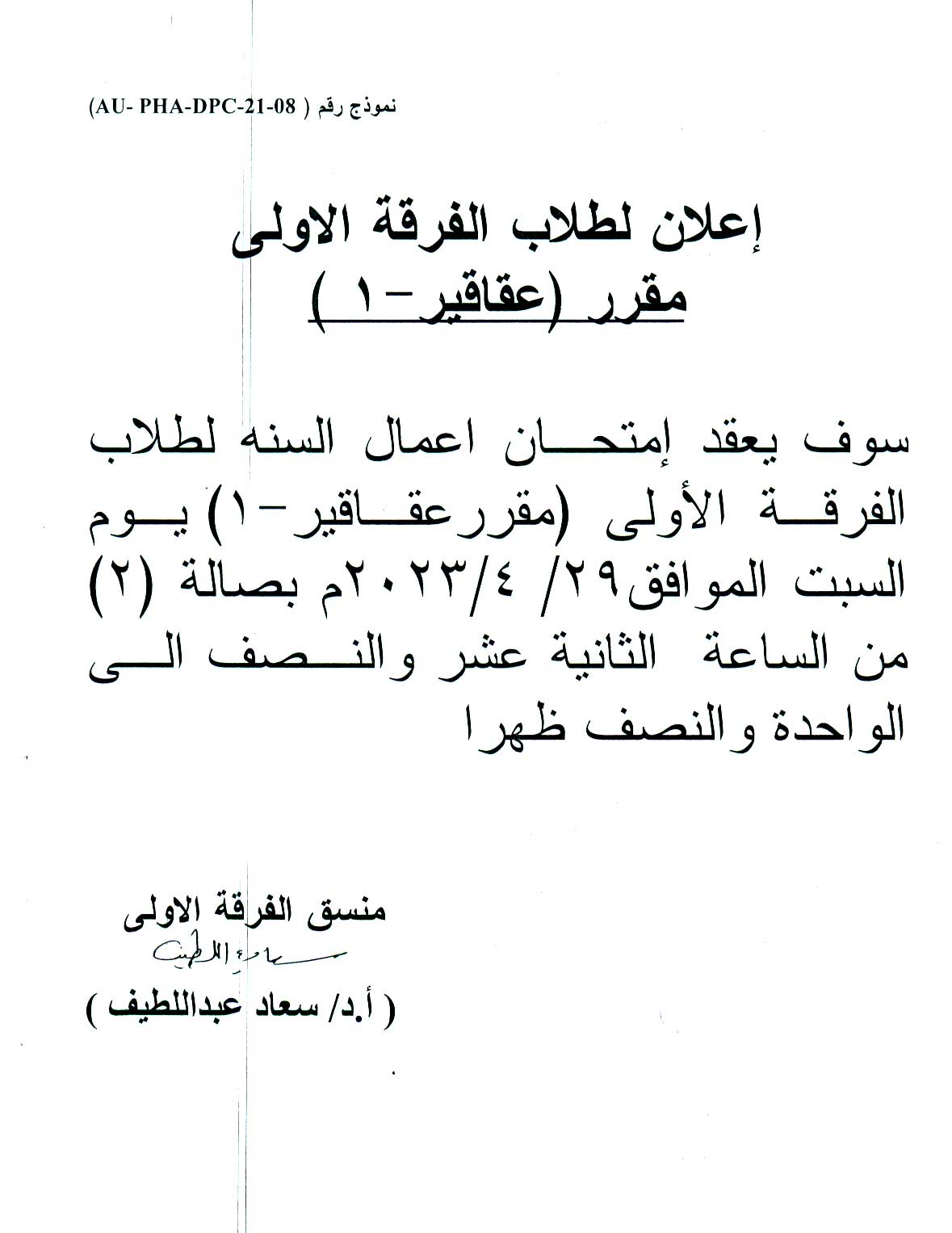
The Department of Pharmaceutical Organic Chemistry announces the opening of grievances in midterm and practical exam for the Pharmaceutical Organic Chemistry Course -1 for students (first level Pharm D, semester -1 and Alahlia)

A novel polymer integrated Vertically-Oriented reduced graphene oxide sheets supported over palladium nanoparticles based sensor for Real-Time monitoring of Sorafenib; a Multi-kinase inhibitor in complex biological samples

Research Abstract

Herein, we report a facile preparation of vertically oriented reduced graphene oxide sheets (VrGO) supported on
a palladium nanoparticles-decorated graphite electrode. The electrode is fabricated by a simple two electrodeposition steps method. The designed electrode BEFD&VrGO@PdNPs successfully provides an open structure of rGO layer exposing palladium nanoparticles (PdNPs) to the solution, leading to formation of a uniform distributed vertically oriented rGO (VrGO) due to the high surface area of palladium-decorated PGE substrate. The fabricated electrode was successfully used for determination of sorafenib (SOR); an anti-cancer drug. Using square wave voltammetric method (SWV), the fabricated electrochemical sensor succeeds to monitor the electro-oxidation of SOR with a low limit of detection of 9.9 x10? 10 M and ultrahigh sensitivity of 237 μA nM? 1cm? 2 over a linear concentration range of 3–120 10? 9 M with an excellent correlation coefficient. Additionally, the performance of the modified electrode has been successfully tested by real-time monitoring of SOR in pharmaceutical tablets, human plasma, and human urine without any interference from complex matrices.

Research Authors
Marwa R. El-Zahry , Marwa F. B. Ali
Research Date
Research Journal
Microchemical Journal
Research Publisher
Elsevier
Research Vol
180
Research Website
https://doi.org/10.1016/j.microc.2022.107549
Research Year
2022
Subscribe to