


Training course for veterinarians at New Valley University
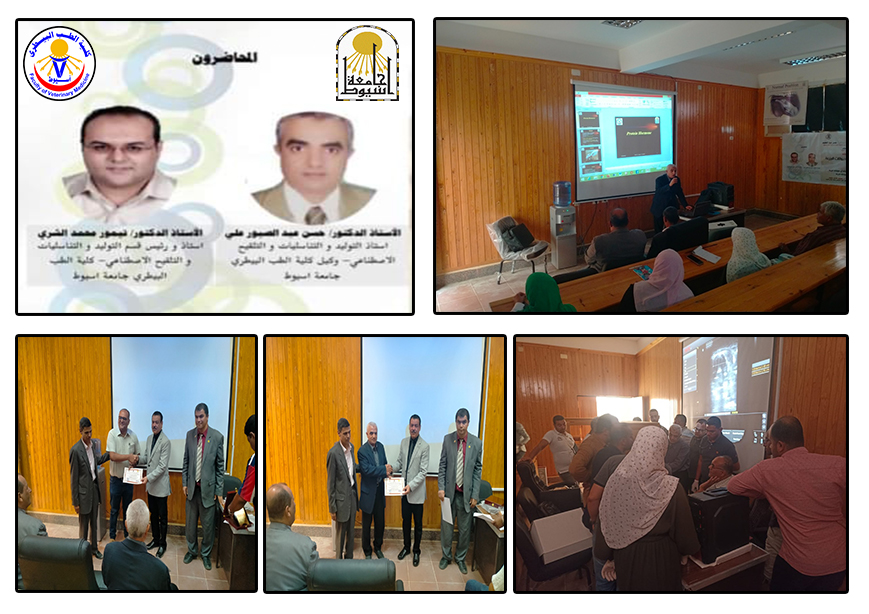
workshope Cell Press Journals Workshop Awareness
Seroprevalence of Besnoitia besnoiti in Assiut Governorate, Egypt
Research Abstract
Background: Bovine besnoitiosis is a widespread disease caused by Besnoitia besnoiti with significant economic
losses in cattle production. There is a lack of knowledge about it in Egypt.
Aim: This study was conducted to detect the seroprevalence of B. besnoiti in cattle and to find out the presence of the
disease and the most important symptoms of besnoitiosis in cattle in Assiut Governorate, Egypt.
Methods: A total of 190 cattle from Assiut city and its different rural centers were examined clinically and serologically
for the presence of B. besnoiti. The serological examination was carried out by using the indirect enzyme-linked
immunosorbent assay (ELISA) kit in serum (ID.Vet Innovative Diagnostics Louis Pasteur. Grabeis, France). The
results were analyzed statistically using the chi-square test to assess the association between seroprevalence and
different parameters (age, sex, season, housing, and health status).
Result: Thirteen cattle were seropositive for B. besnoiti by ELISA and showed symptoms of besnoitiosis. Acute
symptoms included fever, tachycardia, edematous swellings of intermandibular space and limbs with polyarthritis,
diarrhea, ruminal atony, and enlarged lymph nodes. The chronic symptoms included cough, mastitis, exophthalmia,
cysts on the sclera and conjunctiva, nodules in the skin, and alopecia associated with tick infestation. The overall
seroprevalence of B. besnoiti was 22.1%. Regarding sex, the seroprevalence was higher for females 34.6% than for
males 6.97%. While, according to age susceptibility, the seroprevalence was highest (50.9%) with age ≥5 years,
followed by age >1 to <5 years (14.6%), and only one animal of age ≤1 year was recorded at 2.2%. Concerning seasonal
variations, the seroprevalence was highest in spring 42.9%, followed by autumn 29.3%, winter 13.6%, and summer
7.5%. Whereas, according to the housing system, it was 60% and 8.6% in farm and household rearing, respectively.
Depending on the health status, the seroprevalence was 21.6% of clinically healthy and 23.2% of clinically diseased
cattle.
Conclusion: The existence of B. besnoiti antibodies has been demonstrated in clinical and subclinical infected cattle
in Assiut Governorate, Egypt. The ELISA test is considered to be a good diagnostic method for detecting infection.
Furthermore, additional studies are essential to minimize and prevent the spread of infection.
Research Date
Research Department
Research Journal
Open Veterinary Journal
Research Member
Research Pages
754–761
Research Publisher
Huda Mohammed Kuraa
Research Vol
12
Research Year
2022
Predicting the testicular function in non-obstructive azoospermia via targeted gene panel
Research Abstract
Men with non-obstructive azoospermia constitute a challenging subgroup of male infertility patients in whom a genetic cause of defective spermatogenesis may be a contributing factor. The aim of this prospective observational cohort study was to determine whether assessment of meiotic nuclear division 1 (MND1) and glyc‑ eraldehyde-3-phosphate dehydrogenase (GAPDH) gene expression (MND1/GAPDH) in testicular tissue could be a prognostic indicator for sperm retrieval and ICSI outcome in patients with non-obstructive azoospermia. The study participants underwent clinical evaluation, conventional semen analysis, serum follicular stimulating hormone (FSH), testosterone assay, scrotal ultrasound examination, microsurgical testicular sperm extraction (mTESE), and assess‑ ment of MND1/GAPDH gene expression levels in testicular tissue via quantitative polymerase chain reaction (qPCR) techniques
Research Date
Research Department
Research Member
Predicting the testicular function in non-obstructive azoospermia via targeted gene panel
Research Abstract
Men with non-obstructive azoospermia constitute a challenging subgroup of male infertility patients in whom a genetic cause of defective spermatogenesis may be a contributing factor. The aim of this prospective observational cohort study was to determine whether assessment of meiotic nuclear division 1 (MND1) and glyc‑ eraldehyde-3-phosphate dehydrogenase (GAPDH) gene expression (MND1/GAPDH) in testicular tissue could be a prognostic indicator for sperm retrieval and ICSI outcome in patients with non-obstructive azoospermia. The study participants underwent clinical evaluation, conventional semen analysis, serum follicular stimulating hormone (FSH), testosterone assay, scrotal ultrasound examination, microsurgical testicular sperm extraction (mTESE), and assess‑ ment of MND1/GAPDH gene expression levels in testicular tissue via quantitative polymerase chain reaction (qPCR) techniques.
Research Date
Research Department
Deciphering Alternaria metabolic responses in microbial confrontation via an integrated mass spectrometric targeted and non-targeted strategy
Research Abstract
Microbial confrontation is ubiquitously present in nature, such as mycoparasitism, competition and antibiosis between biocontrol agents and microbial pathogens. However, the internal metabolic responses of fungal pathogens under microbial interaction scenario have been scarcely investigated. In this study, we set up an integrated mycotoxin analysis and non-targeted metabolomics workflow to decipher metabolic changes of Alternaria pathogens when confronted with selected Trichoderma strains, as well as mycotoxin metabolization in the Trichoderma spp. Results demonstrated that Trichoderma spp. significantly influenced mycotoxin production and whole metabolome of Alternaria pathogens when in cocultivation, and one Trichoderma strain could metabolize alternariol into its hydroxylated form. These differential metabolites revealed fungal physiological alternations in various confrontation conditions. In all, a MS-based strategy was proposed to investigate microbial metabolic profiles under fungal/fungal and fungal/mycotoxin cocultivation, and this generic methodology would be significant for understanding the occurrence and change of food contaminants in microbial interactions.
Research Date
Research Department
Research Journal
Food Chemistry
Research Member
Research Publisher
Science Direct
Research Rank
Q1
Research Website
https://doi.org/10.1016/j.foodchem.2022.134694
Research Year
2022
Novel one-point calibration strategy for high-throughput quantitation of microcystins in freshwater using LC-MS/MS
Research Abstract
Precise quantification of microcystins (MCs) in freshwater is crucial for environmental monitoring and human health. However, the preparation of traditional multi-sample external calibration curve (MSCC) is time consuming and prone to error. Here, a novel one-point calibration strategy including one sample multi-point calibration curve (OSCC) and in sample calibration curve (ISCC) is proposed for the quantitation of eight MCs in freshwater lakes using liquid chromatography tandem mass spectrometry (LC-MS/MS). The multiple isotopologue reaction monitoring (MIRM) of MCs and its 15N-labelled internal standards were used for OSCC and ISCC, respectively. The isotopic abundance of each MIRM channel could be calculated and measured accurately. Additionally, this strategy was comprehensively validated and showed good performance in selectivity, sensitivity, accuracy and precision as the traditional MSCC. Interestingly, OSCC could realize sample dilution by monitoring the less abundant MIRM transitions, while ISCC remove blank matrixes and generate calibration curve in each study samples. Furthermore, the proposed methodology was successfully applied to analyze several freshwater lake samples contaminated by MCs. Considering the advantages of excluding the MSCC preparation, simplified workflows and improved throughput, OSCC and ISCC will be favored for MCs monitoring and as an emerging approach in environmental pollutant control and prevention.
Research Date
Research Department
Research Journal
Science of The Total Environment
Research Member
Research Pages
159345
Research Publisher
Science Direct
Research Rank
Q1
Research Website
https://doi.org/10.1016/j.scitotenv.2022.159345
Research Year
2022
Molecular Typing of Rotaviruses in Diarrheic Neonatal Calves
Research Abstract
Rotavirus ribonucleic acid was extracted from 16 fecal samples of the serologically positive diarrheic calves
using Latex agglutination test (LAT) and Immunochrmatographic assay (ICA). The extracted RNA was submitted to Reverse transcriptase polymerase chain reaction (RT-PCR) to detect VP7 and VP4 genes and the
positive samples were 100% (16/16) and 81.25% (13/16), respectively. The amplified products were subjected
to G and P-genotyping by semi-nested multiplex PCR using G6, G8 and G10 genotyping and P1, P5 and
P11 genotyping primers, respectively. G6 was detected in 10 (62.50%) of 16 samples and G10 was diagnosed
in 5 (31.25%) of 16 samples and one (6.25%) sample did not react with any G primer used. P5 was detected
in 9 (56.25%) of 16 samples, P11 was diagnosed in 3 (18.75%) of 16 samples, mixed infection with P5+P11
was observed in 1 (6.25%) of 16 samples and 3 (18.75%) samples did not react with any P primer used. G
and P genotypes combination revealed that G6P5 was in 50% (8/16), G10P11 in 12.50% (2/16), G10P5 in
6.25% (1/16), G6P11 in 6.25% (1/16), G10 (P5+P11) in 6.25% (1/16), G6P? in 6.25% (1/16), G10P? in 6.25%
(1/16), and G?P? in 6.25% (1/16). These results suggest that the detected genotypes can be used as dominant
strains for the formulation of an appropriate vaccine against BRV in the Assiut Governorate. In conclusion, RTPCR and Semi-nested multiplex PCR can be used as rapid and confirmatory tests for the detection of nucleic acid and genotypes of Rotavirus, G and P genotypes combination in the present study revealed that G6P5, G6P11, G10P5, and G10P11 were circulating genotypes in bovine population in Assiut governorate. G6P5 strain was the most common of all strains diagnosed in other fecal samples. The presence of various combinations of G
and P genotypes among field isolates of BRV suggests that genetic reassortment frequently occurred between
viral strains with genes encoding different G and P genotypes. Finally, the presence of different genotypes of
Rotaviruses emphasize their simultaneous monitoring of animals for the development and optimization of
Rotavirus vaccines.
Research Date
Research Department
Research File
Rotavirus-paper3.pdf
(526.92 KB)
Research Journal
Journal of Advanced Veterinary Research
Research Member
Research Pages
475-479
Research Vol
12
Research Year
2022
Field Trials to Evaluate Five Fasciolicides against Natural Liver Fluke Infection in Cattle and Sheep in Egypt
Research Abstract
| Fasciola hepatica, a parasitic trematode, affects cattle and many mammals, including humans. The present study was carried out in Assuit governate, Egypt, over one year from 2018 to 2019, to assess the prevalence of fascioliasis in cattle and sheep. We clinically examined 835 animals (303 cattle and 532 sheep) from different private farms. We performed the fecal examination through a direct smear and did a sedimentation technique. The results demonstrated that fascioliasis was present in 20.8% of cattle and 17.1% of sheep, and the overall prevalence was 18.4%. After assessing associated risk factors, there was a significant association only between sex and infection rate (P<0.05). Other assessed risk factors (species, water, and feeding source) did not affect the infection level (P>0.05). By calculating the odds ratio, the sex was considered as a risk factor as odds ratio (OR) =5.879, 95% confidence interval (CI) 3.699-9.449. Categorized the animals into six groups. We treated each group with either albendazole, triclabendazole, superzole, clorsulon, or rafoxanide. NC group received no treatment. Animals were subjected to clinical and laboratory examination after the second dose's third and sixth week. The recovery percentage in animals treated with albendazole, triclabendazole, and Superzole was 84%, while 84% and 96% in animals treated with clorsulon and rafoxanide, respectively. All the drugs were effective (P<0.05); nonetheless, rafoxanide demonstrated the best recovery percentage (area under curve =0.605 in cattle and =0.615 in sheep). |
Research Date
Research Department
Research File
Fasciola-paper-2023_0.pdf
(291.7 KB)
Research Journal
International Journal of Veterinary Science
Research Member
Research Pages
76-81
Research Vol
12
Research Website
https://doi.org/10.47278/journal.ijvs/2022.160
Research Year
2022
Acaricidal Properties of Four Neem Seed Extracts (Azadirachta indica) on the Camel Tick Hyalomma dromedarii (Acari: Ixodidae)
Research Abstract
Tick infestation remains one of the major health problems that affect the productivity and comfort of camels. The control of ticks mainly relies on using chemical acaracides. Limited information is available on the potential benefits and activity of various neem extracts on Hyalomma ticks. The present study investigated the acaricidal activity of neem seed extracts at different concentrations against developmental stages of the camel tick Hyalomma dromedarii in comparison to Butox and diazinon. The acaricidal activity of three extracts, namely, hexane extract (HE), methyl chloride extract (MCE), and methanol extract (ME), of neem seeds (Azadirachta indica) were tested at varying concentrations of 5, 10, 15, and 20% on engorged H. dromedarii female ticks at days 1, 3, 5, 7, 12, 16, 20, 28, 37, and 43 after treatment (DPT). Interestingly, results of applying different neem seed extracts to engorged H. dromedarii female ticks showed that the most effective extract was hexane at concentration 20%, causing 100% mortality at 1st day post-application, while methanol extract at 20% and dichloromethane extract at 20% caused the death of all ticks at 28th day posttreatment as compared to Butox® 5.0 and Diazinon-60, which resulted in mortality of all ticks at 3 and 5 DPT, respectively. In addition, no mortality was reported with the application of aqueous extract (AE), which served as the control group. Furthermore, the neem hexane extract exhibited high efficacy against reproductive performance of female ticks, whereas no fertility or oviposition was reported at all of their concentrations. Additionally, no hatchability occurred using all neem extracts, except the aqueous extract, which showing no effect. In the present study, larvae responded more rapidly to the plant extracts, whereas mortality of all larvae was recorded at 24 h after treatment with 5% hexane. Taken together, this study pointed out that the acaricidal effect of hexane extract of neem seeds was more effective and could be economically used for controlling H. dromedarii ticks.
Research Date
Research Department
Research File
fvets-09-946702.pdf
(265.89 KB)
Research Journal
Frontiers in Veterinary Science
Research Member