

Congratulation

أطيب الأمنيات بالتوفيق للطالبة منار محمود صابر ضمن فريق جامعة أسيوط للكاريكاتير
news category
student
أطيب الأمنيات بالتوفيق للطالبة منار محمود صابر ضمن فريق جامعة أسيوط للكاريكاتير
The main bioactive constituents in the standardized Ginkgo biloba leaf extract (EGb 761) are the terpene lactones and flavonoid glycosides. EGb 761’s antioxidant and anti-inflammatory properties have previously been demonstrated. Indomethacin-induced gastric ulcers have a multifactorial etiology and represent a major restriction to its therapeutic utility. The underlying ulcerogenic process involves oxidative and inflammatory biomolecular insults. This study was performed to explore the curative and preventative benefits of EGb 761 in experimentally-induced ulcers. To develop gastric ulcers in mice, indomethacin (40 mg/kg) was administered orally. EGb 761 (200 mg/kg) was given by gavage for 7 days before (preventative) and after (therapeutic) indomethacin administration. The histological alterations and macroscopic mucosal lesions were assessed. In gastric tissue homogenates, malondialdehyde (MDA), reduced glutathione (GSH), nitric oxide (NO), and inflammatory cytokines were measured. The expressions of cyclooxygenase-2 (COX-2), cytokines, and proliferating cell nuclear antigen (PCNA) in the stomach mucosa were also investigated. The ulcer index, histological alterations, gastric oxidants, and inflammatory biomarkers were all significantly increased by indomethacin. In stomach specimens, it increased COX-2 and PCNA expression. EGb 761 treatments, both prophylactic and therapeutic, resulted in significant reductions in ulcer lesions, nitrosative and oxidative damage, and inflammatory markers, along with the lowering of COX-2 and PCNA expressions. Furthermore, in the fight against stomach ulcers, EGb 761 treatment was found to be more efficient than prevention.

A unique sperm behavior was observed in Egyptian chickens. Sperm showed a tendency to agglutinate forming motile thread-like bundles. Sperm agglutination behavior, kinematics, and some morphometric measures were studied in relation to sperm competition and fertility duration in Sharkasi and Dandarawi chickens. Sperm tendency to agglutinate was assessed by examining sperm morphology using scanning electron microscopy, Acridine orange-stained semen smears using fluorescence microscopy, and recording videos of sperm under phase contrast microscope. Sperm velocity and morphometric measures were evaluated using image-J software. To assess sperm competition, Sharkasi and Dandarawi hens were artificially inseminated by semen pools possessing equal number of Sharaksi and Dandarawi sperm. Artificial insemination was repeated ten times. The eggs obtained were incubated, and the hatchlings were discriminated as descending from Sharkasi or Dandarawi fathers according to their phenotype. To assess the fertility duration, Sharkasi and Dandarawi hens were inseminated by semen collected from roosters of the same strain. Eggs were collected for a period of 28 days post-insemination and incubated. Sharkasi spermatozoa showed higher tendency to agglutinate forming longer and thicker motile bundles. No significant differences were observed in sperm curvilinear and straight line velocity and in sperm morphometric measures between Sharkasi and Dandarawi chickens. Sharkasi roosters fathered 81.6% and 67.7% of the hatchlings produced by Sharkasi and Dandarawi mothers, respectively. The fertility period in Sharkasi and Dandarawi was 22 and 14 days, respectively. We suggest that the differences seen in sperm competitiveness and fertility duration can be attributed to sperm agglutination behavior.
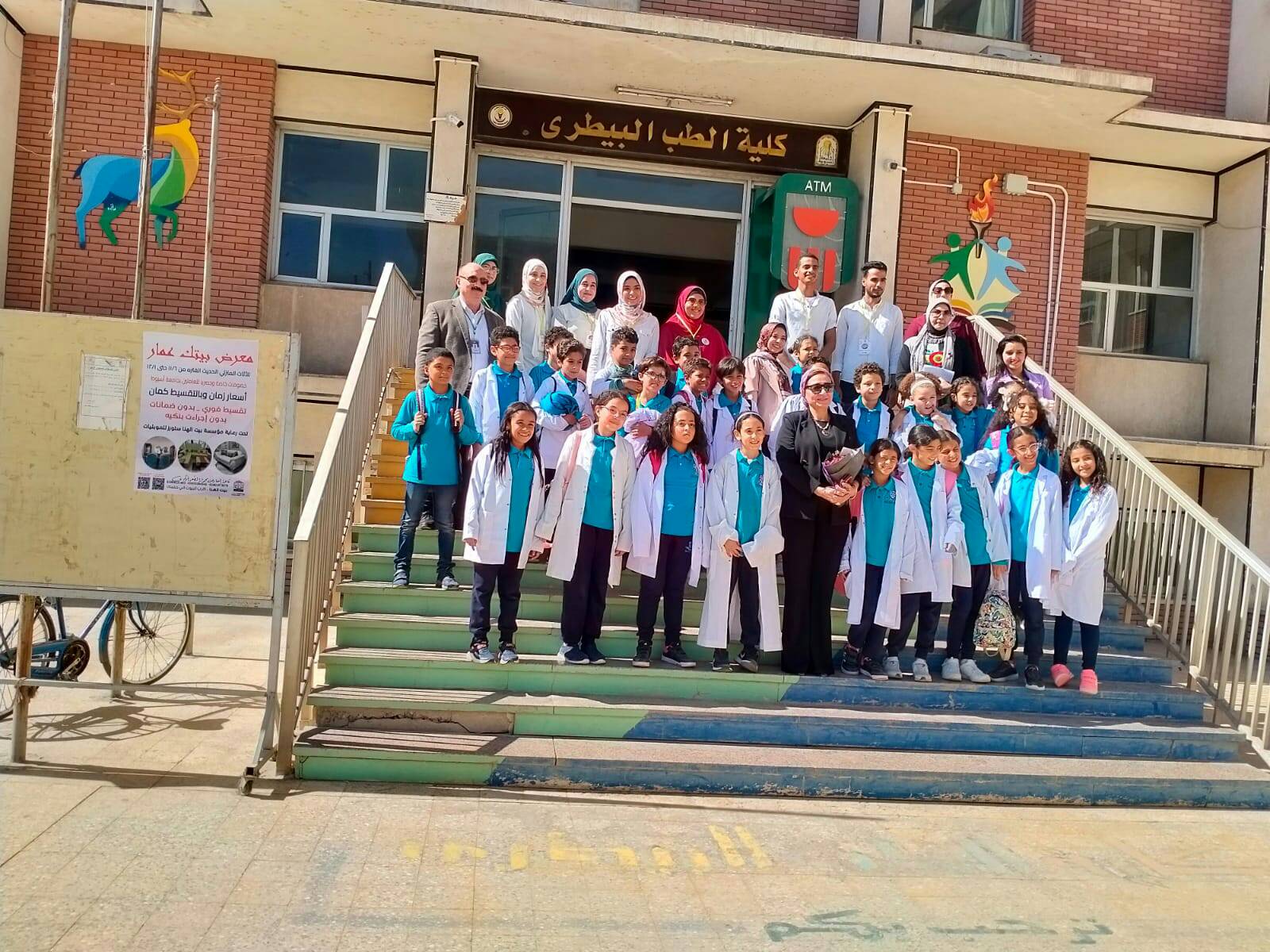
فى استضافة كريمة للأستاذة الدكتورة/ مديحه حسنى درويش والأستاذ الدكتور/ مؤمن عبدالعظيم محمد وبمشاركة لجنة الأسر الطلابية والجمعية العلمية لإيواء وإراحة الحيوان AWA كانت الزيارة العلمية لمدرسة سمارت سيتى الدولية بأسيوط لتلاميذ الصف الرابع الابتدائى والذى تم فيه زيارة لقسم التشريح ومتاحف التشريح المتنوعة تحت إشراف وأستقبال كريم من العالم الجليل الأستاذ الدكتور / محمد أحمد علم الدين والتعرف على جميع المتاحف للتشريح والأجنة
وكذلك ممارسة بعض الألعاب الترفيهية بملعب الكلية
ثم التوجه إلى المستشفى البيطرى واستقبال الاستاذ الدكتور/ محمد سميكة مدير المستشفى للزيارة وتجولهم بالمستشفى والتعرف على بعض الأقسام بها والحيوانات والأسماك بأنواعها
The present study describes the morphological characteristics of the camel heart Ossa cordis, and os aorta using computed tomography soft tissue window (CT) alongside 3D render volume reconstructions and light microscopy. The current study techniques demonstrated the Ossa cordis and os aorta in the cardiac window with more precision than the black and white (ghost), and angiography images. Transverse and sagittal CT images additionally demonstrated the presence of Ossa cordis and os aorta. This study is the first to record two small Ossa cordis sinistrum and one os aorta in the camel heart, in addition to the more commonly observed singular, large, os cordis dextrum. The os cordis dextrum was always located in the upper part of the interventricular septum, near to its junction with the atrium, forming an elongated rectangular shape when observed transversally. The wider cranial part was composed from bone, whereas the caudal aspect was narrow and contained both bone and cartilage. Light microscopy identified that the os cordis dextrum consisted of trabecular bone, marrow spaces, and hyaline cartilage. Two Ossa cordis sinistrum were detected on the left side of the heart, one in the right fibrous ring and another in the interventricular septum, microscopy showed that both contained only trabecular bone with osteocytes, osteoblasts, and osteoclasts. At the level of ascending aorta, there was also trabecular bone containing osteocytes, an os aorta.
Bacteria of the genus Pseudomonas are pathogens in both humans and animals. The most prevalent nosocomial pathogen is P. aeruginosa, particularly strains with elevated antibiotic resistance. In this study, a total of eighteen previously identified Pseudomonas species strains, were isolated from chicken. These strains were screened for biofilm formation and antibiotic resistance. In addition, we evaluated clove oil's effectiveness against Pseudomonas isolates as an antibiofilm agent. The results showed that Pseudomonas species isolates were resistant to most antibiotics tested, particularly those from the β-lactamase family. A significant correlation (p < 0.05) between the development of multidrug-resistant isolates and biofilms is too informal. After amplifying the AmpC-plasmid-mediated genes (blaCMY, blaMIR, DHA, and FOX) and biofilm-related genes (psld, rhlA, and pelA) in most of our isolates, PCR confirmed this relationship. Clove oil has a potent antibiofilm effect against Pseudomonas isolates, and may provide a treatment for bacteria that form biofilms and are resistant to antimicrobials.
This study explored the growth efficiency and the intracellular pathways by which Cnicus benedictus extract (CBE) acts. It investigated the antioxidant effects and efficacy of CBE as a fish supplement in attenuation of Aeromonas hydrophila in Oreochromis niloticus fish. Mono-sex Nile tilapia fish (n = 225) were randomly allocated to five groups in triplicate aquaria (n = 3 tanks per group, 15 fish per tank, with 120 L of water per tank) with a daily water exchange rate of 20%. After adaption for 2 weeks and body weight measuring, the experimental groups were fed isonitrogenous and isocaloric diets with different dosages of the ethanolic extract of C. benedictus for 10 weeks. The five groups were identified as the control group (CBE0.0), which was fed on the basal diet, while the second (CBE0.1), the third (CBE0.2), the fourth (CBE0.4), and the fifth (CBE0.6) groups were fed the basal diet supplemented with 0.1%, 0.2%, 0.4%, and 0.6% of C. benedictus extract, respectively. After the 10-week feeding trial was completed, the fish were inoculated with the PCR-identified pathogenic A. hydrophila in a challenge trial which lasted 15 days. A. hydrophila, one of the septicemic bacteria, causes severe economic losses, high mortality rates, and hemorrhages in Nile tilapia and other cultured freshwater fishes worldwide. The CBE was found to significantly increase the body mass, weight gain, and the specific growth rate, as well as the protein efficiency ratio of the fish. Increased survival percentage, accompanied by post challenge lymphocytosis with decreased liver enzyme levels, increased total protein, and improved kidney function markers were also seen. Additionally, CBE supplementation showed significant increases in phagocytic activity, phagocytic index, and lysosomal activity post challenge, accompanied by increases in antioxidant activity and the mRNA expression of cytokines genes hsp70 and tlr7 mRNA. The desirable effects of CBE treatment were confirmed by a histopathological examination of the height of intestinal villi and enterocytes lining the middle intestine and increases in the size of liver cells. We conclude that CBE increases the growth performance and modulates the antioxidant, inflammatory, stress, and immune-related genes in Nile tilapia. Moreover, the dietary inclusion of 0.42–0.47% CBE showed a better protective effect with the A. hydrophila challenge
Although milk is a significant nutrient source for humans, it can be associated with various bacterial infections. Acinetobacter species can be found in milk due to residual water in milking machines, milk pipelines or coolers, the inadequate cleaning of dairy equipment, tainted udders and teats, the improper transport and storage of milk and the inadequate cleaning of dairy equipment, causing diseases. Most members of the genus Acinetobacter are opportunistic commensals with limited virulence and are clinically insignificant. However, Acinetobacter infections have recently increased in severity due to the frequent use of mechanical breathing devices, venous catheters and antibiotics, and they pose significant public health concerns. Acinetobacter baumannii (A. baumannii) is an opportunistic pathogen that causes various nosocomial infections. Studies using animal models and clinical data demonstrated that A. baumannii is a highly virulent species. It is a significant pathogen, especially due to the emergence of multidrug-resistant (MDR) strains and their association with many nosocomial infections and community-acquired infections.
Acinetobacter baumannii (A. baumannii) is an opportunistic pathogen associated with nosocomial infections. In this study, 100 raw milk samples were collected from Qena, Egypt, and subjected to conventional and molecular assays to determine the presence of A. baumannii and investigate their antimicrobial resistance and biofilm formation. Our findings revealed that, among the 100 samples, Acinetobacter spp. were found in 13 samples based on CHROM agar results. We further characterized them using rpoB and 16S-23SrRNA sequencing and gyrB multiplex PCR analysis and confirmed that 9 out of the 13 Acinetobacter spp. isolates were A. baumannii and 4 were other species. The A. baumannii isolates were resistant to β-lactam drugs, including cefotaxime (44%), ampicillin-sulbactam and levofloxacin (33.3% for each), imipenem, meropenem and aztreonam (22.2% for each). We observed different antimicrobial resistance patterns, with a multi-antibiotic resistant (MAR) index ranging from 0.2 to 0.3. According to the PCR results, blaOXA-51 and blaOXA-23 genes were amplified in 100% and 55.5% of the A. baumannii isolates, respectively, while the blaOXA-58 gene was not amplified. Furthermore, the metallo-β-lactamases (MBL) genes blaIMP and blaNDM were found in 11.1% and 22.2% of isolates, respectively, while blaVIM was not amplified. Additionally, eight A. baumannii isolates (88.8%) produced black-colored colonies on Congo red agar, demonstrating their biofilm production capacity. These results showed that, besides other foodborne pathogens, raw milk should also be examined for A. baumannii, which could be a public health concern.
