Effect of feeding graded levels of palm kernel meal with exogenous enzymes on performance, nutrient digestibility and carcass traits of growing rabbits
|
|
Camels are well known for their high blood glucose content and marked glucose tolerance. In order to understand the glycemic control in camels the role of insulin receptor was investigated. The camel insulin receptor sequence, structure model, and domain content were compared with those of humans and other vertebrates. The results indicated 100% identity rate in old world camels, 99.7% identity rate with new world camels and 96% with humans. There was a high identity rate among insulin receptors in domestic animals (82.3–100%). Despite the conserved features of the insulin 1 binding site (the main functional insulin molecules), the second insulinbinding site in camel insulin receptors showed interesting differences. Most of the sequence differences between human and camel insulin receptors were concentrated in the insertion domains (ID), particularly the ID-β loop. ID-α’~αCT’~ID-β, which is important for insulin receptor signal transduction, showed a greater positive electrostatic potential in camels. Such differences might be associated with the noticed hyperglycemia and insulin resistance in camels by affecting the movement of the α-CT helix which lies between the IDs and significantly affects the main insulin molecules, lowering the affinity at insulin site 1 and by affecting the transmission of the insulin signal to the intracellular domain
e evaluated the fects of different levels of dietary silver nanoparticle (AgNP) powder on performance, intestinal microflora, carcass traits and blood parameters of broiler chickens. Three hundred seven-day-old Ross broiler chicks were randomly divided into five groups, each group replicated three times with 20 birds per replication. Chickens were fed the basal diet with 2.5, 5, 10 and 20 mg AgNPs per kg feed. Dietary inclusion of AgNPs improved the final body weight, cumulative weight gain and feed conversion ratio. The best broiler performance, carcass traits, and relative organ weights were observed in the group supplemented with 2.5 ppm AgNPs. Increasing the AgNP dose resulted in a significant decrease in the caecal lactose positive and enterococci bacteria populations, while lactobacilli counts were numerically increased. The silver residues in the breast and thigh muscle significantly increased (p < .05) in a dose-dependent manner. Dietary inclusion of AgNPs induced dose-dependent lesions in liver, kidney, spleen and duodenum tissues involving degeneration, necrosis, mononuclear infiltration and focal aggregation of inflammatory cells. In conclusion, despite its potential positive impacts on growth performance, carcass traits and caecal microbial population diversity at a dose of 2.5 ppm, dietary inclusion of AgNPs had the following negative effects on broilers: 1) silver residues in breast and thigh muscle, which may result in AgNPs transmission to consumers, and 2) cytotoxicity in intestinal, liver, spleen and kidney cells in a dose-dependent manner. Therefore, we suggest the use of lower doses of AgNPs (< 2.5 ppm diet) in poultry production in the future studies
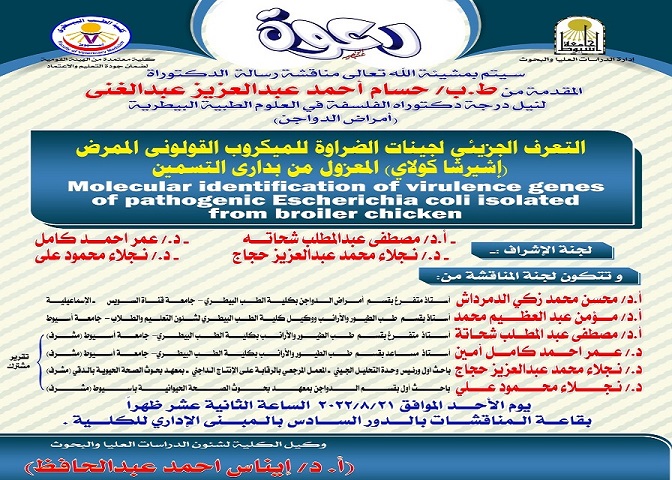
The current work aimed to evaluate the effect of feeding organic acids (OA) on growth performance, carcass traits, meat quality, blood parameters and immune response of broilers fed with a low protein diet (LPD). A total number of 68 broiler chicks (one-day-old) were randomly distributed into 4 equal groups each of 17 chicks. The first group was fed the basal diet (100% NRC crude protein (CP)) free from OA and considered as a control (T1). The other three groups (T2, T3 and T4) were fed on diets with different protein levels (95% NRC, 90% NRC & 85% NRC, respectively) and supplemented with OA at a level of 0.45%. The results showed that body weight and gain during starter phase (days 1-21) were not significantly (P = 0.7, P = 0.13, respectively) influenced by the supplementation of OA. However, during finisher phase (days 22-42) body weight and gain were significantly decreased (P < 0.05) in OA groups (-18% and -24%, respectively). A significant (P < 0.05) reduction in abdominal fat content and the meat cholesterol, triglyceride, and fat mass of broiler breast and thigh meat, while protein content significantly (P < 0.05) increased in all OA supplemented groups. In conclusion, adding OA improved immune response through increased serum globulin, and an increase in bursa relative weight of broilers. Moreover, the addition of OA to broiler fed LPD has no effect on growth parameters and carcass traits but improves broiler immunity and produces healthy meat to consumers.
The current study was conducted to find out the influence of feeding broilers on low protein diets supplemented with prebiotic. Growth performance, carcass traits, muscle cholesterol, triglycerides, chemical composition, blood parameters and immune response of broilers were evaluated. A total number of 68 birds’ one day old broiler chicks (Ross 308) randomly distributed into 4 equal groups each of 17 chicks. The first group (control) was fed the basal (100%NRC CP) diet free from prebiotic. The other three groups (T2, T3 and T4) were fed on low protein diets (95, 90 & 85% of NRC requirements, respectively) and supplemented with prebiotic at level of 0.1%. The results showed that, birds in the second group had significantly higher live body weight, feed conversion, and dressing percentages. Supplementation of prebiotic had no significant effects on relative weight of liver, gizzard and immune organs. Reduction in the relative weight of abdominal fat pad in all prebiotic treated groups. There were significant reduction (P<0.05) in the meat cholesterol, triglycerides and fat mass of broiler breast and thigh, while protein content was significantly (P<0.05) increased in all prebiotic treated groups. A numerical increased in antibody titre in birds in the second and third groups. Birds in the second group had the best economic feed efficiency. It could be concluded that adding prebiotic to broiler diets low in protein (95, 90 and 85% of NRC) has a beneficial effect on growth parameters, carcass traits, economic value in addition to healthy and nutritious poultry products for consumers.
Bovine subclinical mastitis was one of the most important health problems facing dairy industry, its impact exceeded the economic aspects and extended to potential negative effects on human health. The current study aimed to determine the prevalence of E. coli as an important mastitic pathogen and identify some of its most important virulence gene as well as their antimicrobial resistance profile. In the present study E. coli was isolated and biochemically identified whereas out of 100 subclinically mastitic milk samples was nine samples were positive for E. coli with 9% prevalence rate. Serotyping of these isolates declared that 3 isolates were serotype O26:H11, 2 isolates in serotype O91:H21 and 1 isolate in each of serotypes O55:H7, O128:H2, O146:H21 and O124. Antimicrobial resistance profile of the obtained isolates showing that all the isolates were 100% resistant to both erythromycin and streptomycin, while 88.9% (8/9) were sensitive to gentamicin. The presence of 3 important virulence factors including shiga toxin1(stx1), shiga toxin 2 (stx2) and intimin (eae) genes, among the obtained isolates was reported using PCR. Molecular investigation revealing that 2 isolates contain all studied virulence genes (stx1, stx2 and eae), 3 isolates contain (stx1 and stx2), while stx1 was detected solely in 2 isolates, also 1 isolate contain only stx2 and lastly 1 isolate was negative for any of the studied virulence factors. In a conclusion, there was a 9% prevalence rate of E. coli in subclinically mastitic milk samples in the current study, indicating its importance as a mastitic pathogen. The shiga toxin genes (stx1 & stx2) are widely distributed among E. coli isolates, while the intimin (eae) gene is less prevalent in comparison to shiga toxin genes. Also the recorded high multidrug resistance rate among the isolates posing threat to human health though entrance of these strains into the human being food chain whereas the isolated E. coli strains had the highest resistance to erythromycin and Streptomycin (100%), followed by Clindamycin (77.8%), Nalidixic acid (66.7%), and Gentamicin (11.1%) was the lowest.
Background and Aim: Measuring blood progesterone (P4) concentration has become an essential diagnostic tool in small animal reproductive medicine. Methods enabling precise and rapid on-site measurements are in high demand, especially for the optimization of breeding management in bitches. This study aimed to compare two commercial on-site methods (Speed™ P4, Virbac [M1] and mini VIDAS®, bioMérieux [M2]) and a well-established radioimmunoassay (RIA), which was used as a reference method. Materials and Methods: Comparative measurements were performed on 52 blood serum samples collected from 45 clinically healthy bitches of different breeds. The dogs had been presented to determine the estrus cycle stage and predict the time of ovulation. Each sample was divided into three aliquots. In aliquot 1, P4 was measured immediately applying M2. Aliquots 2 and 3 were stored at −20°C until analysis was performed using RIA and M1. The consistency of the three methods was investigated by pairwise linear regression analyses. Results: In RIA, the P4 concentrations ranged between 1.1 and 25.4 ng/mL. Regression analyses revealed highly significant (p<0.0001) positive correlations between the three methods applied (M1 vs. RIA: R=0.94; M2 vs. RIA: R=0.98; and M1 vs. M2: R=0.91). Conclusion: The results show that the two commercial on-site methods tested exhibit approximately equal, high consistency with the radioimmunological reference method and can, therefore, be used beneficially in a clinical setting. However, biological interpretation of data must be performed in a method-specific manner0
This study aimed to investigate the effect of oral supplementation of rumen-protected
L-arginine on semen quality, testes, and accessory genital glands biometry in rams.
Ten apparently healthy and fertile rams were randomly divided into two equal groups;
control, and rumen-protected L-arginine (20 mg/Kg body weight for 30 days) treated
group. In all rams, ultrasonographic measurements of the testes and the accessory
genital glands and blood sampling were performed at day (D)10, D20, and D30 (D0 is
the start of supplementation). Semen ejaculates were collected twice/week and semen
quantity, and quality was examined. Our results showed that, in the L-arginine treated
group, there were significant increase in the ultrasound biometric measurement of right
seminal vesicle (RSV) and right Cowper’s gland (RCG) at D10, both testes, tail of the
epididymis (TE), SV, and CG of both sides at D20, and of both testes, RTE, RSV, RCG,
and LSV at D30. Semen quality and quantity parameters were significantly improved in
L-arginine treated group. Moreover, testosterone level in the L-arginine treated group
was significantly higher than that in the Control group. Serum thyroxine and glutathione
peroxidase concentrations were significantly higher in the L-arginine treated group. The
present study concluded that oral supplementation with rumen-protected L-arginine is
beneficial in improvement of rams’ fertility.
Decreasing male fertility encouraged the investigators to innovate accurate diagnostic non-invasive methods for detection of changes in the testicular parenchyma. Ultrasonography (US) has the potential to be used in this manner for decades, but magnetic resonance imaging (MRI) is still of limited application in animals for this purpose. The current study was designed to describe appearances and quantitative MRI attributes of the normal testes, epididymis besides angiography of testicular artery in camels. About 30 apparently healthy male dromedary camels aged 8–14 years were slaughtered during the rutting season. Immediately after slaughtering, the male gonads (n = 30 pairs of testicles and epididymis) were subjected to morphometric evaluation using a Vernier caliper and ultrasound scanning. Epididymial sperms were evaluated for motility, vitality and abnormality. MRI was performed for testes (n=16) by using a 1.5T Excite-II MRI apparatus of Sigma. Radiography and angioarchitecture of testicular artery (n=24) were done. Camel testicular length, width, and depth showed non-significant differences between a Vernier caliper or sonar. The MRI results revealed that both the testis and epididymis have homogenously intermediate signal (T1) and testes have hyperintense signal, with slightly lower signal in the epididymis (T2). In conclusion, both the ultrasonography and MRI techniques, with each respective computer-assisted imaging, could be used to detect the histomorphological changes of the camels' testicles. However, US imaging remains the first diagnostic technique for evaluating the reproductive health in men for its lower cost and accuracy. MRI is beneficial when the sonograms are inconclusive and/or equivocal. It shows the examined tissues in greater anatomical details compared to ultrasonography. Further studies are needed to compare between characteristics of US and MRI of normal testes and epididymis with testicular artery angiography in living camel during rut season and non-rut season and between normal healthy and affected diseased genitalia.
Retained placenta is a pathological condition defined as failure to expel foetal membranes
within 12–24h after parturition. It instigates important financial losses tothe dairy industry causing considerable economic loss. It is a multifactorial disorder.Although different hypotheses have been proposed, contradictory results and no single factor explains the development of the disease. This indicates that there are overall significant gaps in our knowledge about the various factors affecting the aetiopathology and pathobiology of the retained placenta. Thus, it will be of great interest to investigate the potential contributing factors that influence the occurrence of RP which provide us with the mechanisms to avoid the occurrence of the disease. In addition, different predictive indicators of RP should be a part of our research, thus providing the essential procedures applied to deal with the disease and the development of novel therapeutic and prophylactic strategies in its management. Furthermore, lately, the molecular role takes attention to understanding its effect in the occurrence of the disease. Such information might help dairy scientists in the future to design better management and preventive practices for RP in dairy cows.