

 Do you have any questions? (088) 2080369 - 2345622 Pharmacy_QAAU@pharm.aun.edu.eg
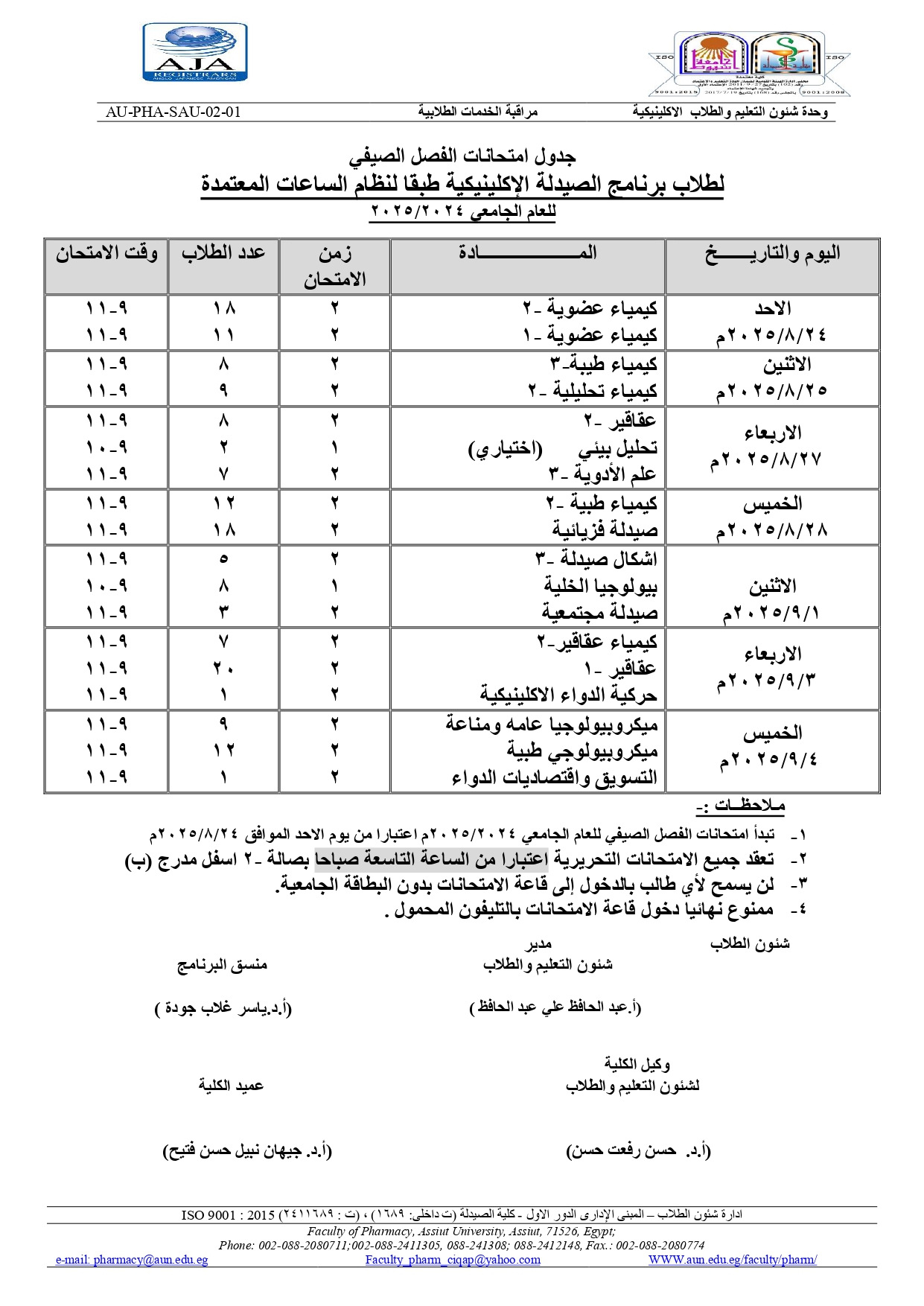
Summer Semester Examination Schedule for Pharm D Clinical Pharmacy Program Students (Credit Hour System) for the Academic Year 2024/2025
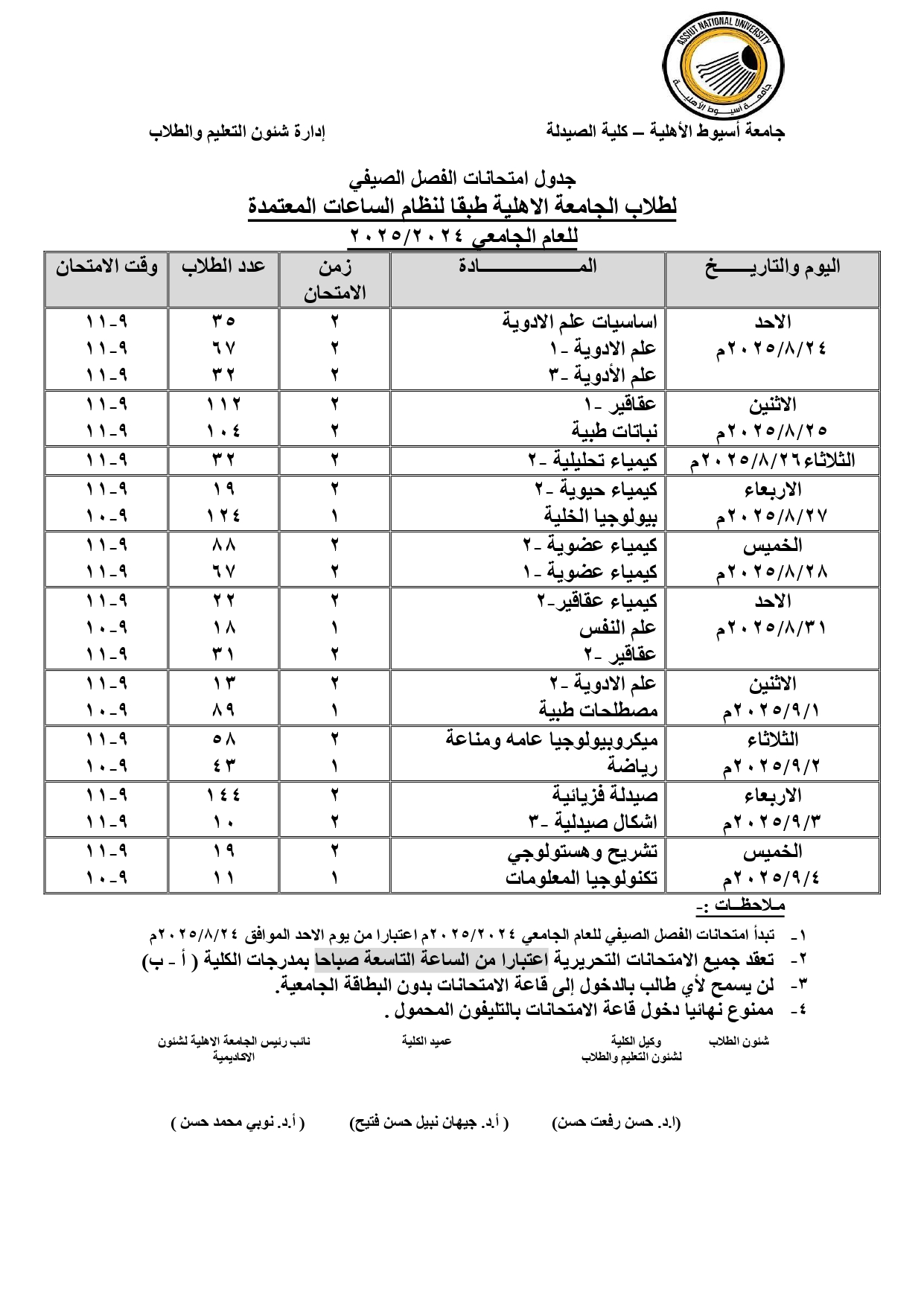
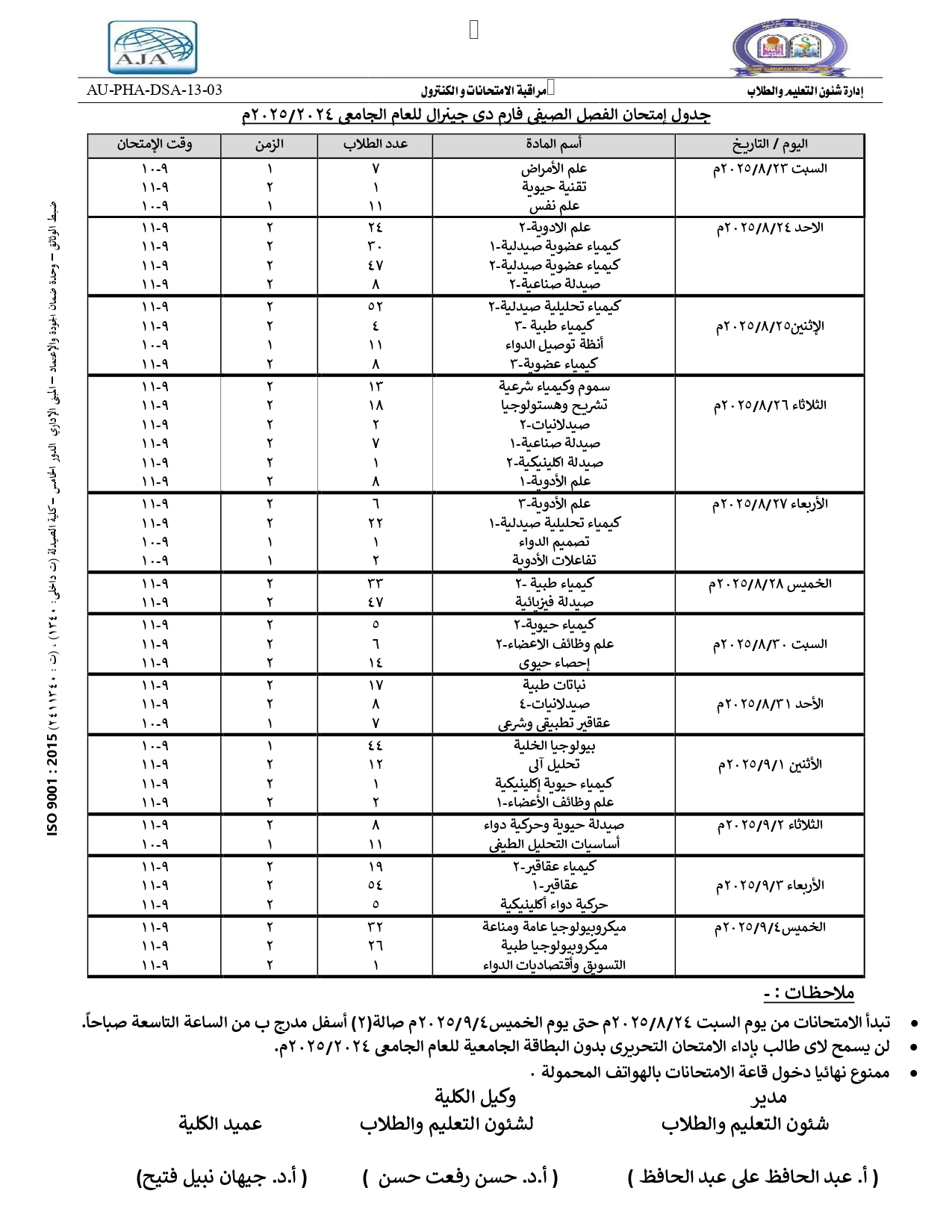
Summer Semester Examination Schedule for the Pharm D Program for the Academic Year 2024/2025.
news category
إعلانات الطلاب
Congratulations from Prof. Dr. Gihan Nabil Hassan Fetih, Dean of the Faculty, and the Faculty Vice Deans, to Dr. Sara Ahmed Abou El-Magd, Associate Professor at the Department of Pharmaceutics, for her being awarded the State Encouragement Award in the fi


Congratulations from
Prof. Dr. Gihan Nabil Hassan Fetih,
Dean of the Faculty, and the Faculty Vice Deans,
to Dr. Sara Ahmed Abou El-Magd,
Associate Professor at the Department of Pharmaceutics,
for her being awarded the State Encouragement Award in the field of Medical Sciences.
news category
خبر عام
Crystal structure and quantum chemical calculations of 2-(2'-oxospiro[1,3-dioxolane-2,3'-indol]-1'(2'H)-yl)acetohydrazide
Research Date
Research Department
Research Journal
Journal of Heterocyclic Chemistry
Research Member
Research Publisher
Wiley
Research Rank
Q2
Research Vol
62
Research Website
https://doi.org/10.1002/jhet.70108
Research Year
2025
Hybrid Nucleobase–Heterocycle–2-Oxindole Scaffolds as Innovative Cell Cycle Modulators with Potential Anticancer Activity
Research Date
Research Department
Research Journal
RSC Advances
Research Member
Research Publisher
the Royal Society of Chemistry
Research Rank
Q2
Research Vol
15
Research Website
https://pubs.rsc.org/en/content/articlelanding/2025/ra/d5ra04997k
Research Year
2025
Announcement for Pharm D Students – Summer Semester It has been decided that the Practical and Practical-Theoretical Exam for the Phytochemistry-2 course will be held on Thursday, August 14, 2025

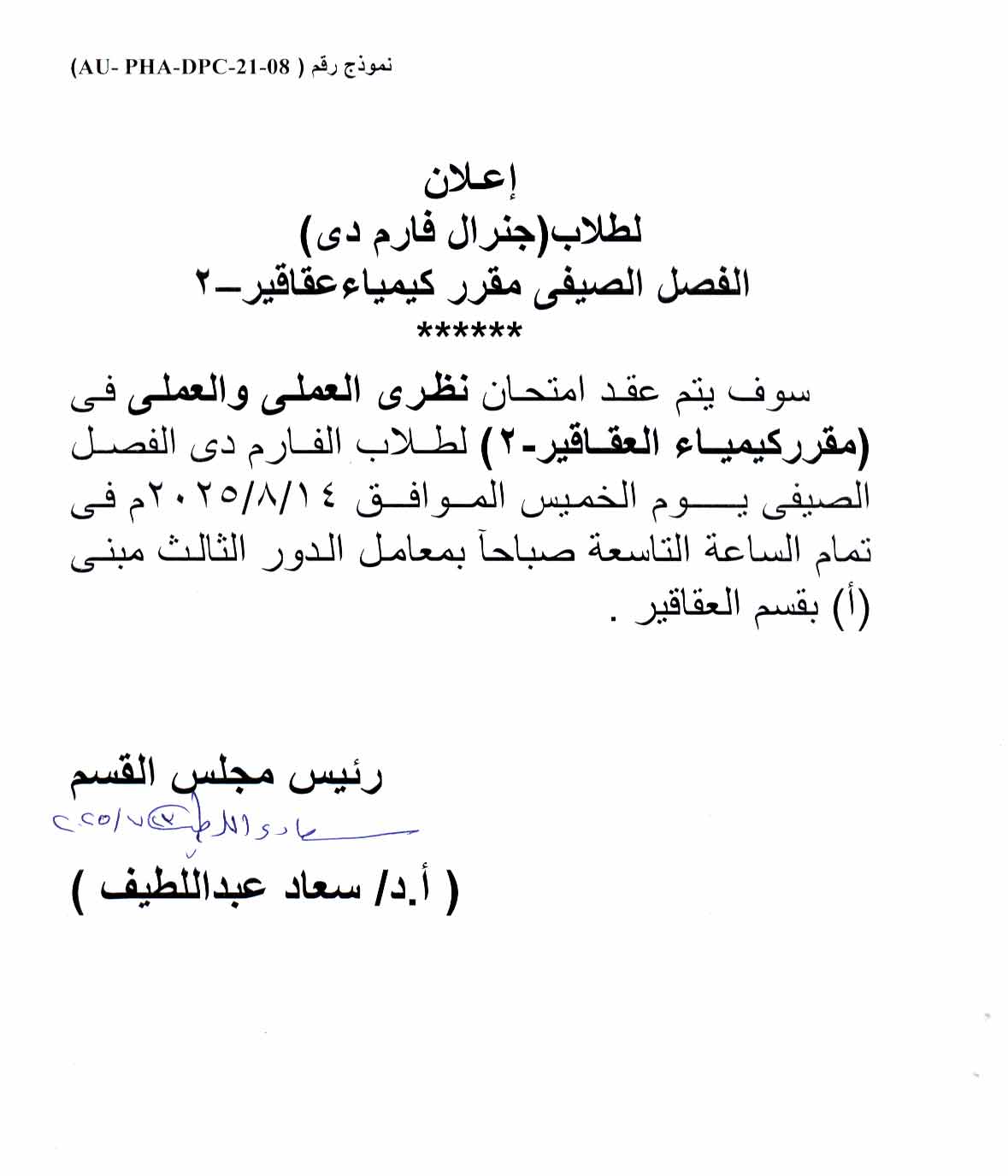
The theoretical–practical and practical examinations in the Phytochemistry–2 course for Pharm D students (summer semester) will be held on Thursday, August 14, 2025, at 9:00 a.m., in the laboratories on the third floor, Building (A), Department of Pharmacognosy.
news category
إعلانات الطلاب
Announcement for National University Students, Summer Semester: The theoretical and practical exams for the course 'Phytohemistry-2' will be held on August 14, 2025

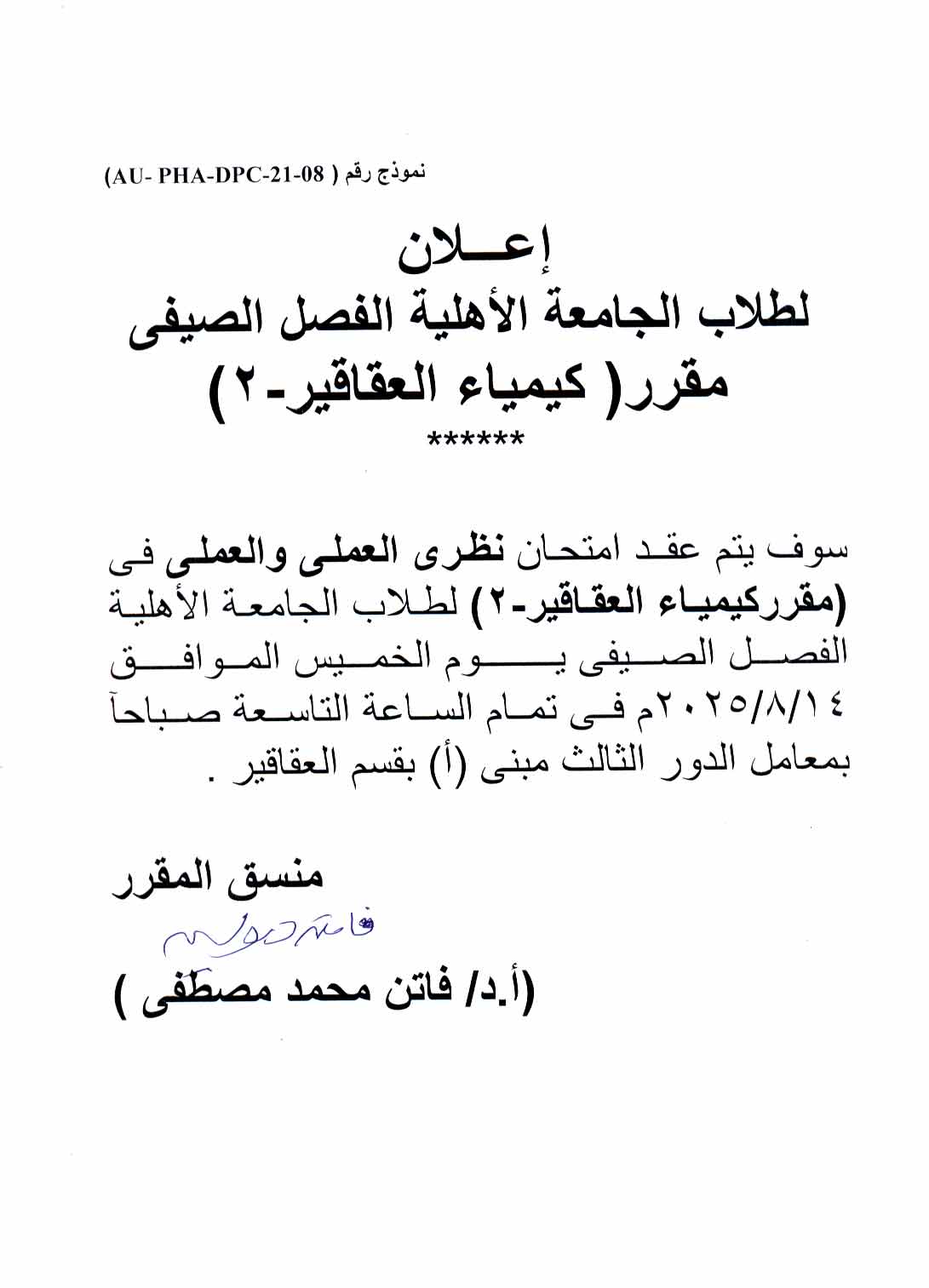
The theoretical–practical and practical examinations in the Phytochemistry –2 course for National University students (summer semester) will be held on Thursday, August 14, 2025, at 9:00 a.m., in the laboratories on the third floor, Building (A), Department of Pharmacognosy.
news category
إعلانات الطلاب
Announcement for Clinical Pharmacy Program Students It has been decided that the Practical and Practical-Theoretical Exam for the Phytochemistry-2 course will be held on Thursday, August 14, 2025.

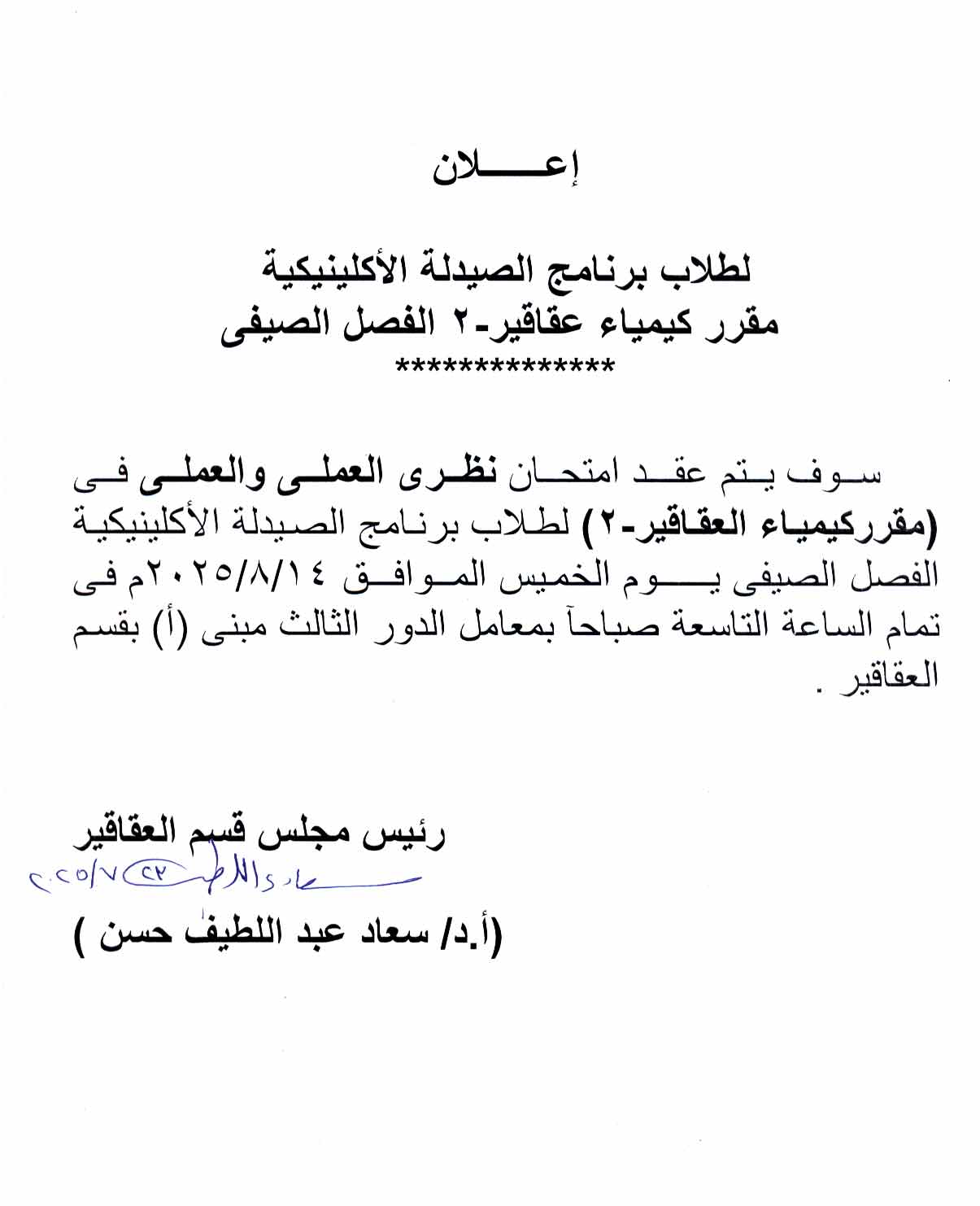
The theoretical–practical and practical examinations in the Phytochemistry–2 course for Clinical Pharmacy Program students (summer semester) will be held on Thursday, August 14, 2025, at 9:00 a.m., in the laboratories on the third floor, Building (A), Department of Pharmacognosy.
news category
إعلانات الطلاب
Announcement for Pharm D and Clinical Pharm D Students – Summer Semester It has been decided that the Midterm Exam for the Pharmacognosy-1 course will be held on Wednesday, August 13, 2025.

The midterm examination in the Pharmacognosy–1 course for Pharm D and Pharm D Clinical students (summer semester) will be held on Wednesday, August 13, 2025, at 9:00 a.m., in the lecture hall on the third floor, Building (A), Department of Pharmacognosy.
news category
إعلانات الطلاب