




 Do you have any questions? (088) 2080369 - 2345622 Pharmacy_QAAU@pharm.aun.edu.eg

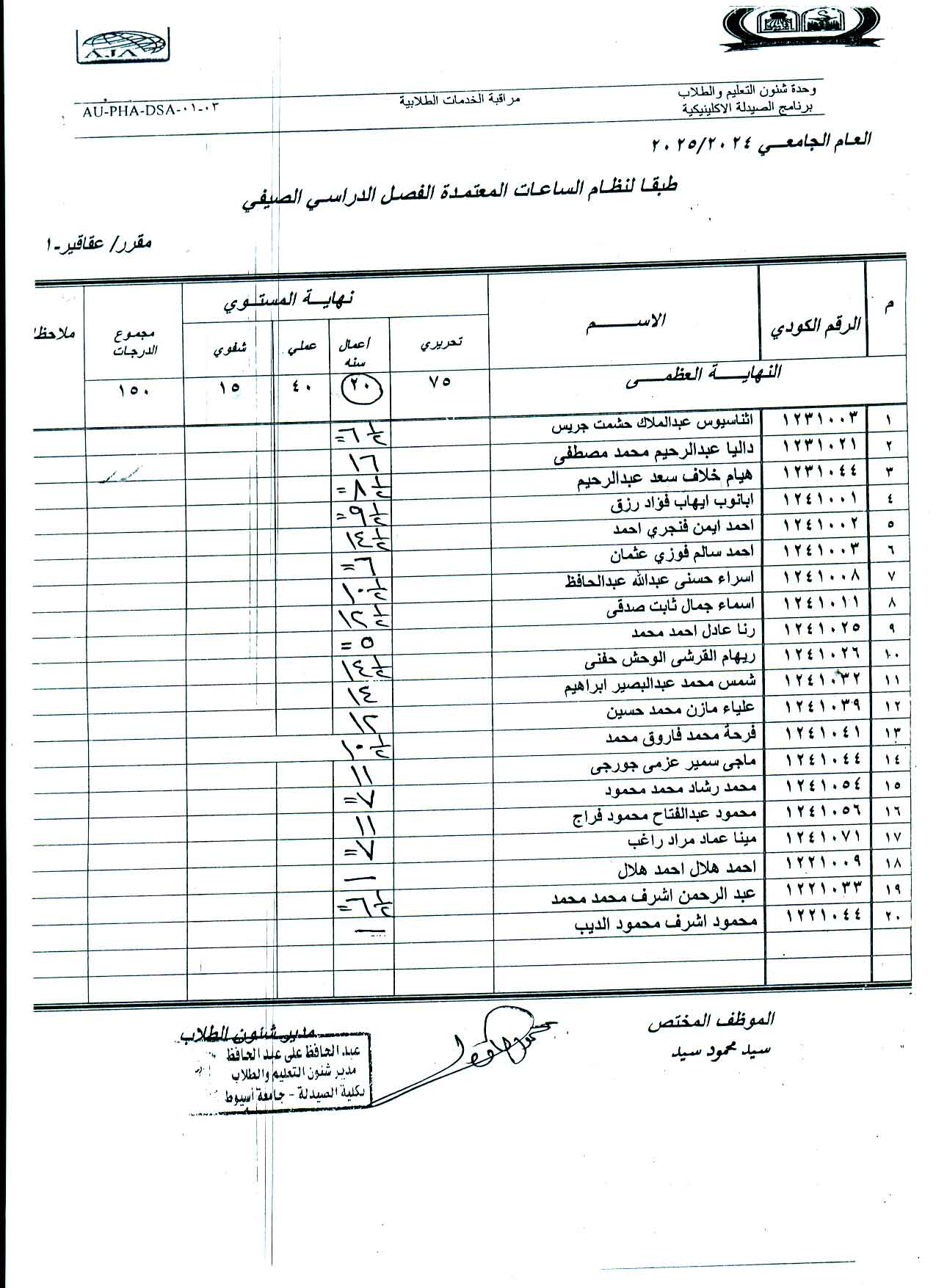
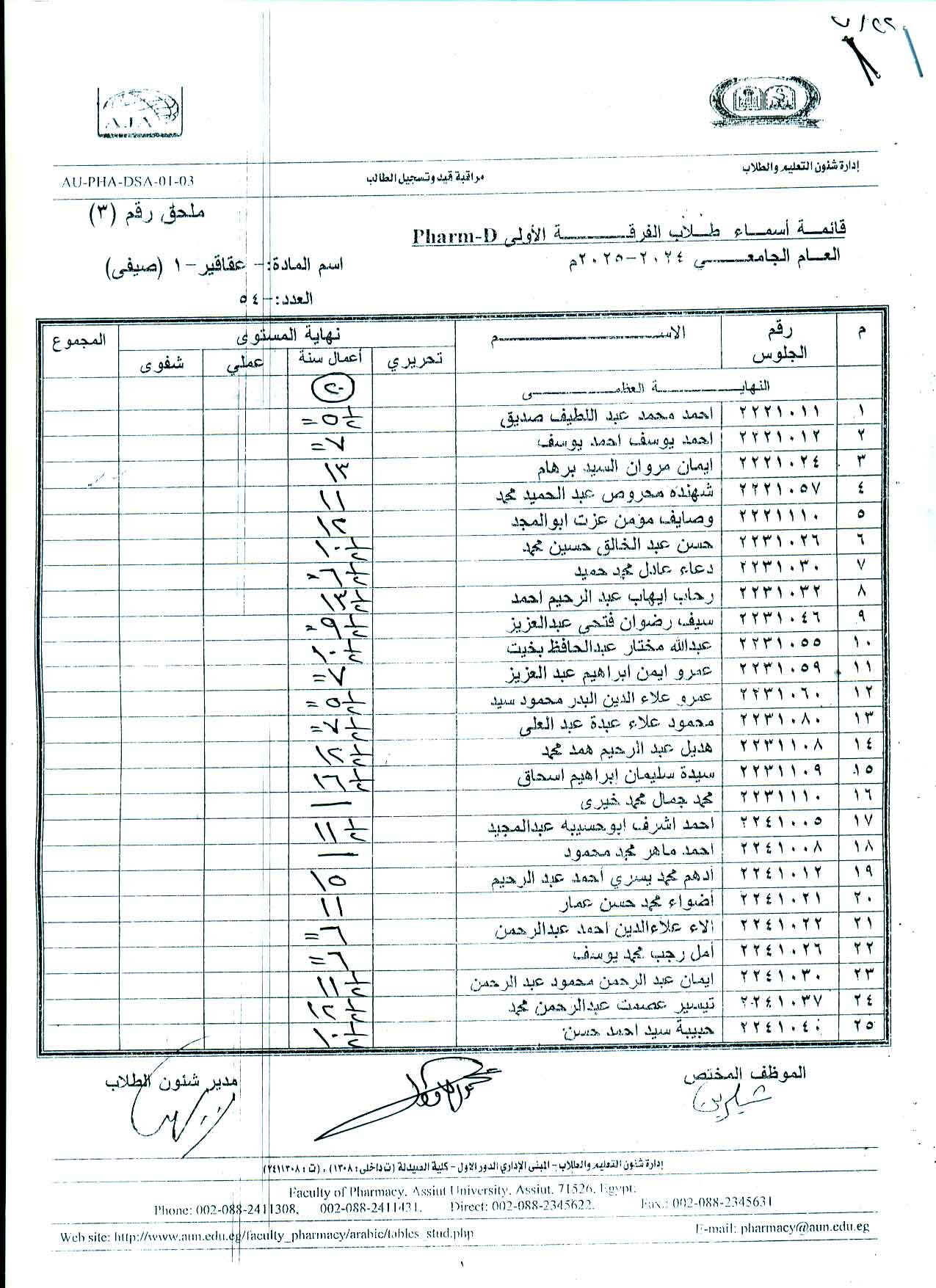
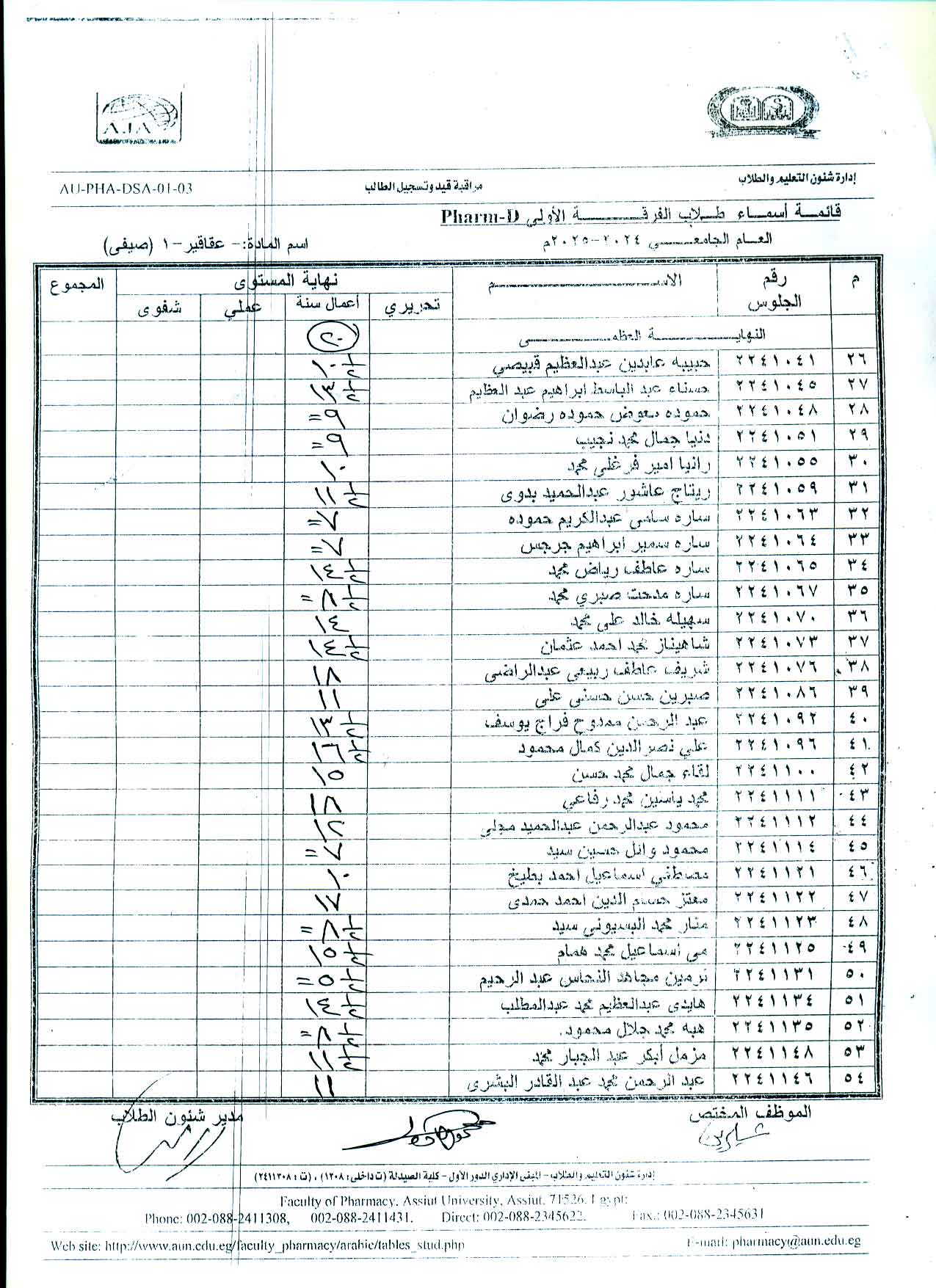
Whoever wishes to submit a petition for reviewing the mid-term exam grade should register their name at the department’s secretary office starting from Monday, August 18, 2025, until Monday, August 25, 2025 .
The results of reviewing the petitions for the students who have registered their names at the department’s secretary office will be announced afterwards.
Click
?
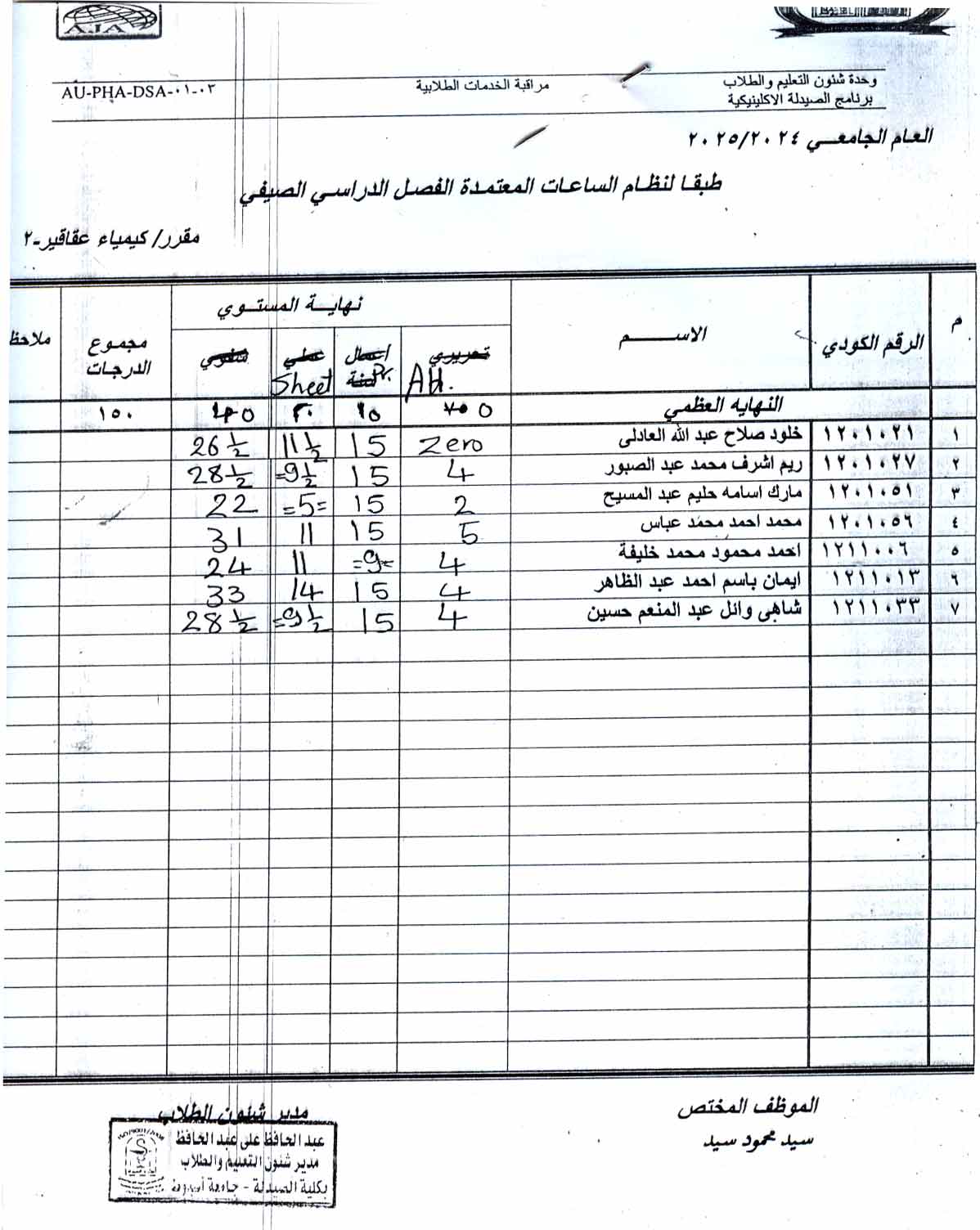
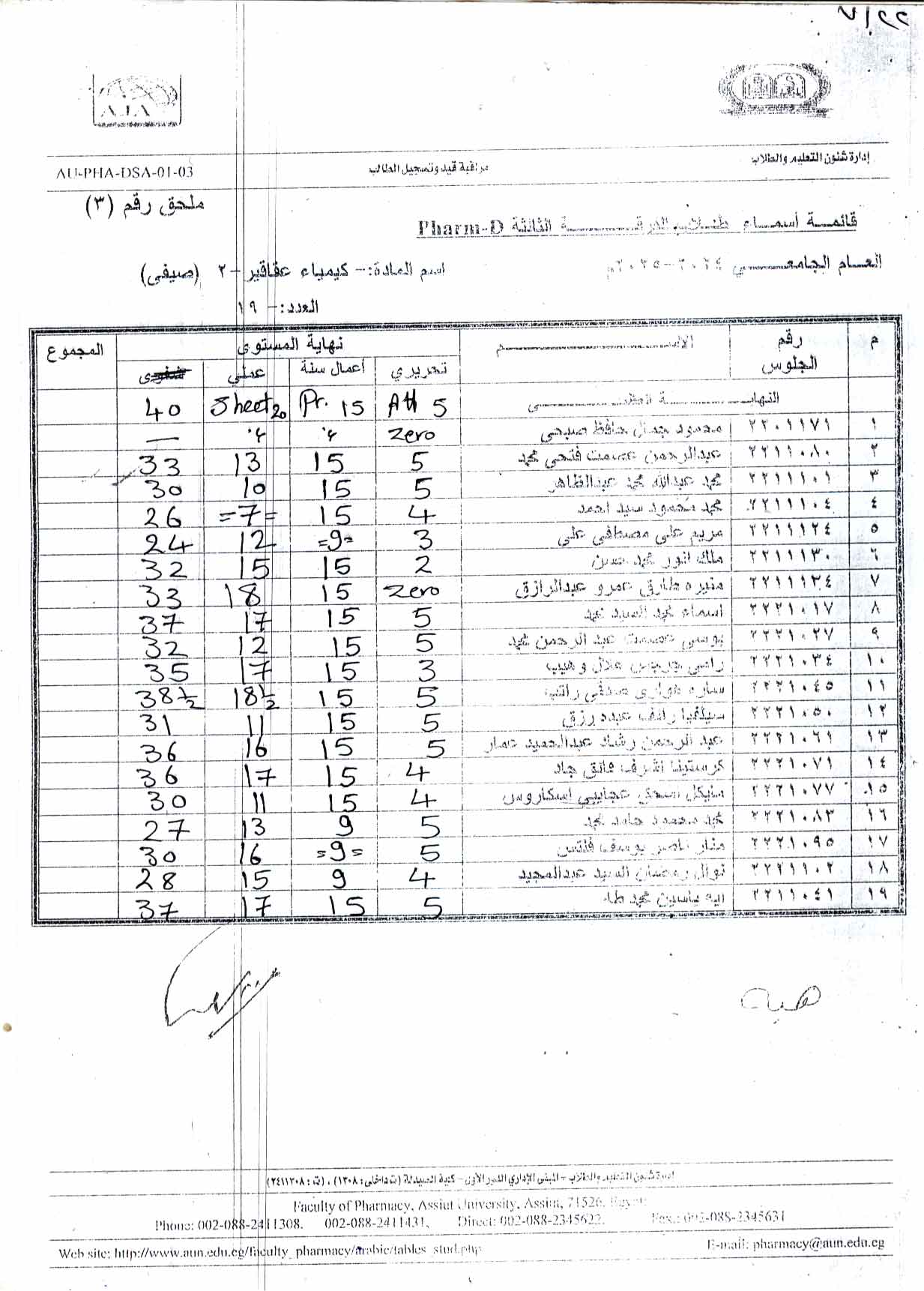
Grade Report for Pharmacognosy–1 (Summer Semester)

Whoever wishes to submit a petition for reviewing the practical or practical-theory exam grade should register their name at the department’s secretary office starting from Monday, August 18, 2025, until Monday, August 25, 2025 .
The results of reviewing the petitions for the students who have registered their names at the department’s secretary office will be announced on Wednesday, September 3, 2025 .
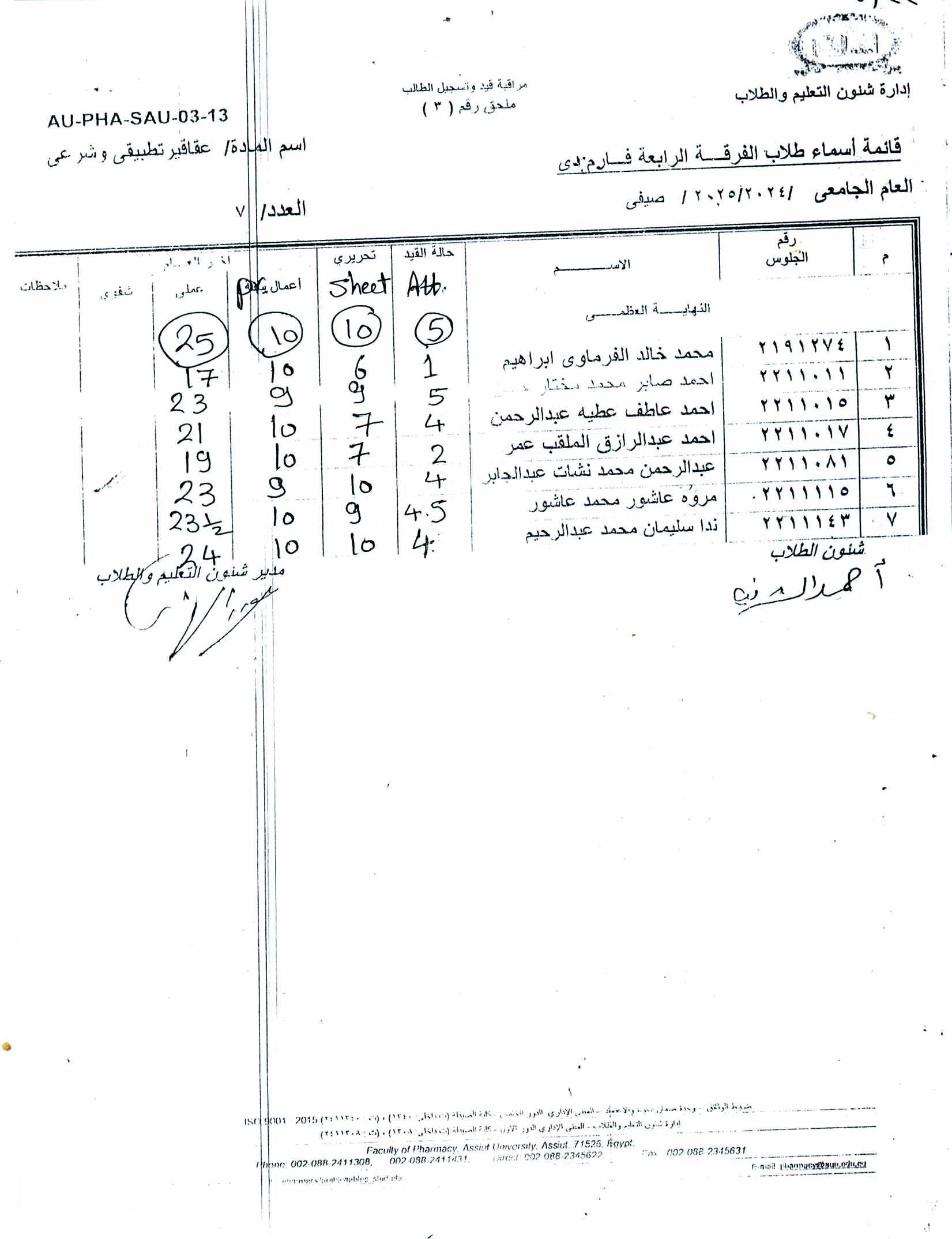

Whoever wishes to submit a petition for reviewing the practical or practical-theory exam grade should register their name at the department’s secretary office starting from Monday, August 18, 2025, until Monday, August 25, 2025 .
The results of reviewing the petitions for the students who have registered their names at the department’s secretary office will be announced on Sunday, August 31, 2025 .

Under the patronage of Prof. Dr. Ahmed El-Menshawy, President of the University, and the supervision of Prof. Dr. Gehan Nabil Feteih, Dean of the Faculty, and Prof. Dr. Soad Abdel-Latief Hassan, Director of the Faculty’s Technology Services Unit, the Technology Services Unit organized a workshop for the faculty staff titled "Basics of Excel_Office365".
The workshop was delivered by the staff members of the Technology Services Unit, with a large number of participants from various departments and sections of the faculty. This workshop comes as part of the Faculty’s continuous efforts to enhance the skills of its employees in information technology and digital transformation, in line with Egypt’s Vision 2030.
The unit is organizing three workshops in this field:
All workshops will be held in the Technology Services Unit Lab at theaculty.


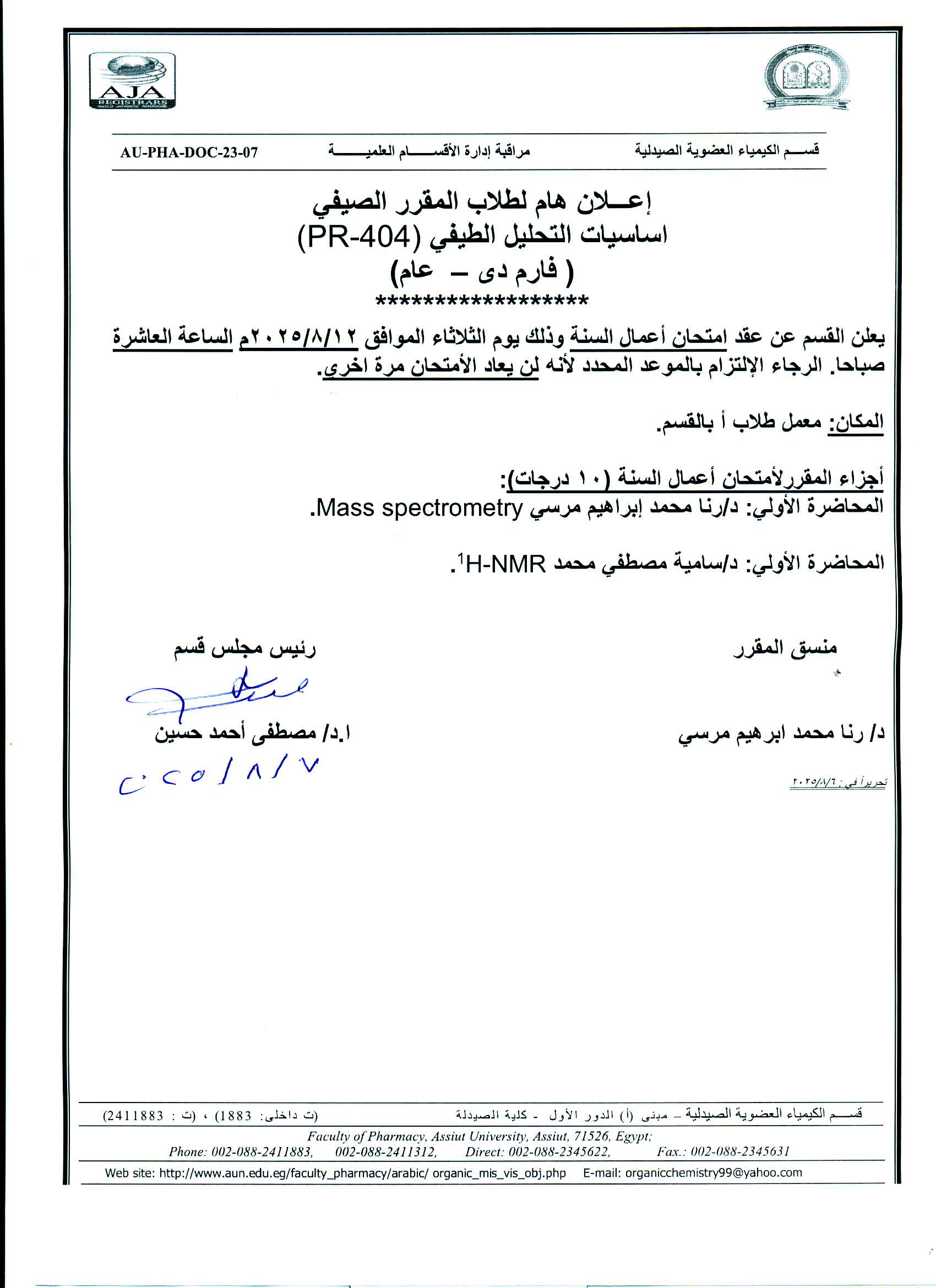
The department announces that the midterm exam will be held on Tuesday, 12/8/2025, at 10:00 a.m. Please adhere to the scheduled time as the exam will not be repeated.
Venue: Student Laboratory, Department.
Exam content (10 marks):


The practical and theoretical–practical examinations in the Applied and Forensic Pharmacognosy course for Pharm D students (summer semester) will be held on Thursday, August 14, 2025, at 11:00 a.m., in Laboratory (A), fourth floor, Department of Pharmacognosy.

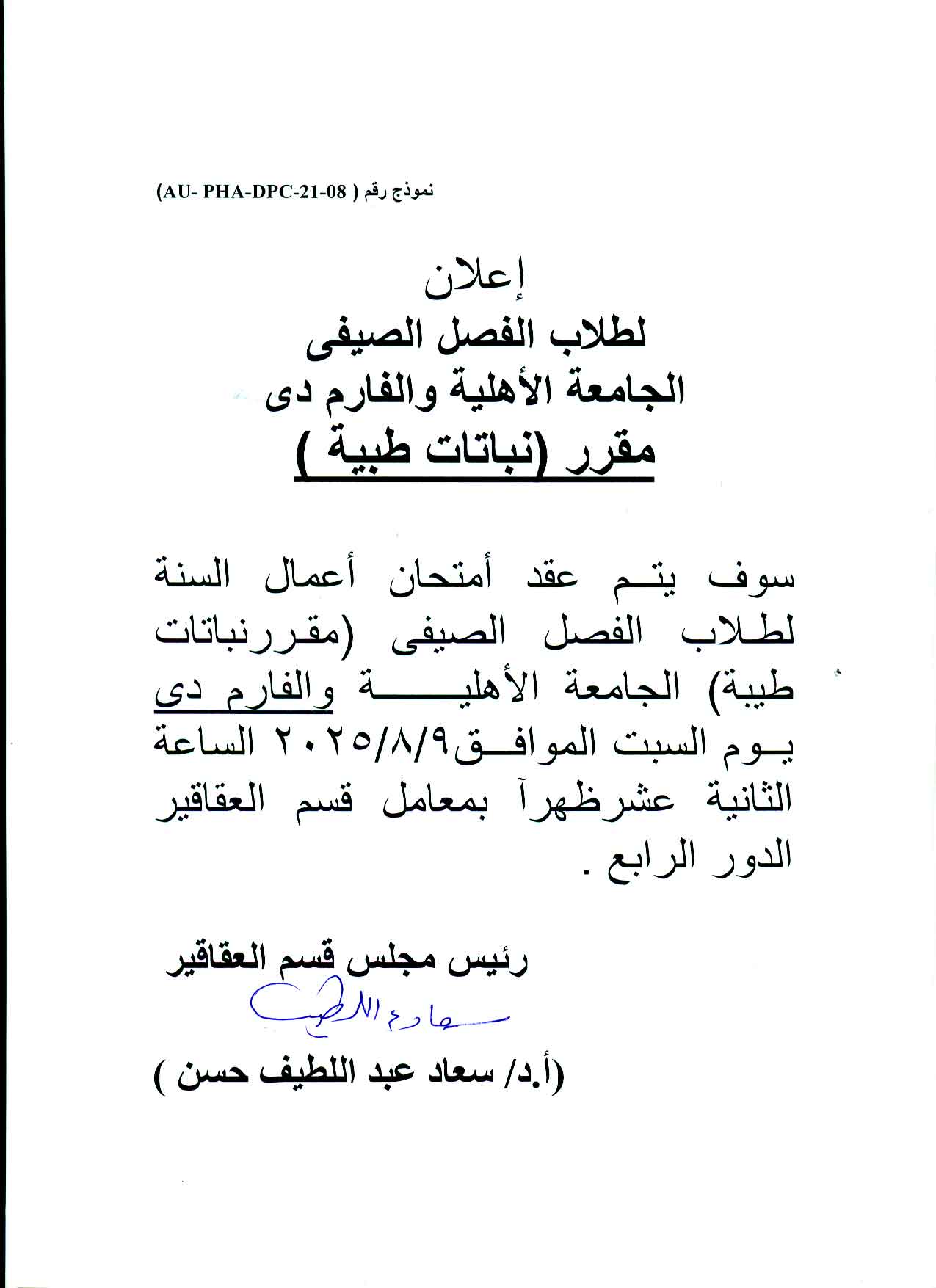
The Midterm Exam for the course Medical Plants for Pharm D and National University students – Summer Semester – will be held on Saturday, August 9, 2025, at 12:00 a.m., in the Pharmacognosy Department laboratories, 4th floor.
Reverse-prenylated phenolic compounds are an abundant class of bioactive plant natural products. Hyperixanthone A, an inhibitor of multidrug-resistant Staphylococcus aureus, is a polyprenylated xanthone carrying
two forward geminal and one reverse prenyl group. Although prenyltransferases responsible for the forward
prenylations were identified, the final reverse prenylation reaction remained elusive. No plant enzyme catalyzing reverse prenylation of an aromatic carbon has been described so far. Here we use metabolic profiling
and transcriptomic information from Hypericum perforatum and H. sampsonii to identify homologous
enzymes involved in the formation of reverse-prenylated xanthones and characterize their functions using
in vitro, in vivo, and in silico approaches. The identified enzymes are non-canonical UbiA-type prenyltransferases, which surprisingly catalyze both forward and reverse prenylations with different regioselectivities.
Reconstruction of the enzyme cascade in Saccharomyces cerevisiae and Nicotiana benthamiana confirmed
reverse-prenylated hyperixanthone A as the major product. Molecular modeling and docking simulations
supported by site-directed mutagenesis suggest two distinct binding modes, which enable forward and
reverse prenylations and provide a rationale for the preferred catalysis of the reverse prenyl transfer reaction. The identification of reverse prenylation augments the repertoire of reactions catalyzed by
membrane-bound UbiA-type plant aromatic prenyltransferases. The insights also provide a new tool for the
biotechnological modification of pharmaceutically valuable natural products.