
Academic year schedule 2024/2025 AD, second semester - first level - Assiut Private University
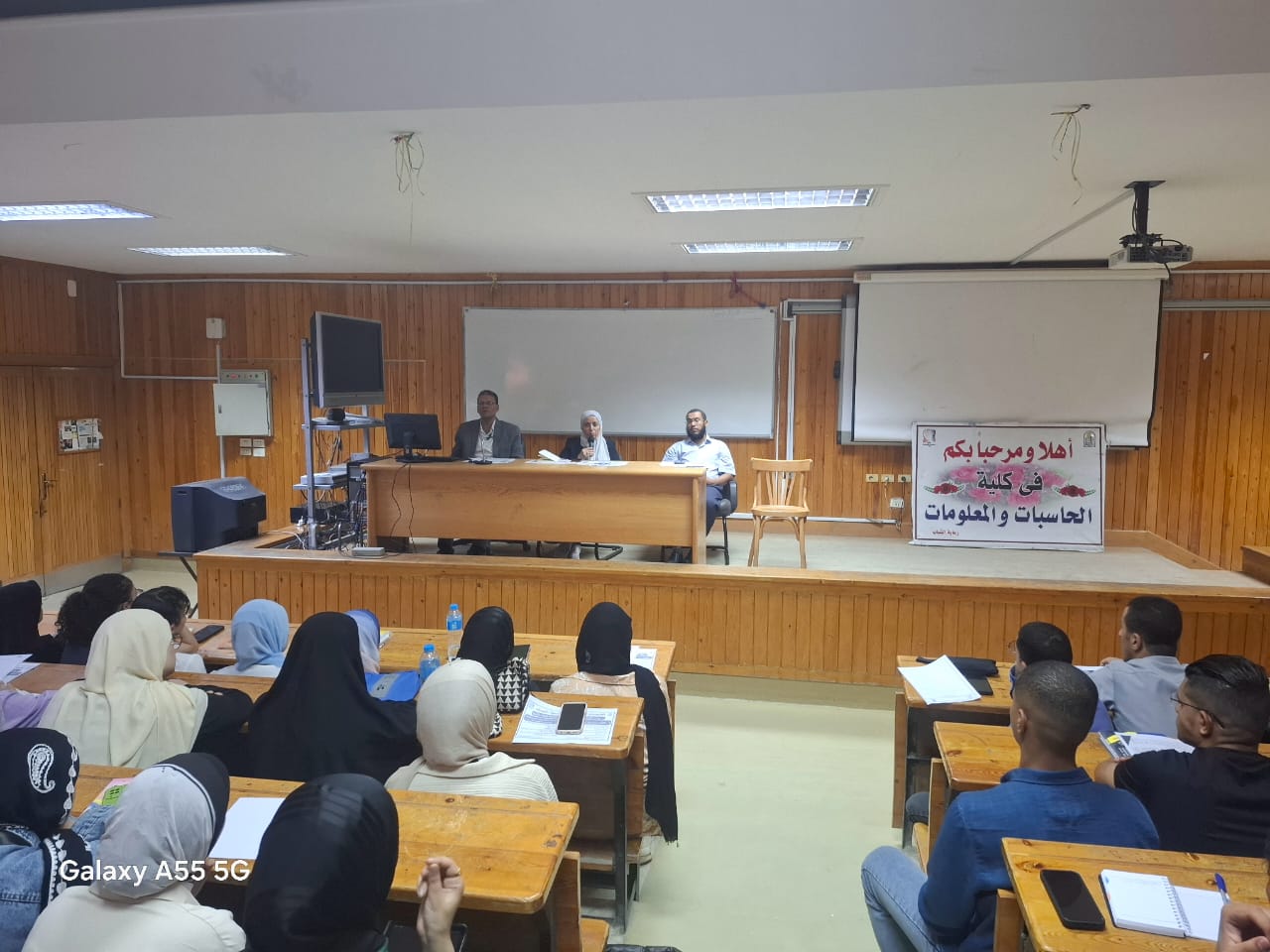
Receiving new students for the academic year 2024/2025

The college administration represented by: Mrs. Prof. Dr. Taisir Hassan Abdel Hamid, Dean of the College of Computers and Information
On Monday, September 30, 2024 Received new and old college students
Her Excellency the Dean welcomed the students and congratulated them on the occasion of the start of the new academic year
Her Excellency was accompanied in this reception by a group of faculty members, assistants and administrators at the college, headed by:
Prof. Dr. Khaled Fathy Hussein (Dean of the College for Education and Student Affairs)
Dr. Mamdouh Farouk
Environmental Public Speaking Competition
Announcing the 24th session of the Environmental Public Speaking Competition during the period from 25-28 November 2024.
Those wishing to register should view the details and registration method through the attached link to the email on page 1 of the announcement.
eeg@emirates.net.aeedu@eeg.ae
Environmental Public Speaking Competition from November 25-28
Environmental Public Speaking Competition from November 25-28
Congratulations from Prof. Dr. Taisir Hassan Abdel Hamid, Dean of the Faculty of Computers and Information, to Dr. Mustafa Qurashi, Lecturer in the Faculty’s Information Technology Department.

Prof. Dr. Taisir Hassan Abdel Hamid, Dean of the Faculty of Computers and Information, extends her sincere congratulations to Dr. Mustafa Qureshi, Lecturer in the Department of Information Technology, Faculty of Computers and Information, Assiut University, for including Dr. Mustafa's name on the honor roll at the University of Quebec, Canada. Dr. Mustafa completed his doctoral studies in artificial intelligence applications for automatic control in fifth-generation networks in the fall of 2023. During his studies, Dr. Mustafa published many research papers and studies on artificial intelligence applications in fifth-generation networks During which he published more than 12 research papers and patents in the largest scientific journals and international conferences He also carried out many practical tasks in global research centers such as the Samsung Research Center for Artificial Intelligence in Montreal, Canada and the Nokia Bell Research Laboratory in Stuttgart, Germany which is considered one of the rare laboratories from which nine scientists have won the Nobel Prize. Dr. Mustafa is in the Ericsson Artificial Intelligence Unit to reduce carbon emissions related to 5G networks through artificial intelligence. He also participated in the editorial board of a workshop at the International Conference on Wireless Communications and Networking Conference (WCNC). It is worth noting that Dr. Mustafa works as a lecturer in the Department of Information Technology at the Faculty of Computers and Information at Assiut University, from which he graduated with honors, then worked as a teaching assistant, then an assistant lecturer, then a lecturer in the same department
The Second Arab Camp for Talented and Innovative People
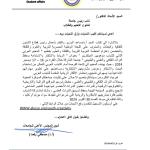
The Second Arab Camp for Talented and Innovators With reference to the letter of Mr. Prof. Dr. / Assistant Minister and Acting Head of the Cultural Affairs and Missions Sector and Supervisor of the Egyptian National Commission for Education, Science and Culture, which includes the intention of the Arab League Educational, Cultural and Scientific Organization to organize the "Second Arab Camp for Talented and Innovative Youth" entitled "Leadership, Innovation, Sustainability and Preservation of Cultural, Scientific and Natural Heritage" at the University of Sharjah during the period from December 16-17, 2024, as the camp aims to provide an opportunity for Arab youth to be able to use research and innovation and present their innovative projects and help them develop their creative skills in a way that contributes to encouraging and investing in the pioneering ideas presented to Arab youth. Please kindly circulate the announcement to the colleges of your esteemed university concerned with the fields of cultural, natural and scientific heritage, preservation and restoration of heritage and historical sites, digital technology and heritage, stimulating green heritage to confront climate change, encouraging and developing environmental tourism and preserving the marketing of scientific heritage, # for the participation of young people by presenting the idea of their innovative and pioneering projects that they have begun to implement, whether partially or completely, to apply no later than October 30, 2024. Registration for application and uploading research should be through the following link: WWW.alecso.org/youth-creativity
Chess Championship Events
Under the patronage of Prof. Dr. Taisir Hassan Abdel Hamid, Dean of the College,
and Prof. Dr. Khaled Fathy Hussein, Vice Dean of the College for Education and Student Affairs,
the Social Committee of the Youth Care Department organized a chess championship for college students in preparation for the chess championship that will be held by Assiut University.
The following students qualified for the university-level qualifiers:
Youssef Abu Al-Gheit (first place)
Ahmed Osama Abdel Qawi Jaber (second place)
.Ahmed Mustafa Abdel Hamid (third place)
Krollos Samir Samuel (fourth place)
Opening of the Literature Club at the Faculty of Computers and Information
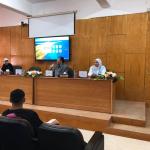 Under the patronage of Ms. Professor Dr. / Taisir Hassan Abdel Hamid (Dean of the College) Prof. Dr. Khaled Fathy Hussein (Vice Dean of the College for Education and Student Affairs) The Literature Club at the College of Computers and Information was opened on Tuesday 10/29/2024 In the presence of Prof. Dr. Khaled Fathy Hussein (Vice Dean of the College for Education and Student Affairs) Dr. Hind Mohsen (PhD researcher at the College of Arts) Ms. Sayed Farhan (Director of Youth Care Department) Ms. Marwa Kamal Kamel (Cultural Activity Officer) And a group of distinguished students in various fields of literature. The opening session included a speech by Prof. Dr. Khaled Fathy Hussein and Dr. Hind Mohsen. Some of the students' literary works were also reviewed and it was agreed to communicate with the Central Literature Club at the university and the various college clubs to sponsor and support talented students and those interested in literary and cultural activities at the college.
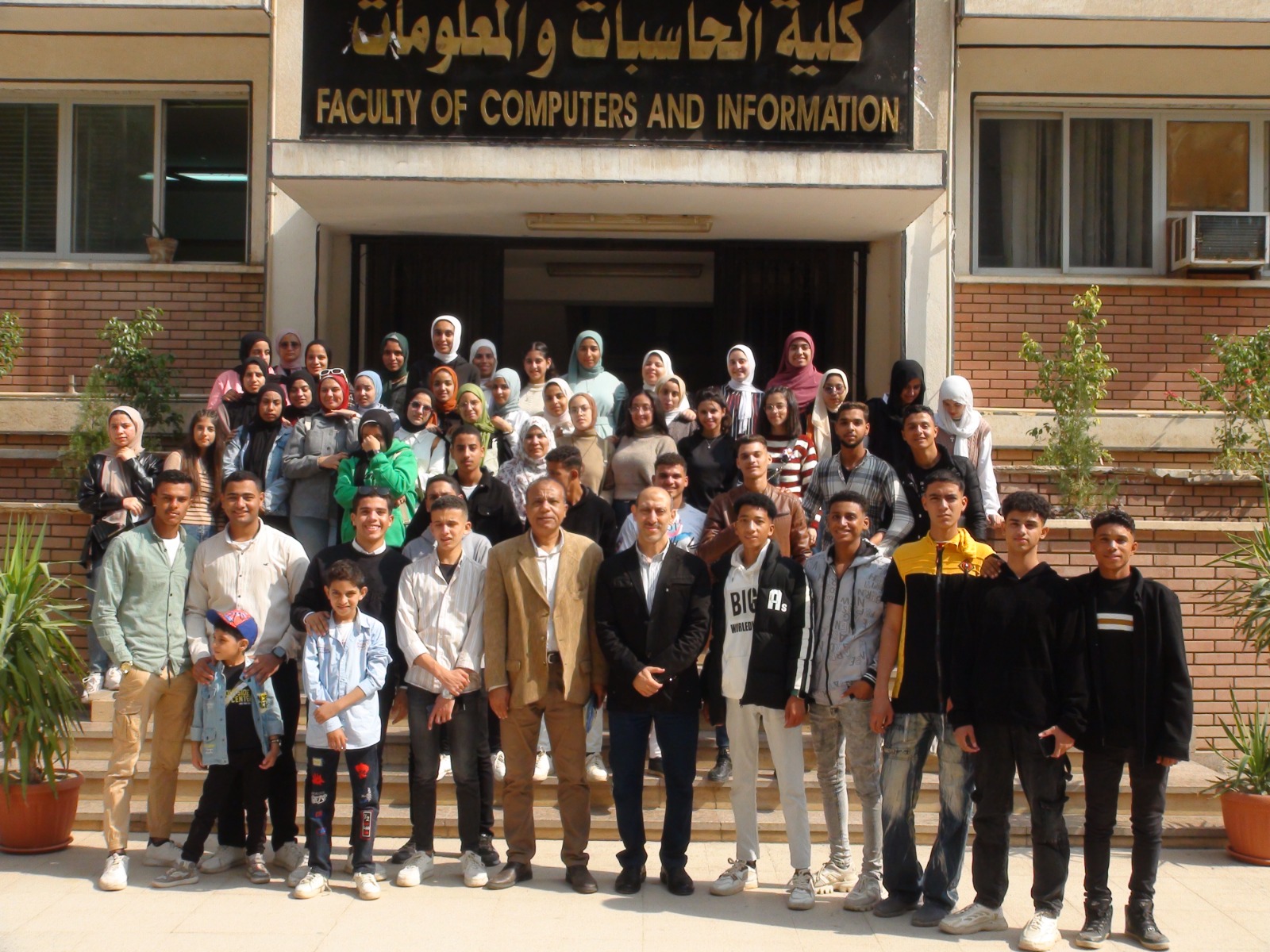
Visit of Martyr Hamdoun Secondary School to the Faculty of Computers and Information
- Read more about Visit of Martyr Hamdoun Secondary School to the Faculty of Computers and Information
A scientific visit for students of Martyr Hamdoun Secondary School in Umm Al-Qusour, Manfalut Center, to the Faculty of Computers and Information On Thursday, 11/7/2024, the Faculty of Computers and Information received students of Martyr Mustafa Hamdoun Secondary School in Umm Al-Qusour, Manfalut Center, where tours were organized on the campus for students to see the advanced university facilities such as the multimedia lab, the computer consulting center, and the highly equipped labs. A short introductory lecture was also given about the various specializations available at the college. The students expressed their great admiration for the college, its modern equipment, and the advanced technologies that have been adopted in the educational process As they felt enthusiastic and inspired to pursue their higher education in such a distinguished academic environment. Professor Ali Abdel Mohsen Hassan Muhammad, Deputy of Martyr Mustafa Hamdoun Secondary School, expressed his happiness with this visit and the scientific benefit that the students achieved from it, and expressed his thanks to the college administration for giving students this opportunity to enhance their interest and love for scientific and technical fields. Visiting schools to universities is a valuable opportunity for students to broaden their educational horizons and enhance their desire to pursue higher education. These visits are an exciting and fruitful experience for students, as they have the opportunity to explore the university environment, learn about the different specializations, and the academic and cultural facilities available