The Faculty of Computers and Information at Assiut University launches the activities of the third edition of the
"employment and self-employment" forum with the wide participation of major technology companies
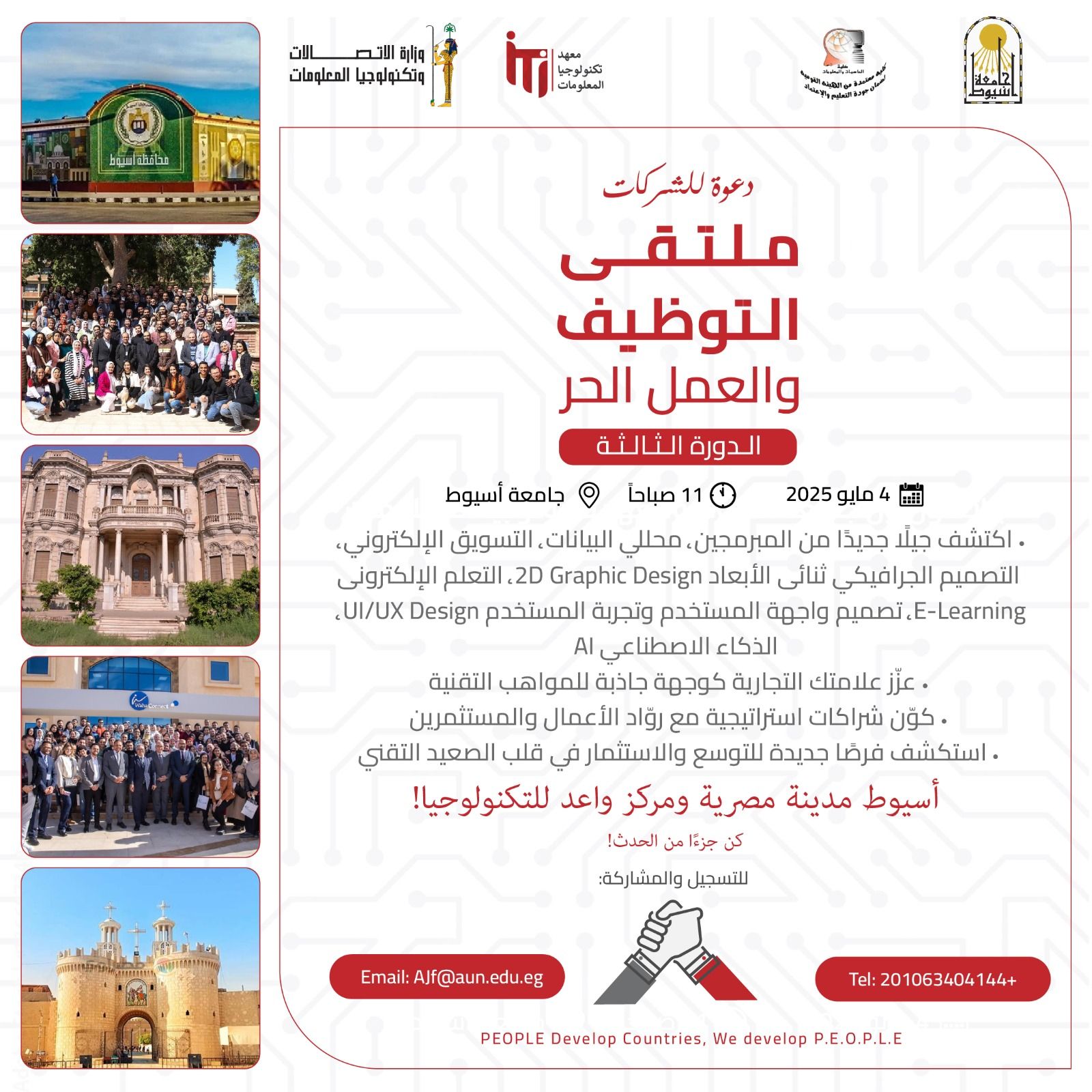
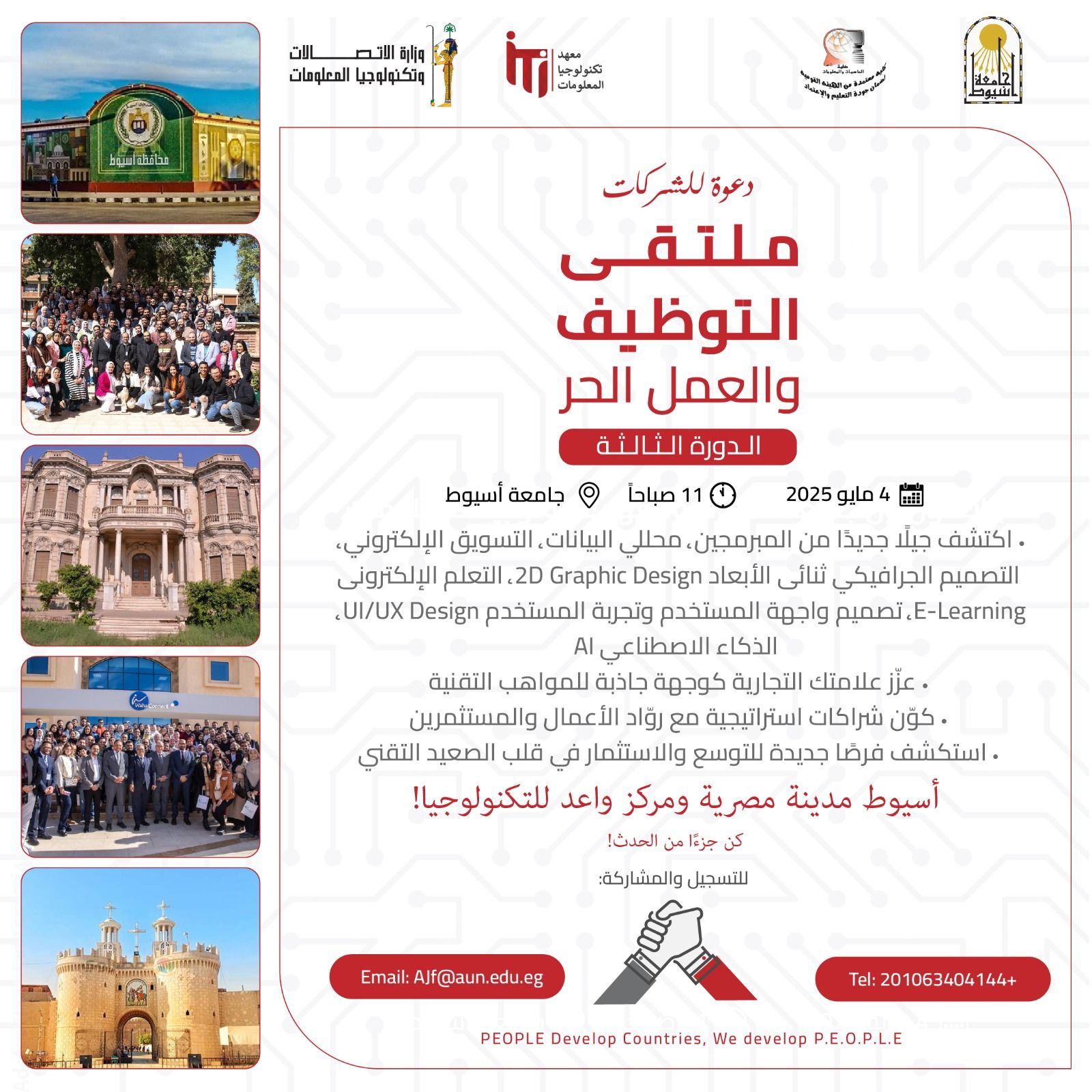
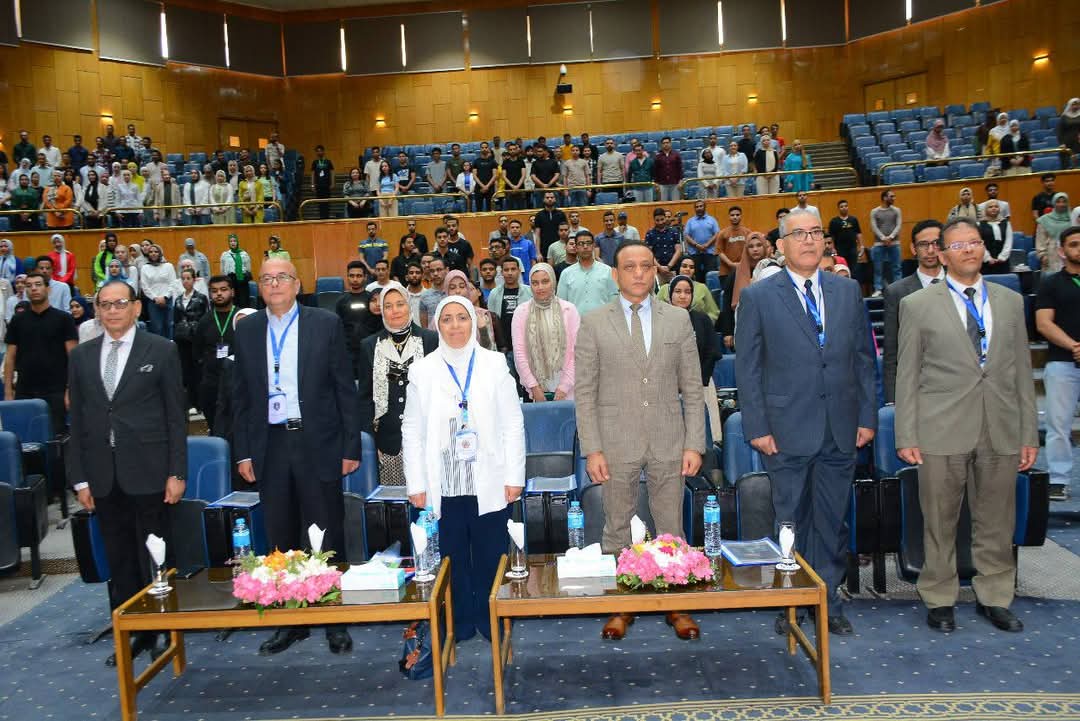
Assiut University witnessed, on Sunday, May 4, 2025, the launch of the activities of the third session of the "employment and self-employment forum", which was organized by the Faculty of Computers and Information in cooperation with the branch of the Institute of Information Technology in Assiut, affiliated with the Ministry of Communications and Information Technology, under the supervision of Dr. Ahmed El-Minshawy, university president, and the supervision of Dr. Ahmed Abdul-Mawla, vice president of the University for Education and Student Affairs, Dr. Heba Saleh, president of the Institute of Information Technology, and Dr. Tayseer Hassan Abdul Hamid, dean of the College of computers and information.
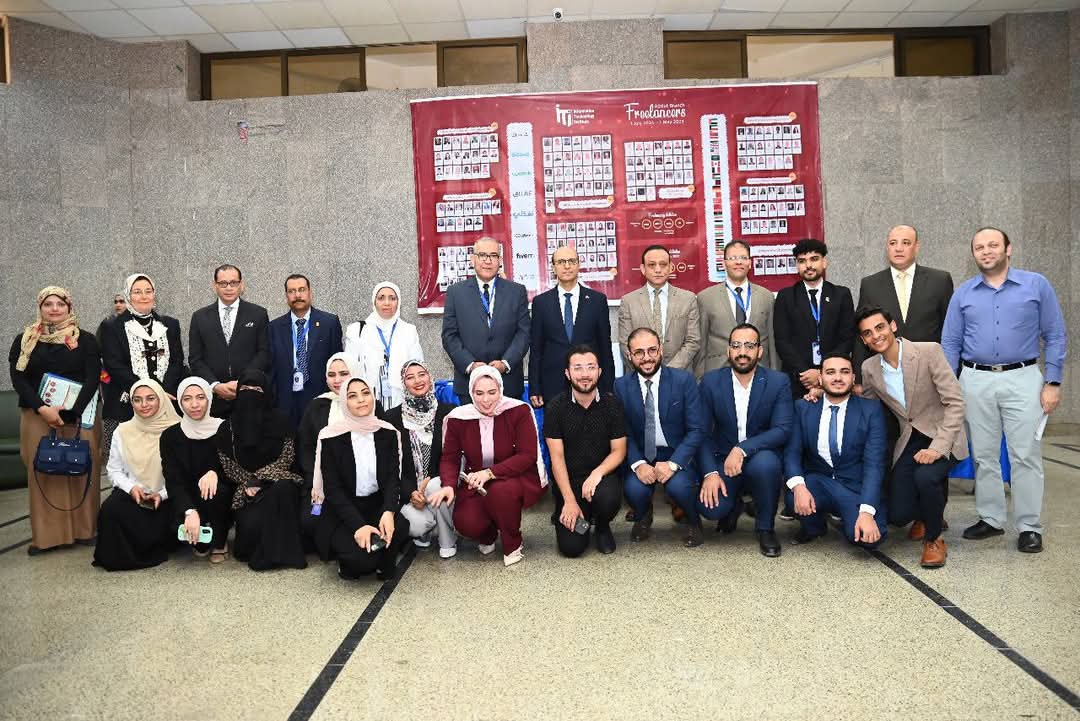
The events were attended by Dr. Mahmoud Abdul Alim, vice president of the University for Community Service and Environmental Development, Dr. Jamal Badr, vice president of the University for Graduate Studies and Research, along with several faculty members, a selection of experts, developers, and specialists in the fields of technology, and representatives of 22 local and international companies operating in the sector, which provided more than 250 job opportunities and training for university graduates.
The forum was held under the supervision of Professor Dr. Khaled Fathi Abdul Aziz, vice dean of the Faculty of Computers and Information for Education and Student Affairs, and engineer Ayman Ayad, director of the branch of the Institute of Information Technology in Assiut.
Dr. Ahmed El-Minshawy stressed that the forum is an important interactive platform that enables students and graduates to communicate directly with employment institutions and learn about the realistic requirements of the labor market in various fields of modern technology, including artificial intelligence, cybersecurity, data analysis, and digitization. He explained that the University seeks to support the culture of self-employment, promote entrepreneurship thought in line with national trends of digital transformation, and empower young people in the fields of advanced technology.
For his side, Prof. Dr. Mahmoud Abdel Alim explained that the forum embodies the University's vision of preparing qualified cadres capable of competing in the labor market, and reflects the efforts of the Ministry of Higher Education and scientific research in strengthening the link between academic institutions and the labor market and providing real opportunities for Egyptian youth.
Dr. Jamal Badr toured the exhibition of companies participating in the forum, which included 22 technological companies, that provided more than 250 job opportunities and training for university graduates, praising the level of fruitful cooperation between the University and those companies, reflecting the business community's confidence in the quality of Education outputs at the University.
Dr. Tayseer Hassan Abdul Hamid expressed her pride in the students of the Faculty of Computers and Information, stressing that they represent the most prominent beneficiaries of this type of partnership, because of their efficiency and excellence, which enabled them to prove themselves in major international institutions, wishing them further success and progress.
Dr. Khalid Fathi Abdul Aziz pointed out that the forum is a golden opportunity to develop students ' technical and professional skills and enhance their ability to actively engage in the labor market through interaction with leading technology companies.
In his speech, engineer Ayman Ayad conveyed the greetings of Dr. Heba Saleh, president of the Institute of Information Technology, to the administration of Assiut University, praising the partnership that began since 2007 when the University hosted the headquarters of the Institute, which started with only 100 trainees, and today reached more than 5,000 training grants annually, stressing that the institute is not limited in its support on the technological side, but is keen to develop comprehensive skills qualified for the labor market.
Engineer Hossam Megahed, chairman of the board of Directors of the association "Elites NGO", stressed that the ICT sector in Egypt is facing a challenge represented by the lack of qualified cadres, in exchange for the availability of a large number of young people looking for job opportunities, stressing that the best solution is to develop technological skills for young people, especially in Upper Egypt governorates, through effective partnerships such as cooperation between Assiut University and the Institute of Information Technology.
The opening of the forum witnessed the presentation of a documentary film highlighting the aspects of cooperation between the Institute of Information Technology and the College of Computers and Information, a review of the most important activities of the Institute and its services provided to students, as well as a video of a number of graduates of the college and the Institute who joined the labor market in major companies.
The forum included a series of lectures and dialogue sessions, presented by several representatives of local and international companies, including: "From Education to Employment: Building Bridges of Success" by engineer Hossam Megahed, "digital generations of Egypt: empowering youth to shape the future" by Dr. Firouz Mahmoud, Director of training at the Ministry of Communications and Information Technology," success story" by Dr. Hussein Ibrahim, Microsoft," programming at the speed of thinking" by Dr. Mohamed Beltagi, Optomotica, and"beyond coding" by engineer Nada Ehab, from gabi, and"remote work ethics" by Engineer Ahmed Ayman, from turn digital, and"data technologies and products" by engineer Mohamed Abdo, from spaceman, and"post-graduation" by engineer Hani Abdul Wahab, and"financial technology" by engineer Andrew saber, from Petra, and"the story of the establishment of clinical platform for booking medical services" by engineer Haitham Essam
This forum comes within the framework of Assiut University's efforts to enhance employment opportunities and digital entrepreneurship and support the capabilities of its students and graduates to qualify them for strong competition in the local and international labor markets.