

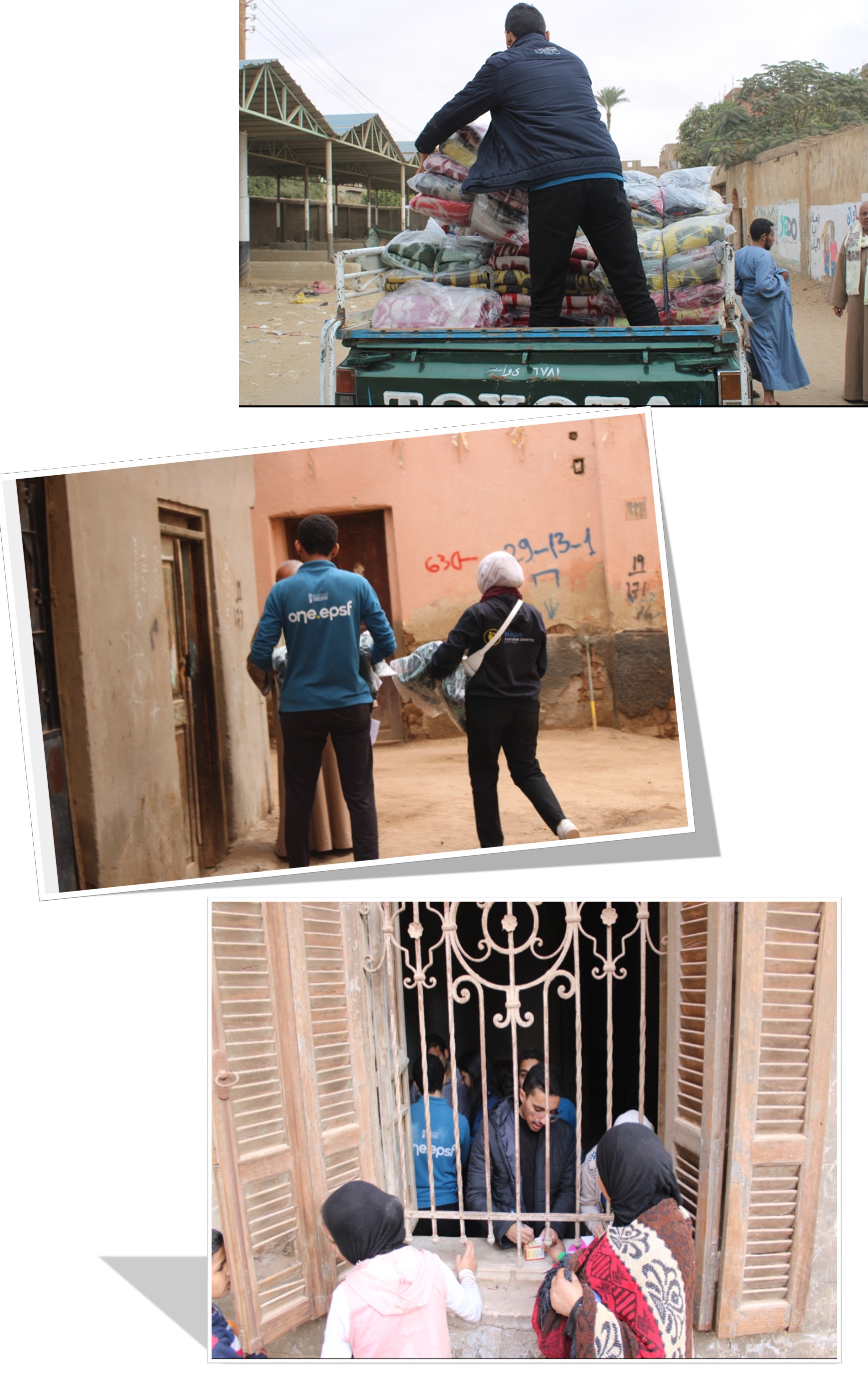
Students of the Scientific Society EPSF Assuit Organizing a medical convoy and distributing blankets in the village of Bani Shuqair in Manfalut - Assiut
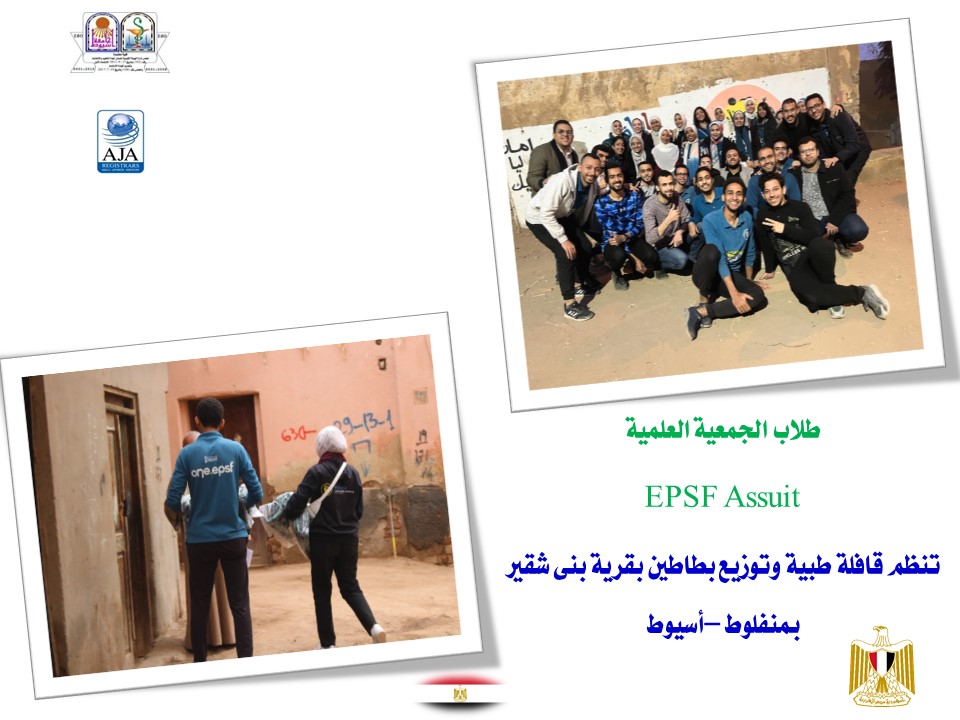
Under the auspices of Prof. Dr. / Ahmed El Menshawy - Acting President of the University, and Dr. / Ahmed Mohamed Abdel Mawla - Dean of the Faculty and Acting Vice President of the University for Education and Student Affairs and under the supervision of Dr. / Hassan Refaat Hassan - Vice Dean for Education and Student Affairs and Prof. Dr. / Mohamed Mahmoud Abdel Latif - Vice Dean for Community Service and Environmental Development Affairs and Dr. / Nermin El-Iraqi - Assistant Professor in the Department of Pharmaceutics and Director of the Scientific Association for Students of the Faculty of Pharmacy Students of the Scientific Association for Students of the Faculty of Pharmacy, Assiut University (Assuit EPSF) organized a medical convoy and distribution 150 blankets for the most needy groups in the village of Bani Shuqair in Manfalut - Assiut

This was done on Friday 12/23/2022 AD
طلاب الجمعية العلمية EPSF Assuit تنظم قافلة طبية وتوزيع بطاطين بقرية بنى شقير بمنفلوط –أسيوط

news category
خبر عام

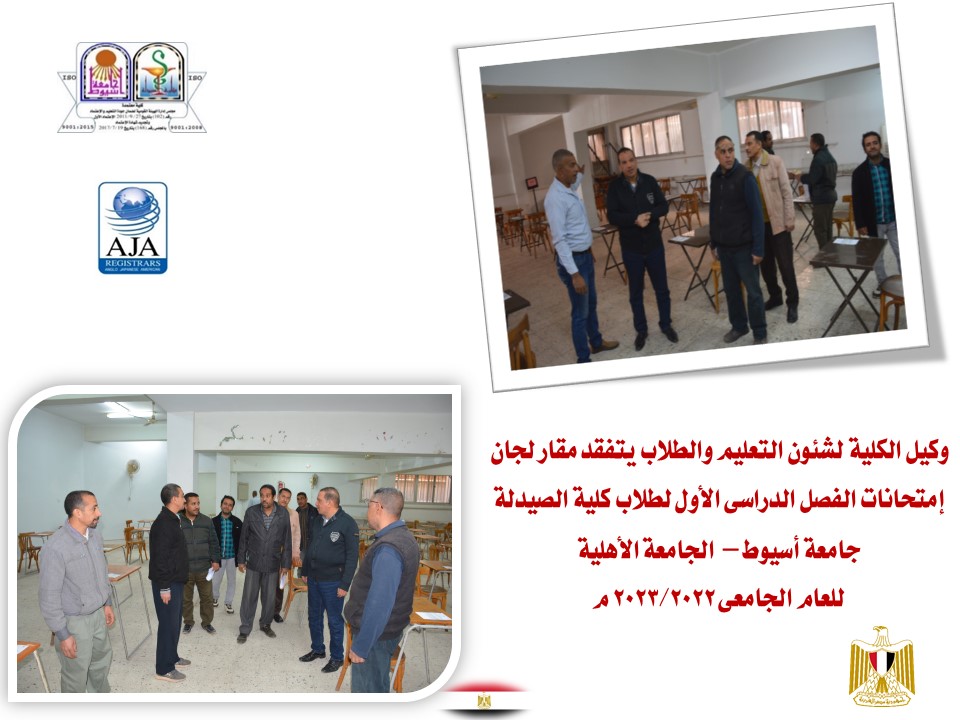
The Vice Dean for Education and Student Affairs inspects the examination committees First semester exams for students of the Faculty of Pharmacy Assiut University - Ahlia University For the academic year 2022/2023

Under the auspices of Prof. Dr. / Ahmed El-Minshawy - Acting President of the University and Prof. Dr. / Ahmed Mohamed Abdel-Mawly - Dean of the Faculty and Acting Vice-President of the University for Education and Student Affairs, and within the framework of final preparations for the start of the exams for the first semester of the academic year 2022/2023 and It is scheduled to start on Tuesday, corresponding to 12/27/2022. Prof. Dr. Hassan Refaat Hassan - Vice Dean for Education and Student Affairs, accompanied by Mr. / Abdel Hafez Ali Abdel Hafez - Director of Student Affairs Department, made an inspection tour of the examination committees for the first semester of the academic year 2022/2023 in the auditorium complex, examination halls, examination committees for the general program, the clinical pharmacy program, and examination committees for students of the Faculty of Pharmacy at Al-Ahlia University, to ensure the implementation of all directives related to exams, including the equipment of the committees, the provision of all services, the completion of all maintenance work for those, and their preparation by all means to prepare the atmosphere appropriate for students to take exams.

The tour took place on Monday 12/26/2022

وكيل الكلية لشئون التعليم والطلاب يتفقد مقار لجان  إمتحانات الفصل الدراسى الأول لطلاب كلية الصيدلة جامعة أسيوط – الجامعة الأهلية للعام الجامعى 2022/2023 م

news category
خبر عام

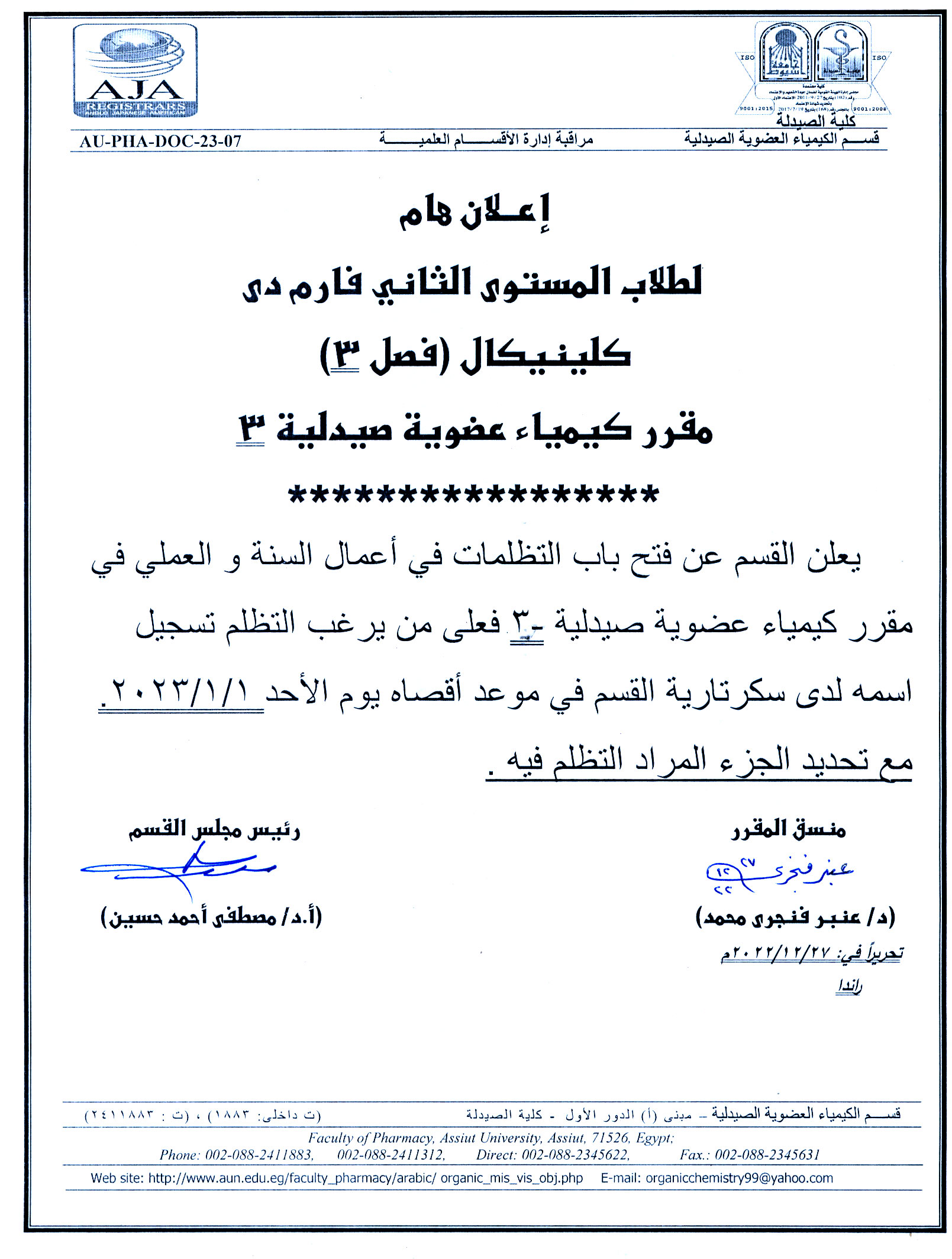
The Department of Pharmaceutical Organic Chemistry announces the opening for grievances in the year and practical work of the course of Pharmaceutical Organic Chemistry-3 for students of the second year PharmD  

The Department of Pharmaceutical Organic Chemistry announces the opening for grievances in mid-term and practical for the course of Pharmaceutical Organic Chemistry-3 for students of the second level Pharm D and (semester 3) Clinical

Meeting of the Council of the Pharmaceutics Department, Faculty of Pharmacy on Monday, January 2, 2023 AD, at ten in the morning

God willing, the meeting of the Pharmaceutics Department Board of the Faculty of Pharmacy No. (510) will be held on Monday, January 2, 2023 AD, at ten in the morning

in the teaching hall on the third floor under the chairmanship of the Faculty to discuss the topics that we will inform you later.


news category
خبر عام

A Novel C Fe Cu Nanocomposite Loaded with Doxorubicin Tailored for the Treatment of Hepatocellular Carcinoma

Research Authors
Mohammed S Saddik, Mahmoud MA Elsayed, Amany A Abdel-Rheem, Mohamed A El-Mokhtar, Eisa S Mosa, Mostafa F Al-Hakkani, Samah A Al-Shelkamy, Ali Khames, Mohamed A Daha, Jelan A Abdel-Aleem
Research Date
Research Department
Research Journal
pharmaceutics
Research Publisher
pharmaceutics
Research Year
2022

Novel Green Biosynthesis of 5-Fluorouracil Chromium Nanoparticles Using Harpullia pendula Extract for Treatment of Colorectal Cancer

Research Abstract

Colorectal cancer (CRC) is the third highest major cause of morbidity and mortality worldwide. Hence, many strategies and approaches have been widely developed for cancer treatment. This work prepared and evaluated the antitumor activity of 5-Fluorouracil (5-Fu) loaded chromium nanoparticles (5-FuCrNPs). The green biosynthesis approach using Harpullia (H) pendula aqueous extract was used for CrNPs preparation, which was further loaded with 5-Fu. The prepared NPs were characterized for morphology using scanning and transmission electron microscopes (SEM and TEM). The results revealed the formation of uniform, mono-dispersive, and highly stable CrNPs with a mean size of 23 nm. Encapsulation of 5-Fu over CrNPs, with a higher drug loading efficiency, was successful with a mean size of 29 nm being produced. In addition, Fourier transform infrared (FTIR) and X-ray diffraction pattern (XRD) were also used for the investigation. The drug 5-Fu was adsorbed on the surface of biosynthesized CrNPs in order to overcome its clinical resistance and increase its activity against CRC cells. Box–Behnken Design (BBD) and response surface methodology (RSM) were used to characterize and optimize the formulation factors (5-Fu concentration, CrNP weight, and temperature). Furthermore, the antitumor activity of the prepared 5-FuCrNPs was tested against CRC cells (CACO-2). This in vitro antitumor study demonstrated that 5-Fu-loaded CrNPs markedly decreased the IC50 of 5-Fu and exerted more cytotoxicity at nearly all concentrations than 5-Fu alone. In conclusion, 5-FuCrNPs is a promising drug delivery system for the effective treatment of CRC.

Research Authors
Mohammed S Saddik, Mahmoud MA Elsayed, Mohamed Salaheldin A Abdelkader, Mohamed A El-Mokhtar, Jelan A Abdel-Aleem, Ahmed M Abu-Dief, Mostafa F Al-Hakkani, Hatem S Farghaly, Heba A Abou-Taleb
Research Date
Research Department
Research Journal
pharmaceutics
Research Vol
13(2)
Research Year
2021

Tailoring of novel azithromycin loaded zinc oxide nanoparticles for wound healing

Research Abstract

Skin is the largest mechanical barrier against invading pathogens. Following skin injury, the healing process immediately starts to regenerate the damaged tissues and to avoid complications that usually include colonization by pathogenic bacteria, leading to fever and sepsis, which further impairs and complicates the healing process. So, there is an urgent need to develop a novel pharmaceutical material that promotes the healing of infected wounds. The present work aimed to prepare and evaluate the efficacy of novel azithromycin-loaded zinc oxide nanoparticles (AZM-ZnONPs) in the treatment of infected wounds. The Box–Behnken design and response surface methodology were used to evaluate loading efficiency and release characteristics of the prepared NPs. The minimum inhibitory concentration (MIC) of the formulations was determined against Staphylococcus aureus and Escherichia coli. Moreover, the anti-bacterial and wound-healing activities of the AZM-loaded ZnONPs impregnated into hydroxyl propyl methylcellulose (HPMC) gel were evaluated in an excisional wound model in rats. The prepared ZnONPs were loaded with AZM by adsorption. The prepared ZnONPs were fully characterized by XRD, EDAX, SEM, TEM, and FT-IR analysis. Particle size distribution for the prepared ZnO and AZM-ZnONPs were determined and found to be 34 and 39 nm, respectively. The mechanism by which AZM adsorbed on the surface of ZnONPs was the best fit by the Freundlich model with a maximum load capacity of 160.4 mg/g. Anti-microbial studies showed that AZM-ZnONPs were more effective than other controls. Using an experimental infection model in rats, AZM-ZnONPs impregnated into HPMC gel enhanced bacterial clearance and epidermal regeneration, and stimulated tissue formation. In conclusion, AZM -loaded ZnONPs are a promising platform for effective and rapid healing of infected wounds.

Research Authors
Mohammed S Saddik, Mahmoud MA Elsayed, Mohamed A El-Mokhtar, Haitham Sedky, Jelan A Abdel-Aleem, Ahmed M Abu-Dief, Mostafa F Al-Hakkani, Hazem L Hussein, Samah A Al-Shelkamy, Fatma Y Meligy, Ali Khames, Heba A Abou-Taleb
Research Date
Research Journal
Pharmaceutics
Research Publisher
MDPI
Research Vol
Vol.14
Research Year
2022

Anti-inflammatory activity of the food plant Calligonum polygonoides L. flavonoids targeting NF-κB

Research Abstract

Calligonum polygonoides L. subsp. comosum (Polygonaceae) is a wild shrub that grows on the sandy deserts of various regions in North Africa, Western Asia and Southern Europe. In some of Asian countries, the flower buds and young branches of the plant are used to prepare traditional food dishes. Also, different organs of C. polygonoides L. are used traditionally in treatment of stomach diseases. The isolation of anti-inflammatory lead compounds was performed by using different normal silica gel, reversed phase C-18, and sephadex LH-20 open columns. The identification of the isolated compounds was done using NMR spectral techniques. The isolated compounds are of different flavonoid classes; two flavonol glycosides; kaempferol-3-O-β-D-glucuronide and mequilianin, one flavan-3-ol; catechin, and one dihydro-flavonol; taxifolin. The methanol extract and ethyl acetate fraction of Calligonum polygonoides L. subsp. comosum exhibited anti-inflammatory activity against NF-κB translocation pathway on HEK293 cells. All of them were active against NF-κB translocation, and previously isolated from the plant under study. Kaempferol-3-O-β-D-glucuronide, a flavonoid glycoside demonstrated the most potent NF-κB inhibition in comparing with other flavonoids; taxifolin, catechin, and mequilianin. Therefore, the food plant aerial parts of C. polygonoides are rich in nutraceuticals (flavonoids and flavonoid glycosides) that can be utilized in the treatment of vascular inflammation.

Research Authors
Ahmed M Zaher, Mai AM Ahmed, Nesma M Mohamed
Research Date
Research Department
Research Journal
Bulletin of Pharmaceutical Sciences. Assiut
Research Publisher
Assiut University, Faculty of Pharmacy
Research Vol
43
Research Year
2020

Anti-inflammatory and cytotoxic specialised metabolites from the leaves of Glandularia × hybrida

Research Abstract

In our ongoing effort to investigate active specialised metabolites from genus Glandularia, phytochemical studies on the ethanolic extract of Glandularia × hybrida (Groenl. & Rümpler) G.L. Nesom & Pruski leaves resulted in the isolation of three undescribed compounds, a dibenzylbutyrolactolic lignan and two echinocystic acid based triterpenoid saponins, in addition to two known compounds. Interestingly, this study reports isolation of chemosystematically valuable specialised metabolites for the first time from the genus under investigation. Additionally, the isolated metabolites were evaluated for their iNOS inhibition and cytotoxic activities using a combination of in silico and in vitro studies. The pharmacokinetics properties (ADMET) of some of the isolated compounds were determined using pkCSM-pharmacokinetics server. Molecular docking analysis showed that saponin compound possesses higher negative score (− 9.59 kcal/mol) than the lignan compound (− 6.56 kcal/ mol). The isolated compounds also showed iNOS inhibition activity with IC50 values ranging between 6.6 and 49.7 μM and significant cytotoxic activity against a series of cell lines including SK-MEL, KB, BT-549, SK-OV-3, LLC-PK1 and VERO cells. Hence, this study reveals that specialised metabolites from G. hybrida plant are of significant anti-inflammatory and cytotoxicity potentials.

Keywords: Glandularia × hybrida Verbenaceae Triterpenoidal saponins Lignans X-ray crystallography iNOS inhibition Molecular docking

Research Authors
Nesma M. Mohamed a , Mai A.M. Ahmed a , Shabana I. Khan b,c , Frank R. Fronczek d , Anber F. Mohammed e , Samir A. Ross b,c,*
Research Date
Research Department
Research File
5-C.pdf (553.88 KB)
Research Journal
Phytochemistry 195 (2022) 113054
Research Publisher
Nesma M. Mohamed
Research Vol
Volume 195Volume 195, March 2022, 113054
Research Website
https://scholar.google.com/citations?user=CfIo5VgAAAAJ&hl=ar&oi=sra
Research Year
2021
Subscribe to