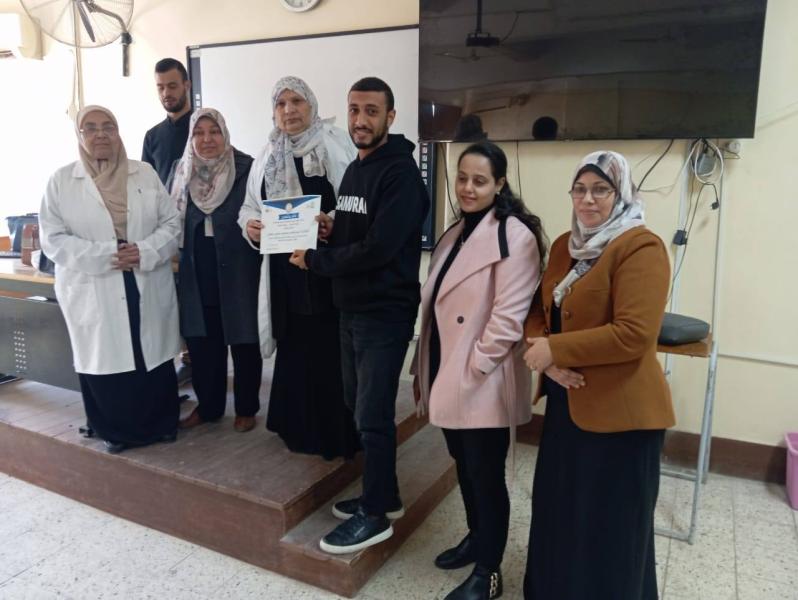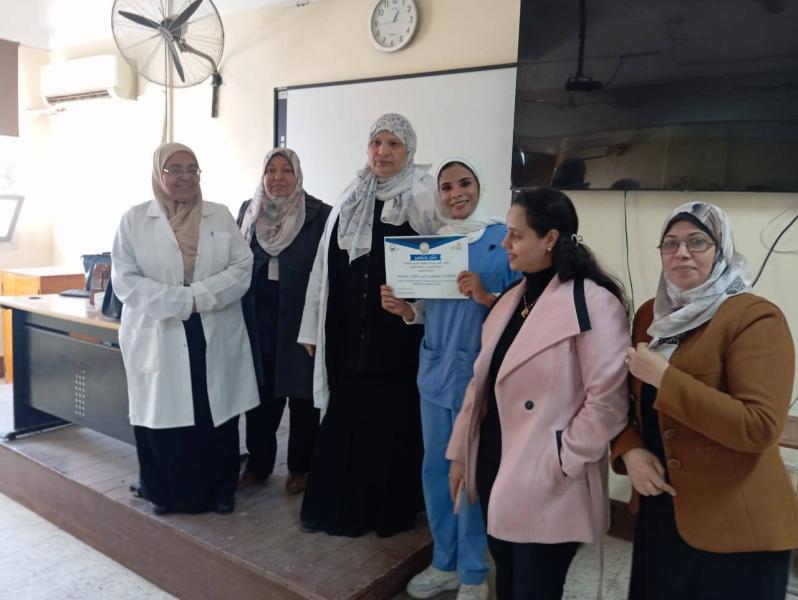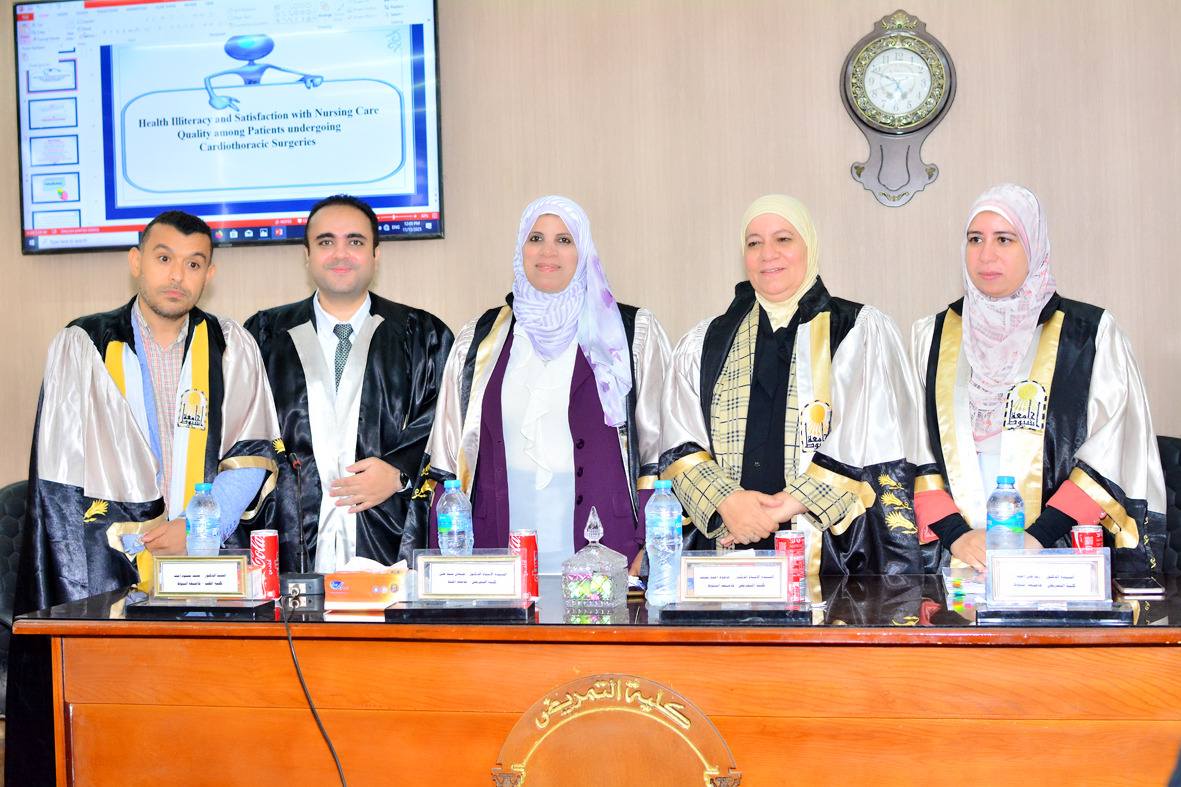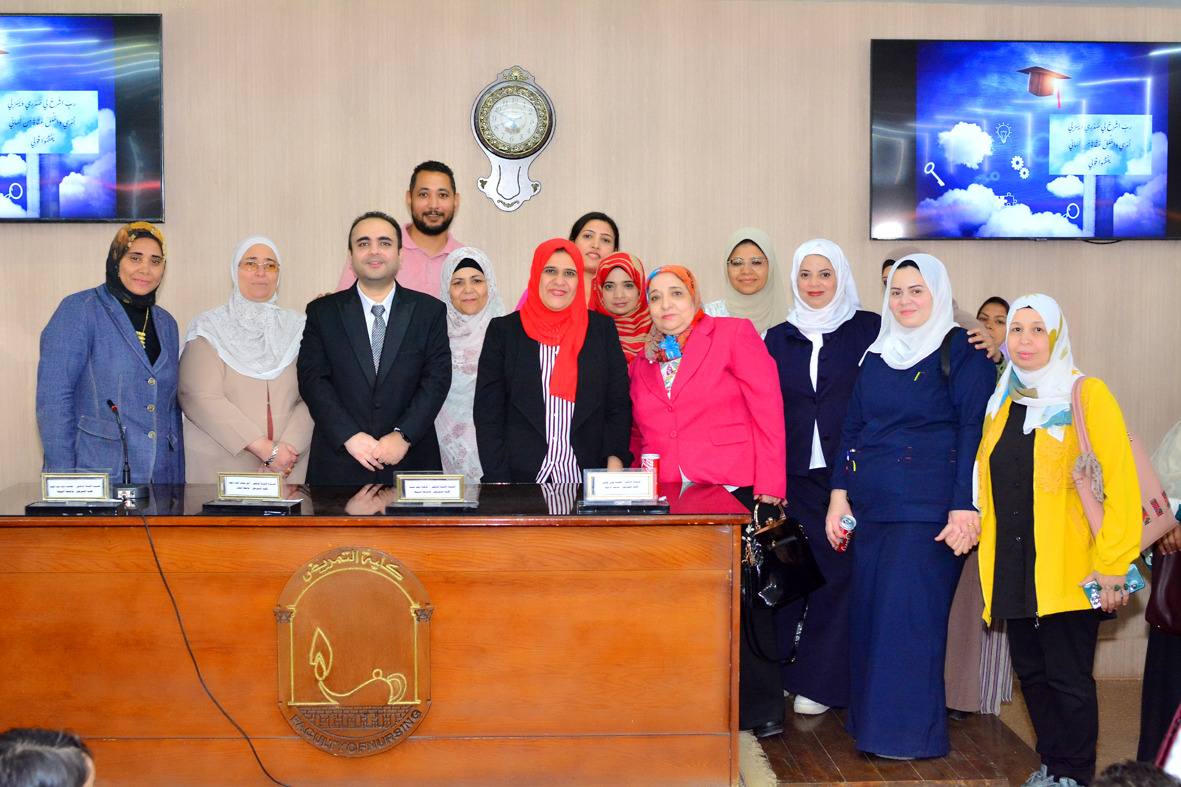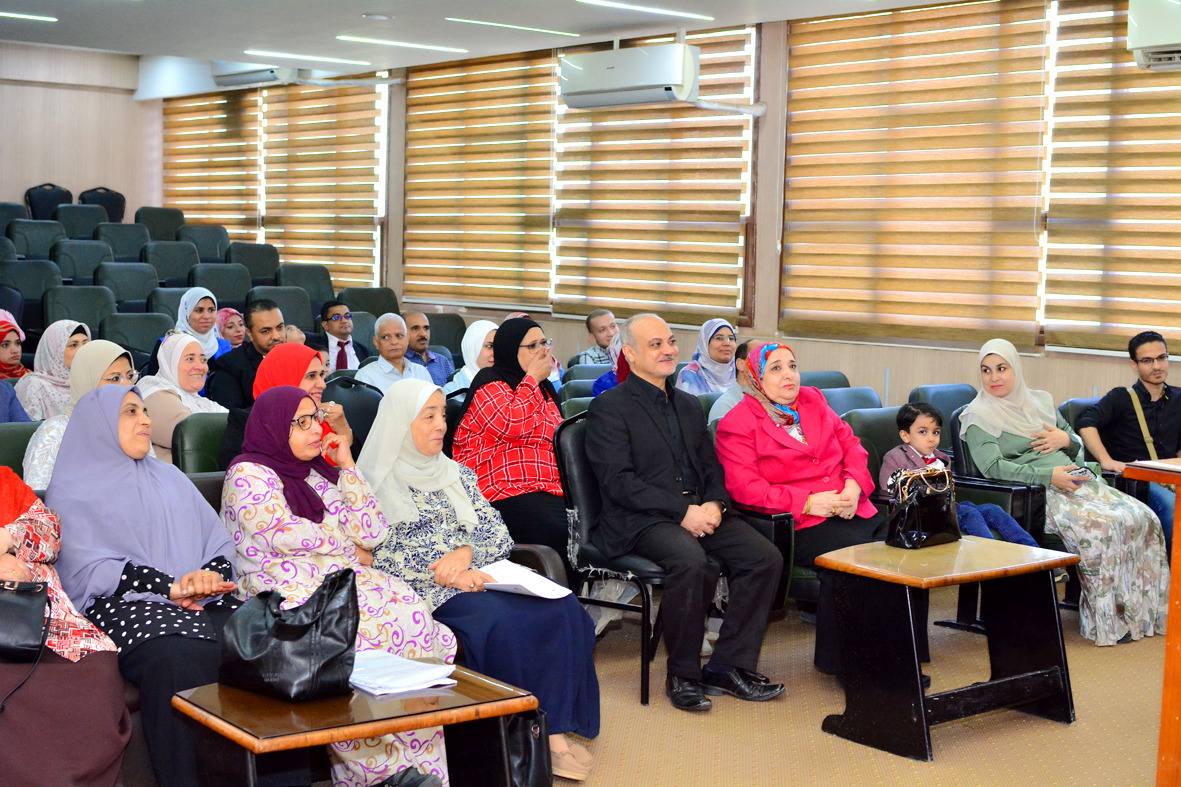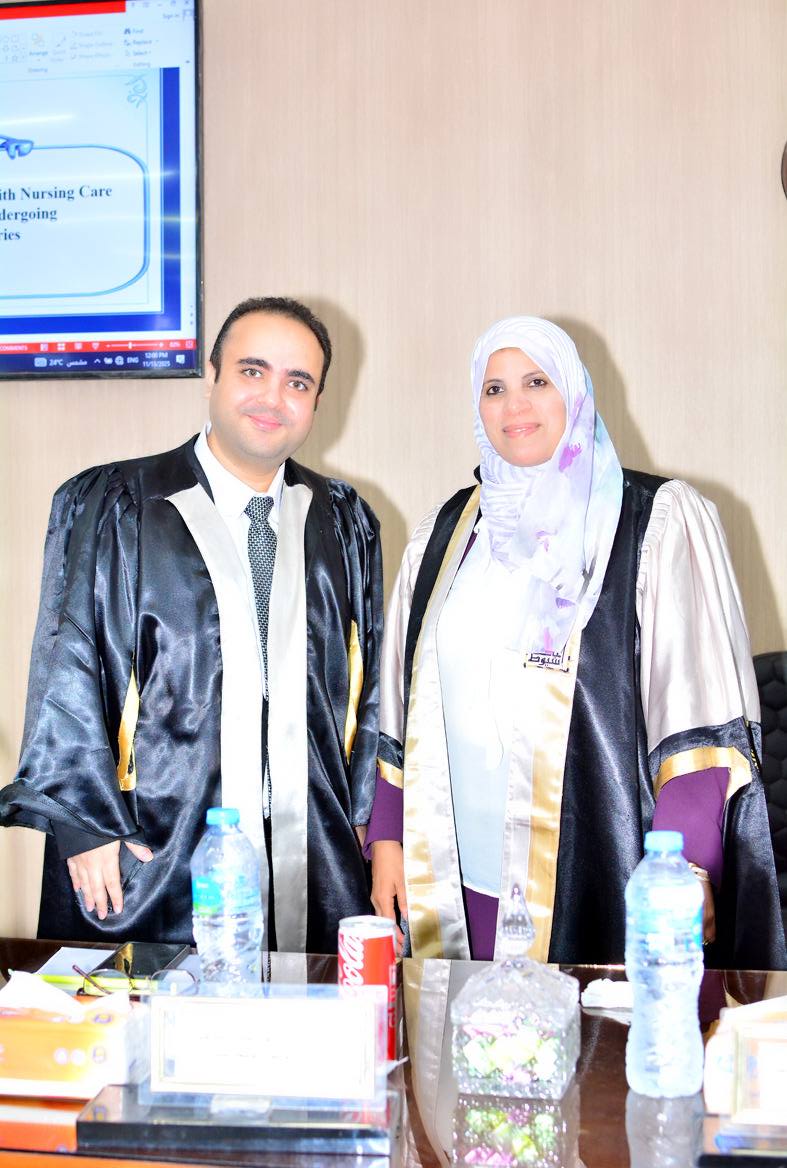
Acceptance of the master's thesis of the researcher/ Asmaa Abdel Aal Muhammad, a teaching assistant in the Department of Nursing Administration, Faculty of Nursing - Sohag University

The subject of the submitted message is :

Effect of entrepreneurial leadership on climate team and innovative work behavior among nursing staff nurses

(The impact of entrepreneurial leadership on team climate and innovative work behavior among nursing staff)

The thesis review and supervision committee was:

Prof. Dr. Souad Ahmed Ghallab, Professor of Nursing Administration, Faculty of Nursing, Assiut University. (About the Supervisors)

Prof. Dr. Sahar Mohamed Morsi, Professor of Nursing Administration, Faculty of Nursing, Assiut University. (Internal examiner)

Prof. Dr. Nadia Mohamed Ali Saleh, Professor of Nursing Administration, Faculty of Nursing, Sohag University. (External examiner)

Dr. Reda Hassan Hussein, Assistant Professor of Nursing Administration, Faculty of Nursing, Assiut University. (About the supervisors)

Dr. Umm Hashem Jumaa Ragab, Assistant Professor of Nursing Administration, Faculty of Nursing, Sohag University. (About the supervisors)

We wish everyone good luck and success.

Importance of gradation of needs among nurses working in different health care setting

Research Authors
soad Ahmed Ghallab Amal Sayed Mohamed , Hala Ramzy youssif
Research Journal
المجلة الطبية بجامعة القاهرة
Research Publisher
المجلة الطبية بجامعة القاهرة
Research Year
2006

First Line Nurse Managers′ Attributes and Work Stress Levels at Assiut University Hospitals

Research Abstract

Background: Not all the first line nurse managers have the same levels of leadership attributes so that being effective or ineffective nurse managers depends on the level of attributes she/he has. Aim: Determining the first line nurse managers′ attributes and work stress level. Study design: Descriptive research design was used. Setting: Conducted at Assiut University Hospitals. Subject: First line nurse managers no.= 77 Methods: The data were collected using two tools; I- Structured self-administer questionnaire including; a) Personal data sheet, b) Assertiveness scale, c) Personal accountability checklist, d) Johari Window Questionnaire, and e) Protective Nursing Advocacy Scale II- Perceived work stress scale. Results: The study revealed that the highest percent of the first line nurse managers were not-assertive (72.7%), having high level of accountability (59.8%), had open level of awareness (16.9%), advocating others (85.7%), and had moderate level of stress (83.1%).Conclusion: There was negative relation between the first line nurse managers′ attributes and work stress level. Recommendation: Implementing continuous educational programs for nurse managers to improve nurse awareness, and assertiveness

Research Authors
noura elsayed esmail, Samah Mohamed Abdalla, Amal Sayed Mohamed
Research Date
Research Journal
Assiut Scientific Nursing Journal
Research Pages
84-92
Research Publisher
Assiut University, Faculty of Nursing
Research Vol
8
Research Website
https://journals.ekb.eg/article_101232.html
Research Year
2020

Relationship between Employee’s Psychological Empowerment and Time Management Proficiency

Research Abstract

Background: Time management is crucial for empowered employees, high employee empowerment increase productivity Aim: aim of the study was to determine the relationship between employee’s psychological empowerment and time management proficiency Study design: descriptive correlational design. Setting: The study was conducted in different administrative units at Faculty of Nursing Assiut University. Subject: Consisted of 81 employee’s. Tools: Two tools were used to collect data namely, time management proficiency questionnaire and psychological empowerment scale tool one: Consisted of two parts. Part one personal data form. Part II: Time management proficiency questionnaire, which classified under seven dimensions Tool II: Psychological empowerment scale, which classified under 5 dimensions. Results: more than half of employees 54.3% have low psychological empowerment level as well as  the highest percentage 46.9%  of employees fall within moderate time management level and about 43.2% of employee had low time management level Conclusion: strong positive relation between employee’s psychological empowerment and time management proficiency (p = 0.000- r = 0.88). Recommendations: Develop empowerment training program for employee's unit managers and time management program for employees, and further researches to test the impact of time management and empowerment on productivity, organizational loyalty and commitment.

Research Authors
Amal Sayed Abdel-hafez, Samah Mohamed, Magda Ahmed Albeah, Maha Muhammad Rashed
Research Date
Research Journal
Assiut Scientific Nursing Journal
Research Pages
217-227
Research Publisher
Assiut University, Faculty of Nursing
Research Vol
8
Research Website
https://asnj.journals.ekb.eg/article_417992.html
Research Year
2020

Effectiveness of Green Electronic Exams: Exploring Facilitators, Barriers, and Student’s Satisfaction within the Context of Green Education

Research Abstract

Background: Green electronic exams are a fundamental component of the e-learning process. Green education has emerged as a strategy for fostering environmental awareness. Aim of the Study: Explore the levels of perceived green electronic exams effectiveness, facilitators, barriers, and nursing students’ satisfaction within the context of green education. Subject and Method: A descriptive correlational, comparative research design was utilized. The study was conducted with 1,030 nursing students from three Nursing Colleges; Assiut, Sohag, and South Valley. A simple random sampling technique was employed to select students from the eligible population at each college. Data collection tools included: personal and academic information, green electronic exams facilitators scale (14 items across 4 dimensions), green electronic exams barriers scale (19 items across 4 dimensions), electronic exam satisfaction assessment scale (18 items) and green E-Exam   effectiveness scale (34 items across 6 dimensions). Results: Students from College of Nursing Assiut University reported the highest levels of effectiveness (22.7%), facilitators (68.3%), and satisfaction (79.8%), while perceiving the lowest level of barriers (55%%). Strong positive associations found among all core scales of green electronic exam (p ≤ 0.001). Conclusion: there is a statistical significant associations were identified with Last Semester Score/ academic performance , place of residence with green exam effectiveness, facilitators, barriers and nursing student’s satisfaction p ≤ 0.001. Recommendations: Integrate green education principles into exam content & delivery. Future researches to explore longitudinal approaches to deepen understanding of digital transformation in nursing education.

Research Authors
Amal Sayed Mohamed, Safaa R Osman, Magda Ahmed Mohamed Mansour, Saieda Abdelhameed Abdelaziz
Research Date
Research Journal
Egyptian Journal of Health Care
Research Pages
2123-2136
Research Publisher
Ain Shams University, Faculty of Nursing
Research Vol
12
Research Website
https://ejhc.journals.ekb.eg/article_442477.html
Research Year
2021

Nurses Patients Ratio and its Effect on Patient's Safety

Research Abstract

Background: Nurse to patient's ratio having great effect on quality of patients care provided especially patient's safety. Aim: This study aimed to determine the effect of nurse patient's ratio on patient‟s safety. Research design: descriptive, correlational research design was used. Setting: The study was conducted at Assiut Fever Hospital (Isolation, Hemodialysis and Health insurance units). Subject: 55 nurses were observed. Tools : Personal data sheet and patient's safety observational check list were used. Results: Nurses shortage appear in dialysis unit followed by health insurance unit and the highest percentage of shortage appear in isolation unit (53.4%, 61.5%, and 72%). Nurse patient's ratio have positive relation with nurses‟ application of general and medication safety standards in morning shift (0.748, 0.778) respectively. There is a positive relation between the nurse patient's ratio in evening shift (100%), but in night shift was (98.2%) for not met general patient safety standards and 100% for medication safety standards Conclusion: There were statistically significant differences between nurses‟ application of patient's safety standards dimensions and nurse patient's ratio in the three shifts Recommendation: Developing strategies to use nurse patient's ratio effectively and provide continuous training for nurses about national patient's safety standards.

Research Date
Research Journal
Assiut Scientific Nursing Journal
Research Pages
222-229
Research Publisher
Assiut Scientific Nursing Journal
Research Vol
10
Research Website
https://journals.ekb.eg/article_220633.html
Research Year
2022

Effect of Work Climate on Problem Solving Skills among Teaching Staff Members and their assistant

Research Abstract

Background: The problem-solving process is a complex procedure that requires the integration of multiple skills. A positive work climate is considered essential for ensuring an organization’s sustainability. Aim of the study: investigate the effect of work climate on problem-solving skills among teaching staff members and their assistants at the Faculty of Nursing Assiut University. Subject and method: A cross-sectional, descriptive correlational design was utilized, involving 212 participants selected through purposive sampling. Data collection tools included a personal characteristics questionnaire, the Problem-Solving Scale (32 items across 8 dimensions), and the Work Climate Scale (39 items across 11 dimensions). Results: Findings revealed that 21.7% of staff showed high problem-solving skills versus 15.6% of assistants. Additionally, 45.3% of staff perceived a highly positive climate compared to 32.1% of assistants. Significant associations were found between problem-solving skills and personal factors such as age, gender, experience, and residence (p = 0.000). Conclusion: The study concluded that teaching staff demonstrated slightly higher levels of problem-solving skills and more positive perceptions of work climate compared to assistants. Personal characteristics like gender, experience, and residence significantly affect problem-solving skills and perceptions of work climate among nursing faculty and assistants. Recommendation: The study recommends targeted training, inclusive leadership strategies, and regular evaluation of organizational interventions to enhance problem-solving skills and foster a positive work environment within academic nursing settings.

Research Authors
Amal Sayed Mohamed 1 Safaa R. Osman 2 Magda Ahmed Mohamed Mansour 3 Naglaa Mohammed Amein Ghanem 4
Research Date
Research Journal
Egyptian Journal of Health Care.
Research Pages
2318-2332
Research Publisher
Egyptian Journal of Health Care.
Research Vol
13
Research Website
https://ejhc.journals.ekb.eg/article_440408.html
Research Year
2022

Nurses' Knowledge and Attitude Toward Quality Improvement: Implication for Health Care Outcomes

Research Authors
Amal Sayed Mohamed1 & Heba Mostafa Ali 2
Research Date
Research Journal
Assiut Scientific Nursing Journal
Research Pages
270-279
Research Publisher
Faculty of Nursing Assiut University
Research Vol
10
Research Year
2022

Nurses Perception about Situation, Background, Assessment, Recommendation (SBAR) Shift Report and Patient’s Safety

Research Abstract

Background: communication is essential element in providing patient health care services. SBAR shift reports are utilized to ensure communicating patient’s information briefly without unimportant details. Aim: Evaluate nurse's perception about situation, background, assessment, recommendation and patient’s safety. Study design: the study was performed using descriptive design. Setting: the research performed at Sohag Cancer Center. Subject: involved of 50 nurse's works at inpatients department Tools: Tool (I) consists of two parts Part (1): Personal data sheet which gathered data about: gender, age, and years of experience, educational qualification, and marital status. Part (2): Self administer questionnaire about Nurse’s perception related to situation, background, assessment, and recommendation. It included 25 multiple choice questions. Tool (II): patient’s safety audit checklist, the tool consists of 17 items with sub-items covering general patient’s safety goal. Results: all nurses had unsatisfactory knowledge score (100.0%) and no patient’s safety activity (25). Conclusion: nurses have low knowledge score about SBAR shift report and no activity in relation to patient’s safety goals Recommendations: implementing inservices training program on SBAR shift report applications, and further studies investigating SBAR shift report format on nurses productivity and nurses, patient satisfaction

Research Authors
Suzan Ataallah Mohamed, Samah Mohamed Abdullah, Nahed Shawkat Abo Elmagd, Amal Sayed Mohamed
Research Date
Research Journal
Assiut Scientific Nursing Journal
Research Pages
199-205
Research Publisher
Assiut Scientific Nursing Journal
Research Vol
11
Research Website
https://journals.ekb.eg/article_318488.html
Research Year
2023
Subscribe to