
Effect of designing Educational Program on Nurses` Performance for Immediate care of post cystectomy Patients at Intensive Care Unit

Research Abstract

Abstract Background: Educational program today is very important for the nurses to increase knowledge and practice for immediate care of cystectomy.Aim to: evaluate the effect of educational program on nurses` knowledge and practice for immediate care of post cystectomy patients at intensive care unit. Research design : A quasi experimental design was conducted to achieve the aim of the study. Subjects: All available nurses' were 40 nurses caring for patients with cystectomy. Two tools were used for data collection, tool one, knowledge assessment structured interviewing questionnaire and tool two, an observational checklist. Results: Nurses` knowledge scores improved after implementation of the educational program from (15% to 97.5%), also the observed nurses` practice scores were improved from (20%) before the educational program to (100%) after the educational program .Conclusion: Nurses` knowledge and practice regarding the immediate care of patients with cystectomy becomes satisfactory level after the educational program. Recommendations: The study recommends focused on establishing plans by periodical educational programs for nurses to help them in improving their knowledge and practice.
Research Authors
Eman H. Hassanein1 , Medhat A. El-Hawary2 , Mervat A. Abdel-Aziz3 & Mogedda M. Mehany4 .
Research Date
Research Department
Research Journal
Assiut Scientific Nursing Journal
Research Member

Assessment the Risk Factors of Patients with Septic Shock in the Intensive Care Unit

Research Abstract

Abstract Background: Sepsis is considered to induce immune suppression, leading to increased susceptibility to secondary infections with associated late mortality. Aim: To assess the risk factors of patients with septic shock in the intensive care unit. Study design: a descriptive research design was utilized in this study. Setting: The study was conducted in the general intensive care unit and trauma intensive care unit at Assuit University Hospital. Sample: A purposive 60 patients with septic shock patients. Tools: two tools used for data collection, tool (1), Patient assessment sheet, and tool (2), risk factors assessment sheet. Results: The main risk factors were dysfunction of one or more of the major body systems, tracheostomy (65.0%), diabetes mellitus (65.0%) and respiratory disease, in addition, more than half of them stay more than 20 days in the ICU and half of them suffered from respiratory failure as a complication of septic shock. Conclusion: major factors that were associated with in-hospital mortality among ICU patients with severe sepsis or septic shock were multi-organ failure and DM which despite treatment with early resuscitation. Recommendation: Applied Nursing guidelines and standard precautions infection control of patients with septic shock at the onset of intensive care unit admission

Research Authors
Nadia Adel Sayed1 , Olfat Abd El-Ghany Shawer2 & Mervat Anwar Abdel-Aziz3 .
Research Date
Research Department
Research Member

Assessment of Nurses’ Knowledge and Practices Regarding Care For Patients with Cardiogenic Shock

Research Abstract

Abstract

Cardiogenic shock is a clinical syndrome characterized by end organ hypo perfusion. It’s an irreversible condition may lead to cardiac arrest. Critical care nurses possess pivotal role in the assessment of patient with cardiac shock, providing treatment. Aim of the study: This study aimed to assess nurses’ knowledge and practice regarding caring of patient with cardiogenic shock. Setting: the study was conducted in coronary care unit at Heart hospital Assiut University. Study design: A descriptive research design was utilized in the study. Subjects The study included 40 nurses working in the mentioned setting. Tools: two tools were used for data collection, Tool one: nurses' knowledge assessment tool. Tool two: observational checklist regarding caring of cardiogenic shock patients Results: revealed that total knowledge level of nurses were (72.5%) unsatisfactory level regarding care of cardiogenic shock patients and (27.5%) of nurses had a satisfactory level. While total nurses practice level were (82.5%) had an inadequate level regarding care for patient with cardiogenic shock and (17.5%) had an adequate level. Conclusion: Nurses showed inadequacy of their knowledge and practices regarding care of cardiogenic shock patients. Recommendations: The study recommends that an education program regarding care of cardiogenic shock patients be designed, conducted and monitored for nurses working in the ICU.

Research Authors
Asmaa Badr Mohamed1 , Mervat Anwar Abd-Alziz2 , Ahmed Abd algleel Ahmed3 & Naglaa Ahmed Ahmed4
Research Date
Research Department
Research Journal
Assiut Scientific Nursing Journal
Research Member

Patterns and Outcomes of Abdominal Trauma Patients Admitted to Trauma Intensive Care Unit

Research Abstract

Abstract Abdomen is the third most common area of the body that is damaged because of trauma. The nurse must be aware of specific assessment findings associated with abdominal trauma and immediate recognition of problems, so this study aimed to assess patterns and outcomes of abdominal trauma patients admitted to trauma intensive care unit. A descriptive research design was used. Setting: This study was carried out in trauma intensive care unit at Assuit University Hospital. Sample: 60 adult critically ill patients with abdominal trauma. Tools: Patient profile characteristic's sheet and abdominal trauma severity scores and outcomes assessment sheet were used. Main results: There were 65% males and 35% females. Mean Age was 36.62±10.8. Blunt trauma accounted for 86.67% while penetrating was 13.33%. Motor car accidents was the main cause of trauma with 51.67%, liver and spleen the most affected organs. Mortality rate was 10%. Gastrointestinal and respiratory complications are the most occurred. Conclusion: Abdominal trauma patients need frequent assessment as majority of the studied patients at a high risk for developing complications. Recommendations: Training the nurses about how to use abdominal trauma scoring systems for frequent assessment of patients' heath statue from first day of admission

Research Authors
Seham H.Mohamed1 ,Mervet A.Abdel-Aziz2 , Mogedda M.Mehany3, Naglaa G.AbdElhafez 4 & Ahmed T.Ahmed5
Research Date
Research Department
Research Journal
Assiut Scientific Nursing Journal
Research Member

The effect of implementing nursing practices to support ventilation among patients with acute respiratory failure on their condition

Research Abstract

Abstract Background: Acute respiratory failure is a sudden and life-threatening deterioration in pulmonary gas exchange, resulting in carbon dioxide retention and inadequate oxygenation approximately 50% to 75% of those patients require ICU hospital stays &and mechanical ventilatory support practices longer than 7 days. Aim: This study aimed to evaluate the effect of implementing nursing practices to support ventilation among patients with acute respiratory failure on their condition. Method: Design: A quasi-experimental research design was used to conduct this research. A convenient sample consisted of 120 patients, they were enrolled in the study group (n=60) and the control group (n=60) was admitted to the chest intensive care unit at Assiut University Hospital. A patient assessment sheet, acute respiratory failure Patient outcomes assessment sheet were used for the collection of data. Results: A significant statistical difference (P<0.05) between both groups concerning the improvement of oxygenation, arterial blood gas, clinical pulmonary infection score, length of chest ICU stay, mechanical ventilator parameters among study group compared to control group subjects after the intervention, thus research hypotheses cane bee supported. Conclusion: Implementing nursing practices to support ventilation among patients with acute respiratory failure effective in improving their outcomes. Recommendation: develop standardized nursing guidelines for patients with acute respiratory failure

Research Authors
Mervat Anwar AbdEl–Aziz1 , Manal Saad Shaker Soliman2 & Mona Mohamed Ibrahim3
Research Date
Research Department
Research Journal
Assiut Scientific Nursing Journal
Research Member

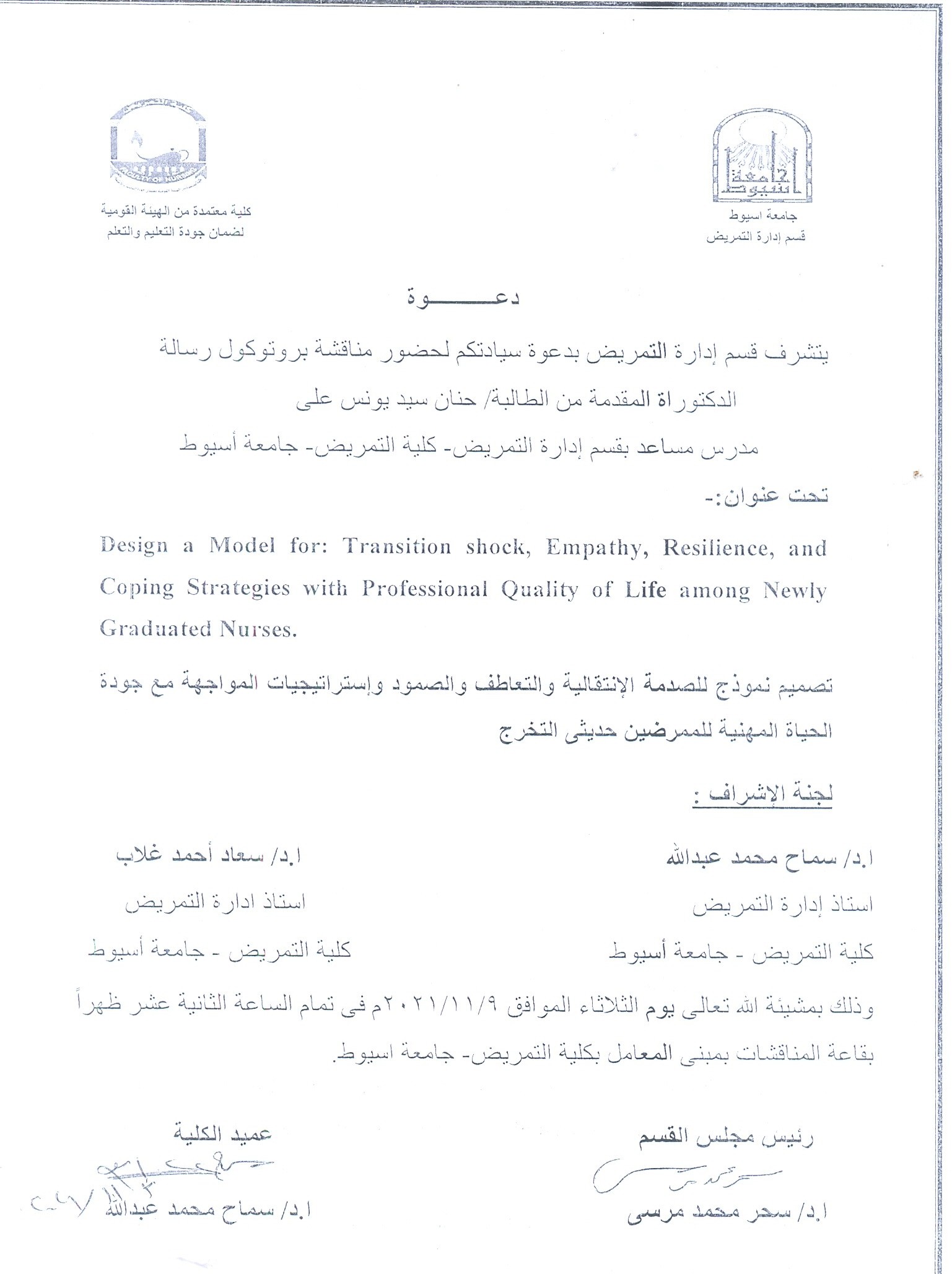
Discussion of the doctoral dissertation protocol for researcher / Hanan Syed Younes Ali

منن

By God willing, the protocol of the doctoral thesis submitted by the researcher / Hanan Syed Younes Ali, Assistant Lecturer, Department of Nursing Administration - Faculty of Nursing - Assiut University, and the title of the thesis: “Design a model for: Transitional shock, Empathy, Resilience, and Coping Strategies with professional Quality of life  among of Newly Graduated nurses” will be discussed, God willing, on Tuesday, 9/ 11/2021 at 11:00 a.m in the conference hall in the laboratories of the Faculty of Nursing, Assiut University

Discussion of doctoral thesis submitted by researcher / Amal Abdel Nasser Mohamed Abdel Aziz

جج

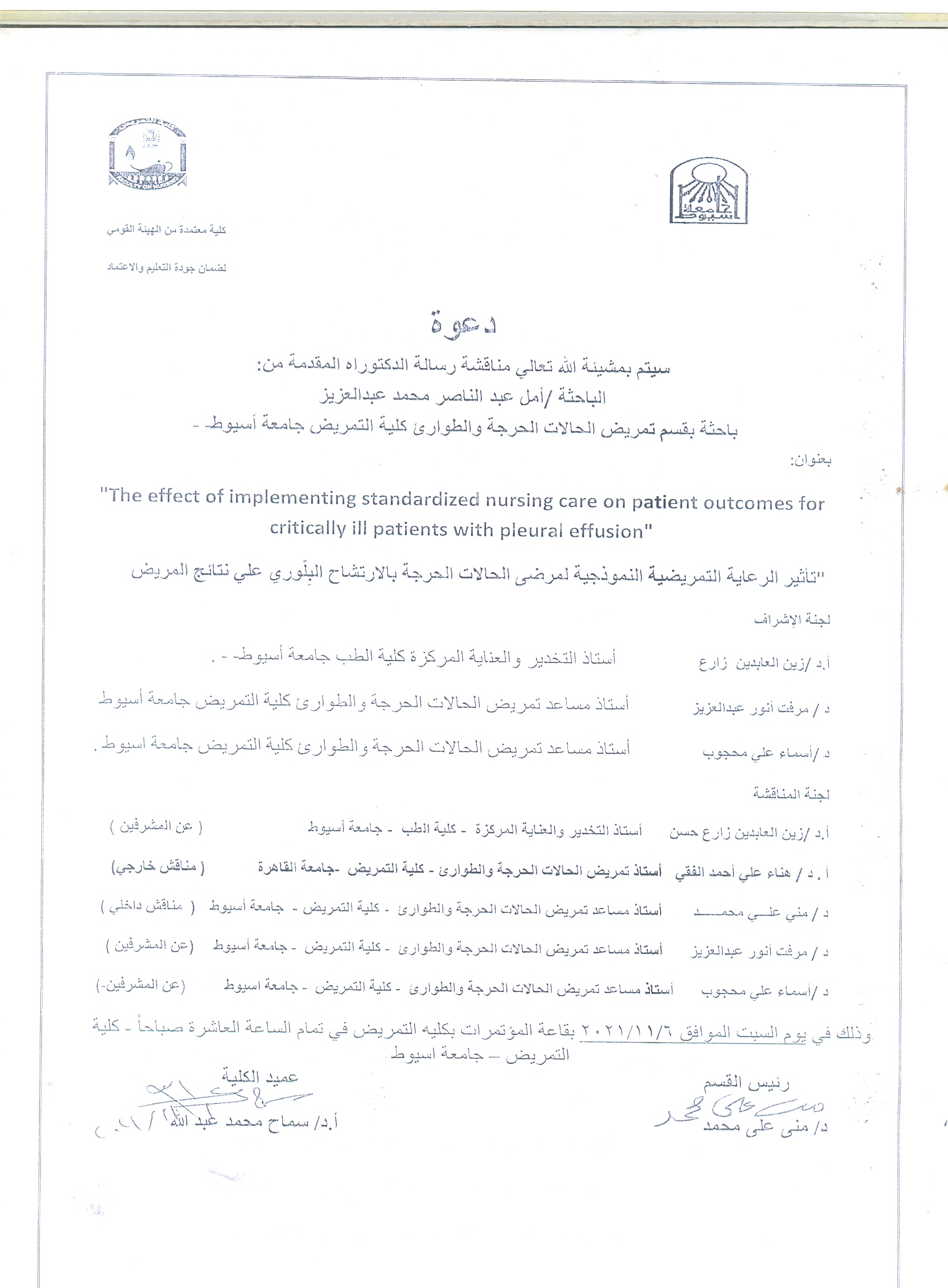
By God willing, doctoral thesis submitted by researcher / Amal Abdel Nasser Mohamed Abdel Aziz - Researcher at the Department of Critical and Emergency Cases, Faculty of Nursing, Assiut University ,will be discussed on Saturday, 14/10/2021, at 10:00 a.m, at the conference hall of the college. Thesis Title:- " The effect of implementing standardized nursing care on patient outcomes for critically ill patients with pleural effusion"

Discussion of doctoral thesis submitted by researcher/ Omar Fathi Hamza Sayed

دد

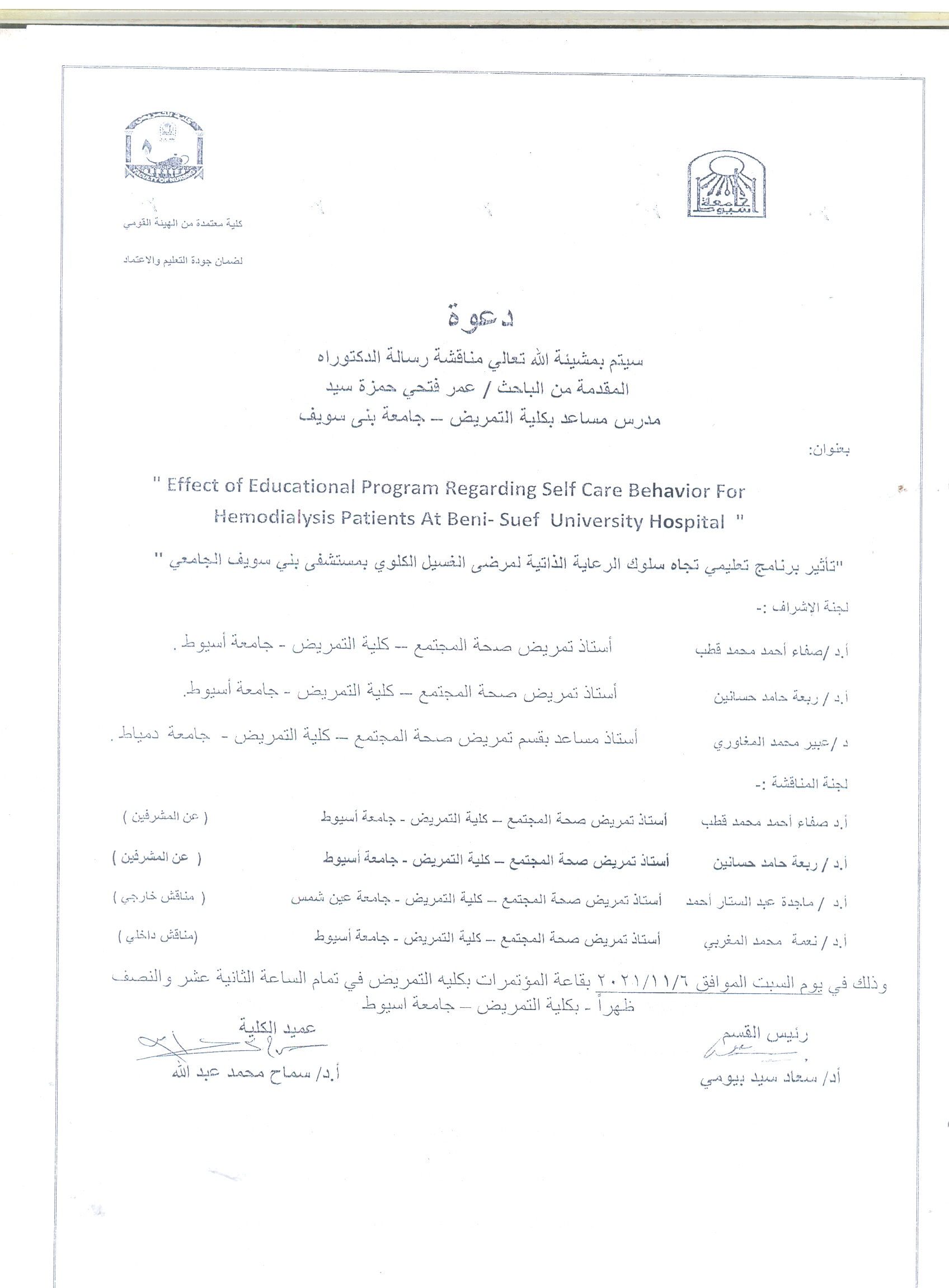
By God willing, doctoral thesis submitted by researcher/ Omar Fathi Hamza Sayed - Assistant Lecturer, Faculty of Nursing - Beni Suef University,will be discussed on Saturday, 6/11/2021, at 12:30 noon., at the conference hall of the college. Thesis Title:- " Effect of an Educational program Regarding selfcare Behavior foHemodialysis patients At Beni Suef University Hospital"

Effect of Nursing Care Guidelines for Post Anesthetic (Phase One) on Patient Outcome at Assiut University Hospital

Research Abstract

Abstract Background: The post anesthesia nurse assumes important for the care and clinical stabilization of the patient in the immediate postanesthetic phase one period until they are fit. Aim this study was carried out to investigate the effect of nursing care guidelines for postanesthetic (phase one) on patient outcome. Tools three tools were utilized to collect data pertinent to the study, which is Tool I Patients assessment sheet consists of three parts. Tool II Richmond Agitation Sedation Scale. Tool III faces pain scales. Methods a quasi-experimental design. The sample was (102) patients that divided into two groups (control 51 and study 51) collected over sixth months. Results As regarding to all time intervals hemodynamic parameters, respiratory status and immediately post anesthesia pain related operation there were statistically significant difference (p<001) between control and study groups post anesthesia phase one, also As regard post-anesthesia complication reduce with statistically significant difference relation to airway obstruction, pain related operation and hypothermia (p<0.009, p=0.029 and p=0.017) respectively between both groups. Conclusion apply nursing care guideline for post-anesthetic showed statistically significance difference of hemodynamic parameters, respiratory status outcomes, decrease pain level and complication

Research Authors
Marzoq Ali Odhah, Hany Ahmed Ibrahim, Mona Aly Mohammed & Mervat Anwar AbdEl-Aziz
Research Date
Research Department
Research Journal
Assiut Scientific Nursing Journal
Research Member

Impact of Educational Training Program on Nurse’s knowledge and practice for Intensive Care Unit Patient Undergoing Endotracheal Intubation

Research Abstract

Abstract Background: Education programs are considered for providing nurses with theoretical and technical information needed to acquire new skills and knowledge. Aim: to assess nurses` knowledge and practice regarding patients who had an endotracheal tube and evaluate the effect of implementing education program on nurses` practice and patient's complications. A Quasi-experimental design. This study was carried out in Trauma and General Intensive Care Unit. The sample of this study consisted of 60 nurses and 120 patients who had endotracheal tube pre/post implementing the program. Tools utilized for data collection were nursing questionnaire sheet, observation checklist sheet, and Patient assessment sheet. The results There were statistical significant differences (P<0.000) in the total nurses knowledge scores regarding endotracheal tube care, pre- implementation was compared with postimplementation and There were statistically significant differences(P<0.000) in total nurses practice scores regarding endotracheal tube care pre- implementation was compared with post- implementation. The patient complication was less oral inflammation absence 70% post- implementing the program. In conclusion: there is the statistically significant difference between the nurse knowledge and practice in pre/post implementing the program. Improving nurses’ knowledge and practice have a favorable effect in preventing post-endotracheal tube care complications.

Research Authors
Abdulnasser A Haza’a, Mona A Mohammed, Mervat A Abdel-Aziz & Hany A Ibrahim,
Research Date
Research Department
Research Journal
Assiut Scientific Nursing Journal
Research Member
Subscribe to