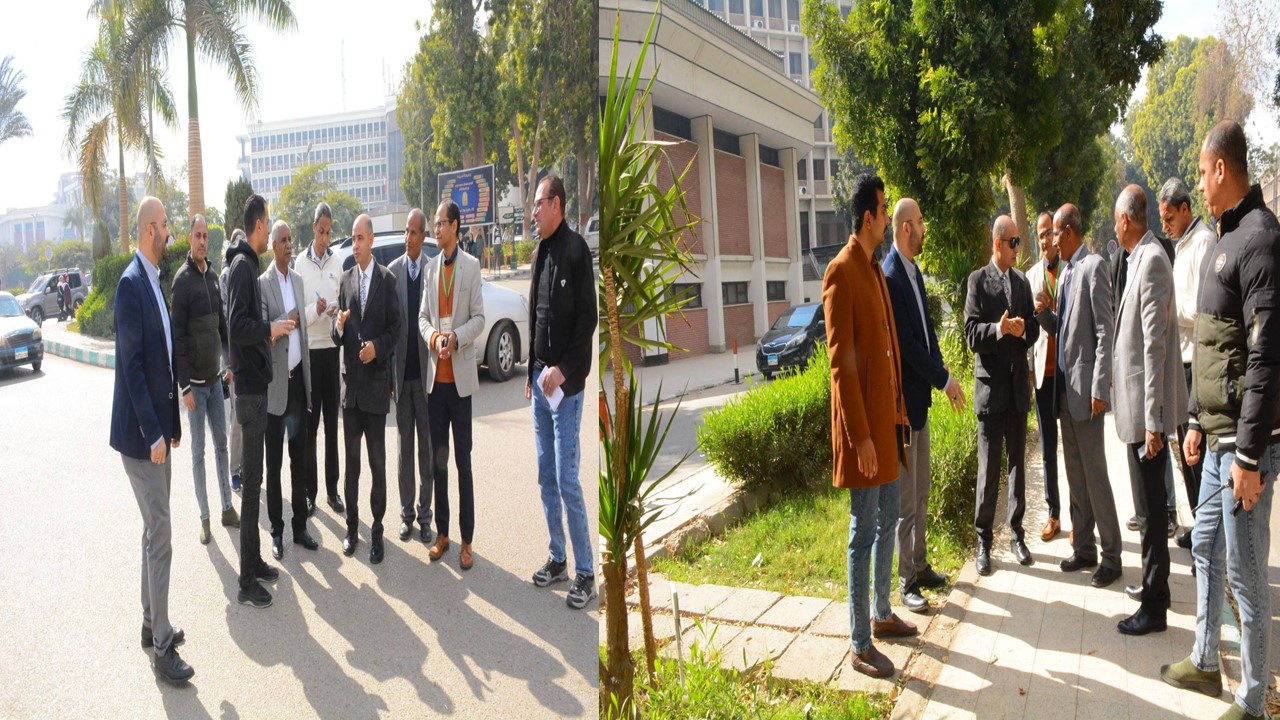
For the Second Consecutive Day… Assiut University Continues the Training Course on “Scientific and Practical Foundations for Preparing Strategic Situation Assessments” for Faculty Members

November 30, 2025

Under the patronage of Professor Ahmed El-Minshawy, President of Assiut University, the University continues the activities of the training course entitled “Scientific and Practical Foundations for Preparing Strategic Situation Assessments” for faculty members. The course is organized by the National Center for Studies, in cooperation with Assiut University, and is being held from 29 November to 1 December at the Faculty and Leadership Development Center in the University’s Administrative Building.

The course is supervised by Major General Ahmed El-Shahaby, President of the National Center for Studies, and Professor Mohamed Adawy, Vice President of Assiut University for Community Service and Environmental Development, with the participation of a distinguished group of faculty members from various faculties of the University.

Lectures on the second day were delivered by Major General Dr. Ahmed Farouk, Consultant at the National Center for Studies, and Mr. Hany El-Aassar, Executive Director of the Center.

The day’s program included lectures on: “The Scientific and Practical Foundations for Preparing Strategic Situation Assessment Papers,” “The Nature of Political and Economic Alert Papers and How to Prepare Them,” and “Collecting, Classifying, and Analyzing Information: The National Center for Studies Model.”

Professor Ahmed El-Minshawy emphasized that Assiut University attaches great importance to developing the skills of its faculty members and enhancing their academic and administrative expertise through specialized training programs. He noted that the course represents a valuable opportunity to strengthen participants’ capacities to analyze reality, identify opportunities and challenges, and formulate decisions based on sound scientific and strategic foundations.

The University President added that such courses are part of the University’s ongoing efforts to support the professional development of faculty members and to encourage the adoption of innovative approaches to situation management and decision-making, thereby contributing to the improvement of academic and administrative performance and to serving the community.

For his part, Professor Mohamed Adawy explained that the course falls within the framework of the University’s societal and developmental role. It focuses on training participants in the latest practical methods for reading and analyzing reality, identifying opportunities and challenges, and building future scenarios that support decision-makers in effectively addressing challenges. He also commended the course for providing ample opportunities for discussion and practical applications, which enhance trainees’ ability to prepare accurate situation assessments that serve their academic, administrative, and research fields.

Assiut University Launches Antibiotic Resistance Awareness

November 24, 2025

Under the patronage of Professor Ahmed El-Minshawy, President of Assiut University, the University on Monday, November 24 witnessed the launch of the scientific seminar entitled “Young Voices, Strong Impact… Together Against Antimicrobial Resistance.” The event was held under the supervision of Professor Ahmed Abdel-Mawla, Vice President for Education and Student Affairs, Professor Alaa Attia, Dean of the Faculty of Medicine and Chairman of the University Hospitals Board, and Dr. Mohamed Abdel-Rahman, Vice Dean of the Faculty of Medicine for Education and Student Affairs.

The seminar was organized by the Infection Control Department at Assiut University Hospitals, in cooperation with the Antibiotic Committee at Al-Rajhi Hospital, the Main Blood Bank Unit of the Clinical Pathology Department, and the Scientific Committee of the Assiut University Student Union.

The event was attended by Professor Mohamed Adawy, Vice President for Community Service and Environmental Development; Dr. Hoda Makhlouf, Vice Dean of the Faculty of Medicine for Community Service and Environmental Development; Dr. Khaled Abdel-Aziz, Director of the Main University Hospital; Dr. Sherif Kamel, Director of Al-Rajhi Hospital; and Dr. Hassan Refaat, Vice Dean of the Faculty of Pharmacy for Education and Student Affairs.

In his remarks, Professor Ahmed El-Minshawy emphasized that Assiut University places great importance on community health issues, particularly antimicrobial resistance, which represents a global challenge requiring coordinated academic and medical efforts. He noted that organizing this seminar reflects the University’s commitment to scientific and awareness-raising initiatives, enhancing awareness among students and healthcare professionals about the rational use of antibiotics, and strengthening medical competencies in service of society and healthcare quality.

Scientific lectures were delivered by Dr. Haidy Karamallah Ramadan, Assistant Professor of Tropical Medicine and Gastroenterology and Head of the Antibiotic Committee at Al-Rajhi Hospital; Dr. Asmaa El-Darawy, Director of the Infection Control Department at Assiut University Hospitals; Dr. Karima Mohamed Sobhi, Assistant Consultant of Public Health; and Dr. Rasha Hosny, Consultant of Tropical Medicine and Gastroenterology.

During the opening session, Professor Mohamed Adawy commended the scientific and community efforts of the Infection Control Department, the Antibiotic Committee at Al-Rajhi Hospital, the Blood Bank Unit, and the Student Union’s Scientific Committee in raising awareness of the dangers of improper antibiotic use. He affirmed the University’s continued support for impactful scientific activities that keep pace with advances in medical sciences.

For his part, Dr. Mohamed Abdel-Rahman explained that the seminar aims to highlight the safe and rational use of antibiotics to prevent bacterial resistance, praising the strong cooperation among medical teams at the University Hospitals, Infection Control Unit, and Blood Bank in providing awareness and patient care.

Dr. Hoda Makhlouf noted that the seminar is held as part of World Antimicrobial Awareness Week, stressing the importance of addressing optimal antibiotic use and the risks of overuse, particularly in light of the post-COVID-19 context and the relevance of this issue across multiple medical specialties.

The seminar included two scientific sessions discussing recent developments in bacterial infections, mechanisms of antimicrobial resistance, strategies to combat bacterial spread, and the role of younger generations in confronting this challenge, under the theme “Awareness and Proper Use… Our Weapon Against Antimicrobial Resistance.”

The organizing bodies also announced the launch of a blood donation campaign as part of the week’s activities, reinforcing community engagement and support for patients within the University.

Assiut University Hosts 10th International Conference of the Faculty of Education: “Creative Education and Human Development”

November 23, 2025
On Sunday, November 23, Assiut University inaugurated the 10th International Scientific Conference of the Faculty of Education, under the theme “Creative Education and Human Development”, with the opening ceremony held at the University’s administrative building. The conference continues over two days, November 23–24.

The event took place under the supervision of Professor Gamal Badr, Vice President for Postgraduate Studies and Research, Professor Hassan Mohamed Howail, Dean of the Faculty of Education and Conference Chair, and key faculty leaders including Dr. Amani Sherif, Dr. Howaida Mahmoud, and Dr. Gamal Hassan El-Sayed. The opening session was attended by Professor Ahmed El-Minshawy, University President, Professor Ahmed Abdelmawla, Vice President for Education, Professor Mohamed Adawy, Vice President for Community Service and Environmental Development, as well as a distinguished group of educational experts, deans, and faculty members from Egypt and the Arab world.

The conference focuses on innovative approaches in education to build human capabilities, emphasizing the role of artificial intelligence in teaching, entrepreneurship, vocational education, teacher preparation, talent nurturing, and the creation of positive learning environments. It also highlights global trends in human resource management, educational leadership, and policies supporting creativity and excellence.

Professor Ahmed El-Minshawy emphasized that developing the educational process is central to preparing individuals capable of meeting the demands of the modern era. He highlighted the conference as a platform for exchanging ideas, showcasing local and international research, and nurturing creative talents as part of Egypt’s ongoing “Human Development” initiatives.

Professor Ahmed Abdelmawla noted that the conference gathers a select group of national and regional experts to explore new educational strategies, reflecting the Egyptian government’s focus on human development as a pillar of comprehensive national growth.

Professor Gamal Badr stressed the importance of fostering creative thinking skills in youth to meet global intellectual challenges, calling for an educational system that cultivates critical and innovative thinking.

Professor Mohamed Adawy highlighted that the conference addresses key educational issues essential for preparing future generations capable of sustainable development, while Professor Hassan Howail emphasized that true educational reform begins at the institutional level, with creative education as a core condition for modern learning and skill development.

The opening session included a video showcasing the Faculty of Education’s achievements in 2024/2025, followed by a ceremony honoring the university leadership and the organizing committee.

Assiut University Hosts Awareness Seminar on “Risks of Corruption and Mechanisms for Its Combating in the New Republic” at the Faculty of Science

November 17, 2025

Assiut University, under the leadership of Professor Ahmed El-Minshawy, organized an awareness and educational seminar titled “Risks of Corruption and Mechanisms for Its Combating in the New Republic” at the Faculty of Science. This seminar is part of a series held across the University’s faculties to support the National Anti-Corruption Strategy 2023–2030.

Professor Ahmed El-Minshawy emphasized that promoting a culture of integrity and transparency is a top priority for the University, aligned with the goals of the National Anti-Corruption Strategy and the objectives of the New Republic in building strong institutions capable of confronting corruption. He noted that such awareness seminars raise the level of knowledge among students, faculty members, and staff about their role in reinforcing governance principles, respecting the law, and fostering societal responsibility, thereby preparing future generations to support state efforts in administrative reform and safeguarding public resources.

The seminar was attended by Professor Mohamed Adawy, Vice President for Community Service and Environmental Development; Dr. Abu Bakr Mohamed El-Tayeb, Dean of the Faculty of Science; Dr. Essam Fadl Abu Zeid, Vice Dean for Community Service and Environmental Development; along with faculty members, teaching assistants, and administrative staff. The seminar was presented by Dr. Mostafa Morsi, Coordinator of the National Anti-Corruption Strategy at Assiut University.

Professor Mohamed Adawy highlighted that organizing this seminar reflects the University’s community-oriented role in promoting values of integrity, transparency, and good governance, in line with Egypt Vision 2030 for building resilient institutions. He stressed the importance of raising awareness of institutional and administrative corruption among all University affiliates, considering accountability a key pillar for building effective institutions that contribute to sustainable development.

Dr. Abu Bakr Mohamed El-Tayeb underscored the significance of such seminars in clarifying the negative impacts of corruption on society and development, explaining the legislative framework for combating it, and emphasizing the role of academic institutions in instilling a sense of citizenship among students as future leaders. He further stressed the need to cultivate a campus community that understands the risks of corruption and is equipped to apply modern prevention mechanisms within the framework of governance and institutional integrity.

Dr. Essam Fadl Abu Zeid noted that Assiut University is committed to organizing educational events that strengthen societal awareness, given that society itself forms the first line of defense against corruption. He highlighted the critical role of educational institutions in preparing cadres that respect laws and regulations and adhere to principles of integrity, recognizing anti-corruption efforts as a fundamental pillar of building the New Republic.

During his lecture, Dr. Mostafa Morsi provided a comprehensive overview of the National Anti-Corruption Strategy 2023–2030, which focuses on building an efficient administrative apparatus, developing human resource systems, establishing values of integrity and transparency, enhancing the efficiency of governmental services, supporting legislative and judicial structures, strengthening the capacities of oversight bodies, and raising public awareness of corruption risks. He also highlighted the importance of international cooperation and experience exchange, presenting practical examples of mechanisms to reduce corruption within government institutions.


Assiut University Farms: A Comprehensive Model Supporting Agricultural and Animal Production and Serving the Community

January 12, 2026

In line with Assiut University’s strategy to maximize the utilization of its productive assets, the University farms at the Faculty of Agriculture continue to play a pivotal role in supporting educational and research activities, while providing safe, high-quality food products to the university community and surrounding areas. This contributes to sustainable development, community service, and environmental enhancement, under the patronage of Professor Ahmed El-Minshawy, University President, and supervision of Professor Mohamed Adawy, Vice President for Community Service and Environmental Development.

Professor Ahmed El-Minshawy emphasized that the University farms represent a key productive and scientific arm for linking academic education with practical application. He noted that the University treats these farms as educational, research, and production units, helping to prepare graduates capable of meeting the demands of the agricultural and animal production labor market.

Professor Mohamed Adawy highlighted that the Faculty of Agriculture farms serve as a practical model for community service, providing safe, high-quality food products and supporting small-scale breeders while preserving high-value animal genetic breeds. He added that the University is currently working to increase operational efficiency and productivity in the farms and to further enhance their societal role, thereby strengthening the University’s self-generated resources and delivering tangible benefits to the local community, in alignment with the national vision for sustainable agricultural development.

In this context, Professor Mohamed Adawy conducted an inspection tour of the University farms on Monday, January 12, accompanied by Professor Adel Mohamed Mahmoud, Dean of the Faculty of Agriculture; Dr. Galal Abdel Fattah Al-Saghir, Vice Dean for Community Service and Environmental Development; Dr. Mohsen Mohamed Farghaly, Scientific Supervisor of the Production Farm at the Department of Animal Production; Dr. Mahmoud Abdel Latif, Scientific Supervisor of the Research Farm at the Department of Animal Production; and Dr. Khaled Abu El-Ezz, Head of the Poultry Production Department and Scientific Supervisor of the Research and Production Farms. The tour focused on developing the farms, enhancing productivity, and maximizing their educational and community impact.

Assiut University farms feature a fully integrated production system, including poultry farms, animal production sectors, feed units, slaughterhouses, and fish production units, providing a diverse platform for practical education, postgraduate research, faculty research projects, and supporting the University’s self-generated resources.

The poultry farms include broiler production units, a fully equipped slaughterhouse, freezing facilities, and specialized breeding halls for strains such as Sharkasi, Dandarawi, and Fayoumi. They also host rabbits, quail, ducks, geese, turkeys, pigeons, and a distinguished ostrich sector. The farm supplies its products through the Faculty’s sales outlets and offers select high-value breeds to small local breeders.

The animal production farms comprise two main sectors: a research sector, providing animals for scientific studies and postgraduate theses, and a production sector, supplying the university community with dairy and meat products at affordable prices, with on-site slaughtering and packaging according to health standards. The farms maintain genetic diversity in valuable animal breeds, including Friesian, Jersey, Brown Swiss, Egyptian buffalo, and various sheep breeds.

The farms also feature a modern automated milking facility, used to train students in advanced animal production management techniques, along with a fully equipped slaughterhouse for fattened calves, supporting the Faculty’s sales outlets and serving an important community role during holiday seasons, particularly Eid al-Adha.

This integrated model highlights Assiut University’s commitment to combining education, research, and production to serve both its students and the wider community, while contributing to the sustainable development of agriculture and animal production in the region.

Coordination Meeting Between Assiut University and the National Center for Social and Criminological Research to Activate Cooperation Protocol

January 19, 2026

As part of activating the joint cooperation protocol, a coordination meeting was held between Assiut University, under the patronage of Professor Ahmed El-Minshawy, University President, and the National Center for Social and Criminological Research to discuss mechanisms of collaboration and develop the initial plan for joint activities and events to be implemented in the upcoming phase.

The meeting was chaired on behalf of Assiut University by Professor Mohamed Adawy, Vice President for Community Service and Environmental Development, and on behalf of the National Center by Dr. Hala Ramadan, Director of the Center.

Attendees from Assiut University included Dr. Ali Kamal, Director of the Center for Monitoring and Studying Social Issues, and Dr. Asmaa Gaber Mehran, Deputy Director of the Center and Protocol Coordinator. From the National Center, participants included Dr. Yasser El-Sayed, Professor Samah El-Mohamady, and Dr. Ghada Riyad, Assistant Professor at the Center.

Professor Ahmed El-Minshawy emphasized that activating the cooperation protocol with the National Center reflects the University’s commitment to strengthening institutional partnerships that link scientific research with societal needs. He highlighted that integrating academic and research expertise allows for the development of practical scientific solutions to priority social and developmental issues, thereby supporting the University’s role in community service and contributing to comprehensive development.

The meeting reviewed the areas of cooperation outlined in the signed protocol and explored ways to activate them to achieve synergy between academic and research expertise, particularly in social, criminological, and developmental domains.

Both parties affirmed the importance of institutional partnership between the University and the Center and the necessity of translating the protocol into practical programs and activities, including scientific events, training courses, workshops, and applied research projects with direct societal impact.

It was also agreed to establish a joint coordination mechanism to follow up on the implementation of agreed initiatives and ensure effective communication between the two parties. This approach aims to maximize the utilization of available scientific and research resources and underscores the leading role of both Assiut University and the National Center for Social and Criminological Research in serving the community and supporting comprehensive development paths.

Faculty of Sports Sciences at Assiut University Organizes the Annual Camp for First-Year Students as Part of Community Service Sports Convoys

January 18, 2026

Under the patronage of Professor Ahmed El-Minshawy, President of Assiut University, the Faculty of Sports Sciences organized the annual camp for first-year students as part of the activities of the Sports Convoys for Community Service and Environmental Development for the 2025–2026 academic year.

The camp was held on the Faculty’s sports fields from January 10 to 16, under the supervision of Prof. Dr. Ahmed Abdel Mawla, Vice President for Education and Student Affairs; Professor Mohamed Ahmed Adawy, Vice President for Community Service and Environmental Development; and Professor Emad Samir, Dean of the Faculty of Sports Sciences.

The camp aimed to train students in public service and volunteer work skills, foster teamwork and a sense of belonging, promote positive behavior and discipline, and equip participants with sporting, cultural, and educational skills that contribute to building a well-rounded university personality capable of active community engagement.

Professor Ahmed El-Minshawy emphasized that student camps constitute a core pillar of the University’s strategy for human development, given their effective role in instilling the values of belonging, discipline, and teamwork, strengthening social responsibility, refining students’ skills, and preparing them to contribute positively to sustainable development efforts.

During his inspection of the camp activities, Professor Mohamed Ahmed Adawy reviewed the regularity of activities and the level of students’ commitment and discipline, commending the strong organization and the efforts exerted in preparing and implementing the various programs. He noted that integrating environmental and community service activities within the camp programs enhances students’ awareness of the importance of preserving the university and community environment, consolidates a culture of sustainability and volunteerism, and reflects the University’s commitment to directing student activities toward serving community issues and improving quality of life.

For his part, Professor Emad Samir explained that the camp included a diverse range of sports, training, and educational activities delivered through four main programs: Public Service, Sports Activities, Cultural Activities, and First Aid.

The Public Service Program featured volunteer activities aimed at beautifying the Faculty and improving its surrounding environment. The Sports Activities Program included competitions in volleyball, basketball, women’s football, chess, and arm wrestling. The Cultural Activities Program focused on discovering and developing students’ talents in Qur’an recitation, religious chanting, free singing, and sports commentary.

Regarding the First Aid Program, the Dean noted that it comprised theoretical lectures and practical applications to train students in handling emergency situations and providing first aid, thereby promoting a culture of safety and responsibility.

The camp concluded with sports performances, formation displays, and singing and chanting segments, followed by honoring outstanding students and distributing awards and gifts, in an atmosphere marked by enthusiasm and team spirit.

The camp was supervised by a team of academic leaders from the Faculty of Sports Sciences, including Dr. Yasser Hassan Hamed, Vice Dean for Education and Student Affairs; Dr. Mostafa El-Sebaei, Vice Dean for Community Service and Environmental Development; Dr. Hazem Kamal El-Din, Head of the Department of Sports Management and Recreation; along with Dr. Mohamed Abdel Azim, Camp Director and Activities Supervisor; and Dr. Mohamed Salah Faleh, Director of the Public Service Program. Their organizational and coordination efforts contributed significantly to the success of the camp and the achievement of its educational and community objectives.

Assiut University Launches a Comprehensive Development Convoy to Serve the Residents of Bani Zaid Al-Akrad Village in Al-Fath District, in Cooperation with Multiple Assiut-Based Entities

January 11, 2026

https://youtu.be/nfNCz3VtCao

Assiut University Launches a Comprehensive Development Convoy to Serve the Residents of Bani Zaid Al-Akrad Village in Al-Fath District, in Cooperation with Multiple Assiut-Based Entities

The Community Service and Environmental Development Sector at Assiut University launched, on Saturday, January 10, a comprehensive community development convoy as part of the initiative “Assiut University Development Convoys for Community Benefit.” The convoy was directed to Bani Zaid Al-Akrad Village in Al-Fath District, Assiut Governorate, within the framework of the University’s societal role and its commitment to supporting the most underserved villages.

The initiative was held under the patronage of Professor Ahmed El-Minshawy, President of Assiut University; the supervision of Professor Mohamed Ahmed Adawy, Vice President for Community Service and Environmental Development; and the coordination of Dr. Mohamed Abdel-Basset, General Coordinator of the Convoys, in cooperation with Dr. Marwa Kedwany, Rapporteur of the National Council for Women in Assiut.

The convoy was organized in collaboration with the National Council for Women (Assiut Branch), the Directorate of Veterinary Medicine in Assiut, the Directorate of Youth and Sports in Assiut, and the Information Technology Institute in Assiut, representing a model of institutional integration and partnership with executive bodies in the governorate.

Professor Ahmed El-Minshawy affirmed that comprehensive development convoys constitute one of the main pillars of Assiut University’s community engagement mission. He emphasized the University’s commitment to mobilizing its scientific, medical, and awareness-raising capacities to serve citizens in the most underserved villages, in line with the State’s vision for sustainable development and human development. He added that the Bani Zaid Al-Akrad convoy reflects effective integration among the University’s various faculties and fruitful partnership with state institutions, contributing to the delivery of integrated services that make a tangible difference in citizens’ lives. He also stressed the University’s continued implementation of such convoys in support of the “Decent Life (Hayah Karima)” initiative and in fulfillment of its national responsibility toward society.

For his part, Professor Mohamed Ahmed Adawy explained that the convoy included a diverse package of activities and services, foremost among them the medical convoy of the Faculty of Medicine, where 248 patients were examined, including 49 internal medicine cases34 chest disease cases57 pediatric cases63 orthopedic surgery cases, and 45 ear, nose, and throat (ENT) cases.

The medical convoy was conducted under the supervision of Professor Alaa Attia, Dean of the Faculty of Medicine and Chairman of the Board of University Hospitals; Professor Hoda Makhlouf, Vice Dean for Community Service and Environmental Development; and Dr. Amr Mohamed, Supervisor of the Medical Convoys Center. Participating physicians included Dr. Aya Ahmed (Internal Medicine), Dr. Mona Adel (Chest Diseases), Dr. Mohamed Mohsen (Pediatrics), Dr. Ahmed Mostafa (Orthopedic Surgery), and Dr. Doaa Mohamed (ENT), in addition to Mr. Alaa Mohamed Amin, Administrative Supervisor of the Medical Convoys, and 10 male and female students.

Regarding the diagnostic and awareness convoy of the Faculty of Dentistry68 cases were examined, and 35 cases were referred to the Faculty of Dentistry Hospital. In addition, an awareness campaign on oral cancer and bruxism (teeth grinding) was conducted, benefiting 82 individuals. This activity was supervised by Professor Safaa Marzouk, Dean of the Faculty; Dr. Mohamed Nahed, Vice Dean for Community Service and Environmental Development; with participation from Mohamed Zein El-Abedeen (Assistant Lecturer – Endodontics), Ms. Rehab Gamal (Teaching Assistant – Pediatric Dentistry), Dr. Irene Magdy and Dr. Mariam Emad (Intern Dentists), and student Waad Haidar.

The veterinary convoy of the Faculty of Veterinary Medicine served 1,033 cases, including 13 cases in Surgery, Anesthesia, and Radiology; 120 cases in Obstetrics and Gynecology; 225 cases in Animal Medicine; 345 cases in Poultry and Avian Diseases; and 330 cases in Animal and Poultry Health. The convoy was supervised by Professor Enas Ahmed Abdel-Hafez, Dean of the Faculty, and Dr. Mahmoud Roshdy, Vice Dean for Community Service and Environmental Development, with participation from Professor Thabet Abdel-Monem (Forensic Medicine and Toxicology), Professor Mohamed Ahmed Hamdy (Animal Surgery), Professor Ahmed Khalaf Abdel-Hamid (Poultry Diseases), along with a number of physicians, students, administrative supervisors, and workers.

In the same context, the educational and awareness convoy of the Faculty of Nursing focused on health education related to pregnancyprevention and treatment methods, and the importance of proper nutrition, benefiting 40 individuals. The activities were supervised by Professor Fatma Roshdy, Dean of the Faculty, and Dr. Nahed Shawky, Vice Dean for Community Service and Environmental Development, with participation from Professor Marzouka Abdel-Aziz (Pediatric Nursing) and Dr. Aya Mostafa (Women’s Health and Obstetrics Nursing).

The program also included an awareness convoy by the Faculty of Computers and Information, during which a training course on cybercrime and safe internet use was delivered, benefiting 40 participants. This was supervised by Professor Taysir Hassan Abdel-Hamid, Dean of the Faculty, and Dr. Dalia Nashaat, Vice Dean for Community Service and Environmental Development, with participation from Dr. Fatma Abdel-Halim, Lecturer at the Department of Information Technology, and attendance by Ms. Yasmin Mohamed and Ms. Ekram Abdel-Wahab, Teaching Assistants at the Information Technology Institute in Assiut.

In addition, a specialized convoy by the Faculty of Specific Education was implemented, covering clothing, nutrition, and artistic awareness. The activities included an awareness session on the importance of healthy nutrition, training on printing images on T-shirts, and encouraging participants to establish small-scale projects in these fields. The convoy benefited 60 participants and was supervised by Professor Yasmin El-Kahky, Dean of the Faculty, and Dr. Mohamed Abdel-Basset, Vice Dean for Community Service and Environmental Development and General Coordinator of the Convoys, with participation from Dr. Zeinab Abdel-HafezDr. Lobna Abdel-Azim (Assistant Professors, Home Economics), Dr. Sara Alaa El-Din (Lecturer, Home Economics), Dr. Hend El-Sherif (Lecturer, Art Education), Dr. Hanan Abdel-Rahman (Lecturer, Art Education), Mr. Mahmoud Talaat and Ms. Amal Shaheen (Teaching Assistants, Art Education), and Mr. Ahmed Ali Ahmed from the Vice Dean’s Office.

Within the community framework, an awareness convoy by the Faculty of Social Work was conducted, aiming to raise community awareness of various social issues to help achieve a dignified life. The convoy benefited 50 individuals and was supervised and attended by Professor Mohamed Soliman, Dean of the Faculty, with participation from Mohamed Abdel-Azim (Assistant Lecturer, Fields of Social Work), Mr. Khalil Finyar Khalil (Assistant Lecturer, Community Organization), Mr. Mohamed El-Fateh and Ms. Ansaf Adel (Teaching Assistants, Group Work), and Alaa Mamdouh, Master’s Researcher.

The Faculty of Arts also organized an educational course on sound socialization methodsthe risks of addiction, and the foundations of successful family relationships, benefiting 50 participants. The activity was supervised by Professor Magdy Alwan, Dean of the Faculty, and Dr. Hamed Abdel-Hamid, Vice Dean for Community Service and Environmental Development, with attendance by Dr. Ahmed Kamal, Head of the Department of Sociology, and Professor Hamdallah Ahmed Kilani, Professor of Sociology.

Dr. Mohamed Abdel-Basset, General Coordinator of the Convoys, stated that organizing such convoys falls within the plan of the University’s Community Service and Environmental Development Sector to strengthen partnerships with state institutions, support sustainable development efforts, and achieve tangible, on-the-ground impact that improves citizens’ quality of life and enhances their health and social awareness.

The convoys were also attended by Professor Mohamed Mostafa Hamdy, Professor at the Faculty of Education and assigned to evaluating and measuring the impact of the convoys and proposing development mechanisms; Ms. Reham El-Hefnawy, General Director of the Office of the Vice President for Community Service and Environmental Development; and Mr. El-Husseiny El-Tayeb, Director of the Technical Office Administration at the General Administration of the Vice President’s Office for Community Service and Environmental Development.

Vice President of Assiut University Inspects the English and French Language Centers to Enhance Their Community Role

January 11, 2026

Under the patronage of Professor Ahmed El-Minshawy, President of Assiut University, Professor Mohamed Adawy, Vice President for Community Service and Environmental Development and Head of the University’s Foreign Language Teaching Centers, conducted an inspection visit to the French Language Studies Center and the English Language Teaching Center. The visit aimed to follow up on workflow and to enhance the quality of the training programs and educational services provided by the two centers.

The visit was attended by Professor Mohamed Abu Rahab, Vice Dean of the Faculty of Arts for Education and Student Affairs; Professor Hamed Mashhour, Vice Dean of the Faculty of Arts for Community Service and Environmental Development; Professor Noha Rizk, Director of the French Language Studies Center; and Dr. Abeer Mohamed Raafat, Supervisor of the English Language Teaching Center, in addition to a number of staff members from both centers.

Professor Ahmed El-Minshawy affirmed that the University places great importance on developing foreign language teaching centers, given their pivotal role in building students’ and graduates’ capacities and enhancing their competitiveness in the labor market. He explained that supporting these centers and updating their training programs falls within the University’s strategy to promote cultural communication and openness to the world, and to align the educational process with community needs and the requirements of sustainable development. This approach, he noted, reinforces Assiut University’s standing as a leading educational institution at both the regional and international levels.

For his part, Professor Mohamed Adawy stated that the visit comes as part of the Community Service and Environmental Development Sector’s plan for periodic follow-up of the University’s foreign language teaching centers across various specializations. The objective is to evaluate performance, identify needs, and maximize the utilization of available resources, thereby strengthening the University’s role in community service and environmental development. He also emphasized the University administration’s commitment to updating training programs and expanding specialized courses that meet the needs of students, graduates, and employees across different institutions.

At the conclusion of the visit, the Vice President for Community Service and Environmental Development expressed his appreciation for the efforts exerted at both the French Language Studies Center and the English Language Teaching Center. He stressed the importance of continuing to develop academic and administrative performance and of updating training programs in line with recent developments in foreign language education, recognizing languages as a key tool for intercultural communication and cultural openness, and as a vital contributor to achieving the goals of sustainable development.

President of Assiut University Joins Christian Brothers in Celebrating Coptic Christmas Through Visits to Several Churches in Assiut

  • Professor El-Minshawy during the Christmas celebrations: The unity of Egyptians will remain the fundamental pillar for safeguarding the nation and supporting the path of development.
  • Priests commend the visit of the Assiut University delegation and praise the University’s enlightening role and its efforts to promote the values of love and tolerance.

In an atmosphere marked by warmth and mutual affection, Professor Ahmed El-Minshawy, President of Assiut University, participated on Wednesday, January 7, in extending congratulations to Christian brothers and sisters in Assiut Governorate on the occasion of Coptic Christmas. This took place during his visits to a number of churches across the governorate. He prayed that Almighty God would return this blessed occasion to Egypt—its wise leadership and its noble people—with goodness, love, peace, security, and stability.

The President of the University was accompanied during the visits by the Vice Presidents of Assiut University: Professor Ahmed Abdel Mawla, Vice President for Education and Student Affairs; Prof. Dr. Gamal Badr, Vice President for Graduate Studies and Research; Professor Mohamed Adawy, Vice President for Community Service and Environmental Development; as well as Mr. Shawky Saber, Secretary General of the University.

The Assiut University delegation also included Professor Alaa Attia, Dean of the Faculty of Medicine and Chairman of the Board of University Hospitals; Professor Madiha Darwish, General Supervisor of Student Activities; Professor Hassan Huwail, Dean of the Faculty of Education; Professor Dwaib Saber, Dean of the Faculty of Law and Legal Advisor to the University President; Professor Khaled Abdel Aziz, Director of the Main University Hospital; Professor Rehab El-Dakhly, Media Advisor to the University President and Head of the Department of Media, in addition to a number of university leaders.

The tour included visits to the Diocese of Abnoub, El-Fath, and New Assiut (Karoz Service Center) in New Assiut City; the Coptic Orthodox Archbishopric in Assiut; the Coptic Catholic Archbishopric in Assiut; as well as the First Evangelical Church and the Second Evangelical Church.

His Grace Anba Bisenti, Bishop of Abnoub, El-Fath, and New Assiut and Head of the Monastery of the Martyr Saint Mina at Mount Abnoub, warmly received Professor Ahmed El-Minshawy and the accompanying delegation. His Grace also extended a gracious invitation to the President of Assiut University to visit the Monastery of Saint Mina, in a gesture aimed at strengthening bonds of closeness and affirming the values of human fraternity.

During the visits, Professor Ahmed El-Minshawy expressed his sincere happiness at sharing the joy of Coptic Christmas with Christian brothers and sisters, affirming that the occasion embodies the highest meanings of love and peace that unite the people of the nation. He emphasized that these renewed cordial encounters reinforce the spirit of belonging and citizenship—values that Assiut University is keen to instill among its students and affiliates—based on the conviction that the unity of Egyptians constitutes the fundamental pillar for protecting the nation and supporting the process of development and nation-building.

The President of the University also extended his congratulations to His Grace Anba Daniel Lotfy, Metropolitan of the Coptic Catholics in Assiut, and then proceeded to the Coptic Orthodox Archbishopric in Assiut, where he was received by His Grace Anba Yoannis, Metropolitan of Assiut and its Dependencies and Secretary of the Holy Synod. This was followed by a visit to the Second Evangelical Church, where he congratulated Rev. Rafiq Thabet, Pastor of the Church.

During the tour, Professor El-Minshawy also met Major General Dr. Hisham Abu Al-Nasr, Governor of Assiut, and Mr. Amr Abu Al-Oyoun, Chairman of the Board of the Egyptian Chamber of Commerce in Assiut and Vice President of the Federation of Egyptian Chambers of Commerce.

The tour concluded with a visit to the First Evangelical Church, where the President of Assiut University extended his congratulations to Rev. Bassem Adly, Pastor of the Church, wishing all continued goodness, peace, and prosperity.

For their part, the bishops and priests expressed their deep appreciation for the visit of the Assiut University delegation, affirming that this gracious gesture reflects the depth of the bonds uniting the people of the nation. They also praised the enlightening role of Assiut University and its mission in spreading the values of love and tolerance and enhancing national awareness among youth.

Subscribe to