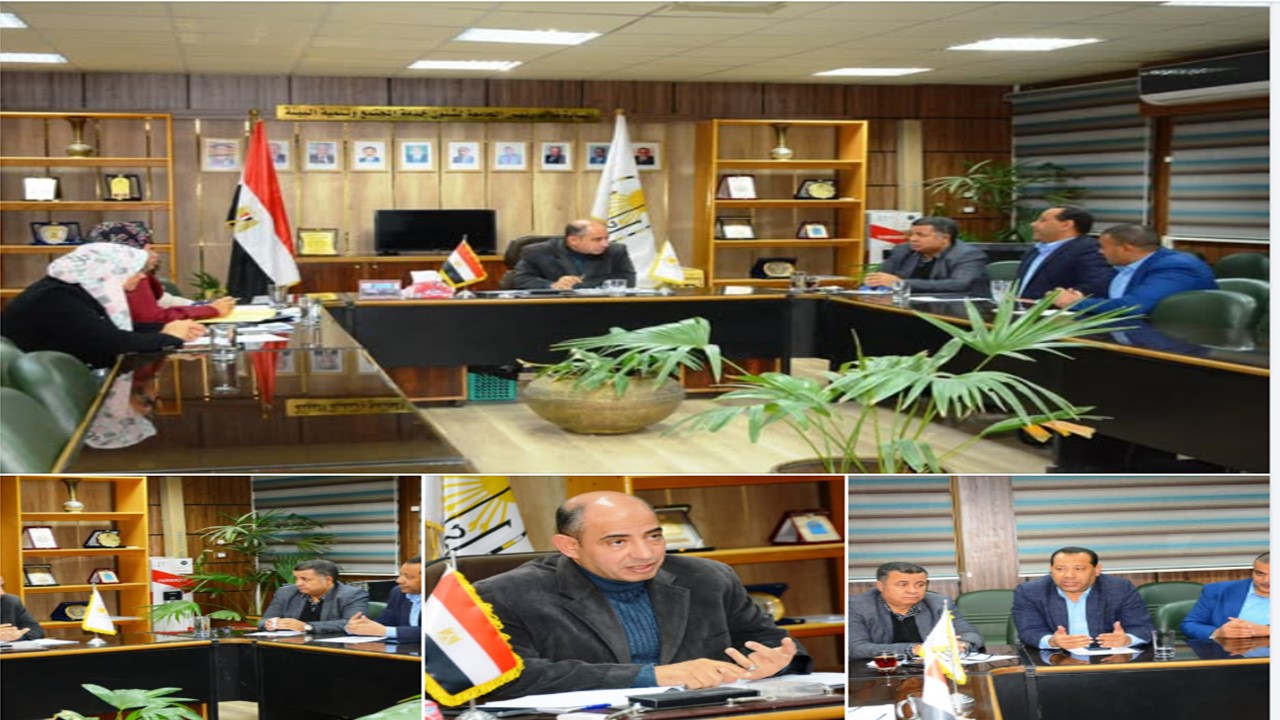
Software and Computer Technology Unit at Assiut University Discusses Plans to Develop Technological Services and Enhance Digital Transformation Across the University Community

January 4, 2026

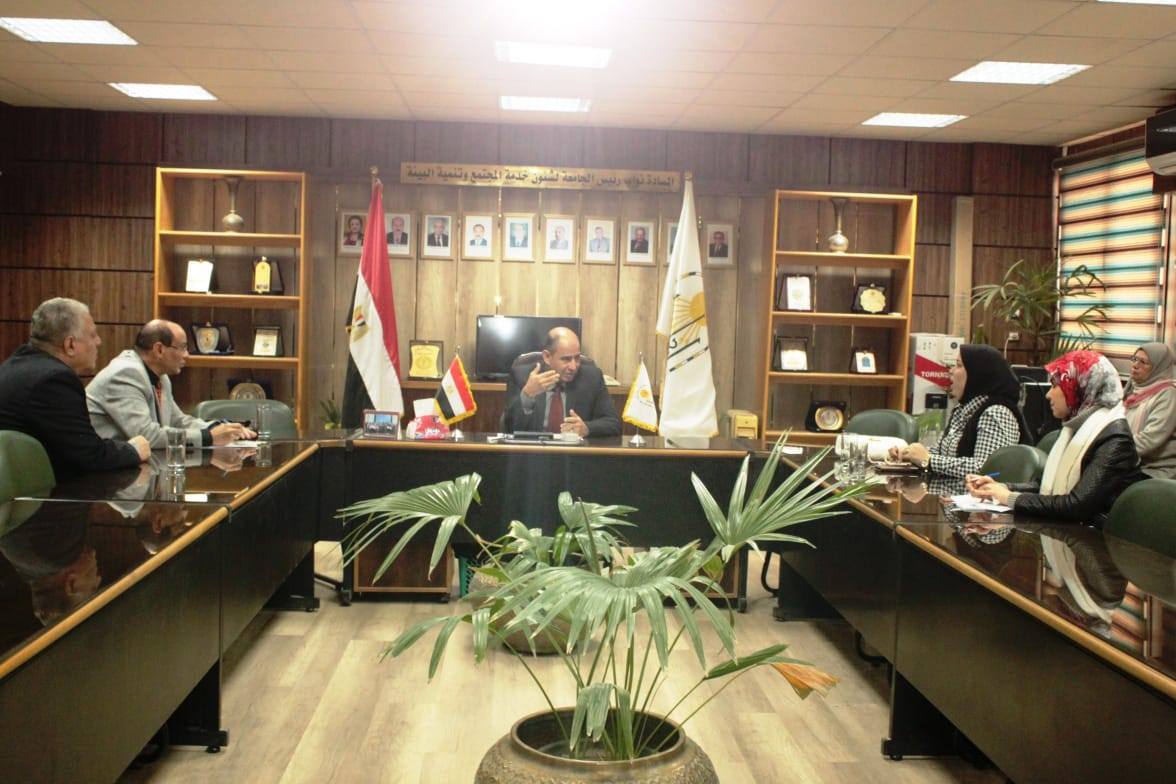
Under the patronage of Professor Ahmed El-Minshawy, President of Assiut University, Professor Mohamed Ahmed Adawy, Vice President of the University for Community Service and Environmental Development, chaired a meeting on Sunday, January 4, with the members of the Board of Directors of the Software and Computer Technology Unit. The meeting addressed a number of administrative matters and reviewed the Unit’s objectives, activities, and role in supporting and developing the university community.

Professor Ahmed El-Minshawy emphasized the University’s commitment to developing its digital infrastructure and modernizing administrative and academic work systems. He noted that the establishment of the Software and Computer Technology Unit represents an important step toward increasing reliance on locally developed software solutions created by the University’s own personnel, contributing to cost rationalization, fostering innovation, and building distinguished capacities in the field of digital transformation.

For his part, Professor Mohamed Ahmed Adawy explained that the establishment of the Unit aligns with Assiut University’s strategic orientation toward digital transformation, the automation of administrative and technical processes, and the enhancement of the efficiency of services provided across the University’s various sectors.

The Vice President pointed out that the Unit’s responsibilities include the design and development of professional-level computer software to support the automation of different university units, in addition to transferring technical and technological expertise to other governmental institutions. This, he added, strengthens Assiut University’s leading role in community service and environmental development, as well as its participation in scientific and research projects that require specialized systems and software.

Professor Adawy further noted that the Unit also works on producing software applications suitable for commercial marketing to meet the needs of the local market, alongside providing technical support to address routine and minor computer hardware issues within the University. These efforts ensure continuity of operations and contribute to improved efficiency.

The meeting was attended by:

  • Professor Alaa El-Din Abdel-Hakim, Professor at the Faculty of Engineering;
  • Dr. Islam Ali Taj El-Din, Director of the Unit and Assistant Professor at the Faculty of Computers and Information;
  • Dr. Ali Hussein Ahmed, Lecturer at the Faculty of Computers and Information and Director of the Management Information Systems Development Center.

Faculty of Arts Hosts Symposium on “Values and Ethics and Their Role in the Rise of Civilizations” as Part of the Fourteenth Islamic Awareness Week

November 19, 2025

The Faculty of Arts at Assiut University hosted an extensive symposium entitled “Values and Ethics and Their Role in the Rise of Civilizations.” The event was held as part of the activities of the Fourteenth Islamic Awareness Week, organized under the patronage of Professor Ahmed El-Minshawy, President of Assiut University. The week is organized by the Higher Committee for Da‘wa at the Al-Azhar Islamic Research Academy, in cooperation with the University, under the theme “Civilizational Concepts.” It is also held under the auspices of His Eminence the Grand Imam, Professor Ahmed El-Tayeb, Sheikh of Al-Azhar, and supervised by His Eminence Professor Mohamed Al-Duwaini, Deputy of Al-Azhar.

The symposium was attended by Professor Mohamed Adawy, Vice President for Community Service and Environmental Development; Professor Magdy Alwan, Dean of the Faculty of Arts; Professor Hamed Mashhour, Vice Dean for Community Service and Environmental Development; Professor Mohamed Abu-Rehab, Vice Dean for Education and Student Affairs; and Professor Sameh El-Banna, Vice Dean for Postgraduate Studies and Research, in addition to a large audience of students and faculty members.

A distinguished group of scholars from Al-Azhar Al-Sharif also participated in the symposium, including:
Professor Mahmoud Al-Hawari, Assistant Secretary-General for Da‘wa and Religious Media at the Islamic Research Academy
Professor Hassan Yehia, Assistant Secretary-General at the Higher Committee for Islamic Da‘wa
– Professor Al-Husseiny Hassan Hammad, Coordinator for Community Engagement and Human Rights at Al-Azhar University–Assiut Branch
Professor Mortaga Abdel-Raouf, Director-General of the Assiut Preaching Region
Professor Youssef Al-Mansi, Member of the Secretariat of the Higher Committee for Da‘wa

In a related context, the University’s administrative building hosted a second seminar entitled “The Civilizational Personality as Formulated by Islam,” presented by representatives of Al-Azhar Al-Sharif as part of the same day’s events.

Professor El-Minshawy affirmed the University’s commitment to fostering an intellectually enlightened environment that strengthens ethical and religious values among students and enhances their ability to engage with contemporary intellectual currents. He added that the University’s cooperation with Al-Azhar Al-Sharif reflects its dedication to promoting a moderate religious discourse that safeguards youth and strengthens their sense of identity and belonging.

For his part, Professor Adawy highlighted the educational value of such symposiums, noting their significant role in raising scientific and intellectual awareness among students. He emphasized that cooperation with Al-Azhar Al-Sharif contributes to cultivating an enlightened discourse capable of countering misconceptions and safeguarding minds.


Assiut University Launches the Fourth Training Program on Governance and Anti-Corruption in Cooperation with the Administrative Control Authority

November 19, 2025

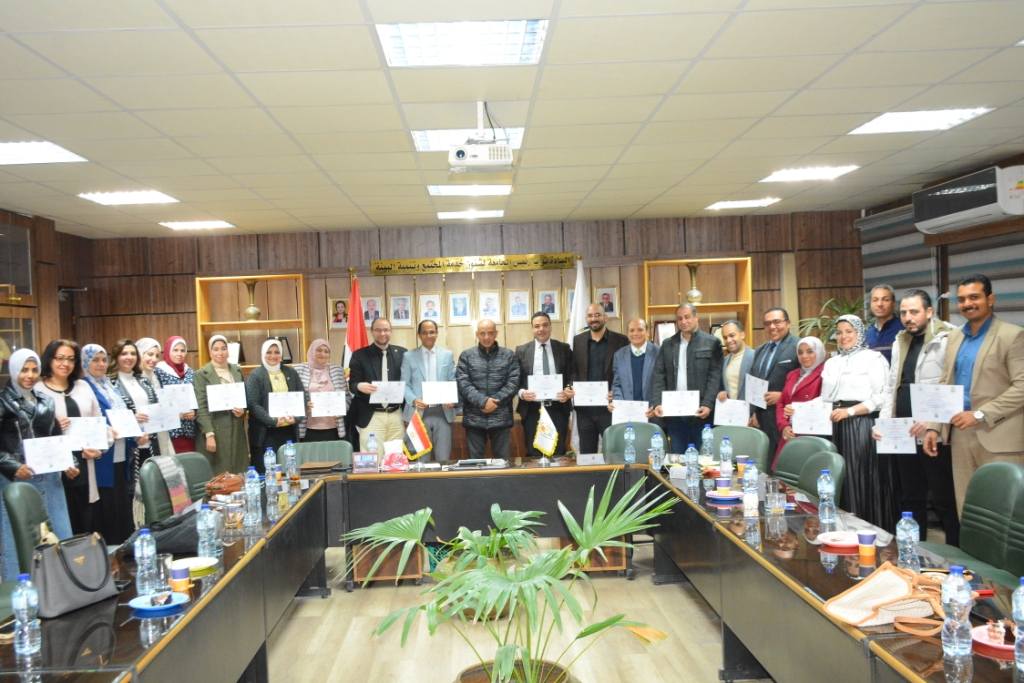
Assiut University has launched the fourth phase of its training program for faculty members in the field of governance and anti-corruption, aiming to promote integrity, transparency, and the principles of good governance within the University, while building an academic community that is aware of corruption risks and equipped to resist them.

The fourth phase of the program was organized under the patronage of Professor Ahmed El-Minshawy, President of Assiut University, and in cooperation with the Administrative Control Authority and the National Academy for Anti-Corruption. The training took place at the headquarters of the Administrative Control Authority in Assiut, under the supervision of Major General Sherif Ramzy, Head of the Office.

The program forms part of the University’s strategy to disseminate a culture of integrity and good governance among faculty members. It was held from 13 to 15 April, with the participation of 30 faculty trainees, and was supervised by Professor Mohamed Adawy, Advisor to the President of the University, and Professor Mostafa Morsy, Coordinator of the National Academy for Anti-Corruption.

Professor El-Minshawy emphasized the University’s commitment to strengthening values of integrity and transparency and fostering a responsible academic environment. He praised the fruitful cooperation with the Administrative Control Authority and its role in supporting national efforts to combat corruption.

The training covered a range of key topics, including: causes and impacts of corruption, legislative and institutional frameworks, Egypt’s Vision 2030, the relationship between corruption and national security, as well as work ethics and governance as effective mechanisms to reduce corruption.


Assiut University Press Continues Enhancing Its Services to Support Education and Research

November 19, 2025

Assiut University’s Printing Press continues to strengthen its role as one of the University’s key production units supporting the educational and research system. This comes in line with the strong attention given by Professor Ahmed El-Minshawy, President of the University, to developing the Press’s capabilities and upgrading its technical infrastructure to keep pace with the rapid advancements in printing and publishing technologies.

In this context, Professor Mohamed Ahmed Adawy, Vice President for Community Service and Environmental Development, held a meeting with the members of the Central Printing Press Board at the Press headquarters to
review workflow and discuss development plans. The meeting was attended by:
Professor Mostafa Qaid Abdel-Azim, Assistant Professor, Faculty of Commerce
Dr. Sara Tarek Kamal, Lecturer, Faculty of Computers and Information
Ms. Haby Mostafa Sayed, Director-General of the General Administration of Internal Audit and Governance
Engineer Galal El-Din Hassan Hamed, Supervisor of the Central Printing Press

Professor El-Minshawy emphasized that the Printing Press represents a vital support pillar for the University, given the essential services it provides to educational, research, administrative, and clinical sectors. He noted that the University is moving forward with upgrading the Press’s equipment and enhancing its technical efficiency to improve the quality of printed materials, in accordance with the University’s digital transformation strategy and its efforts to enhance services offered to students and faculty.

Professor Adawy explained that the meeting addressed financial and administrative matters regulating work at the Press, in addition to reviewing the operation and maintenance report for October. The Board also discussed proposals for improving workflow and increasing production capacity to ensure the continued provision of high-quality printing services that meet the University’s needs.

Following the meeting, the Vice President conducted an inspection tour of the Printing Press alongside Board members to assess ongoing work and review technical needs and future requirements for equipment replacement and upgrading.

Assiut University Printing Press provides services to all faculties, units, administrative sectors, and hospitals of the University, in addition to offering a wide range of services to external entities at competitive prices. Its products include exam answer booklets, conference materials, posters, brochures, invitations, greeting cards, as well as records, files, reports, receipts, tickets, and meal vouchers.

The Press operates through an integrated system of offset, digital, and imaging printing machines, and works across various paper types. This supports its vision of contributing to the University’s knowledge production and research excellence by delivering precise, professional printing and publishing solutions that adhere to the highest quality standards.


Faculty of Commerce at Assiut University Holds Educational Seminar Titled “Tolerance: The Cornerstone of Nation-Building”

November 19, 2025

The Faculty of Commerce at Assiut University organized an educational seminar titled “Tolerance: The Cornerstone of Nation-Building.” The event was held under the patronage of Professor Ahmed El-Minshawy, President of Assiut University, and supervised by Professor Mohamed Ahmed Adawy, Vice President for Community Service and Environmental Development; Professor Alaa Abdelhafiz, Dean of the Faculty of Commerce; and Dr. Amal El-Daly, Vice Dean for Community Service and Environmental Development. The seminar was delivered by Sheikh Mohamed Sayed Abdel-Aal, Senior Preacher at the Assiut Preaching District of the Islamic Research Academy.

The event was attended by Dr. Nesma Heshamt, Vice Dean for Postgraduate Studies and Research; Dr. Marwa Bakr, Head of the Department of Political Science and Coordinator of Student Activities; and Mr. Abdelkader Mahran, Faculty Secretary, along with a number of faculty members, administrative staff, and students.

Professor El-Minshawy emphasized that organizing the seminar reflects the university’s educational and social mission to promote awareness of citizenship values and acceptance of others through its cultural and educational activities. He stressed that nation-building begins with instilling positive values in young people, foremost among them tolerance—a core safeguard for societies striving for progress and prosperity.

For his part, Professor Adawy affirmed Assiut University’s commitment to raising awareness among its students and staff about coexistence and respect for diversity. He stressed that Egypt’s strength lies in the unity of its people, a unity that can only flourish in a society that embraces dialogue and welcomes differences of opinion without prejudice.

Professor Abdelhafiz underscored the faculty’s keen interest in organizing seminars that reinforce constructive values and help shape students into active contributors to their communities. He pointed out that tolerance must become a daily practice for students both inside and outside the university.

Similarly, Dr. El-Daly noted that this seminar is part of the faculty’s commitment to its societal role in promoting positive values among students, particularly tolerance and coexistence. She added that fostering these values supports social stability and represents an essential step in building an informed generation capable of contributing to national development. She also stated that the faculty will continue implementing diverse programs and activities aimed at raising student awareness and reinforcing principles that promote social harmony and balanced, enlightened character-building.

During his lecture, Sheikh Mohamed Sayed Abdel-Aal addressed the importance of cultivating a culture of dialogue and understanding. He emphasized that tolerance is a universal human and moral value upheld by all religions. He noted that the Prophet Muhammad (peace be upon him) represents a practical example of tolerance, and that neglecting this value opens the door to conflict and division. He added that tolerance is founded on respecting others’ right to differ and recognizing diversity as a source of cultural richness that supports development and strengthens peace, justice, and equality.

He concluded by calling for the expansion of educational, cultural, and media programs that instill tolerance in younger generations and enhance their ability to confront manifestations of extremism and intolerance.


Faculty of Social Work at Assiut University Holds Symposium on “The Role of the Presidential Initiative Haya Karima in Developing the Green Village: Opportunities and Challenges”

November 19, 2025

The Faculty of Social Work at Assiut University organized on Wednesday, 19 November, a symposium titled “The Role of the Presidential Initiative Haya Karima in Developing the Green Village (Opportunities – Challenges)”. The event was held under the patronage of Professor Ahmed El-Minshawy, President of Assiut University, and in cooperation with the Haya Karima Foundation, with the attendance of Professor Mohamed Ahmed Adawy, Vice President for Community Service and Environmental Development.

The symposium was convened under the supervision of Professor Mohamed Mohamed Suleiman, Dean of the Faculty of Social Work; Dr. Randa Mohamed Sayed, Vice Dean for Community Service and Environmental Development; and Dr. Sabrin Arabi Saad, Director of the Faculty’s Volunteer Unit. The event also featured the participation of Engineer Mina Ibrahim, General Coordinator of the Haya Karima Initiative in Assiut, and Dr. Mohamed Sami Al-Qadi, Deputy General Coordinator of the Initiative in the governorate.

Professor El-Minshawy affirmed that the Presidential Initiative Haya Karima is one of the most significant national initiatives that has brought about a major transformation in developing rural Egypt. He noted that the wide-ranging improvements in services and infrastructure achieved through the initiative provide a unique model of integrated development that places citizens at the heart of its priorities. He added that Assiut University supports the initiative through its academic and research expertise, its participation in medical, veterinary, and awareness convoys, and by encouraging student involvement in volunteer work.

The University President added that organizing this symposium reinforces the university’s role in community service and in raising awareness of national efforts aimed at building the New Republic. He emphasized that the university remains a key partner in supporting national initiatives that seek to enhance the quality of life for citizens across the governorate’s villages and districts.

For his part, Professor Mohamed Adawy highlighted the strong cooperation between Assiut University and the Haya Karima Foundation across its various areas of work. He noted the university’s significant contribution through its participation in free medical, veterinary, and awareness convoys serving many villages in the governorate. He added that a large number of university affiliates have volunteered under the initiative to support rural development, calling for additional activities to introduce students to the initiative’s achievements and encourage broader participation in its programs.

Professor Suleiman explained that the symposium aims to explore the initiative’s role in developing Egyptian villages as one of the most important national projects of the New Republic and its Sustainable Development Vision 2030. He emphasized that the symposium serves as a valuable platform for exchanging expertise and strengthening collaboration between the academic community, university youth, and civil society in support of this national effort.

In this context, Dr. Randa Mohamed Sayed stated that the Haya Karima Initiative represents a turning point in the development of rural Egypt. She noted that the initiative has launched integrated projects in infrastructure, healthcare, education, women’s and youth empowerment, housing development, and essential services, contributing to improved quality of life for millions. She added that the initiative has targeted 22 million citizens across 20 governorates, covering 1,477 villages in its first phase and 1,667 villages in the second.

Engineer Mina Ibrahim emphasized that the core mission of Haya Karima is human development, which is reflected in the comprehensive services it provides to rural communities. He highlighted the initiative’s achievements in Assiut villages, including upgrades to water and sanitation networks, schools, hospitals, road paving, and the provision of high-speed internet in several villages.

Dr. Al-Qadi expressed his gratitude to the administration of Assiut University and the Faculty of Social Work for their continuous cooperation with the Haya Karima Foundation in development efforts and awareness activities—including this symposium, which aims to familiarize students with the initiative. He encouraged students to engage in volunteer work through the initiative to contribute to the advancement of rural Egypt and the betterment of society.


Assiut University Launches Specialized Pediatric Dental Mission at the Faculty of Dentistry

November 19, 2025

Under the patronage of Professor Ahmed El-Minshawy, President of Assiut University, the Community Service and Environmental Development Sector at the Faculty of Dentistry, in cooperation with Misr El-Kheir Foundation, launched a free specialized medical mission dedicated to pediatric dental care. The two-day initiative was organized under the supervision of Professor Mohamed Adawy, Vice President for Community Service and Environmental Development, and Professor Safaa Marzouk, Dean of the Faculty.

The mission’s events were attended by Dr. Mohamed Nahid, Vice Dean for Community Service and Environmental Development; Mr. Mohamed Farrag, Director of Misr El-Kheir’s Assiut Office; along with a distinguished group of faculty members, teaching assistants, pediatric dentistry interns, and several staff members from the Faculty.

Professor El-Minshawy emphasized that Assiut University places great importance on its community role. He noted that specialized medical missions are among the key tools that reflect the university’s commitment to supporting the healthcare sector and providing quality services to the people of Assiut. He added that pediatric dental missions are vital initiatives that help raise health awareness among children, affirming the university’s continued dedication to launching more health and awareness campaigns across various fields.

For his part, Professor Adawy explained that the mission examined more than 300 children visiting the hospital and provided fillings, extractions, and prosthetic treatments as needed. He affirmed that Assiut University’s specialized hospitals continue to support national efforts to enhance the healthcare system through both service provision and community education.

Professor Marzouk noted that this mission is part of a series of medical convoys implemented by Assiut University to serve the most underserved villages and districts, with the aim of delivering therapeutic and educational services to children and their families. She added that the mission also included awareness programs for children on the importance of oral hygiene and proper dental care.


Faculty of Veterinary Medicine at Assiut University Launches Blood Donation Campaign in Support of the South Egypt Cancer Institute Under the Slogan “A Drop of Blood Equals a Life”

November 19, 2025

Under the patronage of Professor Ahmed El-Minshawy, President of Assiut University, the Student Welfare Administration at the Faculty of Veterinary Medicine organized a blood donation campaign under the slogan “A Drop of Blood Equals a Life.” The campaign, held from 19 to 21 November, was dedicated to supporting patients at the South Egypt Cancer Institute.

The initiative was supervised by Professor Mohamed Ahmed Adawy, Vice President for Community Service and Environmental Development; Professor Eman Ahmed Abdel-Hafez, Dean of the Faculty of Veterinary Medicine; and Professor Mahmoud Rushdy, Vice Dean for Community Service and Environmental Development.

The campaign was organized in collaboration with the South Egypt Cancer Institute, under the supervision of its Dean, Professor Mohamed Abu Al-Magd, with the participation of Dr. Aya Emad El-Din, Resident Physician at the Institute; Dr. Ahmed Thabet, Director of Student Welfare at the Faculty; alongside several faculty members, nursing staff, and student welfare officers.

Professor El-Minshawy emphasized that this initiative reflects the spirit of humanitarian solidarity that Assiut University strives to instill in its students. He noted that blood donation is a noble voluntary act that contributes to saving patients’ lives, especially cancer patients who rely heavily on continuous community support.

Professor Adawy commended the Faculty of Veterinary Medicine for its efforts in reinforcing the university’s role within the community, reaffirming its commitment to strengthening community engagement and providing impactful educational and awareness services. He stressed the importance of such initiatives in supporting cancer patients and easing their burden, encouraging students to take an active part in the campaign.

For her part, Professor Eman Abdel-Hafez explained that the campaign aims to provide various blood types needed to serve cancer patients at the Institute, particularly given the growing number of patients from across Upper Egypt. She added that the medical team conducted all necessary examinations for students before donation and offered guidance on the importance of blood donation and its health benefits for donors.


President of Assiut University Commends the Faculty of Agriculture’s Rooftop Farming Initiative and Highlights Its Role in Sustainability and Food Security

November 19, 2025

During a media briefing held today, Wednesday, 19 November, Professor Ahmed El-Minshawy, President of Assiut University, praised the university’s rooftop farming initiative at the Faculty of Agriculture, affirming that the project has become a leading model among Egyptian universities in the fields of smart agriculture and environmental sustainability.

Professor El-Minshawy noted that transforming building rooftops into productive spaces represents “an inspiring success story” within the university. He added that his recent visit to the Faculty of Agriculture showcased the significant progress achieved and the effectiveness of the efforts made to create a sustainable agricultural environment that helps improve the climate and mitigate the effects of climate change.

The University President explained that the project exemplifies the optimal use of unutilized spaces, aligning with the university’s vision for supporting sustainable development and strengthening food security. He emphasized that the initiative complements the strategy of the Ministry of Higher Education and Scientific Research in promoting a green economy and fostering environmental awareness within the university community.

Professor El-Minshawy highlighted that the project’s benefits extend beyond environmental impact to include economic and social dimensions. It provides agricultural products, such as vegetables, medicinal plants, and aromatic herbs, at low cost, creates opportunities for young people to establish small enterprises, offers women avenues to support their families’ nutritional needs, and helps raise environmental awareness among children while developing their essential skills.

He further affirmed that rooftop farming contributes to reducing indoor temperatures and improving air quality, supporting national efforts to combat climate change and lessen the effects of global warming. The initiative presents an innovative agricultural model that does not depend on arable land.

Professor El-Minshawy revealed that the project has achieved tangible results through producing a variety of crops, including tomatoes, peppers, and local cabbage, in addition to several medicinal and aromatic plants. It also incorporates innovative solutions, most notably the recycling of wooden waste and repurposing it into planting containers, an approach that reinforces sustainability principles and minimizes waste.

He added that the initiative has become a comprehensive training platform for students of the Faculty of Agriculture and other university students, enabling them to acquire practical skills in crop management, irrigation techniques, and modern agricultural practices, thereby preparing them to compete in the agricultural labor market.

In conclusion, the University President extended his sincere appreciation to the Faculty of Agriculture’s working team, including the Dean, Vice Deans, faculty members, and project supervisors, for their distinguished efforts. He reaffirmed that Assiut University remains committed to supporting every initiative that serves the community and promotes sustainability, describing the rooftop farming project as a genuine model for a greener future both within the university and beyond.


Community Service and Environmental Development Sector Discusses Establishing a Civil Society Organization as an Executive Arm to Open New Development Horizons

November 18, 2025

Under the patronage of Professor Ahmed El-Minshawy, President of Assiut University, the Community Service and Environmental Development Sector held its regular meeting on Tuesday, 18 November, to discuss a proposal to establish a civil society organization as an executive arm in accordance with Law 149/2019. The proposed entity aims to open new developmental avenues for the sector and enhance the University’s capacity to engage with external communities, particularly through launching developmental projects.

The meeting was chaired by Professor Mohamed Ahmed Adawy, Vice President for Community Service and Environmental Development Affairs, with the attendance of faculty vice deans and representatives of civil society organizations and development agencies. The gathering addressed the sector’s recent activities and achievements, which reflect the University’s leading role in community service, environmental development, and support for the local community across multiple fields.

Professor El-Minshawy affirmed the University’s commitment to strengthening its developmental and societal role. He stressed that the University continues to harness its scientific and human resources to support national plans for sustainable development, raise community awareness, empower youth, and foster entrepreneurship—efforts that reinforce the University’s position as a trusted hub of expertise supporting comprehensive development in Assiut and the wider region.

At the outset of the session, Professor Adawy extended his appreciation to Professor Abdel-Aleem, former Acting Vice President for the sector, praising his contributions during his tenure and the tangible achievements recorded under his leadership.

Professor Adawy noted that the meeting reviewed the developmental activities of various University faculties, including initiatives related to sustainable development, environmental preservation, resource rationalization, energy efficiency, and civil protection. The meeting also discussed training plans on the use of firefighting equipment and emergency evacuation procedures.

The Vice President also followed up on the execution of decisions from the previous session, noting that the sector remains committed to advancing initiatives that support national sustainable development efforts, while promoting a culture of community engagement, entrepreneurship, and innovation among students.

Professor Adawy emphasized the importance of adhering to precautionary measures during the coming period in light of expected weather fluctuations and rainfall with the onset of winter. The council also discussed a proposal from the Faculty of Computers and Information to launch a series of awareness caravans on cybercrimes and safe internet use for secondary school students and employees of government institutions.

The meeting further addressed directives issued by the national leadership concerning combating smoking on university campuses. Attendees reaffirmed the prohibition of smoking in buildings and indoor facilities and stressed the need to implement graduated penalties for violations.

In addition, the council discussed mechanisms to enhance faculty-based development projects, support entrepreneurial practices, and establish student-led companies. Members also agreed to commence developmental caravans across villages and districts in the governorate and reviewed a proposal to establish a Center for Athlete Support.

The council examined a proposal submitted by the University’s Community Engagement Support Center regarding the establishment of a civil society organization to serve as an executive arm for the Community Service and Environmental Development Sector, thereby strengthening the University’s ability to implement developmental projects in partnership with civil society organizations and the private sector.

At the conclusion of the meeting, Professor Adawy expressed his appreciation to all participants in the sector’s activities, underscoring the importance of continued cooperation and coordination between the University’s faculties and external partners. Such collaboration, he noted, reinforces the University’s mission in community service and environmental development and consolidates its role as a cornerstone of comprehensive development.


Subscribe to