Prof.Dr. Al-Minshawi congratulates Prof.Dr. Enas Abdel-Hafez on the issuance of the presidential decree appointing her as Dean of the Faculty of Veterinary Medicine

نقلا عن الموقع الرسمي لجامعة اسيوط

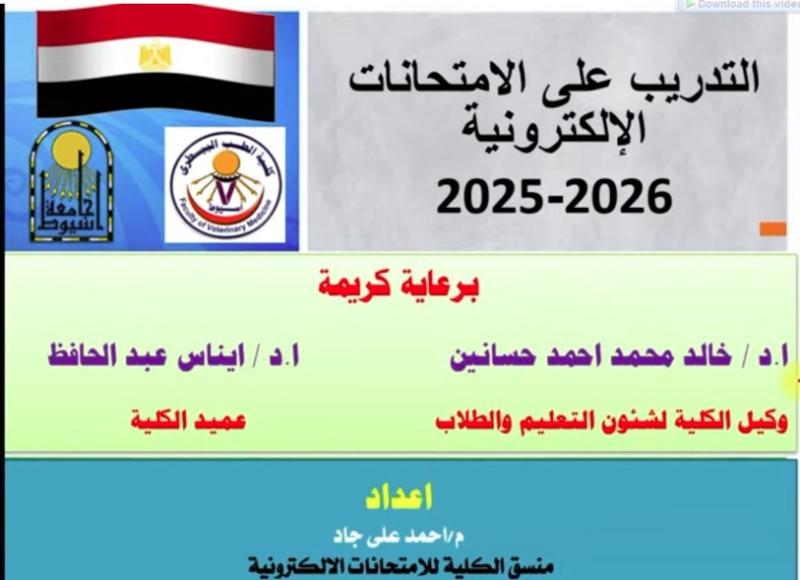
الدكتور المنشاوي يهنئ الدكتورة إيناس عبدالحافظ بمناسبة صدور القرار الجمهوري بتعيينها عميدةً لكلية الطب البيطري

قدّم الدكتور أحمد المنشاوي، رئيس جامعة أسيوط، خالص التهاني إلى الدكتورة إيناس أحمد عبدالحافظ بمناسبة صدور القرار الجمهوري بتعيينها عميدةً لكلية الطب البيطري، متمنيًا لها دوام التوفيق والسداد في مهام منصبها الجديد، ومواصلة مسيرة التطوير والارتقاء بالمنظومة التعليمية والبحثية داخل الكلية، وتعزيز دورها في خدمة المجتمع وتنمية البيئة.

وأعرب رئيس الجامعة عن خالص التقدير والعرفان لفخامة الرئيس عبد الفتاح السيسي، رئيس الجمهورية، وللأستاذ الدكتور أيمن عاشور، وزير التعليم العالي والبحث العلمي، تقديرًا لما يوليه فخامة الرئيس من اهتمام ورعاية لتطوير منظومة التعليم العالي والبحث العلمي في مصر، وما يبذله معالي الوزير من جهود حثيثة لدعم الجامعات المصرية، وتطوير بنيتها المؤسسية، وتعزيز تنافسيتها على المستويين الإقليمي والدولي.

وأكد الدكتور المنشاوي أن كلية الطب البيطري تُعد من الصروح العلمية المتميزة بجامعة أسيوط، إذ تضطلع بدور محوري في إعداد كوادر بيطرية مؤهلة علميًا وعمليًا، قادرة على خدمة المجتمع وتنمية الثروة الحيوانية، ودعم البحث العلمي والتطبيقي في مجالات الطب البيطري وسلامة الغذاء وصحة الحيوان والإنسان، بما يواكب احتياجات سوق العمل ويسهم في تحقيق رؤية الجامعة نحو التميز وخدمة المجتمع.

وأشاد رئيس الجامعة بما تتمتع به الدكتورة إيناس عبدالحافظ من كفاءة علمية، وخبرة أكاديمية وإدارية متميزة، تؤهلها لقيادة الكلية نحو مزيد من التطوير والريادة.
وأشار إلى أن جامعة أسيوط تؤمن بأهمية العمل بروح الفريق الواحد، وتحرص على تعزيز التواصل والتكامل بين مختلف كلياتها وقطاعاتها لتحقيق أهدافها الاستراتيجية في التميز الأكاديمي والبحثي وخدمة المجتمع.

والجدير بالذكر أن الدكتورة إيناس أحمد عبدالحافظ تخرّجت في كلية الطب البيطري بجامعة أسيوط عام 1994، وحصلت على درجة الماجستير في علم الأنسجة عام 1998، ثم نالت درجة الدكتوراه من الكلية نفسها عام 2004، وتدرجت في المناصب الأكاديمية حتى نالت درجة الأستاذية عام 2015. كما شغلت منصب وكيلة الكلية لشئون الدراسات العليا والبحوث قبل توليها العمادة، وأسهمت خلال مسيرتها العلمية في إثراء مجال تخصصها بعدد من الأبحاث والدراسات المتخصصة، إلى جانب إشرافها على العديد من رسائل الماجستير والدكتوراه.

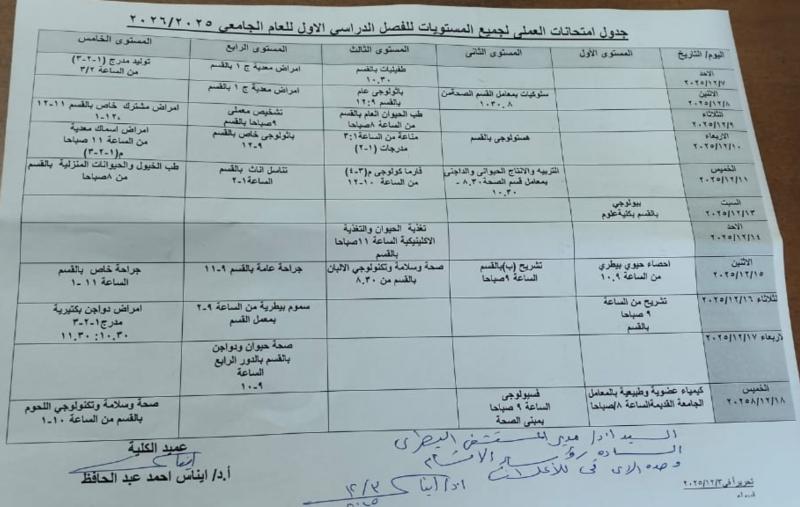
Presidential decree appointing Prof. Dr. Enas Abdel Hafez as Dean of the Faculty of Veterinary Medicine - Assiut University

تتقدم الاستاذ الدكتور / مديحة حسنى درويش عميد الكلية الأسبق والمشرف على كلية الطب البيطري - جامعة الازهر 

بخالص التهاني القلبية

للأستاذ الدكتور /ايناس احمد عبد الحافظ

لثقة فخامة رئيس الجمهورية /عبد الفتاح السيسي بتعيين سيادتها عميدا بكلية الطب البيطري جامعة اسيوط

مع أطيب الامنيات بدوام التوفيق والنجاح

Propolis mitigates busulfan-induced testicular dysfunction in rats: insights into redox stabilization, PCNA modulation, and caspase-3 inhibition

Research Abstract

Introduction: Testicular cytofunctional defects are among the most hazardous effects of cancer chemotherapies. Propolis mitigates the fertility problems associated with gonadotoxic agents through its redox stabilizing, anti-apoptotic, and cytoprotective properties due to presence of bioactive agents identified in our study by gas chromatography–mass spectrometry analysis including, flavonoids, terpenes, aliphatic and aromatic compounds, and amino acids. Herein, we investigated the potential reversal effects of aqueous propolis on busulfan-induced reproductive abnormalities in adult rats. Methods: Thirty rats were randomly assigned to five experimental groups, with six animals per group, for duration of 6 weeks. The control group received only the vehicle daily through oral gavage. The DMSO group was given a single intraperitoneal injection of DMSO. The busulfan group received a single intraperitoneal injection of busulfan at a dose of 20 mg/kg body weight, followed by daily oral gavage. The propolis group was administered propolis daily via oral gavage at a dose of 100 mg/kg body weight. In the busulfan + propolis group, rats received a single intraperitoneal injection of busulfan at 20 mg/kg body weight, combined with daily oral gavage of propolis at a dose of 100 mg/kg body weight. Results and discussion: Busulfan exposure led to a decrease in serum levels of follicle-stimulating hormone, testosterone, and estradiol 17β, along with an increase in luteinizing hormone. It negatively affected sperm outcomes, causing a decline in sperm count and the percentages of live, normal, and motile sperm, while increasing the percentages of dead and abnormal sperm. Furthermore, busulfan disrupted the testicular defense system, as indicated by elevated testicular malondialdehyde levels and reductions in testicular nitric oxide and reduced glutathione levels, catalase and superoxide dismutase activities, as well as serum total antioxidant capacity. Marked histopathological changes were observed, in concomitant with strong immunoreactivity for proliferating cell nuclear antigen and caspase-3 in germ cells. Propolis supplementation effectively mitigated all these abnormalities in busulfanintoxicated rats. Propolis is suggested as a potential complementary adjuvant for managing busulfan-induced reproductive dysfunction, owing to its reproductive hormone-modulating, redox-stabilizing, sperm-protective, and anti-apoptotic properties.

Research Authors
Elham A. AbdAllah , Basant A. Eid , Hassan A. Hussein , Nasser S. Abou khalil, Sohair M. M. Ragab , Asmaa Y. Wahman , Hailah M. Almohaimeed , Rehab H. Moneeb , Hanem S. Abdel-Tawab , Zuhair M. Mohammedsaleh, Jameel Barnawi, Hanan Waly
Research Date
Research Department
Research Journal
Frontiers in Pharmacology
Research Pages
1-17
Research Publisher
Frontiers in Pharmacology
Research Rank
Q1
Research Vol
Volume 16 - 2025
Research Website
https://www.frontiersin.org/journals/pharmacology/articles/10.3389/fphar.2025.1656541/full DOI: 10.3389/fphar.2025.1656541
Research Year
2025

Heavy metal accumulation and its association with epididymal sperm morphometrics in dromedary camels with penile and preputial pathologies

Research Abstract

Background and Aim Sperm morphometry is a vital indicator of fertility, yet male germ cells are highly vulnerable to environmental toxins such as heavy metals. Dromedary camels (DCs) are frequently exposed to penile and preputial pathologies, conditions that can impair semen quality. This study aimed to assess epididymal sperm morphometric characteristics in camels with genital lesions and to explore their associations with concentrations of aluminum (Al), zinc (Zn), molybdenum (Mo), nickel (Ni), and lead (Pb). Materials and Methods Sixty adult male DCs (8–10 years, n = 10/group) were classified into six groups: injury-free, balanoposthitis, penile trauma, prolapsed prepuce, phimosis, and penile tumors. Blood samples were analyzed for heavy metal concentrations using inductively coupled plasma mass spectrometry. Epididymal spermatozoa (caput, corpus, cauda) were evaluated for sperm length (SL), sperm head length (SHL), sperm head width (SHW), sperm head length-to-width ratio (SHL/W), and sperm tail length. Sperm abnormalities were categorized into proximal/distal cytoplasmic droplets and tail defects. Data were analyzed by analysis of variance and correlation statistics. Results Sperm morphometrics varied significantly with pathological status. Camels with penile and preputial disorders exhibited increased SHW in caudal spermatozoa, while SHL and SHW were reduced in caput spermatozoa (p < 0.01). The phimosis group showed fewer abnormalities and lower total abnormal sperm, whereas the penile tumor group had elevated proximal and distal defects and the highest abnormality rate. Heavy metal analysis revealed significantly increased Zn and Ni concentrations in the penile tumor group, while Mo and Pb levels showed no significant differences. Correlation analysis indicated strong associations of Al and Zn with SHW and SHL/W in caudal spermatozoa, and Ni with SHL, SHW, and SHL/W in corpus spermatozoa (p < 0.05). Conclusion Epididymal sperm morphometrics are influenced by penile and preputial pathologies and are significantly associated with Al, Zn, and Ni concentrations. These findings highlight the potential role of heavy metal accumulation in camel reproductive dysfunction and emphasize the need for monitoring environmental exposure in breeding regions.

Research Authors
Montaser Elsayed Ali, Ahmed Yassen M. Osman, Hassan A. Hussein, Mohammed A. Alqahtani, Maha Abdullah Momenah, Ahmed Ezzat Ahmed, and Ragab Hassan Mohamed
Research Date
Research Department
Research File
Research Journal
Veterinary World
Research Pages
2867-2877
Research Publisher
Veterinary World
Research Rank
Q1
Research Vol
Volume 18
Research Website
https://veterinaryworld.org/Vol.18/September-2025/25.pdf DOI: 10.14202/vetworld.2025.2867-2877
Research Year
2025

L-Carnitine-Mediated Antioxidant Defence in Buffalo Oocytes: A Novel Approach for Improving In Vitro Maturation and Embryo Developmental Competence

Research Abstract

THE developmental competence of buffalo oocytes often declines during in vitro conditions,primarily due to oxidative stress. The current study was designed to evaluate the effects of L-Carnitine supplementation during in vitro maturation (IVM) of buffalo oocytes. Oocytes collectedfrom ovaries of slaughtered buffaloes were matured in IVM media supplemented with L-Carnitine at0 (control), 0.3, 0.6, or 1 mg.mL-1, nuclear maturation, penetration, fertilization (IVF), embryoproduction and development were assessed. Additionally, antioxidant parameters includingglutathione (GSH) level, superoxide dismutase (SOD) activity, catalase (CAT) activity, and lipidperoxidation (MDA) level in oocytes after IVM were measured. The outcomes indicated thatsignificant improvements in oocyte maturation to metaphase II were observed in the 0.3 and 0.6mg.mL-1 L-carnitine groups. Fertilization rates were enhanced within 0.3 and 0.6 mg.mL-1 L-carnitinegroups in contrast to the control. The 0.6 mg.mL-1 L-carnitine group demonstrated significantenhancements in cleavage (2-8 cells) and morula formation. Level of GSH exhibited an elevation, andMDA level declined in L-carnitine groups, although not significantly. SOD and CAT activities weresignificantly elevated in the 0.6 mg.mL-1 l-carnitine treatment against the control. In conclusion, L-carnitine incorporation within IVM improves oocyte nuclear maturation, fertilization, embryo growth,and antioxidant activity in Egyptian buffalo oocytes. 0.6 mg.mL-1 emerging as the optimalconcentration for overall improvements in oocyte quality and in vitro embryonic developmentalcompetence
(PDF) L-Carnitine-Mediated Antioxidant Defence in Buffalo Oocytes: A Novel Approach for Improving In Vitro Maturation and Embryo Developmental Competence. Available from: https://www.researchgate.net/publication/393201291_L-Carnitine-Mediated_Antioxidant_Defence_in_Buffalo_Oocytes_A_Novel_Approach_for_Improving_In_Vitro_Maturation_and_Embryo_Developmental_Competence [accessed Oct 23 2025].

Research Authors
Eman M. Abu El-Naga, Doaa A. Soliman, Mohamed Karmi, Ragab H.Mohamed, Ahmed Monir4, Mayada A. Hassan, Badr M.R, and Hassan A. Hussein
Research Date
Research File
Research Journal
Egyptian Journal of Veterinary Sciences
Research Pages
1-9
Research Publisher
Egyptian Journal of Veterinary Sciences, Journals EKB
Research Rank
Q3
Research Website
https://ejvs.journals.ekb.eg/article_436601.html DOI: 10.21608/ejvs.2025.372940.2761

Fertility Preservation in Cancer Patients: Evaluation of Knowledge, Attitude, and Practice of Health Practitioners Towards Fertility Preservation in Makkah Region of Saudi Arabia

Research Abstract

Cancer patients face multiple challenges, such as infertility which may result from exposure to irradiation during cancer treatment. Little is known about the health practitioners’ knowledge and practice regarding fertility preservation and its available options in Saudi Arabia. This study aimed to assess healthcare practitioners’ knowledge, attitudes, and practices (KAP) toward fertility preservation among cancer patients in Makkah, Sau-di Arabia. A cross-sectional study was conducted among 100 health practitioners from September 2022 to January 2023. A self-administered questionnaire was used to assess KAP. The Chi-square (χ ² ) test and Student’s-t-test were used for categorical data and continuous variables as appropriate. Most participants (90%) lacked knowledge about fertility preservation. Cost and clinic availability significantly influenced the health practitioners’ attitude toward fertility preservation discussions with cancer patients (P < 0.05). Most of the study participants (87%) were familiar with sperm and egg freezing, while other techniques were less well-known. There were significant associations between health practitioners’ attitudes in discussing fertility preservation with their cancer patients with significant influence (P <0.05). The results revealed that 92% of the participants agreed that the Saudi Ministry of Health should establish practice guidelines and provide fertility preservation services for cancer patients. Healthcare practitioners in Makkah, Saudi Arabia, have limited knowledge about fertility preservation. Educational interventions and improved access to fertility preservation services are needed.

Research Authors
Ramya Ahmad Sindi, Marwah Salem Bagabas, Leen Mamdoh Al-Manabre, Raghad Zahi Alqasmi, Raneem Yousef Rednah, Shrooq Meshal Al-Jahdali & Hassan Abelsabour Hussein
Research Date
Research Department
Research File
Research Journal
Part of the book series: Proceedings in Technology Transfer ((PTT)) Included in the following conference series: Conference on Creativity, Technology, and Sustainability
Research Pages
1-12
Research Publisher
Springer
Research Rank
Proceedings of the 1st International Conference on Creativity, Technology, and Sustainability
Research Website
https://link.springer.com/chapter/10.1007/978-981-97-8588-9_48 DOI: 10.1007/978-981-97-8588-9_48
Research Year
2025

Computer-assisted sperm analysis of the epididymal spermatozoa in dromedary camels suffering from penile and preputial pathological problems

Research Abstract

Dromedary camels are the most vulnerable animals to penile and preputial pathology due to the aggressive nature of mating and injuries during transit, which could impair the semen quality. Hence, this study was performed to monitor the penile and preputial pathological conditions in male dromedary camels, as well as their impact on epididymal spermatozoa, by utilizing computer-assisted sperm analysis (CASA) and correlation analysis with testosterone concentrations. A total of 60 male dromedary camels were examined for penile and preputial pathological problems. The camels were grouped based on the absence or presence of the pathology conditions: (i) camels with normal penis and prepuce, (ii) camels with balanoposthitis, (iii) camels with penile trauma, (iv) camels with prolapsed prepuce, (v) camels with phimosis, and (vi) camels with penile tumors. The results revealed that there were significant increases in sperm concentration (Conc., M/ml), curvilinear velocity (VCL, μm/s), eat-cross frequency (BCF, Hz), and straightness (STR, VSL/VAP) of the epididymal tail semen in camels with prolapsed prepuce. There were increases in progressive motility (PR), VCL, straight line velocity (VSL, μm/s), average path velocity (VAP, μm/s), BCF, and STR in the sperms of the group with phimosis, but the differences were non-statistically significant. Furthermore, the CASA parameters of the epididymal tail semen in the group with penile tumor showed an increase in PR (%), VCL, VSL, VAP, BCF, and STR (%) compared to those in the group with normal penis and prepuce. However, the CASA parameters of the epididymal body in the group with penile tumor showed a significant increase in vitality, total motility (TM), non-progressive motility (NP), mean angular degree (MAD), linearity (LIN, VSL/VCL), VSL, amplitude of lateral head displacement (ALH, μm), VAP, BCF, and STR compared to those in the group with normal penis and prepuce. There were no discernible differences in testosterone concentrations among the groups. There was a negative correlation (p < 0.05, r = 0.411–0.459) between testosterone concentration and CASA parameters of the epididymal tail semen in camels with penile and preputial pathological conditions. In comparison, there were no discernible differences in correlation (p > 0.5, r = 0.074–0.360) between testosterone concentration and CASA parameters of the epididymal body and head semen in camels with penile and preputial pathology. In conclusion, the semen quality of male dromedary camels could be affected by the penile and preputial pathological problems, while the testosterone concentration was not affected.

Research Date
Research Department
Research File
Research Journal
Frontiers in Veterinary Science
Research Pages
1-11
Research Publisher
Frontiers- Animal Reproduction- Theriogenology
Research Rank
Q1
Research Vol
Volume 12 - 2025
Research Website
https://www.frontiersin.org/journals/veterinary-science/articles/10.3389/fvets.2025.1537708/full DOI: 10.3389/fvets.2025.1537708
Research Year
2025

Penile and Preputial Pathological Problems and Their Impact on Reproductive Organ Biometry and Epididymal Sperm Quality in Dromedary Camels

Research Abstract

This study aimed to investigate the penile and preputial problems and its impact on reproductive organ biometry and epididymal sperm quality in dromedary camels. Among total of 6300 male dromedary camels investigated, there were 2.86% phimosis, 3.00% paraphimosis, 4.14 penile trauma, 2.98% preputial prolapse, 1.47% balanoposthitis, and 2.85% penile tumors. Results revealed that there were no significant differences (P > 0.05) in measurements of the testes, epididymal tail, and accessory genital gland in males with penile and preputial problems compared to those with normal penis and prepuce. There were significant decreases in all sperm parameters evaluated (total motility, total sperm cell count ×106/total collected volume, sperm concentration ×106/ml and percentage of sperm vitality and sperm abnormality) in the pathological issues connected to the prepuce and penis compared to males with normal penis and prepuce. The correlation (r) between right testicular length and epidydimal sperm cell count was positive (P< 0.040, r = 0.853). The epidydimal sperm cell count correlated with both the length of right (r= 0.805; P< 0.053) and that of left bulbourethral glands (r= 789; P< 0.058). The vitality (%) correlated with both the right (r= 0.889; P< 0.030) and left (r= 0.919; P< 0.022) testicular length. It could be concluded that semen quality can be affected by the penile and preputial problems in male dromedary camels, while the testicular and epididymal biometry are not affected.

Research Authors
Ragab H. Mohamed, Walaa M Essawi, Ahmed Y. Osman, Mohammed Karmy Hussein, Montaser Elsayed Ali, Hassan Ali Hussein
Research Date
Research Department
Research File
Research Journal
Egyptian Journal of Veterinary Sciences
Research Pages
1-11
Research Publisher
Egyptian Journal of Veterinary Sciences, Journals EKB
Research Rank
Q3
Research Website
https://ejvs.journals.ekb.eg/article_413218.html DOI: 10.21608/ejvs.2025.345863.2570
Research Year
2025

Placental expression of estrogen and progesterone receptors and vascular endothelial growth factor in buffaloes suffering from uterine torsion

Research Abstract

Background

Although several risk factors have been suggested for uterine torsion, the pathogenesis is still unclear. Therefore, the current study aims to investigate the pathogenesis of uterine torsion by assessing the histological, histochemical, and immunohistochemical changes that occur in the placenta obtained from uterine torsion cases. Immunohistochemical changes include investigation of the expression of estrogen receptors (ERs), progesterone receptors (PRs), and the vascular endothelial growth factor (VEGF) in the placental tissue.

Methods

Forty intrapartum dairy cows were included in this investigation. The cows were divided into two equal groups. The first group was the uterine torsion (UT) group, while the second group was the normal control group (Ctrl). After caesarian section treatment, placentas were collected from all animals in the study. Histopathological, histochemical, and immunohistochemical examinations were performed. Estrogen receptors, progesterone receptors, and vascular endothelial growth factor expression in the placenta were evaluated.

Results

The results revealed numerous trophoblast giant or binucleate cells in the trophoblastic epithelium. Through Masson’s trichrome technique, the distribution of collagen fibers as shiny, blue-colored stripes on the fetal mesenchyme was observed. Additionally, the results showed a strong, intense PAS-positive reaction in the cytoplasmic vesicles of most trophoblastic cells due to mucopolysaccharides. The immunohistochemical findings of the UT placenta revealed moderate to weak staining for ERs in contrast to those of the Ctrl placenta, which revealed moderate staining for ERs. In addition, non-statistical differences in the expression of PRs were found between the two tested groups. For VEGF, strong positive immunoreactivity was found in the Ctrl group compared to the UT group, which exhibits a general absence in many trophoblast cells.

Conclusion

It can be concluded that significant variation was observed in the placentas obtained from buffaloes suffering from UT compared to those obtained from normal pregnant ones. These significant variations were involved in the decreased expression of ERs and VEGF in the UT group compared to the normal Ctrl one. Investigating the expression of these placental molecules may monitor the changes in the placental tissue and provide insight into the pathogenesis of UT.

Research Authors
Yahia A. Amin, Ahmed Abdou Elnegiry, Eatemad A. Awadalla, Hassan A. Hussein & Ragab H. Mohamed
Research Date
Research Department
Research Pages
1-10
Research Publisher
BMC Veterinary Research
Research Rank
Q1
Research Vol
volume 21
Research Website
https://bmcvetres.biomedcentral.com/articles/10.1186/s12917-024-04422-z
Research Year
2025
Subscribe to