The impact of dietary neem leaf on the growth and biochemical traits of rabbits

Research Abstract

Neem is a plant used both as food and in traditional medicine. Its many active components, such as Carotenoids, Saponins, Triterpenoids and Nimbidin, may render it a beneficial feed additive for rabbits. Healthy weaned rabbits from breed V-line (VL) were selected to examine the effect of neem (Azadirachta indica) on growth performance, carcass traits, morphology, and blood parameters responses. Thirty-two V-line rabbits (45 days old) were randomly assigned to four groups (n = 8 per group): a control group (G1) receiving a basal diet, and three treatment groups (G2, G3, G4) receiving the basal diet supplemented with 5%, 10%, and 15% neem leaf powder, respectively. Neem leaf supplementation had no significant effect on the rabbits' growth performance, live body weight, carcass weight, lungs and abdominal fat, dressing percentage and liver. There was a significant (P < 0.05) increase in intestine length in G4. Nevertheless, the cecum considerably shrank (P < 0.05) in G3 and G4, which might have a more negative impact on growth performance. Certain biochemical measures (albumin, globulin, triglycerides, LDL, total protein, cholesterol, glucose, AST, and ALT) did not exhibit significant variations. However, a significant (P < 0.01) drop in blood urea occurred after the higher concentration. A significant (P < 0.05) rise in HDL after neem supplementation. Histologically, the liver showed signs of hepatotoxicity in the group supplemented with neem leaves, such as abnormal hepatocytes' nuclear membranes, pyknotic nuclei, karyorrhexis and karyolysis. Additionally, the portal and central veins were congested, and a greater number of Kupffer cells were seen. In conclusion, the findings suggest that dietary neem leaf supplementation may have adverse effects on rabbit health and performance, particularly at higher concentrations.
 

Research Authors
Abdalla Ali , Ahmed Adawy , Zeinhom Ismaiel , Manal Hussein , Abdelraheim Attaai
Research Date
Research Journal
Scientific Reports
Research Pages
20280-20292
Research Publisher
Springer Nature
Research Rank
3.9
Research Vol
15
Research Website
https://www.nature.com/articles/s41598-025-06905-x
Research Year
2025

Sequential Development of Albino Rabbit Iris During Fetal and Postnatal Life: Histological, Ultrastructural, and Immunohistochemical Investigations

Research Abstract

The iris has several unique structures that are determined by its embryonic origin. Therefore, this research aimed to demonstrate the morphogenesis of the albino rabbit iris. The development of the rabbit iris began at mid-gestation and was completed postnatally. Consequently, we used 36 embryos and 12 neonatal rabbits. The iris originated from the tip of the optic cup. The epithelium of the iris began to differentiate on day 15 of pregnancy, forming a single layer of epithelial cells. The constrictor muscle began its differentiation on day 27 of pregnancy in the area around the pupil, while the dilator muscle differentiated on day 30 as a protrusion from the anterior epithelial cells. The stroma of the iris differentiated from the periocular mesenchyme into fibroblasts, telocytes, dendritic cells, and macrophages. The tyrosinase enzymes expressed in the albino rabbit's iris were inactive and at low levels, with melanocytes lacking melanin pigment. Vimentin immunohistochemistry expression was observed in all layers of the iris. Desmin was expressed only in the constrictor muscle and stroma. Explaining the developmental process of the albino's iris is vital for advancing our knowledge of this tissue.

Research Authors
Nagwa Ibrahim , Sara M M Eldesoky
Research Date
Research Journal
Microscopy and Microanalysis
Research Pages
ozag015
Research Publisher
Oxford University Press
Research Vol
32
Research Website
https://academic.oup.com/mam/article-abstract/32/2/ozag015/8519523?redirectedFrom=fulltext
Research Year
2026

Repeated Freeze–Thaw Cycles and Thawing Methods: Effects on Quality Attributes of Egyptian Native Chicken Breast

Research Authors
Marwa M. Abdallah & Neveen M. Abdelmotilib Nady Khairy Elbarbary, Rania S. Zaki, Ashraf Abd El-malek, Wageh S. Darwish, Marwa A. Ali
Research Date
Research Department
Research Journal
Food Biophysics
Research Member
Research Year
2026

Developmental Morphological and Histochemical Studies of the Tongue in Japanese Quails ( Coturnix japonica )

Research Abstract

The lingual apparatus of the birds was used to determine the food type of the birds. The tongue of the Japanese quail showed great plasticity in morphology, histology and function. Although little literature spoke in details about the developmental anatomy of the Japanese quail tongue and its attachment during embryogenesis and the post‐hatching period, our data were carried out on 85 healthy random specimens arranged on 45 Japanese quail embryos with ages from the 5th day of incubation to hatching day old and 40 quail chicks with the age of 7, 14, 30 and 60 days old. Those investigations found that the primordium of the tongue arose from the oropharyngeal floor primordium as a clear elongated projection supported by basihyale at the 5th and 6th days old of the embryonated egg. The tongue primordium was attached by a thin layer of epithelium (frenulum linguae primordium). With age advancing, the tongue took different shapes, starting from a ‘U’ shape to a triangular elongated shape. Consequently, its parts were fully developed into a lingual apex that was supported by the paraglossale apical process and paraglossale corpus and the lingual body supported by both the posterior part of paraglossale and basihyale. Besides that, (ala linguae) primordia became more prominent as two oval projections with caudal serrated borders at the 10‐day‐old embryo which were supported by posterior processes of os paraglossale. But at 13 days old, the transverse papillary crest primordium began to appear, which consisted of caudally directed finger‐like papillae. Those papillae were developmentally variable in number, shape and length. The lingual muscle primordia could be noticed: ceratoglossus, hypoglossus anterior and genioglossus muscles at 5, 6 and 7 days old of incubation, respectively. However, the genioglossus muscle showed a degenerative process at the 11‐day‐old embryo. Lingual glands were compound tubular and tubulo‐alveolar end pieces, which its primordia appeared at the 7 and 8‐day‐old embryo. Histochemically, the glands showed different reactions to AB and PAS, and combined stains, which the developmental stains reaction ended with a slightly alcinophilic reaction.

Research Authors
Mahmoud Osman Khalifa, Wafaa Gaber, Abdelmohaimen Mostafa Saleh
Research Date
Research Journal
Anatomia Histologia Embryologia
Research Pages
1-26
Research Publisher
WILEY
Research Vol
55(2)
Research Website
DOI:10.1111/ahe.70083
Research Year
2026

Most Beautiful Ramadan Square Competition 2

Under the patronage of
Professor Dr. Ahmed El-Menshawy, President of the University
Professor Dr. Ahmed Abdel-Mawla, Vice President for Education and Student Affairs
Professor Dr. Enas Ahmed Abdel-Hafez, Dean of the Faculty
Professor Dr. Khaled Mohamed Ahmed Hassanin, Vice Dean for Education and Student Affairs
Professor Dr. Madiha Darwish, General Coordinator of Student Activities at the University
And under the supervision of Dr. Ahmed Thabet Abdel-Awad, Director of the Student Welfare Department
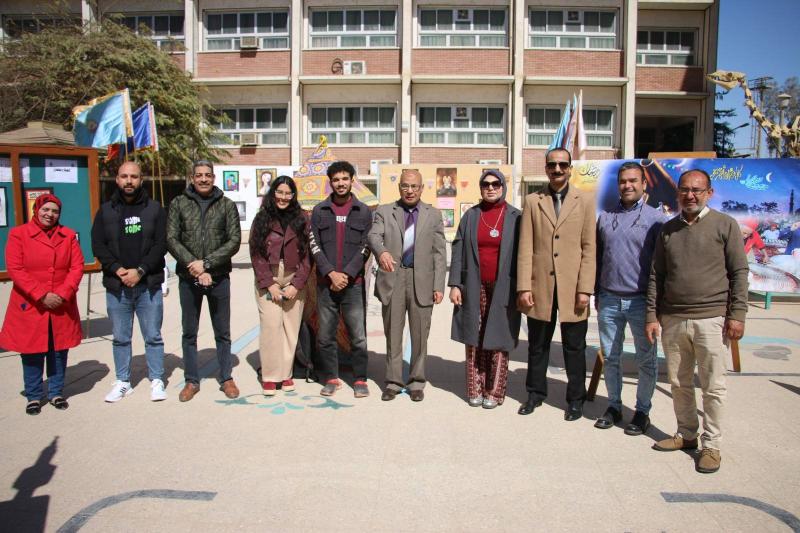
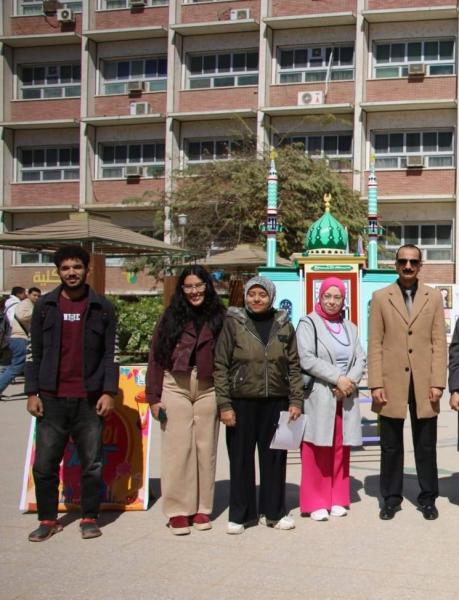
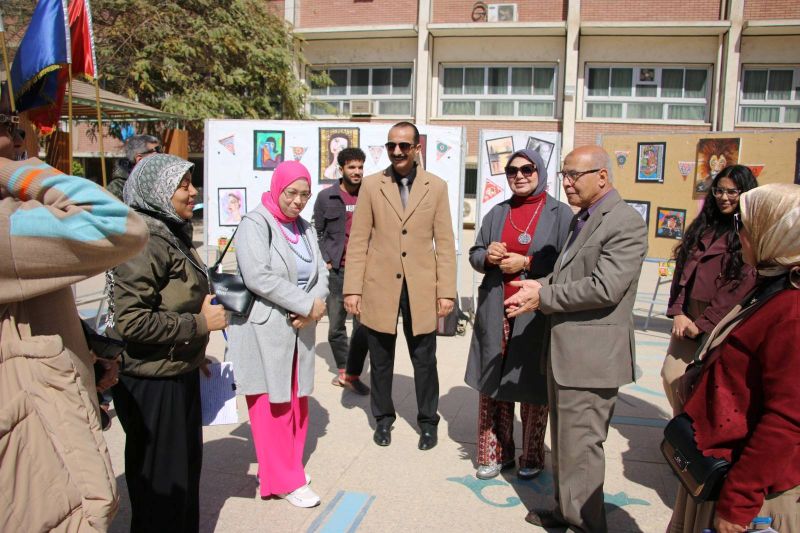
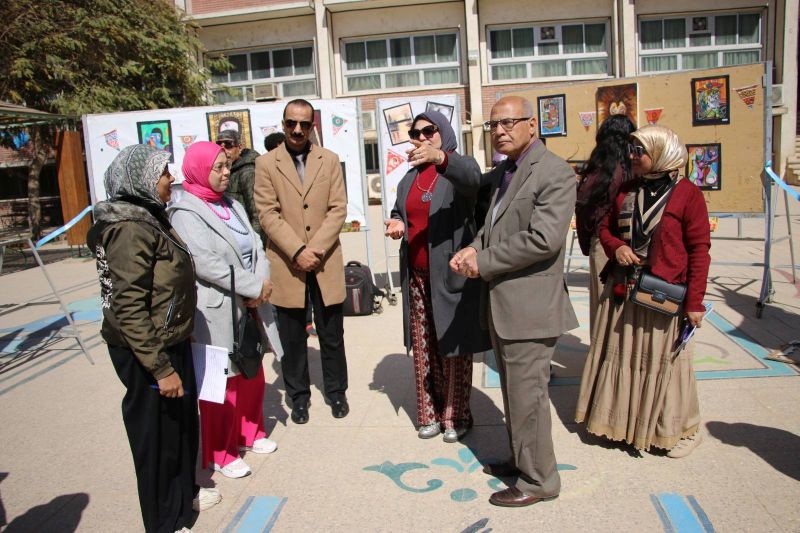
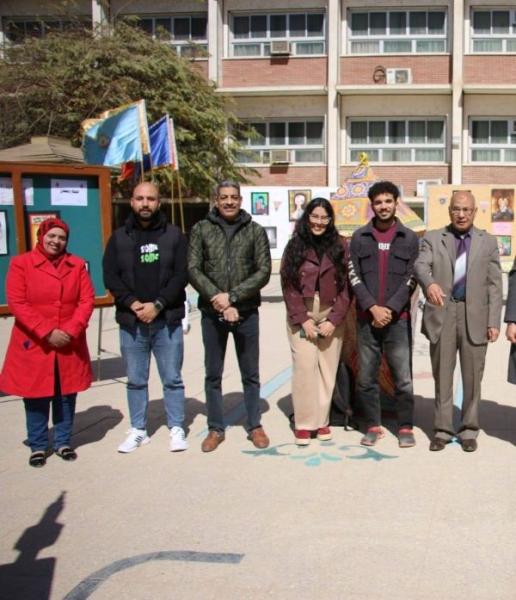
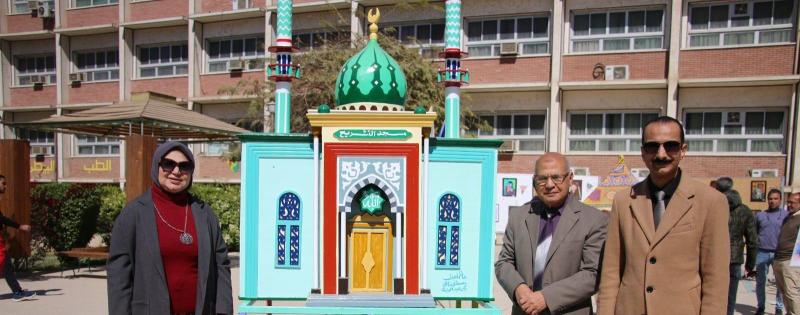
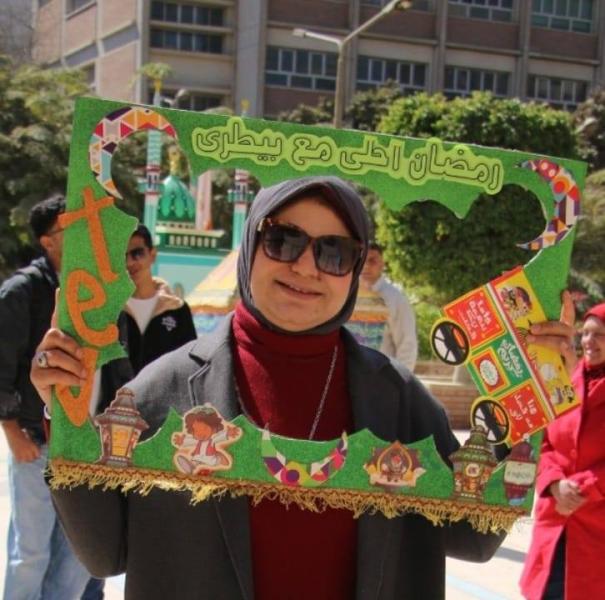
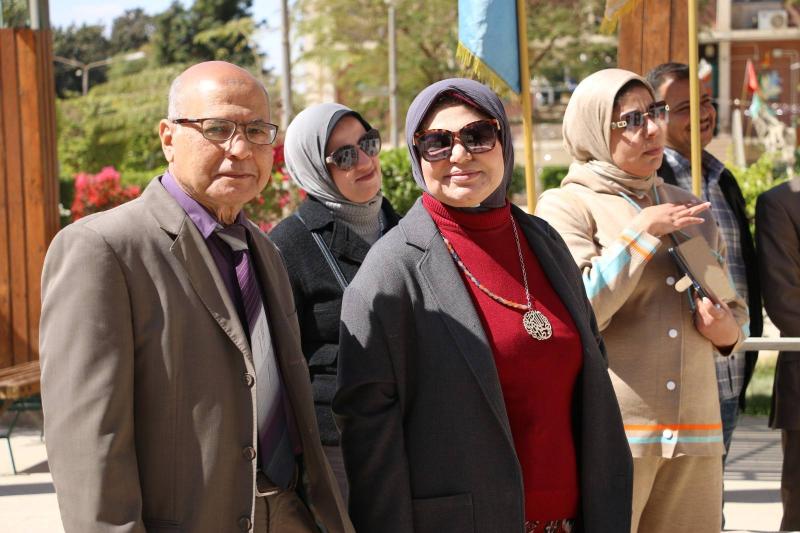
The Technical Committee of the Student Welfare Department at the Faculty of Veterinary Medicine participated in the "Most Beautiful Ramadan Courtyard 2" competition. The evaluation was attended by Professor Dr. [Name of Dean], Professor Dr. [Name of Vice Dean], Professor Dr. [Name of Vice Dean], Professor Dr. Mohamed Ahmed Alam El-Din, Supervisor of the Anatomy Department Museums, and an evaluation committee from the Arts Department of the General Administration for Student Welfare at Assiut University, on Sunday, March 1, 2026.

All praised the high standard of the Ramadan displays in the courtyard of the Faculty of Veterinary Medicine.

1

Art exhibition by student Mohamed Refaat (fourth year) and student Jessica Raafat Fayek (first year)

0

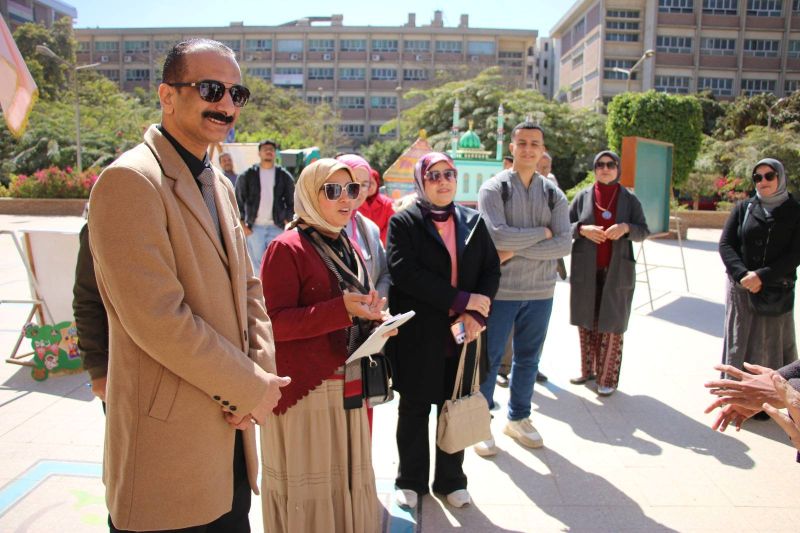
Under the patronage of Professor Dr. Ahmed El-Menshawy, President of the University; Professor Dr. Ahmed Abdel-Mawla, Vice President for Education and Student Affairs; Professor Dr. Enas Ahmed Abdel-Hafez, Dean of the Faculty; Professor Dr. Khaled Mohamed Ahmed Hassanin, Vice Dean for Education and Student Affairs; and Professor Dr. Madiha Darwish, General Coordinator of Student Activities at the University; and under the supervision of Dr. Ahmed Thabet Abdel-Awad, Director of the Student Welfare Department, the Technical Committee of the Student Welfare Department at the Faculty of Veterinary Medicine organized an art exhibition for student Mohamed Refaat (fourth year) and student Jessica Raafat Fayek (first year). The exhibition was inaugurated by Professor Dr. the Dean of the Faculty and Professor Dr. the Vice Dean for Education and Student Affairs, in the presence of a select group of supervisors of fine arts from the Arts Department of the General Administration for Student Welfare at Assiut University. The exhibition opened on Sunday, March 1, 2026, and continued until Tuesday, March 3, 2026, in the Faculty grounds.

All attendees praised the high quality of the artwork. The art in the exhibition

215

Light and Electron Microscopic Characterization of Vascular and Mitochondrial Structures in the Camel Retina

Research Abstract

Camels have unique morphological traits that enable them to adapt well to harsh conditions. This work aims to describe the vascular architecture of the camel retina and investigate its cellular components with a focus on the distribution of mitochondria in Muller cells and photoreceptors, using light and electron microscopy. The camel retina is euangiotic in which blood vessels extend in the inner retina from the nerve fiber layer to the outer plexiform layer. The pericytes are embedded in the basement membrane of the retinal capillaries, and overlapping of pericytes could be observed. Glial cells are localized in the vicinity of blood vessels. Muller cells display mitochondria throughout their length, from their end-feet, which form the inner limiting membrane, to their scleral end, which forms the outer limiting membrane. Interestingly, the bodies of camel Muller cells are densely packed with mitochondria, while their end-feet show few mitochondria. Numerous mitochondria could be observed in the axons and synaptic terminals of rods and cones. Photoreceptor bodies are devoid of mitochondria. The inner segment's ellipsoid region is densely packed with mitochondria, whereas the outer segment lacks them. In conclusion, these findings provide new insights into the vascular and cellular organization of the camel retina, highlighting key adaptations such as a well-developed inner retinal vasculature, specialized features of the inner blood–retinal barrier, and a distinctive pattern of mitochondrial distribution in Muller cells and photoreceptors. This structural specialization may play a crucial role in maintaining retinal function under the challenging environmental conditions camels face.

Research Authors
Manal T Hussein, Wafaa Gaber, Khaled H Aly, Fatma M Abdel‐Maksoud
Research Journal
Microscopy Research and Technique
Research Publisher
John Wiley & Sons, Inc.
Research Website
https://analyticalsciencejournals.onlinelibrary.wiley.com/doi/abs/10.1002/jemt.70073
Research Year
2025

Mizolastine-loaded spanlastics for treatment of atopic dermatitis: immunomodulatory approach for management of inflammation

Research Abstract

Atopic dermatitis (AD) is the most widespread chronic inflammatory skin disease characterised by impaired skin barrier, higher immunoglobulin E (IgE)-mediated sensitisation, and pronounced inflammatory and immune activity. In this study, mizolastine-loaded spanlastics (MZSPs) with edge activators (Brij 35, Tween 80, and Cremophor RH40) were formulated using ethanol injection method. Spanlastics were assessed for their average particle size, surface charge, encapsulation efficacy, morphology, in vitro drug release, and ex vivo skin permeation. MZSPs showed average particle size ranging from 186.2 ± 13.0 nm to 380.7 ± 25.9 nm and high MZ encapsulation efficiency percentage of (95.8 ± 0.68%–98.1 ± 0.86%). The prepared MZSPs were incorporated into 2.5% HPMC hydrogel base to facilitate its topical delivery. The in vitro release experiments showed a sustained release profile of MZ from MZSPs-hydrogel over 24 h with effective flux and permeation through rat skin compared to free drug. Additionally, the therapeutic efficacy of MZSPs-hydrogel in an AD model utilising seven-week-old male Balb/C mice outperformed the free drug in improving cytokine profiles, histopathological and immunohistochemical parameters, along with a quantitative analysis of mast cell immunostaining. These findings support the potential application of MZSPs for the transdermal delivery of MZ, offering enhanced management for AD.

Research Authors
Marwa G Elnaggar, Aml I Mekkawy, Amira F Taha, Fatma M Abdel-Maksoud, Mohamed G Elnaggar, Hesham M Tawfeek, Hassan Tamam
Research Date
Research Journal
Journal of Drug Targeting
Research Member
Research Pages
1-11
Research Publisher
Taylor & Francis
Research Website
https://www.tandfonline.com/doi/abs/10.1080/1061186X.2025.2593462
Research Year
2025

Histopathological effects of lactic acid bacteria enriched white soft cheese in testes of albino rats

Research Abstract

Soft cheeses provide an ideal matrix for bacterial growth, serving as a medium for inoculating starter microorganisms like Lactobacillus. This study aimed to evaluate the biochemical, histopathological, and immunohistochemical effects of white soft cheese inoculated with Lactobacillus helveticus, Lactobacillus rhamnosus, and Streptococcus thermophilus S3855 on male reproductive health in albino rats. Forty male Albino rats, divided into five isolated groups, and fed white soft cheese prepared with different bacterial strains or non-inoculated cheese (control) for 28 days. The prepared cheese was pickled for four weeks at refrigerator temperature and analyzed for chemical and microbiological properties at 7, 14, 21, and 28 days. Total solids decreased over time, while protein-to-dry matter ratios increased across all treatments. Biochemically, all treated groups showed reduced serum total cholesterol, with the most significant triglyceride reduction in group V. Histopathological analysis revealed notable structural damage in testicular tissue, including degeneration of seminiferous tubules, vascular abnormalities, and a marked decrease in seminiferous tubule diameter and spermatogenic cell counts. Johnsen-like scores were significantly lower, particularly in groups III, IV, and V, indicating impaired spermatogenesis compared with the normal control. Immunohistochemically, strong Bax expression was observed in all treated groups, indicating enhanced apoptotic activity. Additionally, wide spread Plexin-B1 expression was also detected in all treated groups. These findings indicate that probiotic-enriched soft cheese may negatively affect male reproductive health, possibly through apoptosis-mediated pathways.

Research Authors
Ruwaida Elhanbaly, Khaled H Salman, Fatma M Abdel-Maksoud, Fatma Abo Zakaib Ali
Research Date
Research Journal
Scientific Reports
Research Publisher
Nature Publishing Group UK
Research Vol
15
Research Website
https://www.nature.com/articles/s41598-025-26073-2
Research Year
2025
Subscribe to