Can L-carnitine prevent Cadmium-Induced Damage of the Developing Hippocampus?

Research Abstract

Background: Cadmium is used in everyday life aspects. Hippocampus plays important role in the memory process and could be affected by cadmium exposure. L-carnitine is antioxidant, its role in neuroprotection is still not known.
Aim of Work: To assess effects of pre- and postnatal cadmium exposures on structure of principle cells (pyramidal and granular) of hippocampus in albino rats, and the potential role of L-carnitine.
Material and Methods: Pregnant female albino rats were used and divided into two major groups: I- Pregnancy and IILactation, each was further equally subdivided into 4 subgroups: Group Ia- Control. Group Ib- received cadmium from pregnancy day (PD)10 until delivery. Group Ic- received L-carnitine from PD7 until delivery. Group Id- received both L-carnitine from PD7 + cadmium from PD10 until delivery. Group IIa- Control. Group IIb- received cadmium from day 0-21. Group IIc- received L-carnitine from day 0-21. Group IId- received both L-carnitine+cadmium from day 0-21. Cadmium chloride was given orally by gastric lavage 4 mg/kg bodyweight/day. L-carnitine dose was given as 200 mg/kg/day orally by gastric lavage. The hippocampal specimens were collected from twelve male offspring of both age subgroups (newborn and 21 day old; 96 rats total) and were processed for light, electron microscopy and morphometry.
Results: In cadmium received rats principle cells showed degenerative changes as pyknosis, cytoplasmic vacuoles, damaged mitochondria, indentation of nuclear membrane, and the morphometric data showed highly significant reduction in principle cells number and decreased principle cell layer thickness as compared to  control. In cadmium+L-carnitine received rats the principle cells showed a very few swollen cells with little vacuoles, mildly dilated rough endoplasmic reticulum, and the morphometric results were improved approaching those of the control.
Conclusion: cadmium damaged principle cells of dentate gyrus, CA3 and CA1 fields of the rat hippocampus. L-carnitine reduced the cadmium-induced neuronal damage.


Research Authors
Ayman S. Amer, Faten Y. Mahmoud, Ashraf H. Abd El-Hakem, Mariam W. Fedal
Research Date
Research Department
Research Journal
The Egyptian Journal of Histology
Research Pages
16-35
Research Publisher
The Egyptian Journal of Histology
Research Rank
DOI: 10.21608/EJH.2019.13391.1124
Research Vol
43
Research Website
https://ejh.journals.ekb.eg/article_41226.html
Research Year
2020

Effect of exposure to cadmium on the hippocampus in adult albino rat and the possible role of L‑carnitine

Research Abstract

Background
The hippocampus is an important structure for formation of new memories. Cadmium is one
of the most toxic agents that can affect hippocampal neurons. L‑carnitine is an antioxidant.
Aim of work
To demonstrate the effects of cadmium on principal cells of hippocampus of adult rats and
possible protective role of L‑carnitine.
Materials and methods
A total of 42 adult rats aged 1 month were subdivided into four subgroups: group I was the control
group, which received no treatment. Group II was administered cadmium given at a dose of
4 mg/kg/day for 1 month. Group III (sham control) was administered L‑carnitine given at a dose of
200 mg/kg/day for 1 month. Group IV was administered cadmium and L‑carnitine given to the rats
at the same previous doses and duration. For each group, six rats were used for light microscopic
study (gallocyanin chrom alum stain), and six rats were used for electron microscopy (group III studied
only by light microscopy). Principal cell count and thickness were measured and statistically analyzed.
Results
Principal cells in group II showed degenerative changes. Morphometric data showed a
significant decrease in measured parameters. In group III, the results were similar to those of
the control group. In group IV, semithin sections and the ultrastructure of the principal cells
showed obvious improvement of cells. Morphometric data also increased compared with those
treated with cadmium.
Conclusion
Cadmium induces changes in the structure of the principal cells of the hippocampus in adult
rats. L‑carnitine plays an important in protection of the hippocampus.

Research Authors
Faten Y. Mahmoud, Ashraf H. Abd El‑Hakim, Ayman S. El Deen Amer, Mariam W. Fidal
Research Date
Research Department
Research Journal
Journal of Current Medical Research and Practice
Research Pages
240-250
Research Publisher
Journal of Current Medical Research and Practice
Research Rank
DOI:10.4103/JCMRP.JCMRP_60_18
Research Vol
4
Research Website
https://www.jcmrp.eg.net/article.asp?issn=2357-0121;year=2019;volume=4;issue=3;spage=240;epage=250;aulast=Mahmoud;type=0
Research Year
2019

Variations versus Similarities in the Cerebellar Structure of Different Vertebrates: A Comparative Anatomical Study

Research Abstract

Aim of work: To compare morphology of anterior cerebellar lobe's lobules: lobule III for hindlimb and lobules IV-V for forelimb movements among different vertebrates with emphasis on cerebellar structural-functional relationship. Material and Methods: Different adult vertebrates were used; from mammals: rat, cat, rabbit, cow, from avian: pigeon, bat and duck, from reptiles: snake, and from primates: human. Cerebella of all animals were examined for gross morphology and microscopic structure. In lobules III-IV-V, thicknesses of cerebellar cortical layers, Purkinje cell surface area, and Purkinje cell count were measured. Obtained data were statistically analyzed. Results: Snake׳s cerebellum didn't show foliations. Pigeon, duck and bat had large vermis with rudimentary cerebellar hemispheres. Rat, cat, rabbit and cow showed large complex foliations of cerebellar hemispheres and vermis. The human had massive cerebellar hemispheres and small vermis. Pigeon, duck and bat had well developed lobules IV-V and so did the cat. In contrast, rat and rabbit had well developed lobule III in comparison to lobules IV-V. In cow and human, lobules III-IV-V were well developed. Order of cerebellar cortical layers in different animals was similar. Significant differences were between lobule III and lobules IV-V in Purkinje cell count and cortical layers thickness following animals' behavior. In animals using hindlimbs more than forelimbs, mean numbers of those data showed significant increase in lobule III compared to lobules IV-V and vice versa. Conclusion: Variations in cerebellar morphology-structure are related to behavioral differences among animals. Degree of structural complexity of cerebellar lobules III-IV-V is related to limbs´ function.

Research Authors
Mohamed N.M. Saleh, Manal M.S. El-Meligy, Ayman S. Amer, and Doaa H.A. Hamed
Research Date
Research Department
Research File
2017.pdf (742.95 KB)
Research Publisher
The Egyptian Journal of Anatomy
Research Rank
doi:10.21608/EJANA.2019.6228.1003
Research Website
https://ejana.journals.ekb.eg/article_67812.html
Research Year
2017

Combined Blood Indexes of Systemic Inflammation as a Mirror to Admission to Intensive Care Unit in COVID-19 Patients: A Multicentric Study

Research Authors
Mohammed Nahed Attia & Taghreed Sayed Meshref Dina Ali Hamad, Mai Mostafa Aly, Marwa Ahmed Abdelhameid, Shimaa Abdalla Ahmed, Asmaa Salah Shaltout, Alaa Eldin Abdel-Moniem, Ahmed Mohamed Reda Ragheb
Research Date
Research Journal
journal of epidimology and global health
Research Year
2021

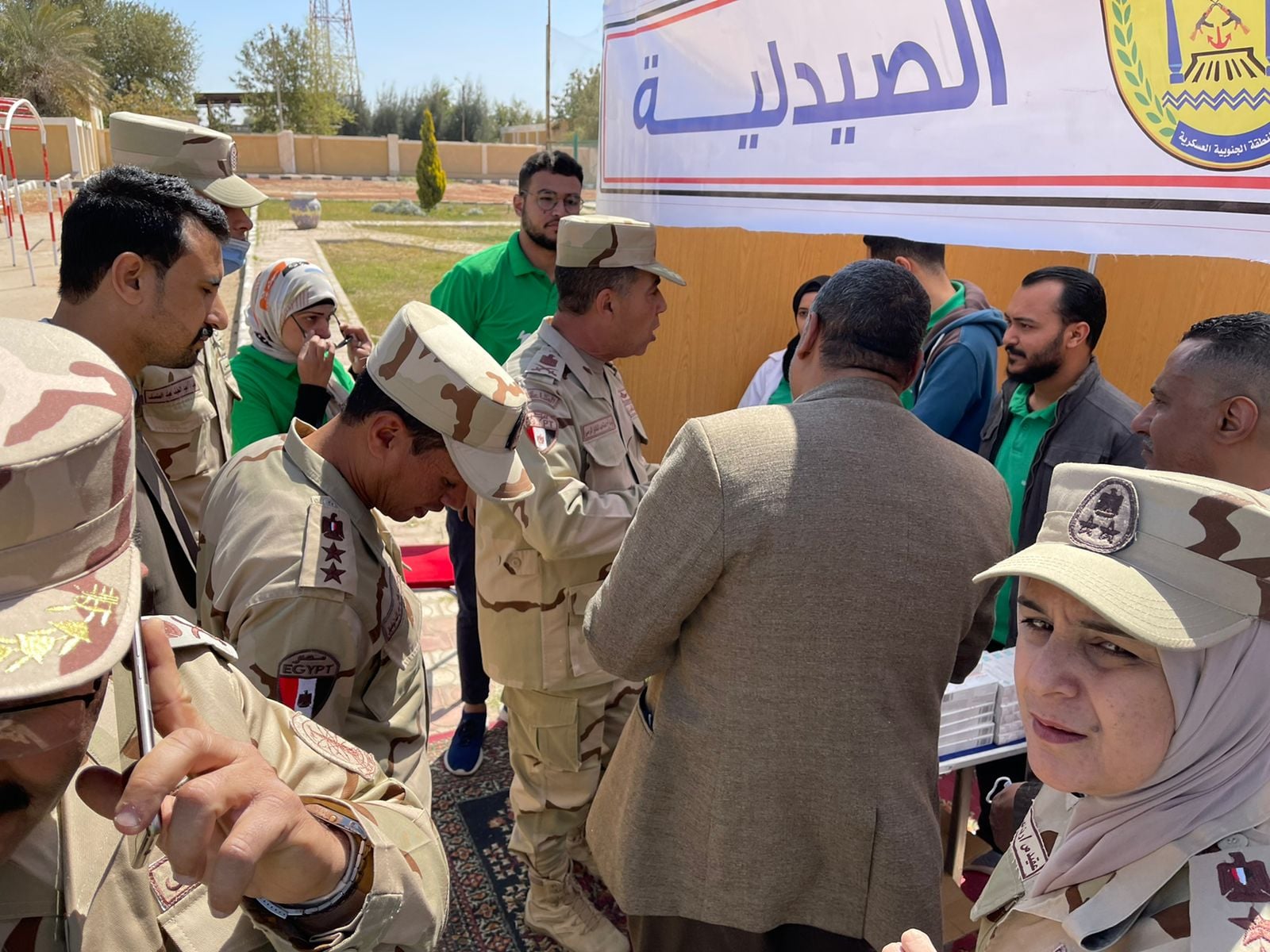
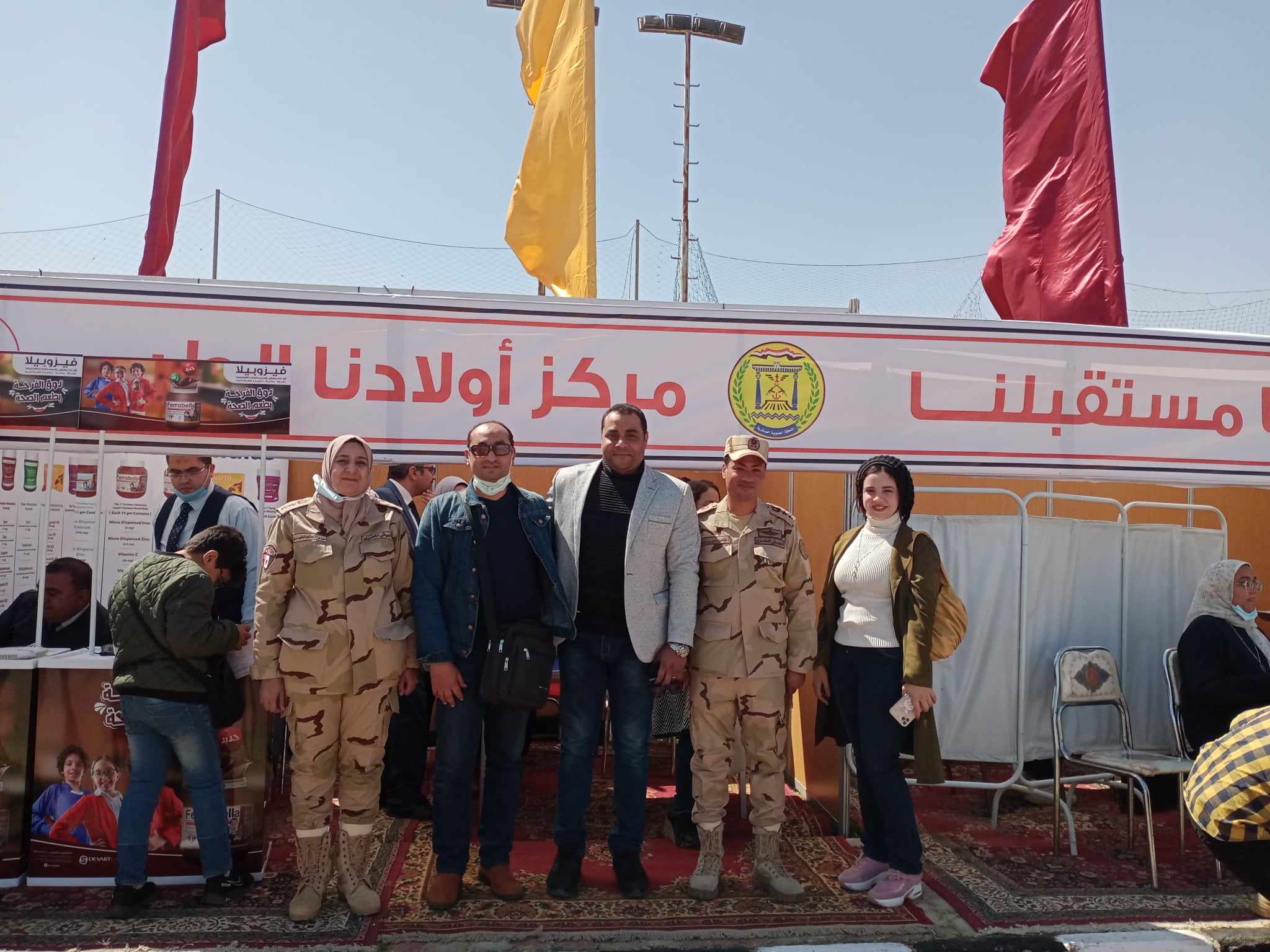
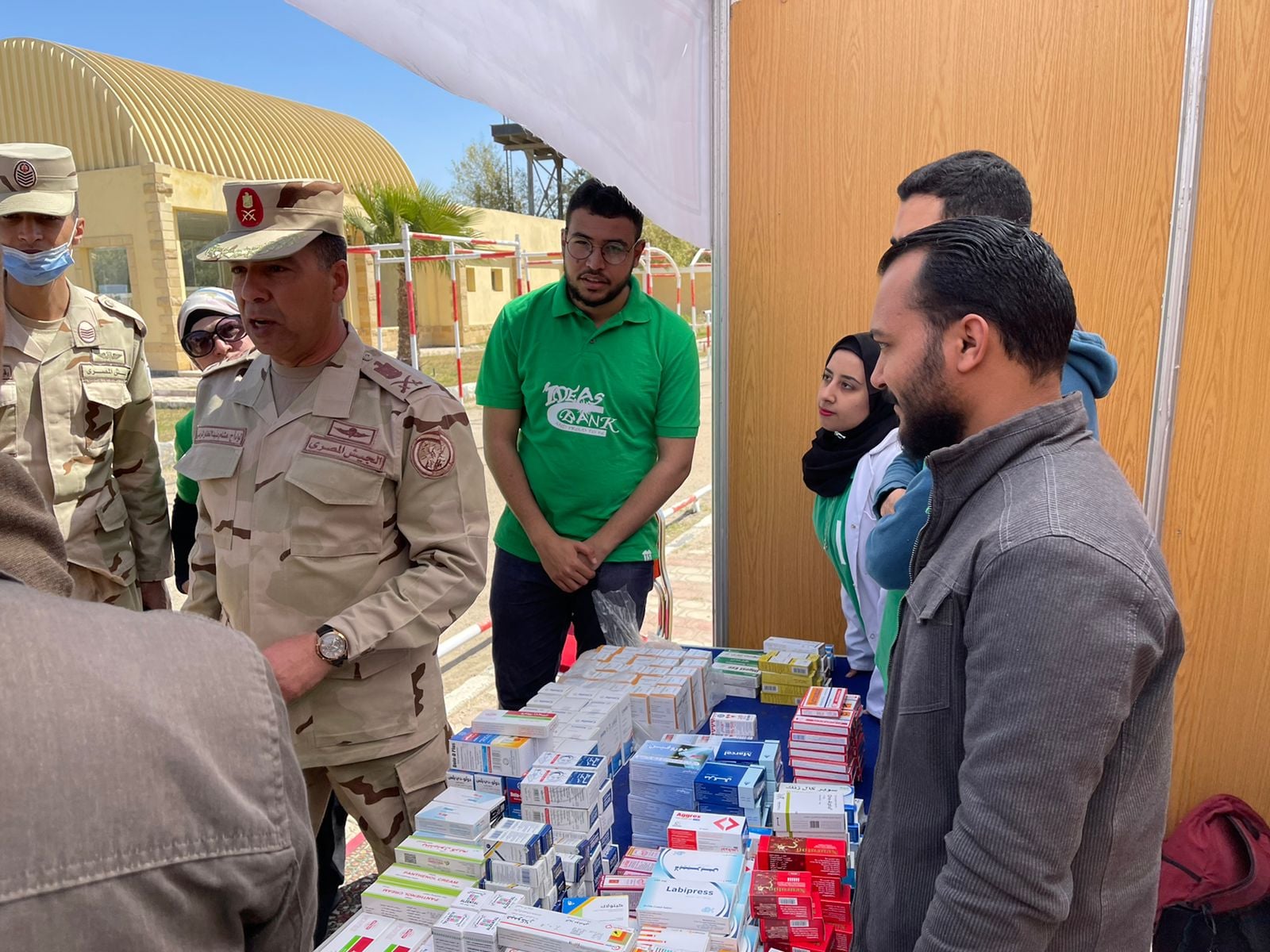
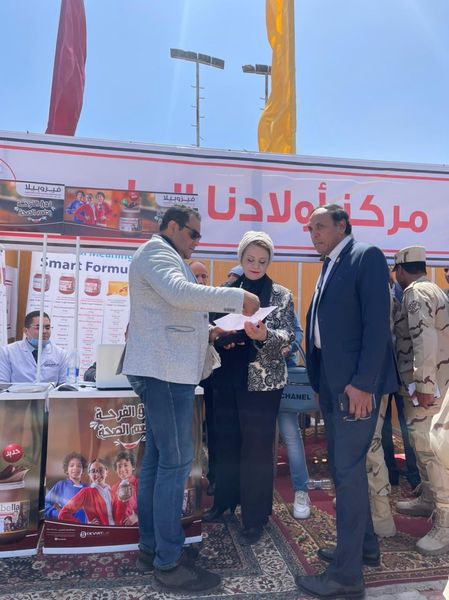
Therapeutic convoy - in cooperation with the medical sector in the southern region and to celebrate the day of the orphan

تحت رعاية

 أ.د/ طارق الجمال رئيس الجامعة

أ.د/ مها كامل غانم نائب رئيس الجامعة لشئون خدمة المجتمع وتنمية البيئة

أ.د/ علاء عطيه عميد الكلية ورئيس مجلس إدارة المستشفيات الجامعية

أ.د/ سعد زكى وكيل الكلية لشئون خدمة المجتمع وتنمية البيئة والمشرف العام على القوافل الطبية

استمراراً للدور الرائد التي تؤديه الكلية علي الصعيدين التعليمي والخدمي لمجتمعها المحيط، وما تحقق من جهد ملموس بقطاع خدمة المجتمع وتنمية البيئة لخدمة أهالي القرى الأكثر احتياجاً.

وبناء على طلب قائد المنطقة الجنوبية العسكرية أطلقت الكلية القافلة العلاجية بالتعاون مع القطاع الطبى بالمنطقة الجنوبية واحتفالا بيوم اليتيم بمشاركة (٧) اقسام  وبحضور (١٦) من أعضاء هيئة التدريس ومعاونيهم ومشاركة طلابية (كلية الطب-كلية الصيدلة)

بمشاركة الاطباء:

أ.د/اسامة محمود العشيرى    الاطفال

أ.د/ مدحت العربى            الصحة العامة

ط/زينب جلال الدين          الصحة العامة

ط/ ميراى ماجد اميل         الصحة العامة

د/ محمد حسن محمد        الامراض الباطنة

ط/ماريا حمدى عبدالملاك  الامراض الباطنة

د/ منتصر جمال احمد         الامراض الصدرية

ط/ دينار رضا رجب            الامراض الصدرية

د/ داليا محمد  تهامى        طب وجراحة العيون

ط/ هبة الله محمج طارق   طب وجراحة العيون

ط/ مينا يوسف عشم         انف واذن وحنجرة

ط/ زينب صلاح الدين محمد   انف واذن وحنجرة

د/ احمد عبدالعال عبدالمجيد   الجلدية والتناسلية

ط/ آيات محمود عبد السلام    الجلدية والتناسلية

د/ اسلام كرم الله رمضان       جراحة العظام

ط/ عمرو حاتم احمد              جراحة العظام

د/ عمرو محمد محمد عبد المجيد. مشرف مركز القوافل الطبية

2341


Subscribe to