
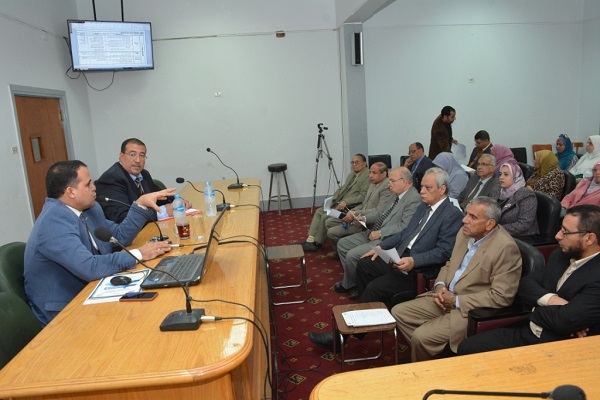
Prof. Tariq Al-Gammal emphasized the importance of activating and maintaining communication with higher education institutions, introducing programmatic accreditation, and exchanging visions, ideas and experiences between higher education institutions and the university in the field of quality assurance.This came during an introductory scientific symposium organized by the Quality Assurance Unit at the Faculty of Education on the programmatic approval of standards, indicators and practices in the presence of Professor Dr. Adel Rasmi Hammad, Dean of the College of Education and the External Auditor of the National Authority for Quality Assurance, and Prof. Dr. Hamdi Mohamed Al-Bitar, Director of the Quality Assurance Unit and a group of members The faculty from the various departments of the college.Where Prof. Dr. Adel Rasmi indicated in his lecture about the importance of programmatic accreditation, its standards and indicators, and how to prepare a self-study for the program and upgrading the level of higher education in Egypt through the axes of evaluation and accreditation and the criteria for accrediting the program in accordance with the National Authority for Quality Assurance and Accreditation Manual, the first issue, January 2009, which includes a standard The mission and goals of the program, the standard for leadership and organization of the program, the standard for financial resources and material support facilities, and the second axis on the educational effectiveness of the program and the academic standards of the program, and the criteria for designing the program and education and the Learning, students, and faculty members and evaluating learning outcomes, reinforcement, development and indicators of program success in line with one of the goals of Egypt's 2030 vision, which is improving the quality of the educational system in line with global systems and improving the competitiveness and outputs of education systems and programs appropriate to the job market at home and abroad.Prof. Hamdi Al-Bitar also pointed out that the objectives of the symposium are to enhance the confidence of the faculty members, which would increase their competitiveness and to develop education for the knowledge economy, noting that higher education represents one of the most important pillars of the development of human societies and the tools for their advancement In addition to its role in creating and disseminating knowledge and science, which requires the necessity of developing and adjusting quality assurance standards through reviewing the visions of educational institutions and their goals, designing curricula and teaching methods to comply with the challenges of the current era and keeping pace with the requirements of the global labor market.