
Effect of Implementing A Clinical Pathway Directed Care on the Frequency of Complication Related Traumatic Brain Injury

Research Abstract

Abstract Background: Severe traumatic brain injury (STBI) is a serious medical condition that is associated with considerable disease burden and disability throughout the world. Clinical pathways provide the means to connect the best available evidence with clinical practice to improve patient outcomes. Objective: To measure the effectiveness of implementing a clinical pathway to usual care on the complications related to severe traumatic brain injury. Design: Quasi-experimental study.Methods: A convenience sampling of 60 adult patients with TBI were recruited, with 30 patients assigned to the control group and 30 to the pathway group. The study was conducted at the trauma ICU of Assiut Hospital, Egypt. The control group received 15 days of ICU routine care and intervention group received 15 day of care includes in the clinical pathway. Results: The study found fewer complications related to TBI in the clinical pathway group, with statistically significant differences found between groups. Patients in the clinical pathway group demonstrated significantly fewer cases of prolonged mechanical ventilation and reintubation. Conclusion: The current study suggests that the implementation of a clinical pathway for severe TBI may be effective in decreasing the frequency of complications related to severe TBI.

Research Authors
Warda Ramadan Abouzeid1 , Nagwa Ahmad Reda2 , Mohammad Mohamed Abd-Ellatif3 , Mona Aly Mohammed4 , Mervat Anwar Abd-Elaziz5 & Matthew J Leach6
Research Date
Research Department
Research Journal
Assiut Scientific Nursing Journal
Research Member

Effect of Modified Clinical Pathway Guidelines on Congestive Heart Failure Patient’s satisfaction at Coronary Care Unit

Research Abstract

Abstract Background: Congestive heart failure patients at coronary care unit suffer from many problems, which might endanger their life as increased anxiety level which originated from disease process and the actual care they receive was complex. Modified Care pathway guidelines are tools that enhance the patient quality of care by decreasing level of anxiety which may lead to increasing patient satisfaction. Therefore, the aim of this study is to evaluate effect of modified clinical pathway guidelines on congestive heart failure patients' satisfaction at Coronary Care Unit. Design: Quasi-experimental research design. Setting: Coronary Care Unit at Assuit University Hospitals. Sample: sixty adult males and females' critically ill patients' who divided into two equal and matched groups (study and control). Tools:- Three tools; Tool I: Personal and medical datasheet, Tool II Assessment of patient anxiety using state-trait anxiety inventory, and Tool III Patients' Satisfaction Scale. Results: Finding of this study supported stated research hypotheses with statistical significant difference between study and control groups regarding total mean of anxiety score at 6th day of intervention were (39.6±6.7, 44.87±4.54) respectively as well as (50%) of study group patients were very satisfied as compared with (3.3%) of control group. Conclusion: Applying modified clinical pathway guidelines significantly reduce anxiety level in congestive heart failure critically ill patients and improve patient's satisfaction. Recommendation: Conducting training programs about importance of modified clinical pathway guidelines implementation for all health care providers.

Research Authors
Ragaa Dahi Mohamed1 , Warda Youssef Mohamed2 , Mervat Anwar AbdEl-Aziz3 & Hatem Abdel-Rahman Helmy4 .
Research Date
Research Department
Research Journal
Assiut Scientific Nursing Journal
Research Member

Effect of implementing nursing care of patients post liver transplantation on nurses performance.

Research Abstract

Abstract: Back ground: intensive care unit nurses should be able to perform liver graft assessment post liver transplantation and learn principle of care to identify and manage any problem during ICU staying. Aim: this research was carried out to investigate the effect of implementing nursing care of patients post liver transplantation on nurses performance. Study design: Quasi-experimental research design was utilized in this study. Setting: intensive care unit at Alrajhey liver hospital at Assiut University hospitals. Sample: A convenience sample of all available nurses. The sample size was 30 nurses. Tools: Utilizing two tools, Nurse's knowledge questionnaire and Observational checklist. Results: Finding of the present study revealed that significant statistically correlation between total nurses’ knowledge and skills regarding assessment of liver graft function and intensive care post liver transplantation which indicated positive relation between knowledge and skills. Finding of the present study revealed that insignificant relationship between information and skills regarding assessment of liver graft function and intensive care post liver transplantation and their socio - demographic data. Conclusion: Nurses` knowledge and practice regarding assessment of liver graft function in ICU and becomes to the satisfactory level after the educational program. Recommendation: Nurses need for continuous training programs to increase their performance regarding assessment of liver graft function post liver transplantation.

Research Authors
Ebtesam Mohammed Abd Rabo1 , Mervat Anwar Abdel-Aziz2 & Khalled Salah Mohamed3 .
Research Date
Research Department
Research Journal
Assiut Scientific Nursing Journal
Research Member

Clinical Outcomes Post Implementing Nursing Intervention for Intravenous Immunoglobulin Recipients.

Research Abstract

Abstract Background: Immunoglobulin is an effective therapy in Guillain-Barre syndrome patients. Careful monitoring for side effects of immunoglobulin and reduction of complications remains mandatory for nursing care. Aim: To evaluate clinical outcomes post implementing nursing intervention for intravenous immunoglobulin recipient. Hypotheses: A significant reduction in complication incidence and length of hospital stay (ICU – department) among study group than control. Patients and Methods: Design: A quasi-experimental research design. Subjects: A convenience sample of sixty adult patients divided into study and control group diagnosed with Guillian Barre syndrome and had received intravenous immunoglobulin as a line of treatment. Setting: Neurological intensive care unit and department at Assiut University Hospital. Tools: I: patient assessment tool, II: four score assessment tool, and III: patient outcomes assessment tool. The control group subjected to routine hospital nursing intervention while study group received nursing intervention of IVIG administration. Results: Finding revealed a statistical significant decrease in disease complications, IVIG side effect, and hospital stay(ICU– department) in response to implemented nursing intervention between two groups p=0.003,0.004 respectively. Conclusion: Better clinical outcomes had been observed among intravenous immunoglobulin recipient with implemented nursing intervention Recommendation: Nursing intervention should be implement for all intravenous immunoglobulin recipient to achieve better clinical outcomes

Research Authors
Mervat A. Abd-El-Aziz1 , Asmaa A. Mahgoub 2 & Amna A. Desouky3
Research Date
Research Department
Research Journal
Assiut Scientific Nursing Journal
Research Member

Discussion of Master thesis submitted by researcher/ Zainab Ali Hosni

By God willing, a master’s thesis will be discussed by the student Zainab Ali Hosni . Head of Nursing at Manqabad Military Hospital, on Tuesday 26/10/2021 at 9:00 a.m    , in the conference hall of the college. Thesis title: " Assessment of nurses Compliance for commitment aseptic technique during hemodialysis (Suggested Guidelines) "

2

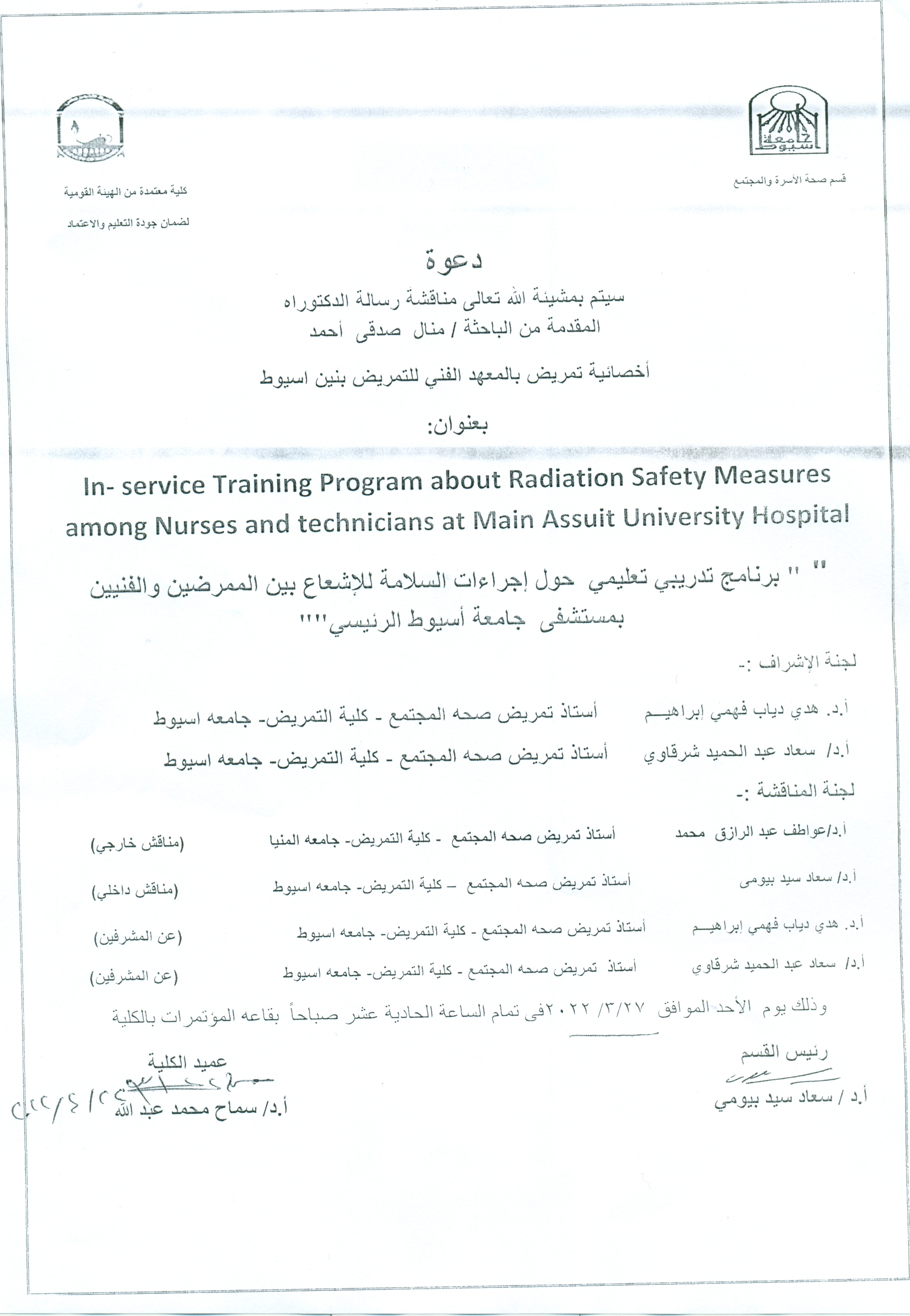
Discussion of the doctoral dissertation protocol for researcher / Heba Syed Mohamed

Discussion of the doctoral dissertation protocol for researcher / Heba Syed Mohamed

By God willing, the protocol of the doctoral thesis submitted by the researcher / Heba Syed Mohamed, Nursing Specialist at South Egypt Cancer Institute, , and the title of the thesis: “Effect of Designing Training program on Nurses to Minimize patients’ Complications of Chemotherapy Extravasation” will be discussed, God willing, on sanday, 24/ 10/2021 pm at 10:00 a.m    the conference hall of the Faculty of Nursing - Assiut University
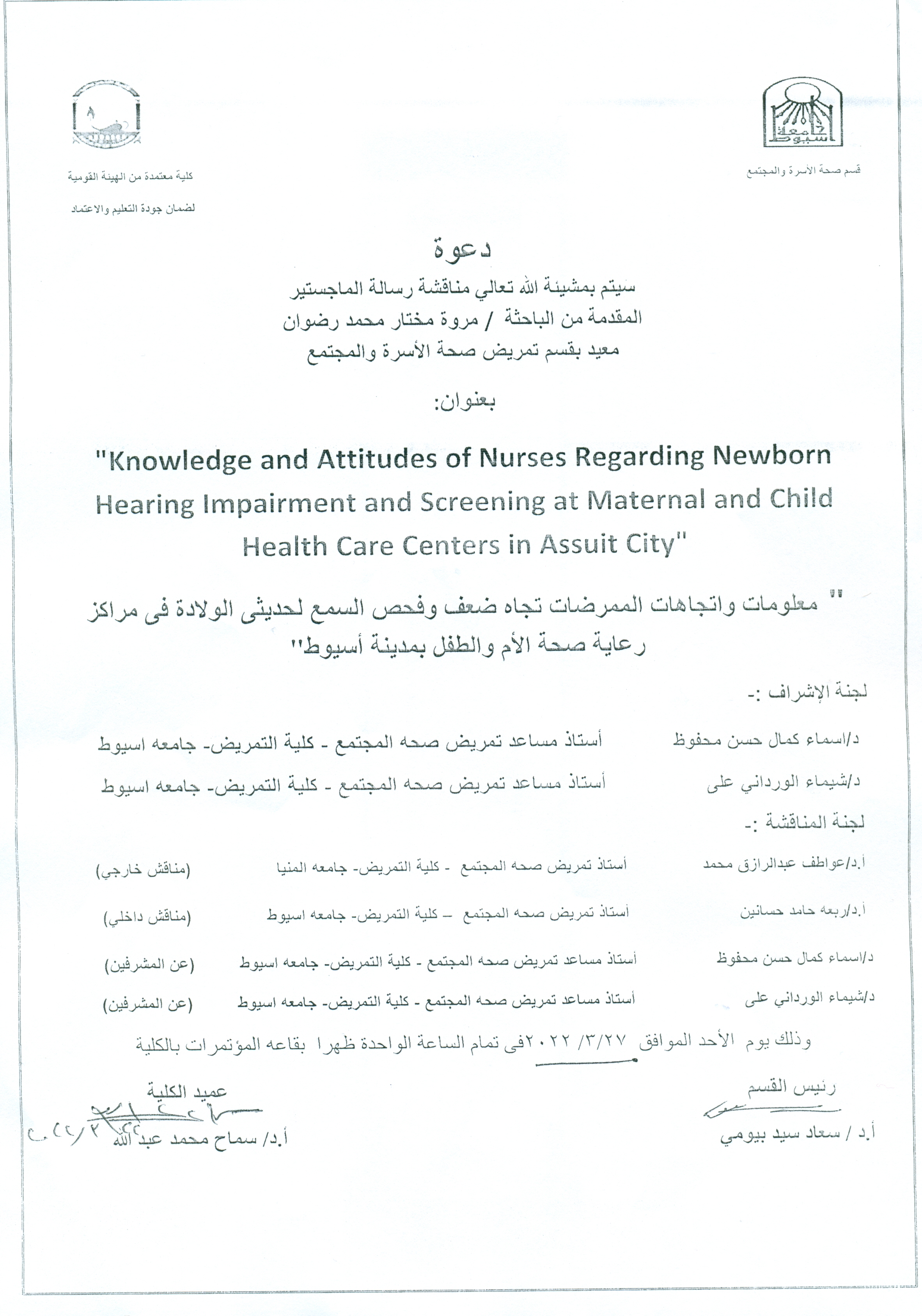
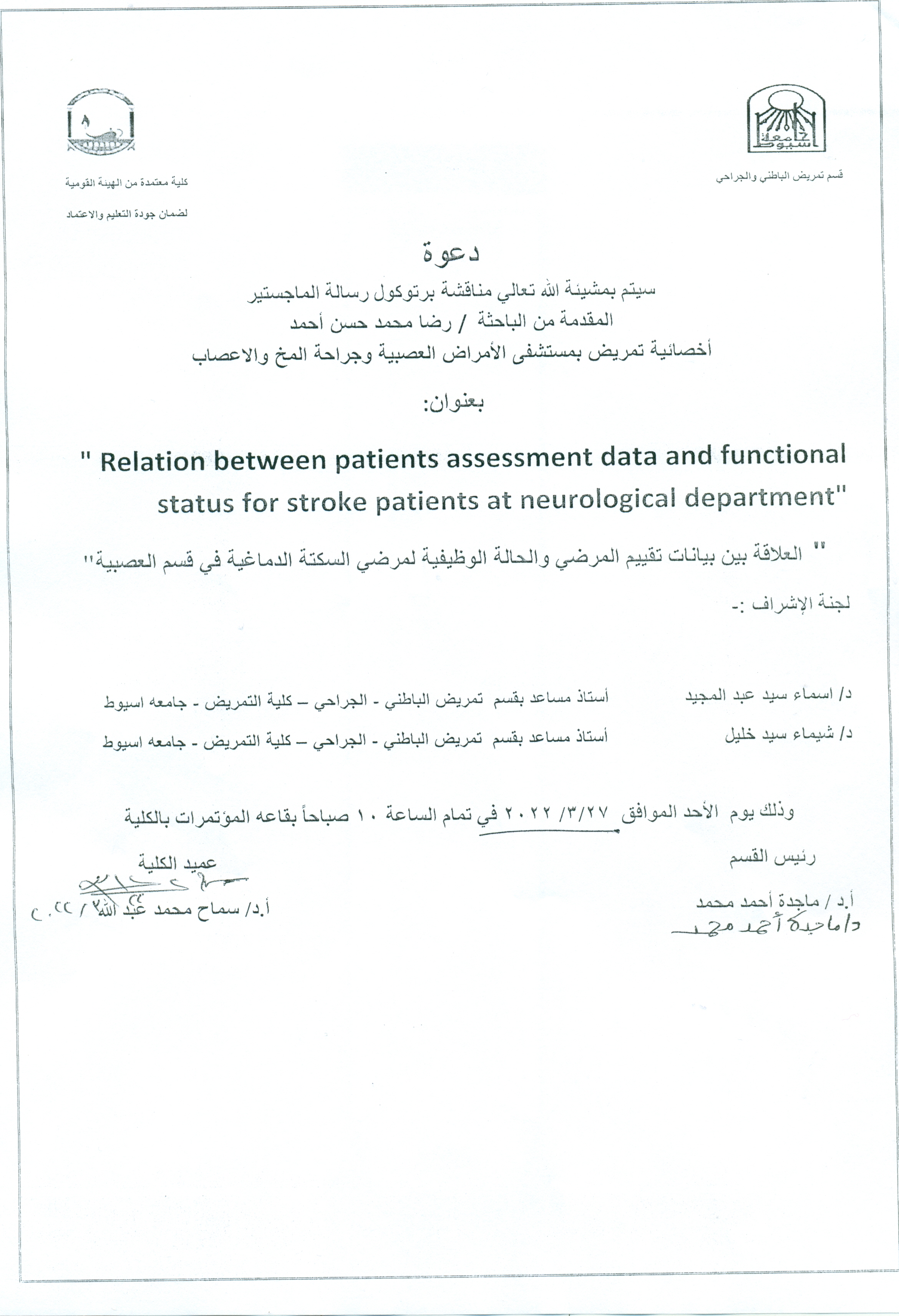
Protocol of master thesis submitted by researcher/ Iman Ahmed Maghribi Ahmed

22

By God willing, protocol of master thesis submitted by researcher/ Iman Ahmed Maghribi Ahmed - Dean of the College of Nursing- South Valley University - the title of the thesis: " Assessment of female nursing students’ knowledge regarding  Polycystic Ovarian Syndrome South Valley University"  will be discussed, God willing, on Tuesday,19/10/2021  at 10:00 a.m    the conference hall of the Faculty of Nursing - Assiut University



Effect of Nursing Guidelines in Clinical Outcomes for Haematemesis Patients on Intensive Care Unit at Alrajhy Liver Hospital

Research Abstract

Abstract Many patients with hematemesis had multiple complications as hypovolemic shock than death. Patient in ICU need special nursing guidelines to improve their outcomes. Aim of the study: to evaluate the effect of nursing guidelines in clinical outcomes for haematemesis patients at gastroenterology intensive care unit. Research design: quasi experimental research design was utilized in this study. Which was carried out in gastroenterology ICU at alrajhy liver hospital at Assiut University. The study sample consisted of study group (50 patients) who received the nursing guidelines and control group (50 patients) who received routine care. The following tools were utilized for data collection: Tool I haematemesis assessment sheet Tool II evaluation through different score, Tool III patient outcome and complication. Tools were applied in 3 phases; preparatory, implementation and evaluation phase. method record and document patient social and medical data, hemodynamic, respiratory, and cardiovascular status, assessment of blood transfusion, laboratory data, assess the patient status using different scale, and finally complications, Results: The majority of control group developed hepatorenal syndrome but (2.0%) patients in the study group had developed hepatorenal syndrome with higher in percentage in complication in control group than study group with significance difference (P<0.05). Conclusion: nursing guidelines leads to significant improvement in Patients outcomes for haematemesis patients. Recommendations suggest to emphasize the importance of accurate assessment of the patient with haematemesis

Research Authors
Asmaa S. Mohamed1 , Mervat A. Abdelaziz2 & Asmaa A. Mahgoub3 .
Research Date
Research Department
Research Journal
Assiut Scientific Nursing Journal
Research Member

Assessment the Risk Factors of Patients with Septic Shock in the Intensive Care Unit

Research Abstract

Abstract Background: Sepsis is considered to induce immune suppression, leading to increased susceptibility to secondary infections with associated late mortality. Aim: To assess the risk factors of patients with septic shock in the intensive care unit. Study design: a descriptive research design was utilized in this study. Setting: The study was conducted in the general intensive care unit and trauma intensive care unit at Assuit University Hospital. Sample: A purposive 60 patients with septic shock patients. Tools: two tools used for data collection, tool (1), Patient assessment sheet, and tool (2), risk factors assessment sheet. Results: The main risk factors were dysfunction of one or more of the major body systems, tracheostomy (65.0%), diabetes mellitus (65.0%) and respiratory disease, in addition, more than half of them stay more than 20 days in the ICU and half of them suffered from respiratory failure as a complication of septic shock. Conclusion: major factors that were associated with in-hospital mortality among ICU patients with severe sepsis or septic shock were multi-organ failure and DM which despite treatment with early resuscitation. Recommendation: Applied Nursing guidelines and standard precautions infection control of patients with septic shock at the onset of intensive care unit admission.

Research Authors
Nadia Adel Sayed1 , Olfat Abd El-Ghany Shawer2 & Mervat Anwar Abdel-Aziz3
Research Date
Research Department
Research Journal
Assiut Scientific Nursing Journal
Research Member
Subscribe to