


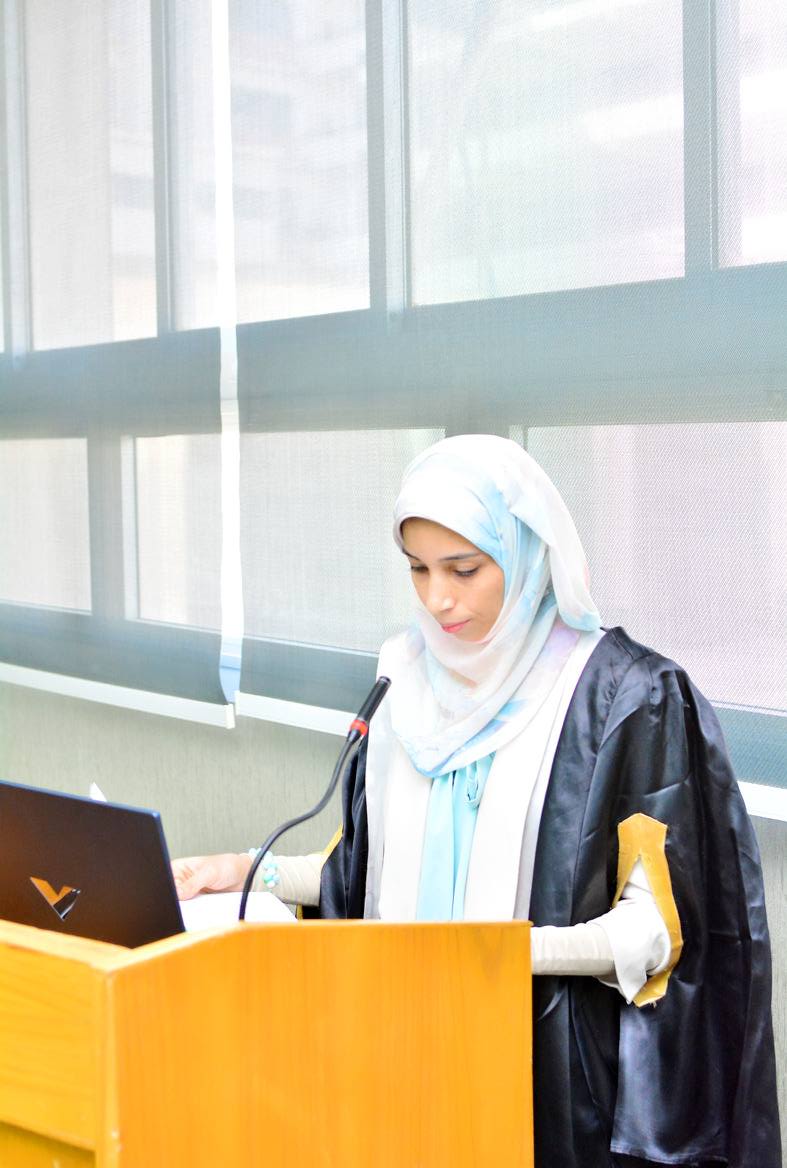
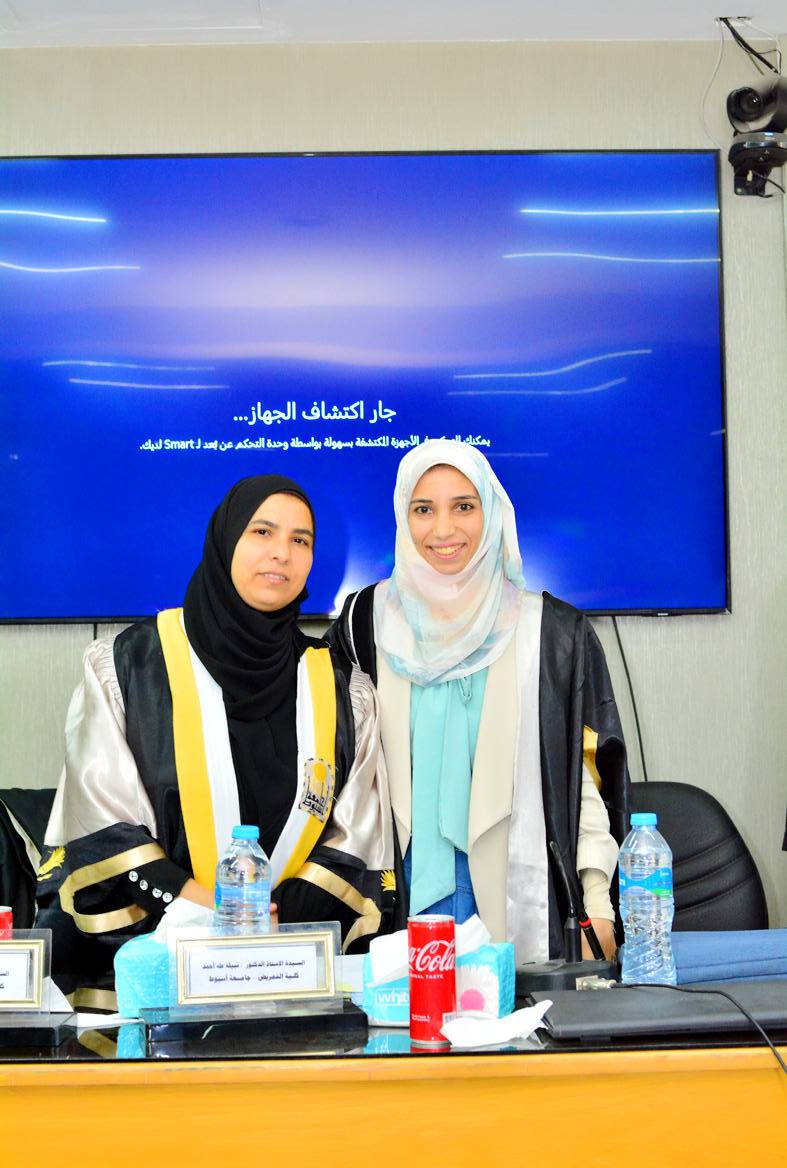
, Faculty of Nursing, Assiut University.
On the occasion of the acceptance of her Master's thesis entitled :
Impact of integrated palliative care on the health status of Gynecologic cancer patients.
The impact of integrated palliative care on the health status of female reproductive cancer patients .
This was done under the supervision and with the participation of a select group of distinguished professors :
Prof. Dr. Nabila Taha Ahmed, Professor of Obstetrics and Gynecology Nursing, Faculty of Nursing, Assiut University. (On behalf of the supervisors )
Prof. Dr. Hesham Ahmed Elsayed Abu Taleb, Professor of Obstetrics and Gynecology - Faculty of Medicine - Assiut University (on behalf of the supervisors)
Dr. Amal Fouad Aref, Assistant Professor of Nursing, Obstetrics and Gynecology, Faculty of Nursing, Assiut University. (On behalf of the supervisors )
Prof. Dr. Intisar Mohammed Younis, Professor of Obstetrics and Gynecology Nursing, Faculty of Nursing, Sphinx University (External Examiner)
Dr. Walaa Hamza Ibrahim, Assistant Professor of Obstetrics and Gynecology Nursing - Faculty of Nursing - Assiut University (Internal Examiner)
With sincere wishes for continued success and achievement in her academic and research career .
 #Media_of_the_Faculty_of_Nursing_Assiut_University

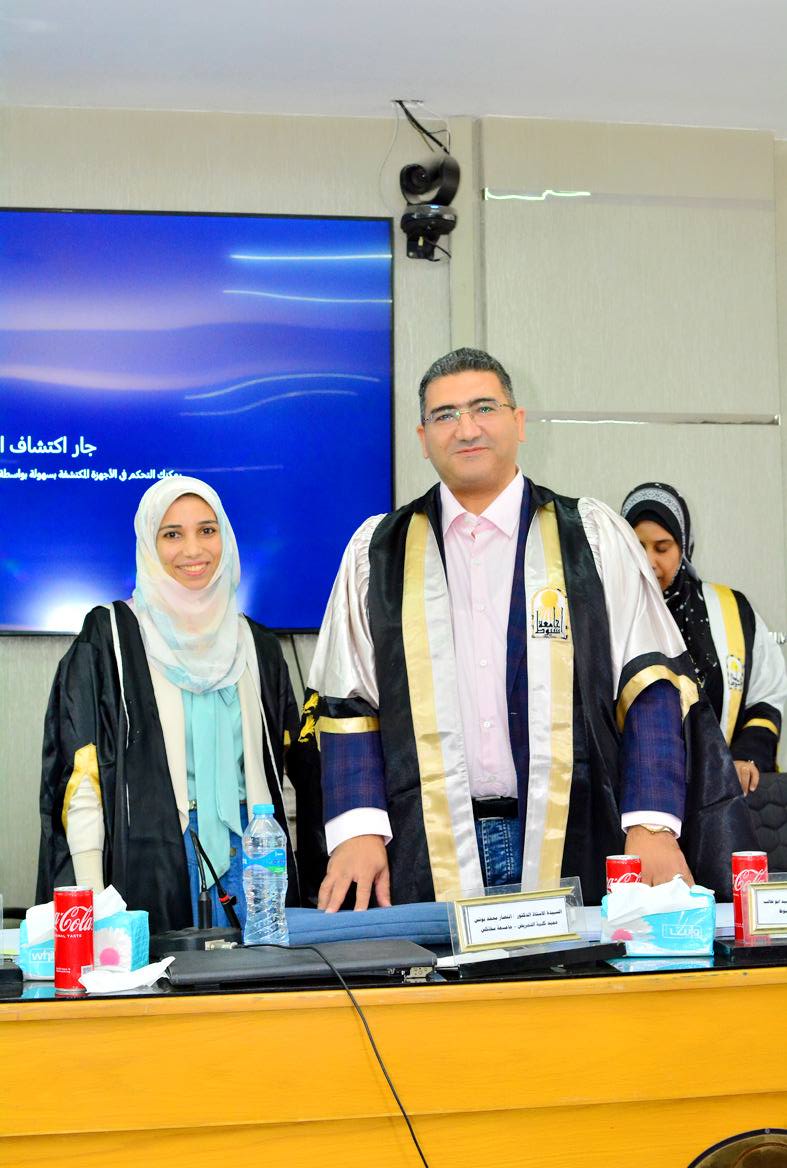
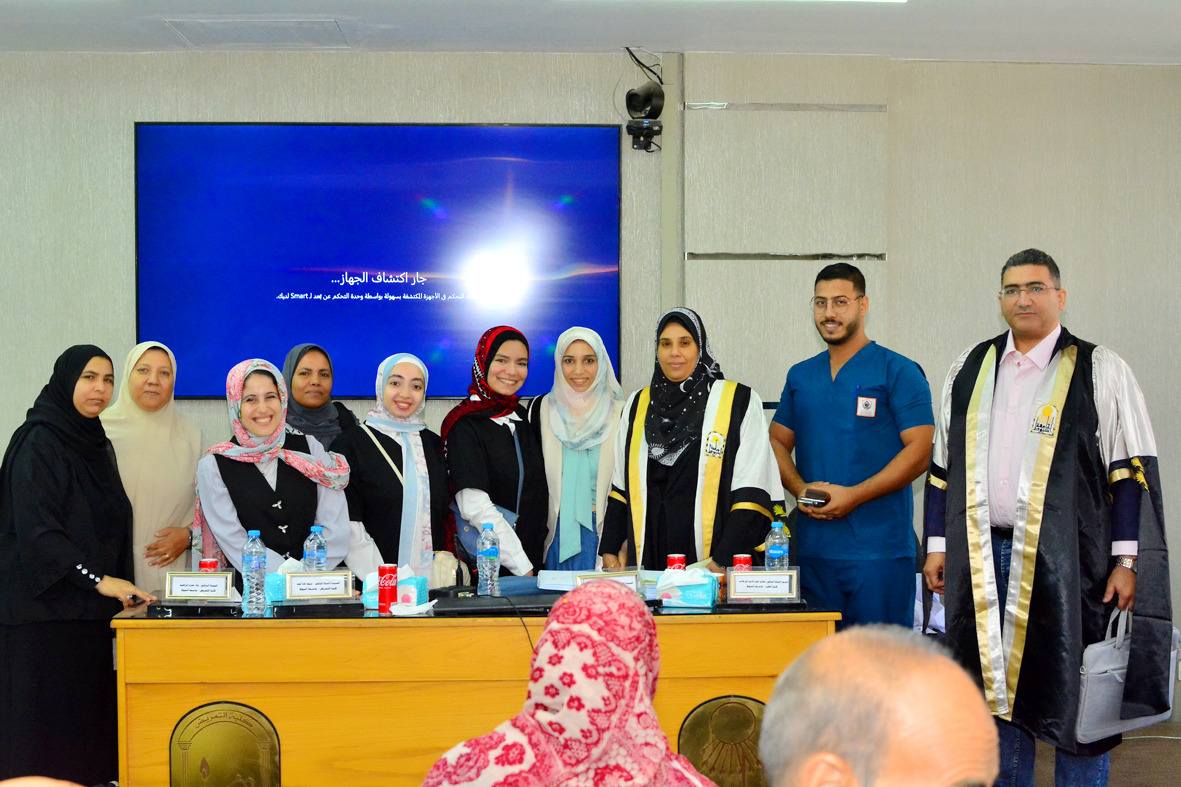
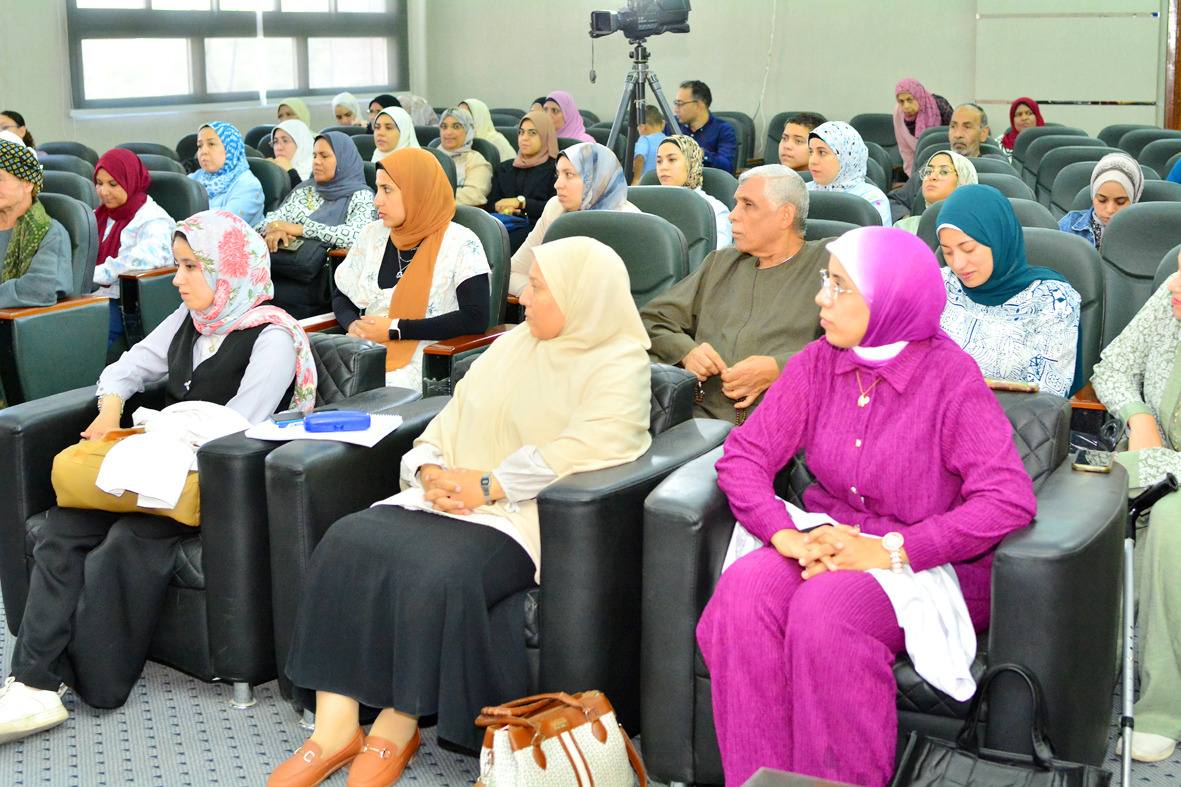


of her Master's thesis.
The introduction to it is titled :
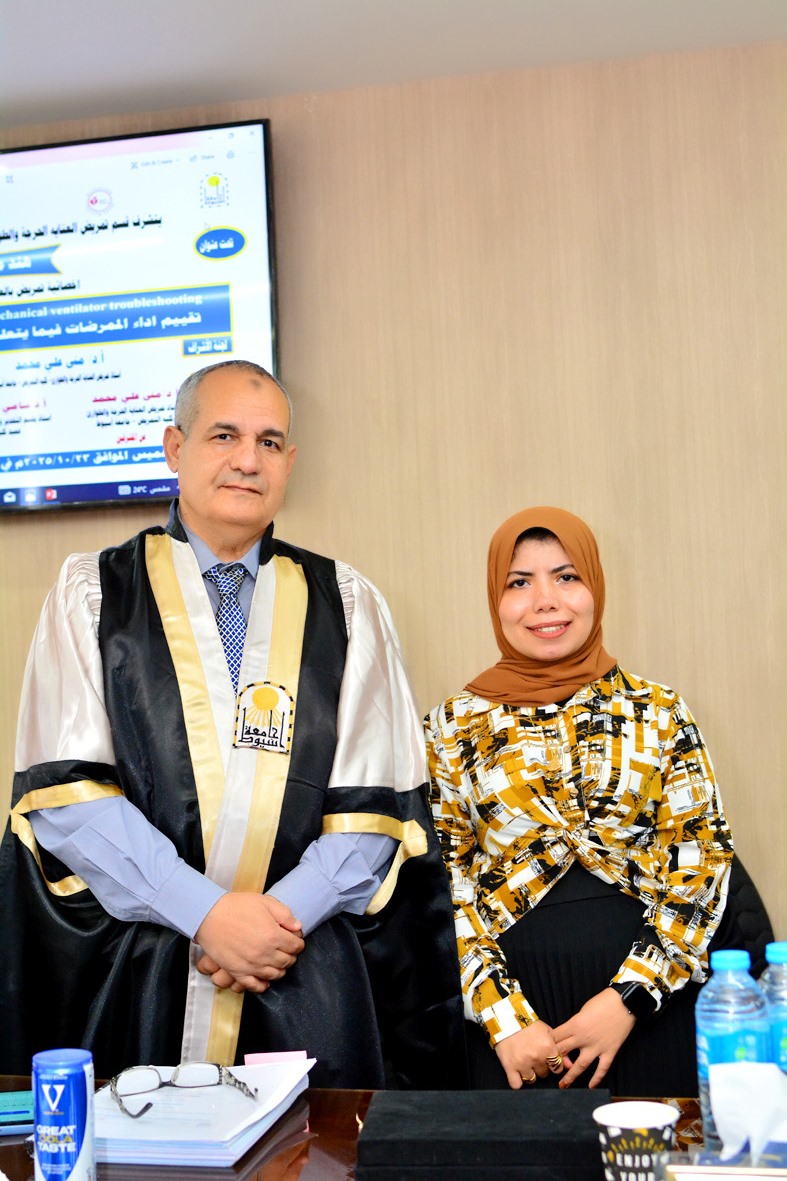
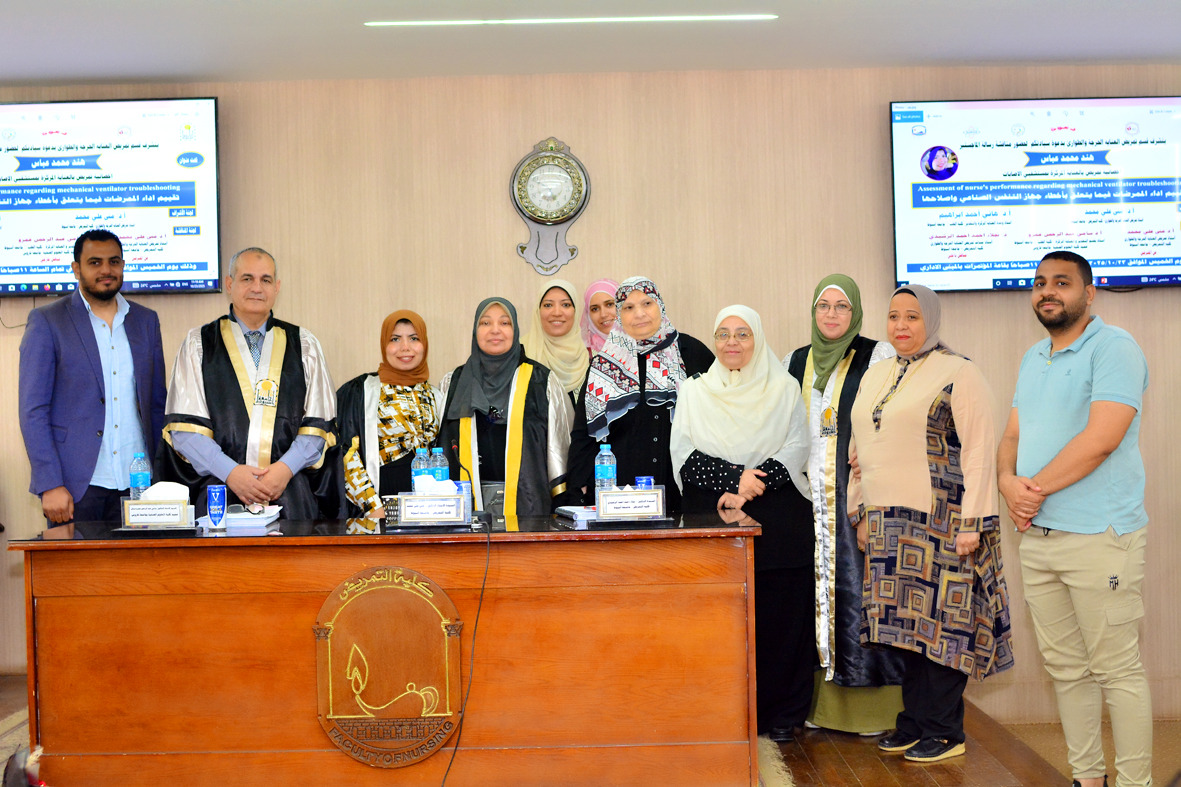
Assessment of nurses' performance regarding mechanical ventilator troubleshooting
Evaluating the performance of nurses with regard to errors in mechanical ventilation and their correction .
This was done under the supervision and with the participation of a select group of distinguished professors :
Prof. Dr. Mona Ali Mohamed, Professor of Critical Care and Emergency Nursing, Faculty of Nursing, Assiut University. (On behalf of the supervisors)
Prof. Dr. Ahani Ahmed Ibrahim, Professor of Intensive Care and Anesthesia, Faculty of Medicine, Assiut University. (On behalf of the supervisors)
Dr. Naglaa Ahmed Ahmed Al-Rashidi, Assistant Professor of Critical Care and Emergency Nursing, Faculty of Nursing, Assiut University. (Internal Examiner)
Prof. Dr. Sami Abdel Rahman Amr, Professor in the Department of Anesthesiology and Intensive Care, Faculty of Medicine, Assiut University; Dean of the Faculty of Health Sciences, Pharos University . (External Examiner)
With sincere wishes for continued success and achievement in her academic and research career .
#Media_of_the_Faculty_of_Nursing_Assiut_University

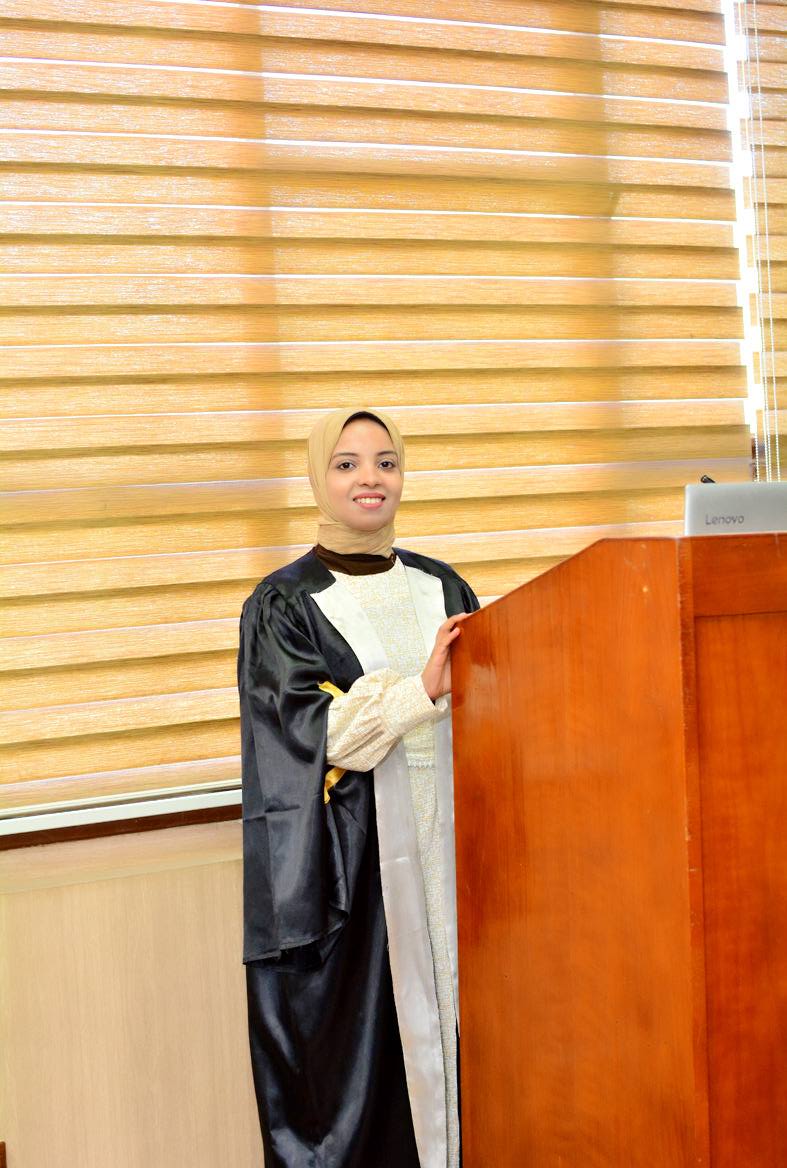
on the acceptance of her Master's thesis entitled :
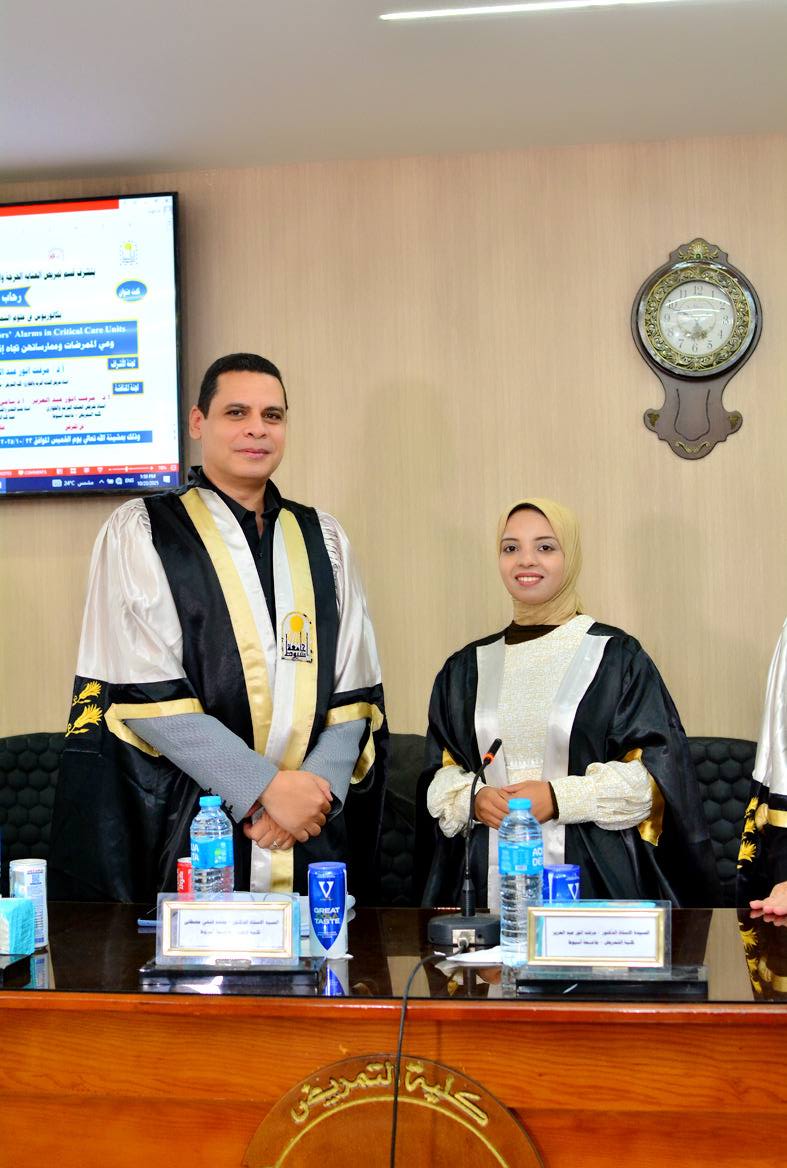
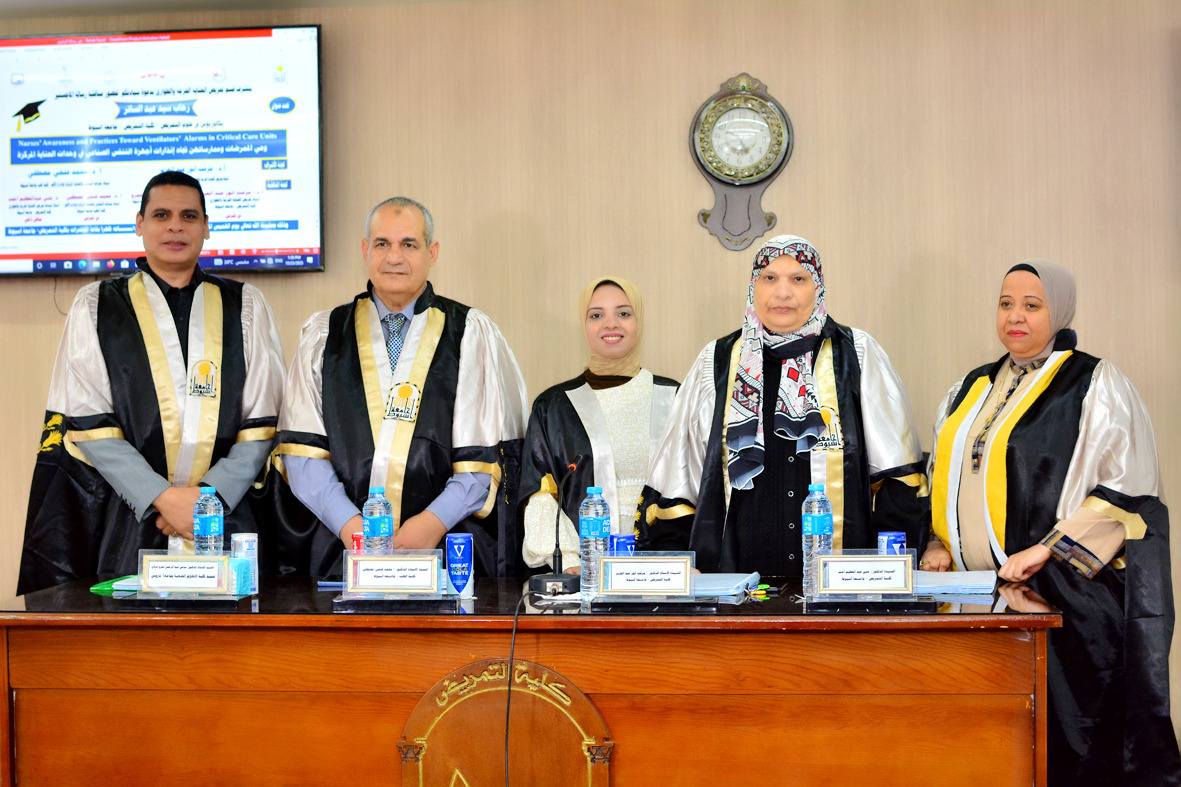
Nurses' Awareness and Practices Toward Ventilator Alarms in critical care units.
Nurses' awareness and practices regarding ventilator alerts in the intensive care unit .
This was done under the supervision and with the participation of a select group of distinguished professors :
Prof. Dr. Mervat Anwar Abdel Aziz, Professor of Critical Care and Emergency Nursing, Faculty of Nursing, Assiut University. (On behalf of the supervisors)
Prof. Dr. Mohamed Fathy Mostafa, Assistant Professor of Anesthesia, Intensive Care, and Pain Management, Faculty of Medicine, Assiut University. (On behalf of the supervisors)
Prof. Dr. Sami Abdel Rahman Amr, Professor in the Department of Anesthesiology and Intensive Care, Faculty of Medicine, Assiut University; Dean of the Faculty of Health Sciences, Pharos University . (External Examiner)
Dr. Mona Abdel-Azim Ahmed, Assistant Professor of Critical Care and Emergency Nursing, Faculty of Nursing, Assiut University. (Internal Examiner)
With sincere wishes for continued success and achievement in her academic and research career .
#Media_of_the_Faculty_of_Nursing_Assiut_University


in the specialized program, who passed away today. We pray to God Almighty to grant him His abundant mercy.
And may God forgive him and grant his family and loved ones patience and solace .
Indeed, we belong to Allah, and indeed, to Him we will return .
#Media_of_the_Faculty_of_Nursing_Assiut_University