Do you have any questions?

Bachelor of Medicine and Surgery (MBBS) Five-Year System (Accredited Points Program) General Program

Bachelor of Medicine and Surgery (MBBS) Five-Year System (Accredited Points Program) General Program
Aflatoxin B1 (AFB1) is a carcinogenic secondary metabolite of filamentous Aspergillus species. This study investigated the effects of Saudi Arabian (local) and Egyptian (imported) Aspergillus flavus-associated AFB1 on rats (hematological parameters, liver, and kidneys). Saudi Arabian and Egyptian A. flavus-associated AFB1 (0.5 mg/kg) were separately fed to two groups of five rats each for 21 days. The control group (5 rats) was fed water and a basal pellet diet for 21 days (a total of 15 rats, 5 rats in each treated group and 5 rats as control). The blood samples from the rats in all the groups were subsequently examined for complete blood count (CBC) data [red blood cell (RBC), neutrophil, and platelet counts; basophil counts; eosinophil, hemoglobin (Hb) content; monocyte, lymphocyte, and mean corpuscular hemoglobin (MCH) counts; mean corpuscular volume (MCV); mean corpuscular hemoglobin concentration (MCHC); and white blood cell (WBC)]. Liver function was assessed by examining the serum levels of alkaline phosphatase (ALP), aspartate aminotransferase (AST), and albumin in all groups. The kidney function test was based on the levels of uric acid, urea, creatinine, and urea. AFB1-induced histopathological changes were observed under a light microscope. One-way ANOVA coupled with Tukey’s LSD test revealed that AFB1 in both isolates (Saudi Arabian and Egyptian) significantly decreased the RBC count, whereas a significant increase in the platelet, WBC, neutrophil, and monocyte counts was noted. Compared with the control treatment, Saudi Arabian AFB1 treatment significantly reduced the MCH and MCHC values. The serum levels of AST, ALP, urea, and creatinine were significantly greater in the Saudi Arabian AFB1-treated group than in the other two groups, whereas the level of ALB was significantly lower in this group than in the Egyptian AFB1-treated group and controls. Histological examination of the liver revealed central vein dilatation and congestion of the portal area with leucocyte infiltration in both AFB1-treated groups, which led to substantial cell mortality. Both AFB1 treatments caused hypertrophied hepatocytes with pyknotic nuclei and granular vacuolated cytoplasm. The AFB1-treated groups presented marked renal damage characterized by cupping of Bowman's capsule, glomerular membrane disruption, and tubular damage. However, adverse effects were more severe in the Saudi Arabian AFB1-treated group. Both AFB1 treatments induced hematological and organ toxicity in rats. However, the toxicity of Saudi Arabian A. flavus-associated AFB1 was more pronounced than that of Egyptian A. flavus-associated AFB1. The findings of the current study may help improve hygiene measures to lower mycotoxin contamination in commercial food products, as well as emphasise the health hazards posed by A. flavus-contaminated household foodstuffs.
Keywords – Aflatoxin B1 – Aspergillus flavus – Hematology – Kidney – Liver – Rats – Toxicity
Background
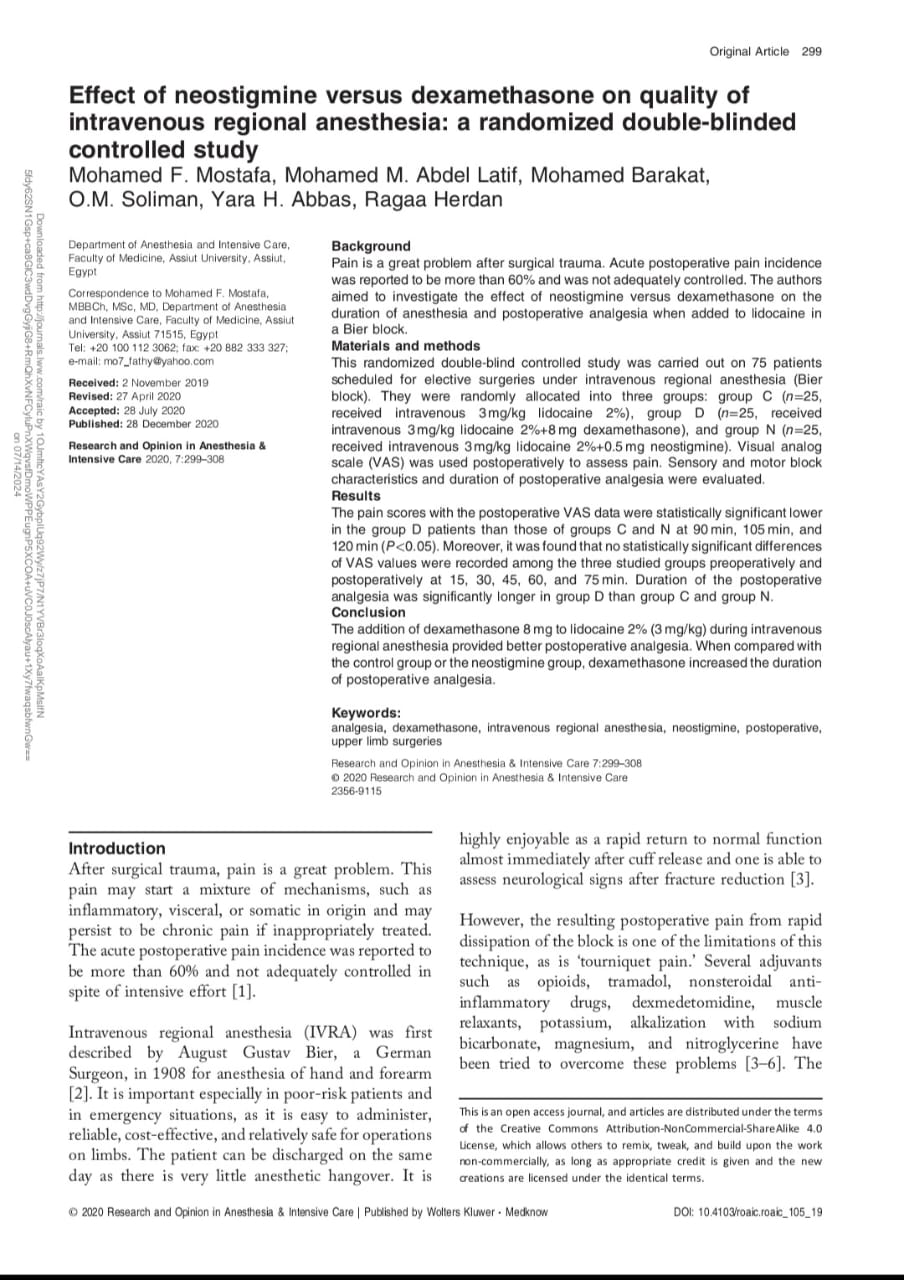
Pain is a great problem after surgical trauma. Acute postoperative pain incidence
was reported to be more than 60% and was not adequately controlled. The authors
aimed to investigate the effect of neostigmine versus dexamethasone on the
duration of anesthesia and postoperative analgesia when added to lidocaine in
a Bier block.
Materials and methods
This randomized double-blind controlled study was carried out on 75 patients
scheduled for elective surgeries under intravenous regional anesthesia (Bier
block). They were randomly allocated into three groups: group C (n=25,
received intravenous 3 mg/kg lidocaine 2%), group D (n=25, received
intravenous 3 mg/kg lidocaine 2%+8 mg dexamethasone), and group N (n=25,
received intravenous 3 mg/kg lidocaine 2%+0.5 mg neostigmine). Visual analog
scale (VAS) was used postoperatively to assess pain. Sensory and motor block
characteristics and duration of postoperative analgesia were evaluated.
Results
The pain scores with the postoperative VAS data were statistically significant lower
in the group D patients than those of groups C and N at 90 min, 105 min, and
120 min (P<0.05). Moreover, it was found that no statistically significant differences
of VAS values were recorded among the three studied groups preoperatively and
postoperatively at 15, 30, 45, 60, and 75 min. Duration of the postoperative
analgesia was significantly longer in group D than group C and group N.
Conclusion
The addition of dexamethasone 8 mg to lidocaine 2% (3 mg/kg) during intravenous
regional anesthesia provided better postoperative analgesia. When compared with
the control group or the neostigmine group, dexamethasone increased the duration
of postoperative analgesia.
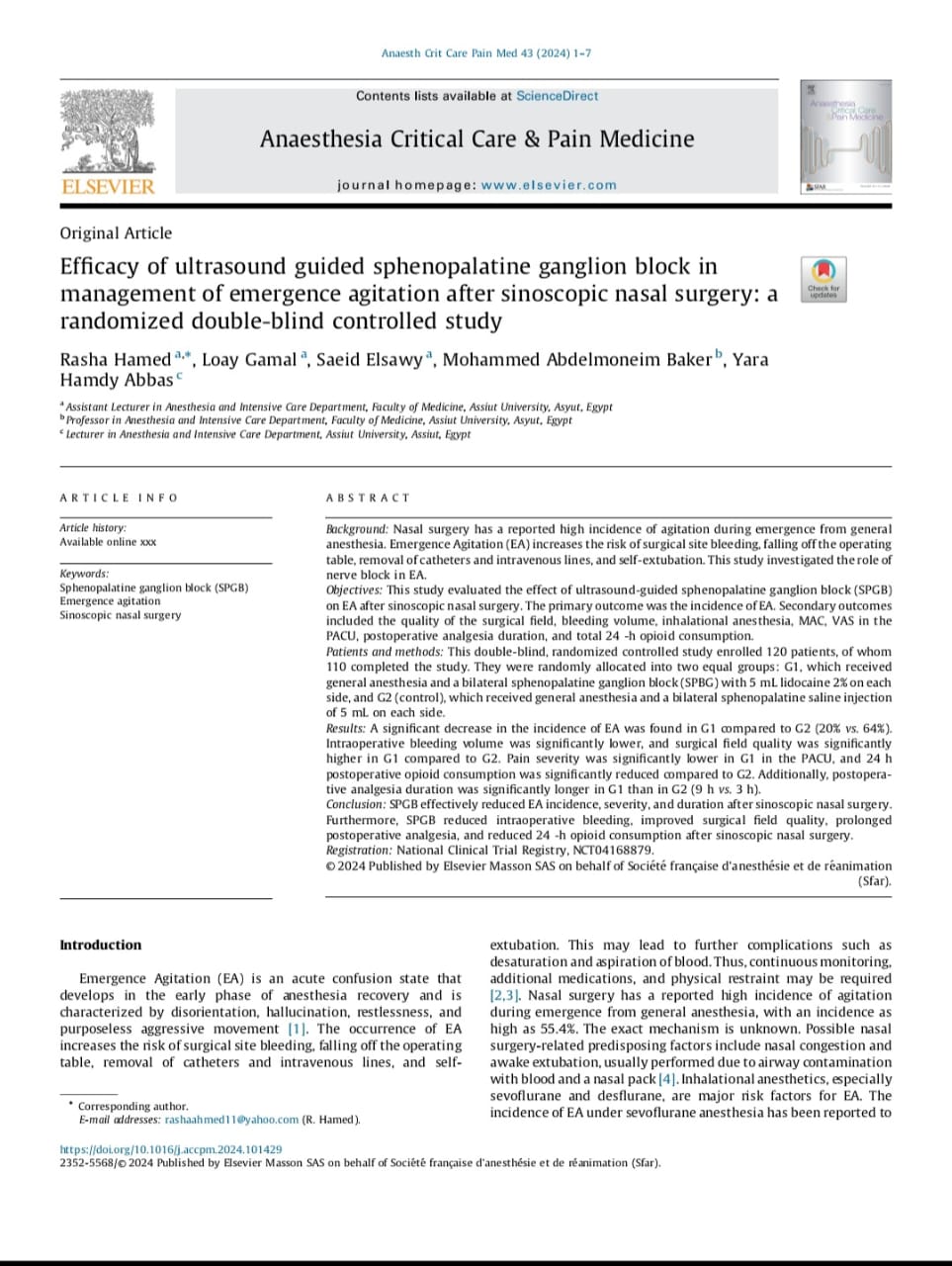
Background: Nasal surgery has a reported high incidence of agitation during emergence from general anesthesia. Emergence agitation (EA) increases the risk of surgical site bleeding, falling off the operating table, removal of catheters and intravenous lines, and self-extubation. This study investigated the role of nerve block in EA.
Aim and Objectives: This study evaluated the effect of ultrasound-guided sphenopalatine ganglion block (SPGB) on EA after sinoscopic nasal surgery. The primary outcome was the incidence of EA. Secondary outcomes included the quality of the surgical field, bleeding volume, inhalational anesthesia MAC, VAS in the PACU, postoperative analgesia duration, and total 24-hour opioid consumption.
Patients and Methods: This double-blind, randomized controlled study enrolled 120 patients, of whom 110 completed the study. They were randomly allocated into two equal groups: GI (sphenopalatine), which received general anesthesia and a bilateral sphenopalatine ganglion block with 5 ml lidocaine 2% on each side, and G2 (control), which received general anesthesia and a bilateral sphenopalatine saline injection of 5 ml on each side.
Results: A significant decrease in the incidence of EA was found in the SPGB group compared to the control group (20% vs. 64%). Intraoperative bleeding volume was significantly lower, and surgical field quality was significantly higher in the SPGB group compared to the control group. Pain severity was significantly lower in the SPGB group in the PACU, and 24h postoperative opioid consumption was significantly reduced compared to the control group. Additionally, postoperative analgesia duration was significantly longer in the SPGB group compared to the control group (9 h vs. 3 h).
Conclusion: SPGB effectively reduced the incidence, severity, and duration of EA after sinoscopic nasal surgery. Furthermore, SPGB reduced intraoperative bleeding, improved surgical field quality, prolonged postoperative analgesia, and reduced 24- hour opioid consumption after sinoscopic nasal surgery.
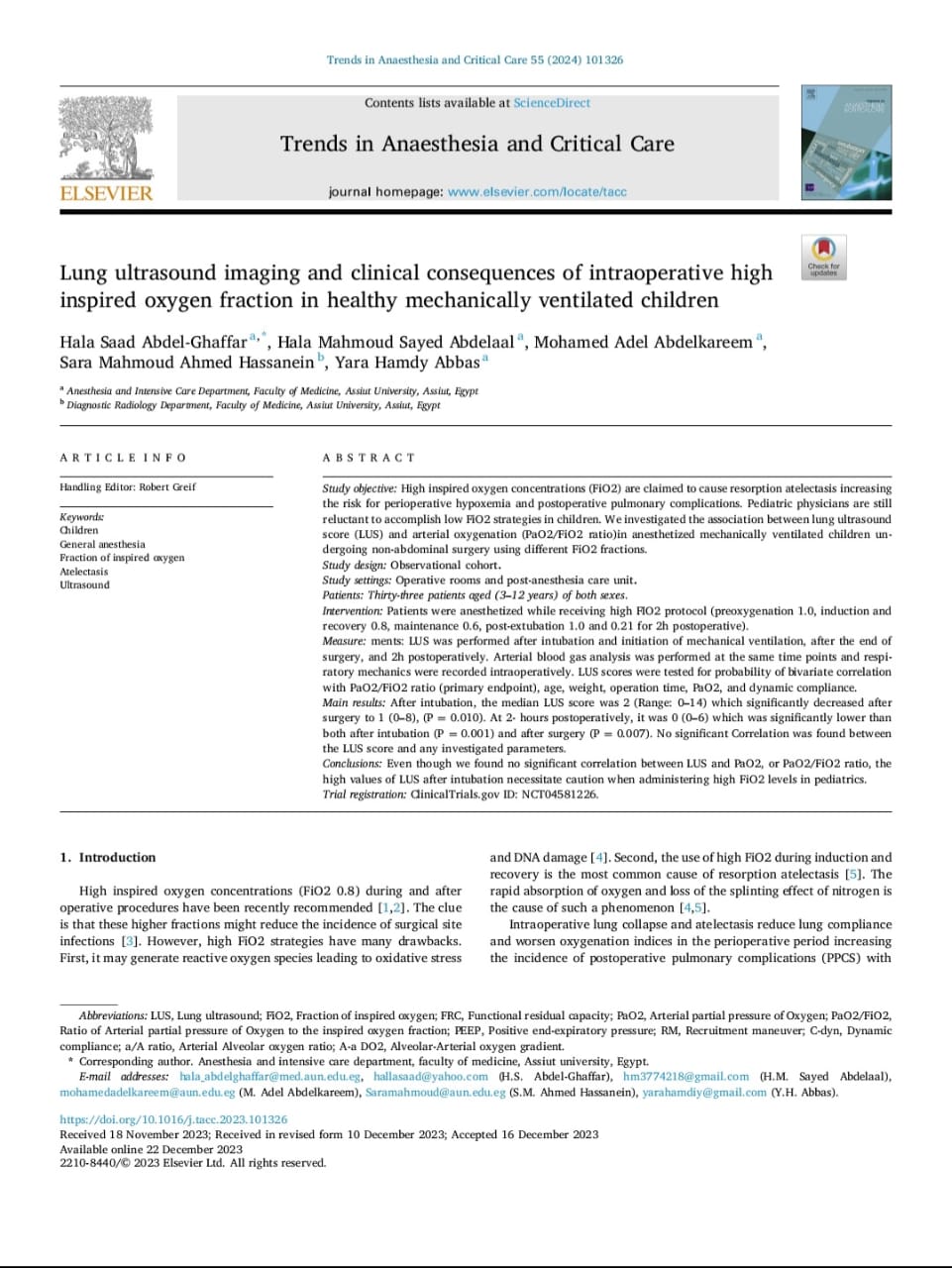
Study objective: High inspired oxygen concentrations (FiO2) are claimed to cause resorption atelectasis increasing the risk for perioperative hypoxemia and postoperative pulmonary complications. Pediatric physicians are still reluctant to accomplish low FiO2 strategies in children. We investigated the association between lung ultrasound score (LUS) and arterial oxygenation (PaO2/FiO2 ratio)in anesthetized mechanically ventilated children undergoing non-abdominal surgery using different FiO2 fractions.
Study design: Observational cohort.
Study settings: Operative rooms and post-anesthesia care unit.
Patients: Thirty-three patients aged (3–12 years) of both sexes.
Intervention: Patients were anesthetized while receiving high FIO2 protocol (preoxygenation 1.0, induction and recovery 0.8, maintenance 0.6, post-extubation 1.0 and 0.21 for 2h postoperative).
Measure: ments: LUS was performed after intubation and initiation of mechanical ventilation, after the end of surgery, and 2h postoperatively. Arterial blood gas analysis was performed at the same time points and respiratory mechanics were recorded intraoperatively. LUS scores were tested for probability of bivariate correlation with PaO2/FiO2 ratio (primary endpoint), age, weight, operation time, PaO2, and dynamic compliance.
Main results: After intubation, the median LUS score was 2 (Range: 0–14) which significantly decreased after surgery to 1 (0–8), (P = 0.010). At 2- hours postoperatively, it was 0 (0–6) which was significantly lower than both after intubation (P = 0.001) and after surgery (P = 0.007). No significant Correlation was found between the LUS score and any investigated parameters. Conclusions: Even though we found no significant correlation between LUS and PaO2, or PaO2/FiO2 ratio, the high values of LUS after intubation necessitate caution when administering high FiO2 levels in pediatrics.
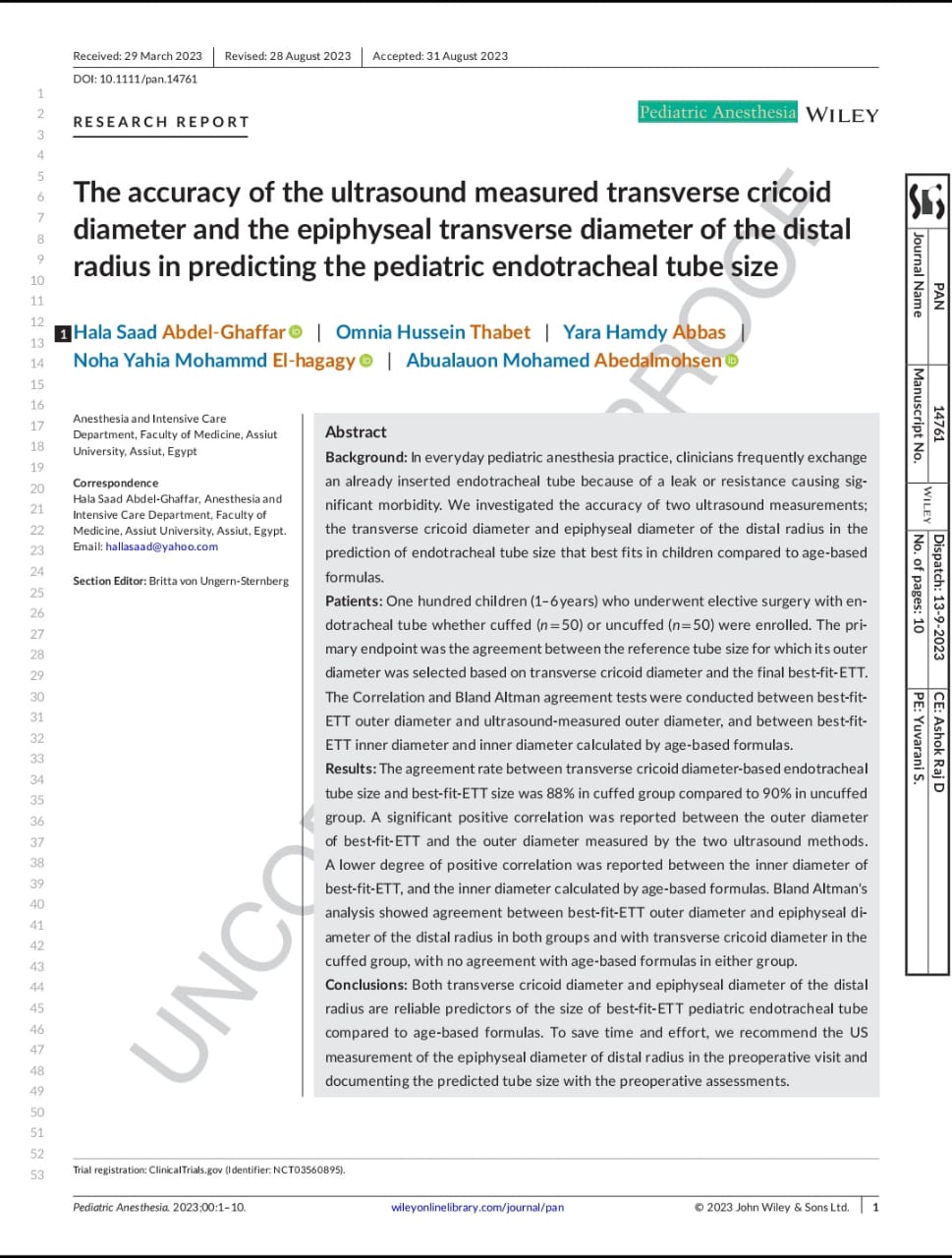
Background:
In everyday pediatric anesthesia practice, clinicians frequently exchange an already inserted endotracheal tube because of a leak or resistance causing significant morbidity. We investigated the accuracy of two ultrasound measurements; the transverse cricoid diameter and epiphyseal diameter of the distal radius in the prediction of endotracheal tube size that best fits in children compared to age-based formulas.
Patients: One hundred children (1–6 years) who underwent elective surgery with endotracheal tube whether cuffed (n=50) or uncuffed (n=50) were enrolled. The primary endpoint was the agreement between the reference tube size for which its outer diameter selected based on transverse cricoid diameter and the final Best-Fit-ETT. The Correlation and Bland Altman agreement tests were conducted between Best-Fit-ETT outer diameter and ultrasound measured outer diameter, and between Best-Fit-ETT inner diameter and inner diameter calculated by agebased formulas.
Results: The agreement rate between transverse cricoid diameter based endotracheal tube size and Best-Fit-ETT size was 88% in cuffed group compared to 90% in uncuffed group. A significant positive correlation was reported between the outer diameter of Best-Fit-ETT, and the outer diameter measured by the two ultrasound methods. A lower degree of positive correlation was reported between the inner diameter of Best-Fit-ETT, and the inner diameter calculated by age-based formulas. Bland Altman's analysis showed agreement between Best-Fit-ETT outer diameter and epiphyseal diameter of the distal radius in both groups and with transverse cricoid diameter in the cuffed group, with no agreement with age-based formulas in either group.
Conclusions: Both transverse cricoid diameter and epiphyseal diameter of the distal radius are reliable predictors of the size of Best-Fit-ETT pediatric endotracheal tube compared to age-based formulas. To save time and effort, we recommend the US measurement of the epiphyseal diameter of distal radius in the preoperative visit and documenting the predicted tube size with the preoperative assessments.
Background:
In everyday pediatric anesthesia practice, clinicians frequently exchange an already inserted endotracheal tube because of a leak or resistance causing significant morbidity. We investigated the accuracy of two ultrasound measurements; the transverse cricoid diameter and epiphyseal diameter of the distal radius in the prediction of endotracheal tube size that best fits in children compared to age-based formulas.
Patients: One hundred children (1–6 years) who underwent elective surgery with endotracheal tube whether cuffed (n=50) or uncuffed (n=50) were enrolled. The primary endpoint was the agreement between the reference tube size for which its outer diameter selected based on transverse cricoid diameter and the final Best-Fit-ETT. The Correlation and Bland Altman agreement tests were conducted between Best-Fit-ETT outer diameter and ultrasound measured outer diameter, and between Best-Fit-ETT inner diameter and inner diameter calculated by agebased formulas.
Results: The agreement rate between transverse cricoid diameter based endotracheal tube size and Best-Fit-ETT size was 88% in cuffed group compared to 90% in uncuffed group. A significant positive correlation was reported between the outer diameter of Best-Fit-ETT, and the outer diameter measured by the two ultrasound methods. A lower degree of positive correlation was reported between the inner diameter of Best-Fit-ETT, and the inner diameter calculated by age-based formulas. Bland Altman's analysis showed agreement between Best-Fit-ETT outer diameter and epiphyseal diameter of the distal radius in both groups and with transverse cricoid diameter in the cuffed group, with no agreement with age-based formulas in either group.
Conclusions: Both transverse cricoid diameter and epiphyseal diameter of the distal radius are reliable predictors of the size of Best-Fit-ETT pediatric endotracheal tube compared to age-based formulas. To save time and effort, we recommend the US measurement of the epiphyseal diameter of distal radius in the preoperative visit and documenting the predicted tube size with the preoperative assessments.
ABSTRACT
Hypospadias repair surgery, though necessary, can be painful after the procedure, especially for children. Effective pain management is essential in all surgeries, but particularly in pediatric procedures. The current study was conducted to evaluate the analgesic efficacy of intravenous ketorolac versus dexmedetomidine after hypospadias repair surgery.
Patients and methods:
A total of 60 children aged between 2 and 7 years old undergoing hypospadias repair under general anesthesia enrolled in the study. Those children were randomly divided into either group Ketorolac (group A) or Dexmedetomidine group (group B). Group (A) included 30 patients who received IV ketorolac in a dose 0.9 mg/kg after intubation for general anesthesia while group (B) included 30 patients who received IV dexmedetomidine in a dose 1 μg/kg after intubation. Pain scores (FLACC), sedation and emergence agitation (EA) scores, 1st analgesic dose, hemodynamics, and any side events were recorded.
Results:
The main finding in this study was that group (B) had significantly lower FLACC at different postoperative times compared to group n(A)with p < 0.05; with exception at 4th and 12th hours. It was found that FLACC was zero in group (B) till the 6th hour postoperatively. All patients in the studied groups had sedation scale was 3 starting from the 4th postoperative hour. Immediate and 2-hour postoperatively, the score was significantly higher among the dexmedetomidine group.Two patients developed EA in group A but non in group B.
Conclusion:
Adjuvant intravenous dexmedetomidine is more effective than intravenous ketorolac in postoperative analgesia children after hypospadias repair surgery under general anaesthesia.
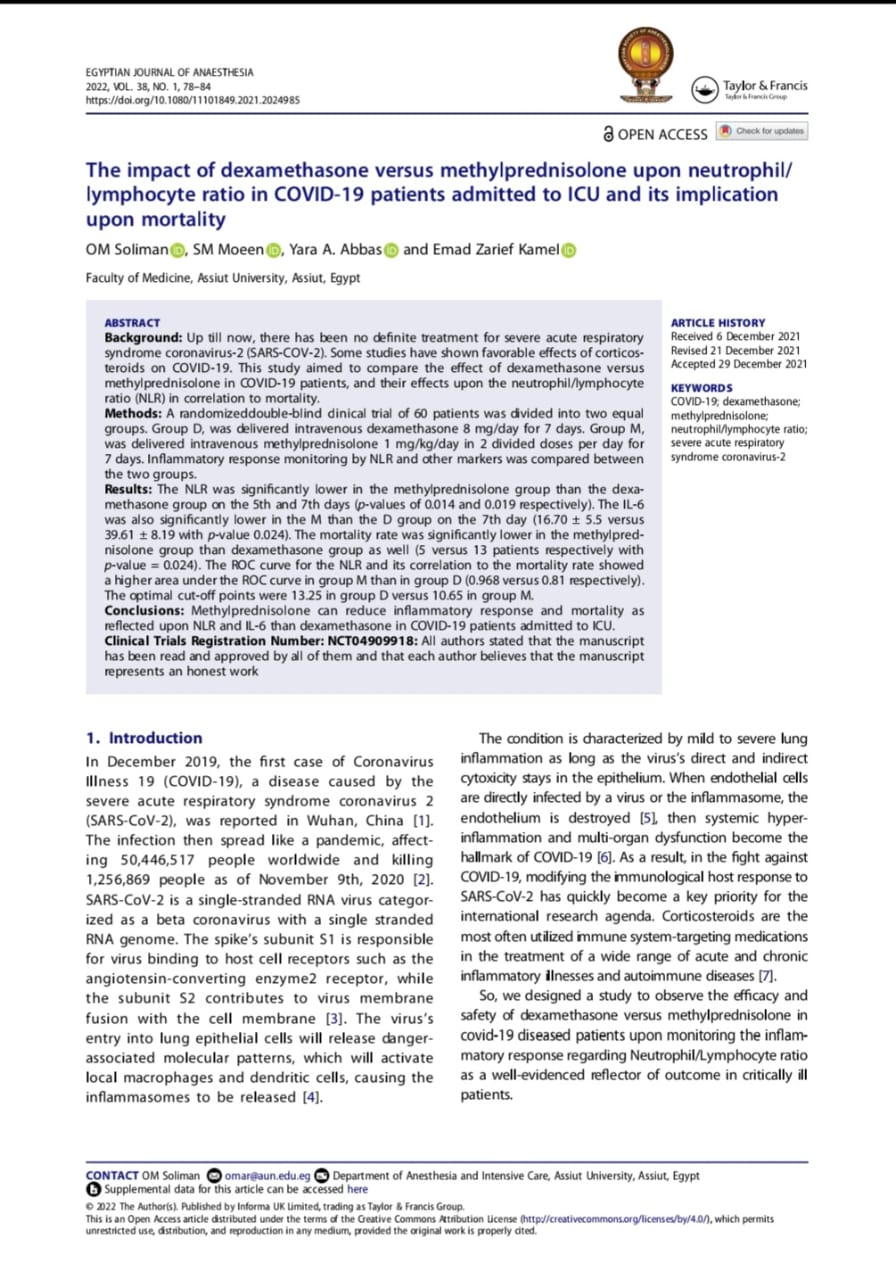
Background: Up till now, there has been no definite treatment for severe acute respiratory syndrome coronavirus-2 (SARS-COV-2). Some studies have shown favorable effects of corticosteroids on COVID-19. This study aimed to compare the effect of dexamethasone versus methylprednisolone in COVID-19 patients, and their effects upon the neutrophil/lymphocyte ratio (NLR) in correlation to mortality.
Methods: A randomized double-blind clinical trial of 60 patients was divided into two equal groups. Group D, was delivered intravenous dexamethasone 8 mg/day for 7 days. Group M, was delivered intravenous methylprednisolone 1 mg/kg/day in 2 divided doses per day for 7 days. Inflammatory response monitoring by NLR and other markers was compared between the two groups.
Results: The NLR was significantly lower in the methylprednisolone group than the dexamethasone group on the 5th and 7th days (p-values of 0.014 and 0.019 respectively). The IL-6 was also significantly lower in the M than the D group on the 7th day (16.70 ± 5.5 versus 39.61 ± 8.19 with p-value 0.024). The mortality rate was significantly lower in the methylprednisolone group than dexamethasone group as well (5 versus 13 patients respectively with p-value = 0.024). The ROC curve for the NLR and its correlation to the mortality rate showed a higher area under the ROC curve in group M than in group D (0.968 versus 0.81 respectively). The optimal cut-off points were 13.25 in group D versus 10.65 in group M.
Conclusions: Methylprednisolone can reduce inflammatory response and mortality as reflected upon NLR and IL-6 than dexamethasone in COVID-19 patients admitted to ICU. Clinical Trials Registration Number: NCT04909918: All authors stated that the manuscript has been read and approved by all of them and that each author believes that the manuscript represents an honest work