invitation

invitation

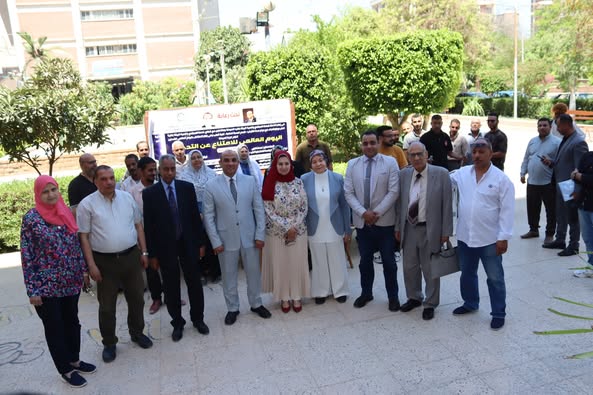
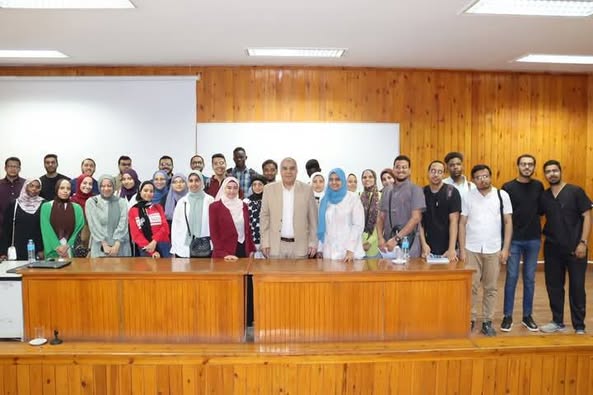
تحت شعار "بلدنا .. أمانة في ايدينا" اليوم البيئي المجتمعى الرابع لكلية الطب، بعنوان "كلية الطب بلا تدخين "

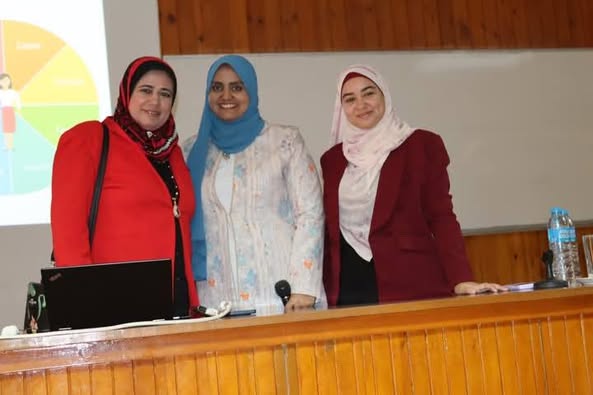
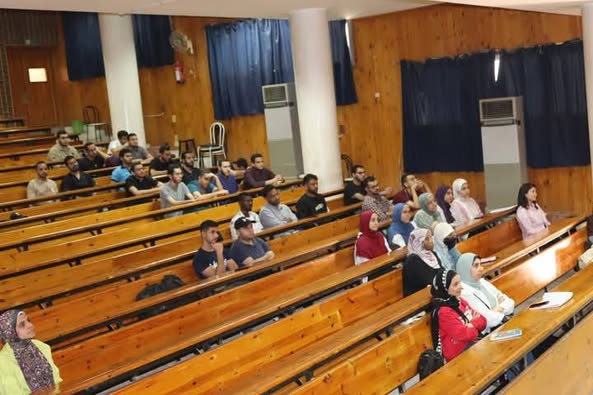
يتشرف قطاع خدمة المجتمع وتنمية البيئة بكلية الطب بتنظيم اليوم البيئي المجتمعى الرابع لكلية الطب، تحت شعار "بلدنا .. أمانة في ايدينا" ، وذلك يوم الأحد الموافق ٢٣ فبراير ٢٠٢٥ بمدرج الجودة الدور الخامس بكلية الطب،  و تحت رعاية الاستاذ الدكتور  أحمد المنشاوى رئيس الجامعة ، والاستاذ الدكتور محمود أحمد عبد العليم نائب رئيس الجامعة لشئون خدمة المجتمع وتنمية البيئة، والاستاذ الدكتور علاء عطية عميد كلية الطب ورئيس مجلس إدارة المستشفيات الجامعية، والاستاذة الدكتورة أمانى عمر وكيل الكلية للدراسات العليا والبحوث، واشراف الاستاذة الدكتورة هدى مخلوف وكيل الكلية لشئون خدمة المجتمع وتنمية البيئة، والاستاذة الدكتورة صفاء مختار رئيس قسم الصدر، والاستاذة الدكتورة إكرام عبد الخالق رئيس قسم الصحة العامة وطب المجتمع،وبتنظيم الاستاذ الدكتور عاطف فاروق القرن استاذ امراض الصدر ومقرر اليوم.

برنامج اليوم العلمي

١٠:٣٠ – ١٠:٥٠  أ.د/محمود عطية – أستاذ الصحة العامة ومشرف وحدة مكافحة التدخين: نظرة عامة – انتشار التدخين

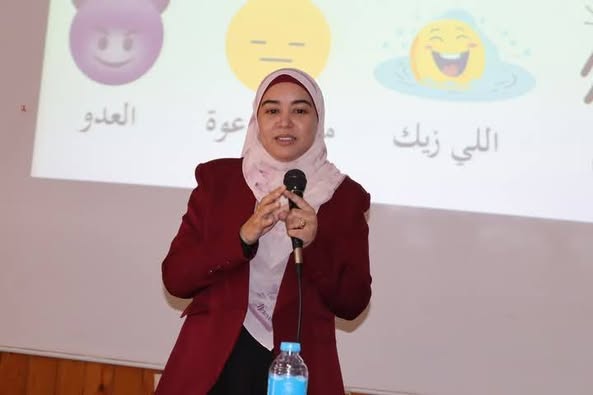
١٠:٥٠ – ١١:١٠  د. آية عاطف القرن مدرس الطب المهنى والبيئى بقسم الصحة العامة:أضرار التدخين وطرق الوقاية منه والاقلاع عنه.

١١:١٠ – ١١:٣٠  أ.د/ عاطف القرن أستاذ الصدر بكلية الطب:

التدخين في صور.

١١:٣٠ – ١٢:٠٠ أسئلة ومناقشة وتوصيات

١٢:٠٠: بريك


meeting 

meeting   


اجتماع        


اجتماع        

  مجلس الكلية ( رقم ٧٩٠)

                  الثلاثاء الموافق  ١٨ فبراير ٢٠٢٥

برئاسة الأستاذ الدكتور/ علاء عطية- عميد الكلية ورئيس مجلس إدارة المستشفيات الجامعية، وبحضور السادة وكلاء الكلية  والسيد وكيل وزارة الصحة ، والسادة رؤساء الأقسام بالكلية والسادة أعضاء المجلس.

بداية رحب السيد عميد الكلية بالسادة أعضاء المجلس ثم:

? استعرض المجلس حصاد الكلية خلال الشهر الماضي.

? تم النظر في الموضوعات المعروضة علي المجلس بجدول الأعمال فيما يخص موضوعات المصادقة و الإحاطة.

? تم مناقشة الموضوعات المقدمة من قطاع شئون التعليم والطلاب وقطاع الدراسات العليا والبحوث وقطاع خدمة المجتمع وتنمية البيئة.


The 16th Annual Conference of the Department of Clinical Pathology under the title "Development and Leadership in the Future of Medical Analysis Science"

The 16th Annual Conference of the Department of Clinical Pathology under the title "Development and Leadership in the Future of Medical Analysis Science"

تحت رعاية

ا.د/ احمد المنشاوي - رئيس الجامعة

ا.د/ علاء عطية- عميد كلية الطب ورئيس مجلس إدارة المستشفيات الجامعية

ا.د/ اماني عمر- وكيل الكليه لشئون الدراسات العليا والبحوث.

ا.د،/ هشام عبدالرحيم - رئيس القسم ورئيس المؤتمر.

ا.د/ حنان جلال عبدالعظيم- مقرر المؤتمر


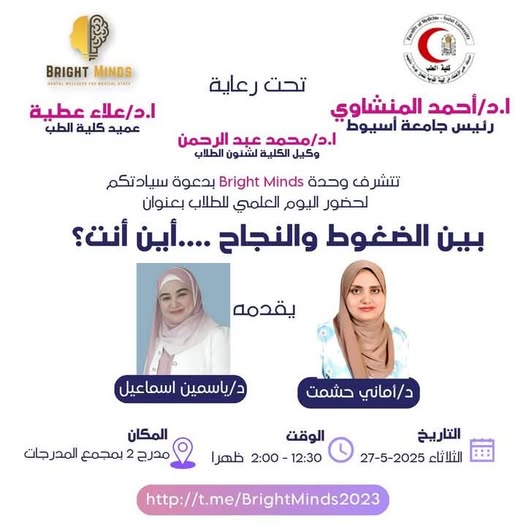
The seventh scientific day for training doctors, batch 59, was held under the title: Texicology forum: part 2

The seventh scientific day for training doctors, batch 59, was held under the title: Texicology forum: part 2

تحت رعاية

ا.د/ احمد المنشاوى- رئيس جامعة اسيوط  

ا.د/ علاء عطية- عميد كلية الطب ورئيس مجلس إدارة المستشفيات الجامعية

ا.د/ محمد عبد الرحمن - وكيل كلية الطب لشئون التعليم والطلاب

وإشراف...

انعقاد اليوم العلمى السابع لأطباء التدريب دفعة 59 بعنوان :Texicology forum :part 2انعقاد اليوم العلمى السابع لأطباء التدريب دفعة 59 بعنوان :Texicology forum :part 2

ا.د/ هيام ثابت - رئيس قسم الطب الشرعي والسموم

ا.د/ سهير قاسم- مدير البرنامج الالزامى لاطباء التدريب.

وذلك يوم الاثنين الموافق ١٧ فبراير  ٢٠٢٥  الساعة ٩ صباحاً

قاعة المؤتمرات بمجمع مدرجات كلية الطب


Subjective and functional outcome Measure to evaluate performance of pediatric cochlear implant

Research Abstract

Background: The majority of research on the effects of cochlear implants has been on clinical evaluations of efficacy (hearing and speech skills, and auditory thresholds). But it's unclear how much clinical efficacy metrics (speech, hearing, and language tests) actually demonstrate how beneficial cochlear implants (CI) are in everyday circumstances.

Objective: this study aimd to assess the performance of a child's current CI with both subjective and functional outcomes measures. Also, we aimed to assess factors affecting these outcomes after CI.

 Patients and Methods: The study group included 45 cochlear implanted children, their chronological age range between 4 to 12 years. Children were divided according to their language age into three groups, group 1(G1) includes15 children with a language age of less than two years, group 2(G2) includes 15 children with a language age of two to less than four years, and Group 3(G3) includes 15 children with language age four to six years. Assessment was done in two sessions, one for phoniatric evaluation and another for audiological evaluation.

Results: CI enabled children to develop speech perception in a closed manner evidenced by the early speech perception (ESP) test with pattern perception being the easiest and monosyllabic words being the most difficult and the least to develop. Most children with CI were able to control their voice, to a lesser extent to use speech in meaningful use in social situations and to develop communication strategies in oral situations which were the least to develop, this was evident by Meaningful use of speech Scale. Children with CI were able to acquire language and their chronological age.

Conclusion: The cochlear implant is an effective rehabilitative tool for the treatment of prelingually deafened children and this was evident by our results. A hierarchal approach of speech assessment according to the language age of the child and selection of age-appropriate speech perception test is very important to assess cochlear implanted children Speech recognition had a high degree of variability. Early implantation age and increased duration of implant experience were the most important factors associated with good performance with CI, better speech perception, and better language outcomes.

Research Authors
Amira Mohamed Bakr a, Amal Mohamad Elattar a, Eman Abdel Fattah Said a, Hanan A. Mohamed b, Maha Abdelgaber A. Aly a
Research Date
Research Journal
The Egyptian journal of otolaryngology
Research Rank
q4
Research Vol
40
Research Year
2024

Preoperative variables affecting outcome of cochlear implant.

Research Abstract

Background: Cochlear implants made a great impact in the management of severe-to-profound hearing loss in both children and adults. Its greatest impact is in helping children born with a profound hearing loss and implanted early to attend mainstream education and using spoken language to communicate. However, the final outcome in pediatric implantation is not predictable as there are large numbers of factors which will affect the outcome of cochlear implantation. Studying these determinants increases the ability of clinicians to offer educated preoperative prognosis and might potentially allow for manipulation of variables in an attempt to achieve the best possible outcome.

Objective: The aim of this study was to assess the preoperative factors affecting the audiological, speech, and language outcomes achieved by the recipients of cochlear implants.

Methodology: A total of 39 children with severe-to-profound sensory neural hearing loss were implanted with cochlear implants. Children had received their implants before age of 5 years. Tests of receptive, expressive language quotient, aided cortical auditory-evoked potential using speech stimulus, aided free field audiometry, and aided speech reception thresholds were administered. Characteristics of the child and the family (age before implant and duration of implant use, cause of hearing loss, preimplant use of hearing aids and language therapy, and sociodemographic characteristics of their families) were the preoperative variables. These variables were considered predictors of audiological and language outcomes achieved by children and were determined using statistical analysis by univariate and multivariate analyses.

Results: Age of the studied children at time of cochlear implantation was statistically significant predictor for CI outcome as regard receptive language quotient and also for N1 latency. Hearing age of the studied children was a statistically significant predictor for CI outcome as regards P1 latency.

Conclusion:  Based on our findings, two most important factors affecting outcome of cochlear implantation were the age at implantation and the hearing age. Other factors were important but did not affect the outcome significantly.

Research Authors
Nashwa Ameer Mahmoud Mosaed, Enass Sayed Mohamed, Mustafa Youssif, Hanan A. Mohamed, Amira Mohammad Eloseily
Research Date
Research Journal
The Egyptian Journal of otolaryngology
Research Rank
q4
Research Vol
40
Research Year
2024
Subscribe to