PERI-IMPLANT STRAIN WITH LOCATOR AND BAR ATTACHMENT DURING DISLODGING OF MAXILLARY IMPLANT OVERDENTURE. A COMPARATIVE INVITRO STUDY

Research Abstract

ABSTRACT

Purpose: This study aimed to evaluate Peri-implant strain with locator and bar attachment during dislodging of maxillary implant overdenture Materials and methods: Four implants were inserted in completely edentulous acrylic maxillary model in canine and premolar areas. Experimental maxillary overdentures with 4 metal hooks were constructed and connected the implants with bar attachments (group I) or locator attachment (group 2). Two strain gauges were bonded at buccal and palatal surface of each implant. Micro strains were measured at buccal and palatal surface of canine and premolar implants during the vertical dislodging of the overdenture. Dislodging was made by chains connected at one end to the metal hooks and to a universal testing machine at the other end.

Results: For canine and premolar implants, locator attachment showed significant higher microstrain values than bar attachments at buccal and palatal gauge positions. For bar group, no difference between buccal and palatal strain gauge positions was detected. However, for locator attachments, buccal strain gauges demonstrated significant higher strain than palatal gauges. For buccal and palatal strain gauges, canine implants showed higher strains than premolar implants for both groups

Conclusion: Within the limitation of this in vitro study, could be concluded that bar attachments may be recommended to retain maxillary implant overdentures than locator attachments in terms of reduced peri-implant stresses that occur during the denture dislodgment which may lead to increased bone resorption around the implants.

Research Authors
Shahinaz Sayed Mohamed Hassan* and Mohamad Hossam El-Din Helmy**
Research Date
Research Journal
EGYPTIAN DENTAL JOURNAL
Research Pages
739:746
Research Publisher
EGYPTIAN DENTAL JOURNAL
Research Rank
Local
Research Vol
Vol. 67
Research Year
2021

Effect of implant loading protocols on failure and marginal bone loss with unsplinted two-implant-supported mandibular overdentures: systematic review and meta-analysis

Research Abstract

Abstract

The aim of this study was to compare implant failure and radiographic bone level changes with different loading protocols for unsplinted two-implant-supported mandibular overdentures. An electronic search of two databases (PubMed, Cochrane Library) was performed, without language restriction, to identify randomized controlled trials (RCTs) comparing immediate or early versus conventional dental implant loading protocols for unsplinted two-implant-supported mandibular overdentures. Data were extracted independently by two reviewers. The Cochrane tool was used to assess the quality of included studies. A meta-analysis was performed. Eight RCTs were identified, seven of which were included; one trial was excluded because related outcomes were not measured. Four of the seven studies were considered to have a high risk of bias and three an unclear risk. Meta-analysis revealed no difference between immediate versus conventional or early versus conventional implant loading protocols regarding implant failure (risk difference (RD) −0.02, 95% confidence interval (CI) −0.13 to 0.10; RD 0.09, 95% CI −0.03 to 0.20) or marginal bone loss (mean difference (MD) 0.09, 95% CI −0.10 to 0.28; MD −0.05, 95% CI −0.12 to 0.02) for implants supporting mandibular overdentures. These findings should be interpreted with great caution given the serious numerical limitations of the studies included.

Research Authors
M.H.E.-D. Helmy1,2 , A. Y. Alqutaibi3,4 , A. A. El-Ella1 , A. F. Shawky5
Research Date
Research File
Research Journal
International Journal of Oral and Maxillofacial Surgery
Research Pages
Pages 642-650
Research Publisher
International Journal of Oral and Maxillofacial Surgery
Research Rank
International
Research Vol
Volume 47, Issue 5
Research Website
https://www.sciencedirect.com/science/article/abs/pii/S0901502717316715
Research Year
2018

Evaluation of Push-Out Bond Strength of Two Esthetic Posts Treated With Various Surface Treatment

Research Abstract

Objective the purpose of this study was to evaluate the push-out bond strength of ready-made glass fiber post and custom-made e-max pressable post treated with various surface treatments: Sandblasting (SB), Sandblasting in conjunction with silica particles then silane coating (SC) and Etching using hydrofluoric acid then silane coating (E)

Materials and methods: Forty freshly extracted single rooted upper central incisor teeth were selected. All root canals were endodontic treatment according to standard procedure then divided into two main groups (20 samples each) according to the type of posts were used. The first group (G) was restored with ready-made glass fiber post (Glassix plus radiopaque) (n=20), The second group (P) was restored with custom made pressable ceramic (E-max press post) (n=20) (Ivoclar Vivadent).Each group was subdivided to four subgroups (5 samples each) according to the type of surface treatment done: subgroup C: no surface treatment (control), Subgroup SB: sandblasting with 50 µm Aluminum-oxide (AL2 O3 ) particles, subgroup SC: sandblasting in conjunction with silica coating particles then silane coating and subgroup E: etching with 9.5% hydrofluoric acid then silane coupling agent. All samples were sectioned by IsoMet into 3sections (2mm each thickness) from coronal to apical then subjected to push-out test by universal test machine. Then all data were calculated, tabulated, and statistically analyzed.

Result: readymade glass fiber post show higher bond strength than custom made e-max press post with no significance different between them

Conclusion: Silica coating then silanization of ceramic e-max post is the best surface treatment that increase bond strength .Etching with hydrofluoric acid then silanization of glass fiber post is the best surface treatment that increase bond strength. Bond strength of glass fiber post was higher than bond strength of ceramic emax post

Research Authors
Eslam O. Sayed* , Cherif A. Mohsen ** and Shams W. Amged ***
Research Date
Research File
1221-1228-84-P5.pdf (487.75 KB)
Research Image
Research Journal
EGYPTIAN DENTAL JOURNAL
Research Member
Research Pages
1221:1228
Research Publisher
EGYPTIAN DENTAL JOURNAL
Research Rank
Local
Research Vol
64
Research Year
2018

Bond Strength and Microleakage of Different Designs of Occlusal Veeners

Research Abstract

The purpose of this study was to investigate fracture strength of different lithium disilicate occlusal veneers designs with different tooth preparations.

Material and method: Fifty-six extracted human mandibular molars were collected with relatively comparable size and standardization done by diamond saw and it will receive. 6mm lithium disilicate occlusal veneers. Specimens will be divided into two main groups, each of these groups contains 28 samples (group A&B), the first group represents occlusal veneers with 1.0 ml with radial shoulder finish line design includes axial surfaces for a2 ml length, while the second group represents occlusal veneers preparation without finish line. Each main group will be subdivided into 2 subtypes groups (A1, A2, B1, B2), each subtype group contains 14 samples, the first subtype group will receive a buccal groove, while the second subgroup will be without grooves. Each subgroup will be divided into 2 classes (7 samples) according to the type of test it will be subjected to: microleakage, bond strength.

Results: The fracture strength is (mean value+ standard deviation) in plain occlusal reduction without vs with buccal groove (890.36 [+ or -] 42.51N), (865.69 [+ or -] 36.79N). The fracture strength is (mean value [+ or -] standard deviation) in occlusal reduction with radial shoulder, without or with buccal groove (835.36 [+ or -] 42.51N), (820.69 [+ or -] 36.79N), with non-significant difference p value 0.05.

Conclusions: All tested occlusal veneer designs proved to withstand normal and parafunctional masticatory forces with non-significant statistical difference. 

Research Authors
Cherif A. Mohsen2 Mohamed G. Hussein1*
Research Date
Research Journal
NeuroQuantology
Research Member
Research Pages
62-66
Research Publisher
NeuroQuantology
Research Rank
International
Research Vol
19
Research Website
https://www.neuroquantology.com/article.php?id=2586
Research Year
2021

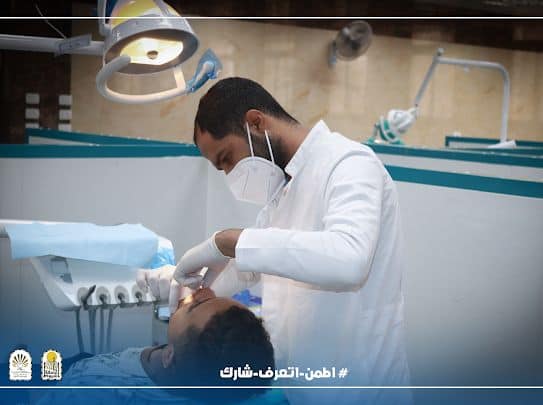
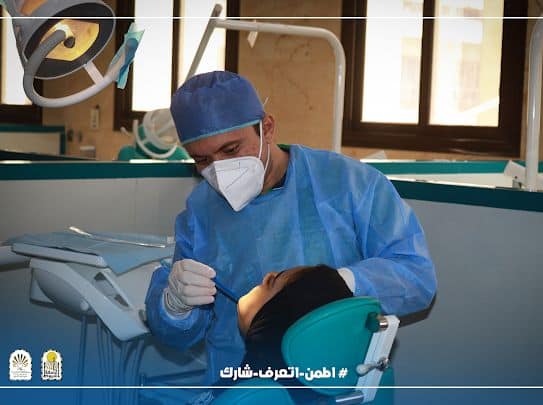
In cooperation with Operation Smile Foundation Egypt University Dental Hospital announces the continuation of bone implants to close the incision of the upper jaw bones free of charge in the Operations Unit of the Oral and Maxillofacial Surgery Department

from the age of 7 years,
 Praise be to God, this week's surgeries were completed by the medical team in the Oral and Maxillofacial Surgery Department
Dr. Mohamed Nahed Attia (Teacher of Oral and Maxillofacial Surgery)
Dr. Abdullah Hashem Ahmed (Demonstrator of Plastic Surgery)
 Dr. Hossam Abu Zaid (Demonstrator of Oral and Maxillofacial Surgery)
Dr. Ahmed Mohsen Hassanein (Demonstrator of Oral and Maxillofacial Surgery)
 Anesthesia:
Dr.. Peter Bassem Halim (Assistant Lecturer of Anesthesia and Intensive Care)
Nursing:
 Miss Amna Ahmed (Supervisor of Nursing in the department)
 Esra Abdo (Operational Nursing)
Sarah Abdel Fattah (Operational Nursing)
 Shaima Youssef (Internal Nursing)
Medical maintenance technicians in operations:
Raghda Samir
 Yasmine Khamis
 General maintenance technicians:
Ahmed Saleh Masoud
For reservations and inquiries
Operation Smile Foundation Egypt numbers
 Hotline : 15899
Mobile : 01066772370
 WhatsApp : 011111184183

.

.

.


.

/

Announcement to faculty members and teaching assistants.

Within the framework of the role of the Egyptian Universities Network at the Electronic and Knowledge Services Center of the Supreme Council of Universities in providing technical support to universities, awareness-raising and technical training for the academic and research community, and in cooperation with Microsoft, one of the important knowledge programs provided by Microsoft will be activated, namely:

Imagine Academy, which provides educational digital content of various Microsoft technologies and uploads them to different educational systems, with the service of integrating content within the relevant educational curricula, while providing supported accredited exams and certificates for faculty members only.

The Egyptian Universities Network, in cooperation with Microsoft, will organize a symposium on Tuesday, May 31, 2022, from 11 am, for information executives in universities and faculty and assistant staff in different faculties.

Microsoft Teams will be used through the following link:


https://bit.ly/3wYNRAQ

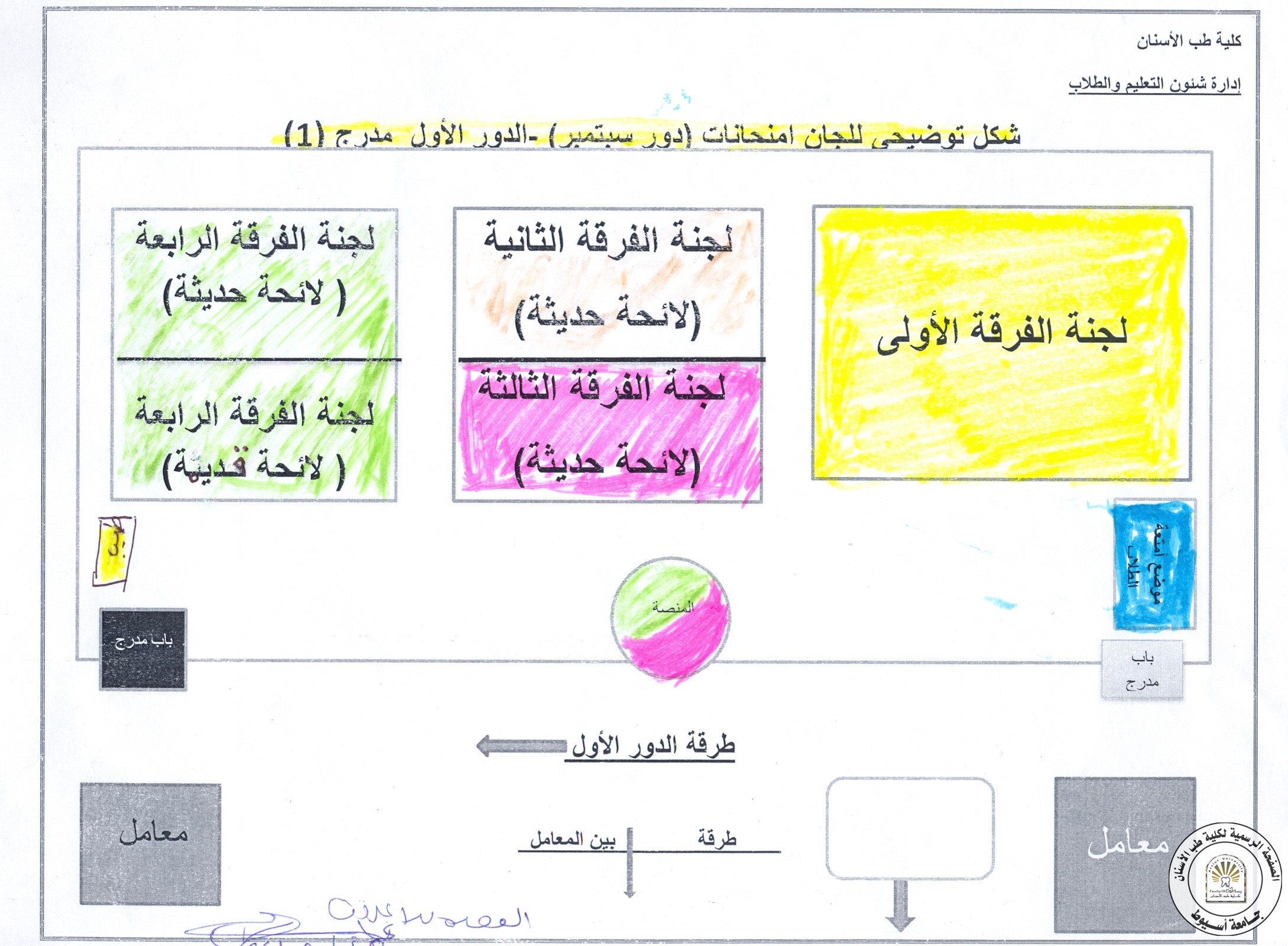
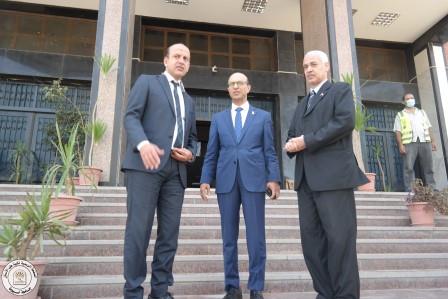
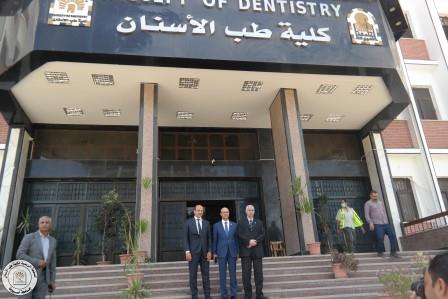
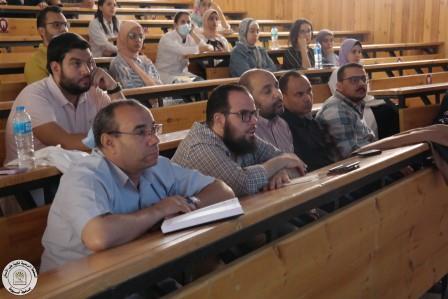
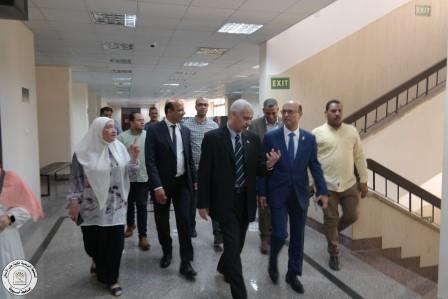
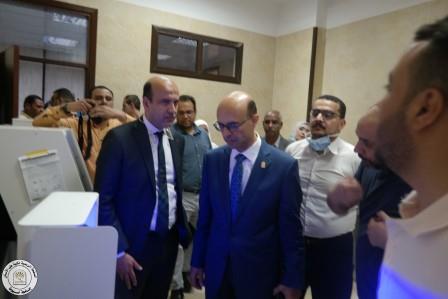
Today, 29/5/2022, the exams for the end of the academic year at the Faculty of Dentistry started, and we were honored by the presence of Prof. Dr. Shehata Ghareeb Shalgami (Vice President for Education and Student Affairs);

To inspect the examination work at the college, he was accompanied by Prof. Naglaa Taha Al-Meligy (Dean of the College for Education and Student Affairs), Dr. Muhammad Nahed (Hospital Director), Prof. Al-Muntasir Hussain (Secretary General of the College), wishing the college administration success..

.

.

.

.

.

.

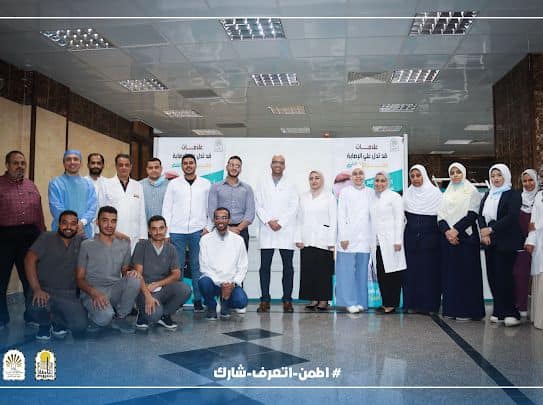
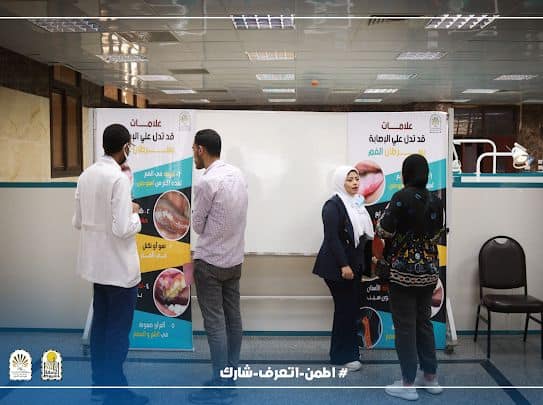
Today, Thursday, 5/26/2022, a festive event was held in the College of Dentistry, entitled: International Day for Washing Hands and Preventing the Spread of Microbes.

ت

We cooperated with the Department of Infection Control in University Hospitals, and we were honored to attend

Prof. Dr. Alaa Attia (Dean of the Faculty of Medicine - Chairman of the University Hospitals Board of Directors)

Prof. Ehab Fawzy (Executive Director of University Hospitals)

Dr. Asmaa Muhammad Abdulaziz (Director of Infection Control Department at University Hospitals)

Dr. Ehab Abdel Radi (Deputy Director of Infection Control Department at University Hospitals)

In the presence of:-

- Prof. Heba Allah Rashid (Dean of the College for Community Service and Environmental Development)

- Prof. Naglaa Taha El-Meligy (Dean of the College for Education and Student Affairs)

- Dr. Mohamed Nahed (Hospital Director)

- Mr. Al-Muntasir Hussein Ahmed (Secretary General of the College)

And a group of professors from Al-Azhar University, the Ministry of Health, the University Hospitals Nursing, the University Dental Hospital, and the Excellence Faculties of Medicine, Dentistry and Nursing.


.

.

.

.

.

.

.

.

Subscribe to