 Do you have any questions?

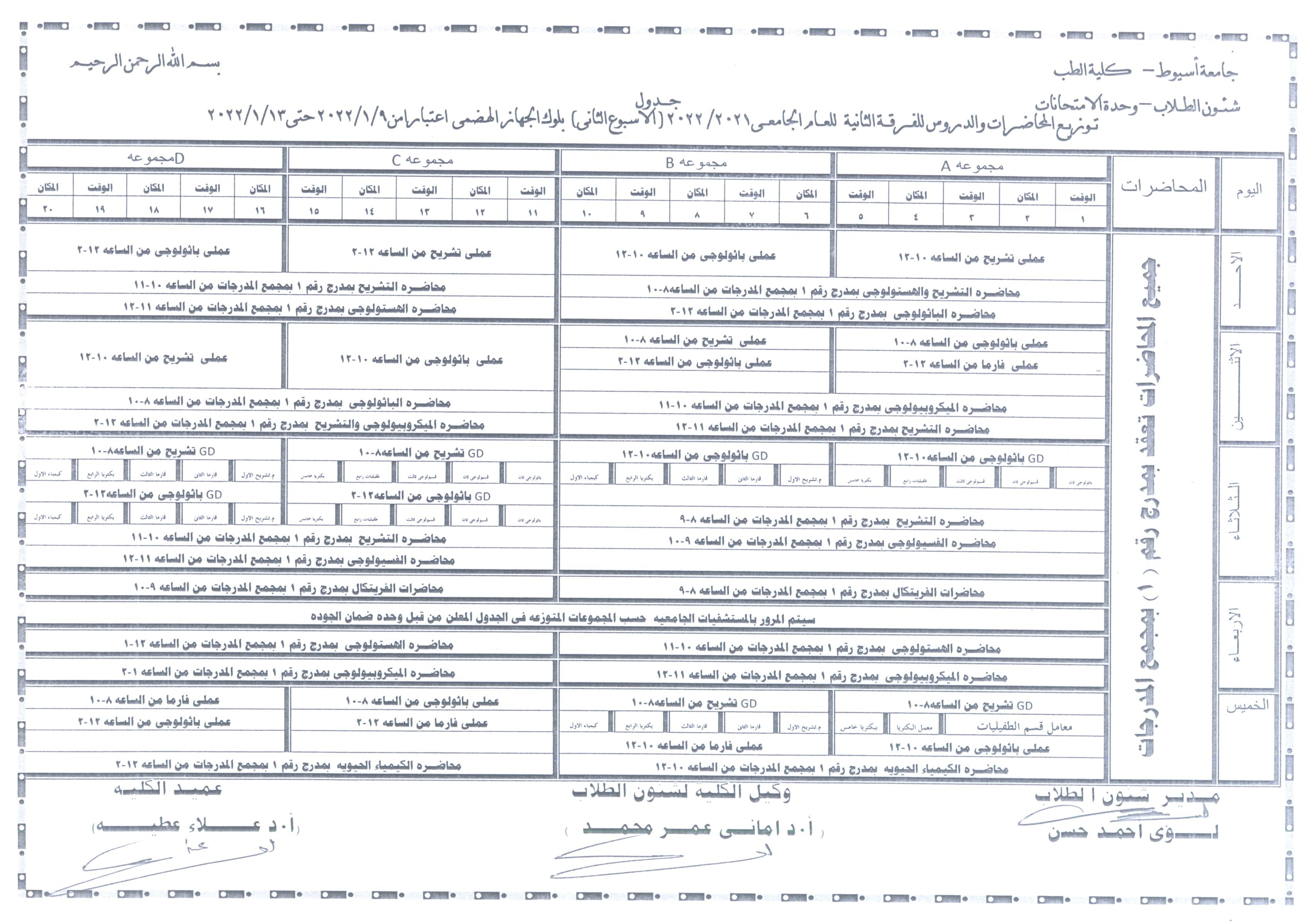
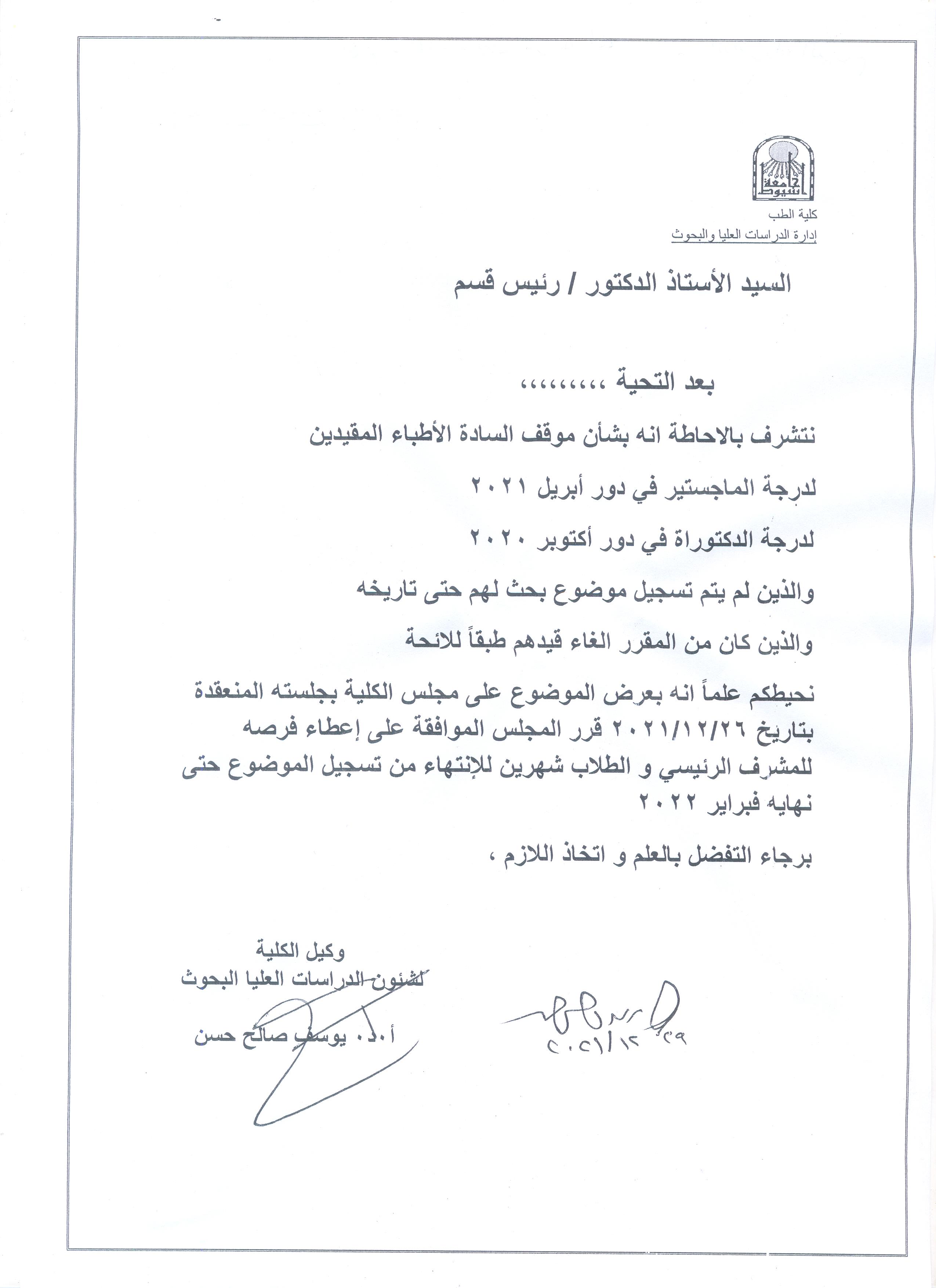

سوف يتم عقد السيمينار الخاص بالطبيبة / آيات عبد الكريم حسن ،
يوم الأربعاء الموافق 5 يناير 2022 م
وذلك فى تمام الساعة العاشرة صباحاً ،
بقاعة مجلس القسم - الدور الثالث - جناح (ج) ،
بعنوان Auto phagy
Background: Repair of cleft palate after 6 years of age is controversial in regard to the surgical procedure and the speech outcome. Primary repair alone may not be considered sufficient to achieve intelligible speech. The authors consider addition of pharyngeal flap at the time of primary repair to be a significant factor in improving speech.
Methods: Prospectively maintained data of all cleft palate patients operated from 2013 to 2017 (5 years) was analyzed to identify patients older than 6 years. Complete cleft palate, incomplete cleft palate, and cleft of the soft palate were further stratified according to different Randall types. They were divided into 2 main types: primary palate repair only and primary palate repair with pharyngeal flap. Speech was assessed preoperatively and 12 months postoperatively by Pittsburgh weighted speech scale.
Results: A total of 139 patients were analyzed. There were 78 males and 61 females. Their ages ranged from 6 to 60 years (mean age, 12.5 years). The overall preoperative speech score in palate repair-only group was 12.15, whereas the postoperative score was 7.32. In patients who underwent primary pharyngeal flap along with palate repair, the preoperative speech score was 11.3, and the postoperative score was 3.76.
Conclusions: In select group of patients who report late for palate repair, addition of pharyngeal flap along with the primary palate repair improves the speech outcome in all Randall groups.
The hypothesis of this study based on OPG is the decoy receptor of sRANKL which bind with its receptor RANK and activate NF-κB. This pathway may involve in the pathogenesis of IBD and any interference with pathway may affect the progress of the disease. The role of RANK/RANKL inhibition as an immunomodulatory. While TFF3 is a good marker indicating healing of mucosa and a state of remission.
(1) Background and objectives: Due to increasing life expectancy, more than one-third of women’s life can be spent in the postmenopausal period. In this period, women have different somatic, psychological, and urogenital symptoms. The present study was done to evaluate postmenopausal symptoms and their correlations among Saudi women attending different primary health centers. (2) Methods: adopting a cross-sectional study was done among 845 postmenopausal women attending different primary health centers. The menopause rating scale (MRS) was utilized to investigate the prevalence and severity of different menopausal manifestations. Data collection was done using a structured anonymous questionnaire disseminated during face-to-face interviews. Analysis of data was done utilizing the SPSS program, version 24. (3) Results: The total MRS score was 15.68 ± 6.85. The mean score of the subscales were: 5.56 ± 2.78 for the somatic domain, 6.04 ± 2.89 for the psychological domain, and 4.08 ± 2.32 for the urogenital domain. Joint and muscle pain (25.2%) and sleep problems (18.6%) were the most prevalent severe/very severe somatic symptoms. The most severe/very severe symptoms of the psychological domain were mental and physical exhaustion (20.2%) and depressed mode (19.2%), while that of the urogenital domain were sexual problems (20.1%) and bladder problems (16.3%). Significant predictors of the subscales of MRS were sociodemographic characteristics such as age, residence, marital status, educational level, and occupation. Furthermore, history of chronic diseases, parity, and menopause duration were …
Objectives To evaluate the relationship between semiquantitative and volumetric parameters on 18F-FDG PET/computed tomography (CT), including maximum standardized uptake value (SUVmax), mean standardized uptake value (SUVmean), metabolic tumor volume (MTV), total lesion glycolysis (TLG), tumor to liver ratio (TLR) and tumor to mediastinum ratio (TMR) with the level of Ki-67 expression in breast cancer. Patient and methods We retrospectively reviewed 105 female patients with newly diagnosed breast cancer who underwent baseline 18F-FDG PET/CT and had immunohistochemical staining to determine the level of Ki-67 expression. The following PET parameters were measured (SUVmax, SUVmean, MTV, TLG, TLR and TMR) and correlated with level of Ki-67 expression. Results Significant moderate positive correlations were found between the PET parameters (primary SUVmax, SUVmean, TLG …
There is conflicting results of few published human 18F-FDG PET/CT studies about BAT activation in breast cancer (BC). The aim of the study is to evaluate the association between the levels of BAT metabolic activity detected by 18F-FDG PET/CT and clinicopathological characteristics of a tumor in patients with primary BC.
BAT was activated in 16 out of 157 (10.2%) consecutive female patients with BC who underwent 18F-FDG PET/CT for initial evaluation. The majority of patients (15/16) had bilateral uptake in the supraclavicular regions. The mean values of the highest SUVmax and total metabolic activity (TMA) of activated BAT were 13.3 ± 9.9 and 79.6 ± 45, respectively. Median outdoor temperature was significantly lower in the activated BAT group (P value=0.035). Patients with BAT activation tended to have a lower median primary tumor size and primary SUVmax, but not statistically significant than those without BAT activation. BAT activation was significantly more frequent among younger age groups (14/16) and patients with lower body mass index (BMI) (10/16), but it was insignificantly more frequent among estrogen receptor-positive (ER+), progesterone receptor-positive (PR+), human epidermal growth factor receptor2 negative (HER2-), invasive ductal carcinoma (IDC), grade II, luminal B subtype, high Ki-67 expression level, patients with positive nodal metastasis, and in patients without distant metastasis. TMA was significantly higher among HER2+ patients (P value=0.019), but insignificantly higher among the younger age groups, stages I and II, invasive lobular carcinoma (ILC), grade I, luminal B subtype, ER+, PR−, higher Ki-67 expression level, patients with positive nodal, and distant metastasis. BMI and patient’s age were the significant independent predictor factors for BAT activation on multivariate regression analysis.
BAT activation in young age females is sex hormone-dependent, positively associated with less aggressive molecular subtypes of BC, less frequent in patients with distant metastasis. BAT activation may be a prognostic factor that carries a better prognosis in BC.