The anti-inflammatory effects of atorvastatin upon the outcome of traumatic brain injury patients: A randomized-controlled double-blind clinical trial

Research Abstract

Traumatic brain injury (TBI) is a quite common health problem. A lot of delayed complications are related to inflammatory responses that occurred within the brain itself. Atorvastatin is related to lipid lowering drugs carrying some anti-inflammatory properties and upon this fact this study hypothesis was built.

Methods

Twenty adult patients with TBI, Glasgow coma scale (GCS) 9–11. Patients were equally and randomly allocated into two groups (group C as control group and group S received atorvastatin 40 mg once daily for 48 h). After 48 h, participants have undergone magnetic resonance imaging brain spectroscopy examination (MRS). The spectral peaks of N-Acetyl aspartate (NAA), Choline, and Creatinine (Cr) were assessed in brain tissue. The primary outcome was presented as ratios of NAA/Cr), Cho/Cr, and NAA/Cho. Other outcomes included GCS and ICU stay

Research Authors
Emad Zarief Kamel, Nagwa M Ibrahem, Hazem Abu Zeid Yousef, Mohammed Gaber Farghly, Shady Safwat Hassan, Khaled Tolba Younes, Yasser Ashraf Gamal, Mina Maher Raouf, Omar Makram Soliman
Research Date
Research Journal
Egyptian Journal of Anaesthesia
Research Publisher
Egyptian Journal of Anaesthesia
Research Year
2023

ARID1A expression in the uterine endometrioid carcinoma

Research Abstract

Introduction: ARID1A (AT-rich interacting domain 1A) gene, a subunit of the SWI/SNF (switch/sucrose non-fermentable) complex, is a tumor suppressor gene. Mutations of this gene with loss of the corresponding protein were detected in different types of cancer. Here, we investigated ARID1A protein expression in endometrioid endometrial carcinoma (EEC), and assessed the correlation between its expression values and the pathological features of EEC.

Materials and methods: The study included 26 cases of EEC and five cases of proliferative endometrium (PE, control group). Immunostaining was done using streptavidin staining methods and ARID1A rabbit monoclonal antibody. Slides were examined and scored for ARID1A nuclear positivity.

Results: Nuclear ARID1A protein expression was observed in all cases of PE, and in 54% of EEC cases. We found significant down-regulation of ARID1A protein expression in EEC (Immunoreactivity score [IRS] = 2.69 ± 2.42) as compared to PE (IRS = 7.4 ± 2.3). Also, there was a significant inverse correlation between ARID1A protein expression value and pathological stage of EEC (r = -0.43, p = 0.040).

Conclusions: Alterations of ARID1A protein expression seem to play a role in the pathogenesis of EEC. The diagnostic and prognostic ramifications of these alterations are open for future studies.

Research Authors
Aliaa Elhosainy, Yasser Gamal Abdelrahman, Safwat Abdel-Radi Mohamed, Mohamed Galal Mostafa
Research Date
Research Department
Research Journal
Assiut Medical Journal
Research Pages
37-44
Research Publisher
Faculty of medicine, Assiut University
Research Vol
41
Research Year
2017

The Effect of Primary Tumor Site on Survival in Metastatic Colorectal Cancer Patients and their Relation to KRAS and Biological Therapy

Research Authors
AM Mohamed, TZ Mahran, GA Abdelrazik, DA Gamal
Research Date
Research Journal
SECI Oncology Journal

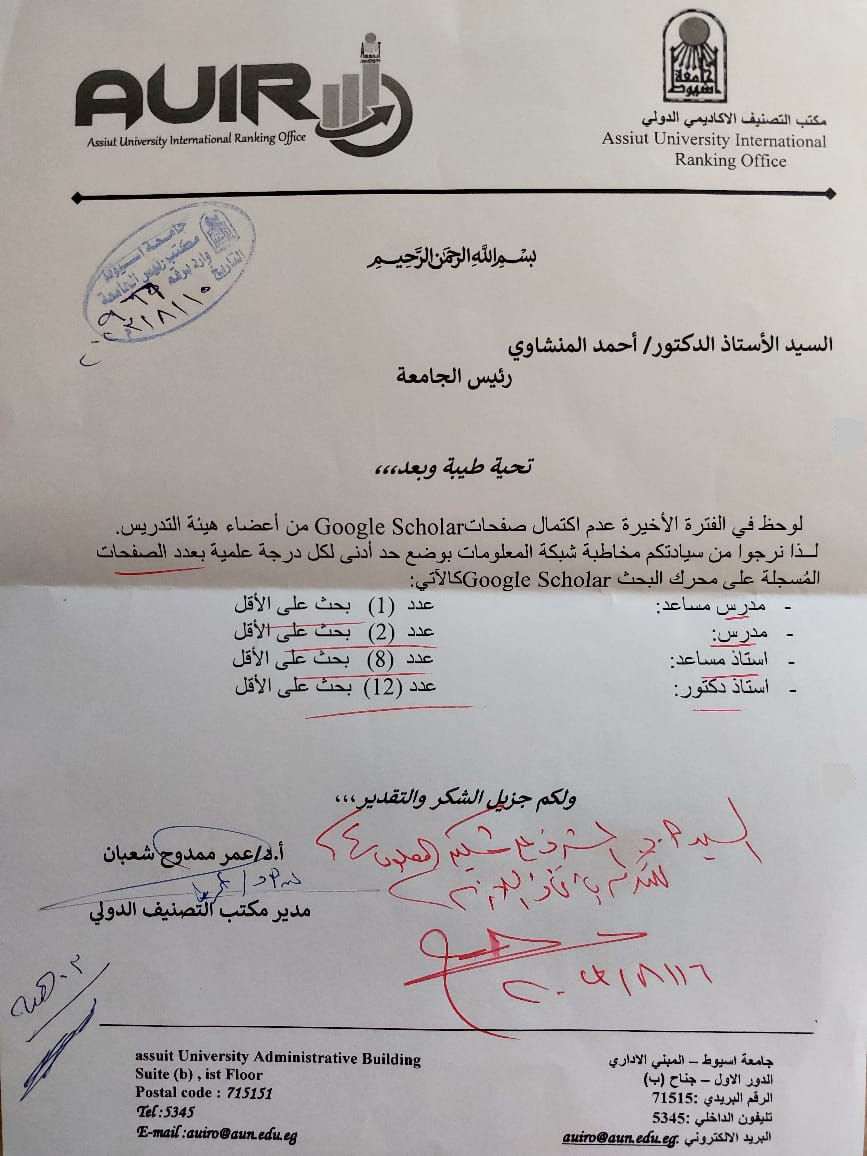
The President of Assiut University indicates the number of research papers required on the Google Scholar website for each academic degree

على السادة أعضاء هيئة التدريس بجامعة أسيوط الالتزام بقرار رئيس جامعة اسيوط :

 الأستاذ الدكتور / أحمد المنشاوي 


وذلك بوضع عدد الأبحاث المطلوبة على موقع Google Scholar لكل درجة علمية كالتالى :


مدرس مساعد : عدد ( 1 ) بحث على الأقل

      مدرس :    عدد ( 2 ) بحث على الأقل

أستاذ مساعد :  عدد ( 8 ) بحث على الأقل

       أستاذ :    عدد ( 12) بحث على الأقل


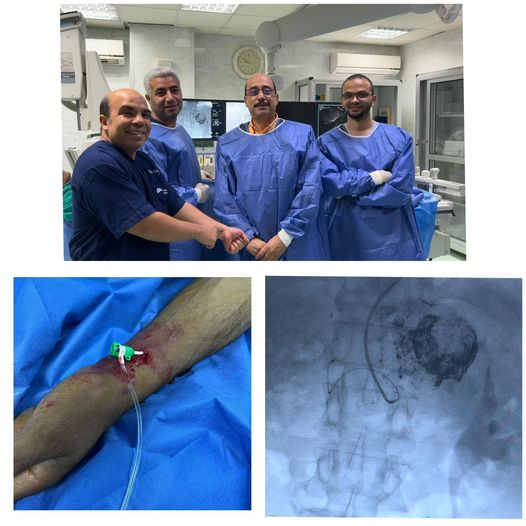
The success of a medical team in the Department of Diagnostic Radiology in introducing a modern technique for injecting liver tumors through the arteries of the arm, in addition to previous techniques.

نجاح فريق طبي بقسم الاشعة التشخيصية في ادخال تقنية حديثة لحقن اورام الكبد عن طريق شرايين الذراع تضاف للتقنيات السابقة.

نجح فريق طبي بالقسم في ادخال تقنية حقن اورام الكبد بالمواد الكيميائية بمدخل عن طريق شرايين الذراع لاول مرة بقيادة الاستاذ الدكتور مصطفي هاشم استاذ الاشعة التشخيصية والتداخلية و يضم الفريق الدكتور وجيه عبدالحفيظ استاذ مساعد الاشعة ومن المدرسين الدكتور سيد حسن والدكتور محمود رفعت والدكتور رامي محمد  والدكتور مصطفي احمد .

وافاد اد مصطفي هاشم قائد الفريق ان هذه التقنيه تعتبر  بديلا كمدخل لشرايين الفخذ بنسبة مضاعفات نزفيه اقل   ووقت اقل لعملية الحقن والمغادره.

واضاف د سيد حسن المشرف علي وحدة الاشعه بمستشفي الراجحي ان إدخال هذه التقنيه تم بتضافر جهود الكادر الطبي المؤهل والرغبه في إدخال التقنيات الحديثه وتوفير كافة الادوات المطلوبه من جانب ادارة  مستشفي الراجحي الجامعي.

وذلك تحت إشراف الأستاذ الدكتور مصطفى الشرقاوي رئيس قسم الأشعة التشخيصية والتداخلية ، والاستاذ الدكتور شريف كامل مدير مستشفي الراجحي..

وقد توجه الفريق الطبي بالشكر لهيئة التمريض والفنيين والمساعدين بوحدة الاشعة بمستشفى الراجحي الجامعي للكبد والجهاز الهضمي.


Subscribe to