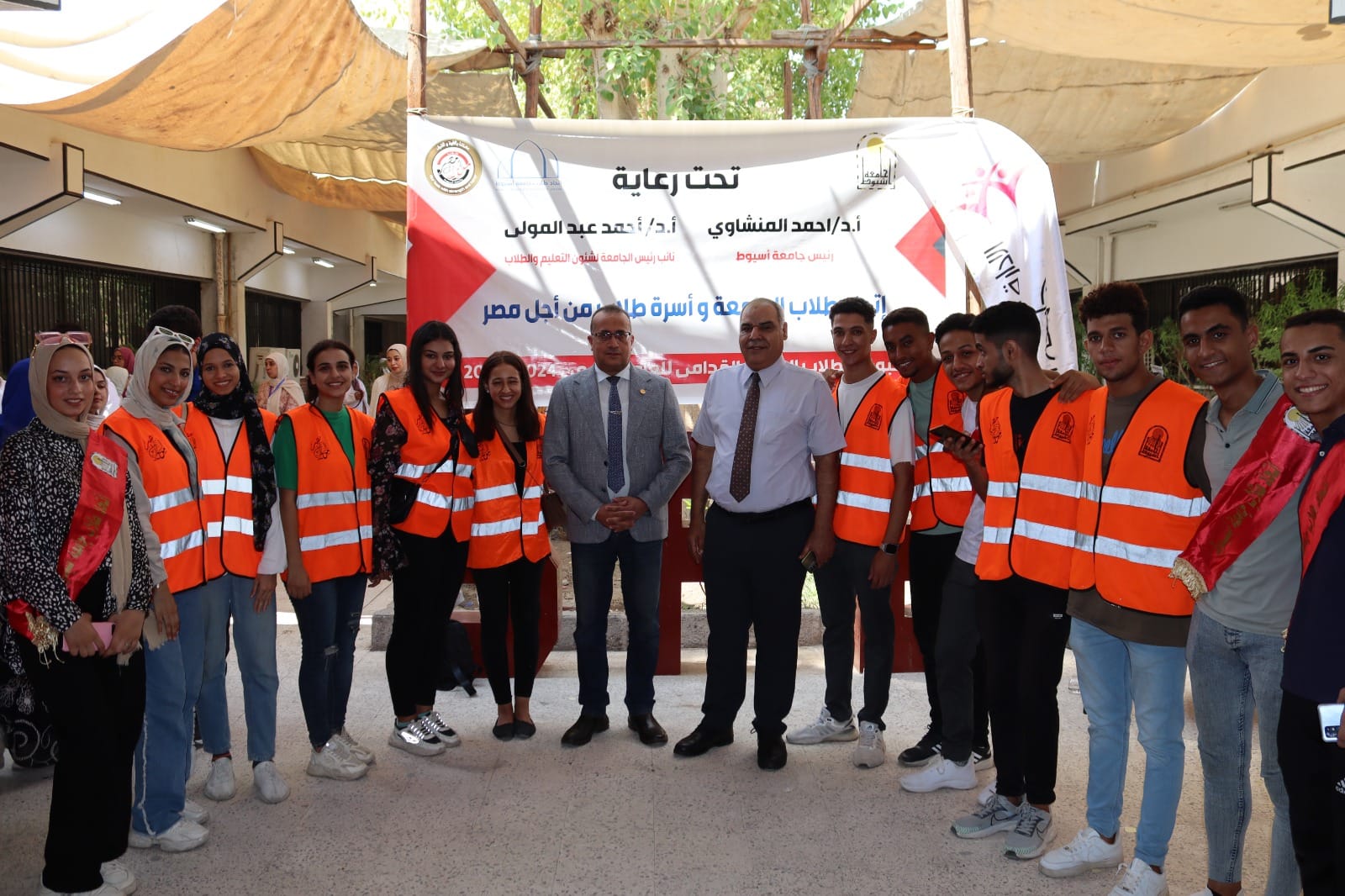
Follow up on the medical examination work for new students nominated for admission to the College of Medicine for the academic year 2024/2025 in the university’s examination hall complex.
Seminar by Dr. Eman Safwat Mohamed Hassanein - Teaching Assistant, Department of Physical Medicine, Rheumatology and Rehabilitation - Faculty of Medicine, Assiut University
الطبيبة/ ايمان صفوت محمد حسانين - معيد بقسم الطب الطبيعي والروماتيزم والتأهيل- كلية الطب بجامعة أسيوط
مع تمنيات العلاقات العامة والإعلام بالتوفيق والنجاح.
An invitation to the second scientific day for spine and spinal cord surgeries and endoscopy, which is organized by the Department of Neurosurgery at Assiut University.
Seminar by Dr. Amira Imam Abdel-Ghani - Teaching Assistant, Department of Physical Medicine, Rheumatology and Rehabilitation - Faculty of Medicine, Assiut University
An important announcement regarding the application and medical examination procedures for new students who have graduated from high school and are enrolled in the College of Medicine for the academic year 2024/2025 AD, on Sunday, September 8th.
بدء إجراءات التقديم والكشف الطبي على الطلاب الجدد الحاصلين على الثانوية العامة، والملتحقين بكلية الطب للعام الجامعي ٢٠٢٤ /٢٠٢٥م
وذلك يوم الأحد الموافق ٨ من سبتمبر ،
اولا التوجه للمكان المخصص بكلية الطب لتقديم الأوراق المطلوبة
ومن ثم التوجه لمجمع صالات الامتحانات بالجامعة لتوقيع الكشف الطبي.
الاوراق المطلوبه
بطاقة الترشيح.
شهادة الثانوية العامة (الاصل).
شهادة الميلاد الاصل (بالرقم الثلاثي للطلاب الذكور + عدد (٣) صورة من الشهادة).
عدد (١٠) صور فوتوغرافية.
نموذج (٢) جند للذكور.
علي الطلاب الذكور احضار البطاقة العسكرية (٦) جند او (٧)جند .
عدد (٢) صورة بطاقة الرقم القومي.
صورة بطاقة ولي الامر .
دوسية بلاستيك بكبسولة..
ملحوظة هامة: علي الطلاب من مواليد عام ٢٠٠٥م ، وما قبلها ضرورة إحضار نموذج (٦ جند) او (٧ جند).
مع تمنيات ادارة شئون الطلاب والعلاقات العامة والإعلام بكلية الطب بالتوفيق والنجاح.
The launch of the activities of the nineteenth conference of the Department of Neurological and Psychiatric Diseases under the title “Medical evidence and guidance in the field of neurological and psychological diseases between reality and application”
 Do you have any questions?




 اولا التوجه للمكان المخصص بكلية الطب لتقديم الأوراق المطلوبة
 الاوراق المطلوبه
  بطاقة الترشيح.
 ملحوظة هامة: علي الطلاب من مواليد عام ٢٠٠٥م ، وما قبلها ضرورة إحضار نموذج (٦ جند) او (٧ جند).


