Do you have any questions?

Increased expression of fibroblast activation protein is associated with autophagy dysregulation and oxidative stress in obese women with uterine fibroids
Research Abstract
Uterine fibroids (UF) represent an immense health burden throughout the world. Obesity is considered one of the risk factors for UF development; however, the underlying mechanisms remain largely unexplored. We investigated the effect of obesity on fibroblast activation and its association with inflammation, autophagy dysfunction, and oxidative stress in UF patients. Thirty-five pre-menopausal UF patients were included in this study and classified into non-obese group (BM1 ≤ 30 kg/m2, n = 15) and obese group (BMI > 30 kg/m2, n = 20). Tissue samples were collected from fibroids and adjacent normal myometrium. Our results showed increased expression of fibroblast activation protein (FAP) together with markers of autophagy, inflammation, and oxidative stress in UF patients, which were all more markedly upregulated in obese compared to non-obese patients. In addition, BMI was significantly positive correlated with FAP and autophagy markers. In conclusion, the results of the present study suggest that obesity-associated autophagy dysregulation together with increased FAP expression may increase the risk of UFs in obese women.
Research Date
Research Department
Research Journal
Reproductive Sciences
Research Member
Research Pages
44-459
Research Publisher
Springer Link
Research Vol
29
Research Website
https://link.springer.com/article/10.1007/s43032-021-00810-0
Research Year
2022
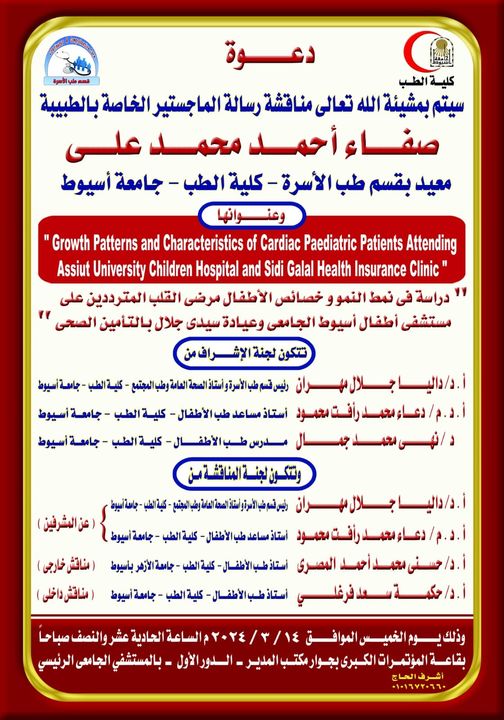
Seminar by Dr. Safaa Ahmed Mohamed Ali - Teaching Assistant, Department of Family Medicine - Faculty of Medicine - Assiut University
The College of Medicine continues its health awareness work and free medical examination with integrated health convoys to Bani Rafi’ - Manfalut Center - on Friday, March 8, 2024.
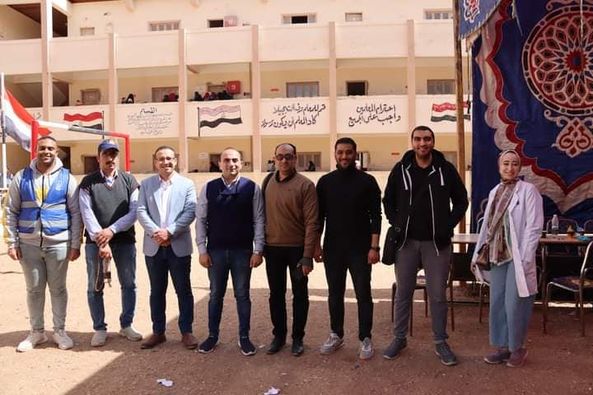
تواصل كلية الطب اعمال التوعية الصحية والكشف الطبي المجاني بالقوافل الصحية المتكاملة إلي بنى رافع-مركز منفلوط- يوم الجمعه ٨ مارس ٢٠٢٤
تحت رعايه
ا.د /احمد المنشاوي- رئيس الجامعه
ا.د/محمود عبدالعليم - نائب رئيس الجامعة لشئون خدمة المجتمع وتنمية البيئة
ا.د/ علاء عطية - عميد الكلية ورئيس مجلس اداره المستشفيات الجامعيه
ا.د/ سعد زكي - وكيل كلية الطب لشؤون خدمة المجتمع وتنمية البيئه والمشرف العام على القوافل الطبيه
د/ عمرو محمد عبد المجيد - مشرف مركز القوافل الطبية
ويأتي ذلك استمرارا للدور الرائد الذي تؤديه الكلية على الصعيدين التعليمي والخدمي لمجتمعها المحيط وما تحقق من جهد ملموس بقطاع خدمة المجتمع وتنمية البيئة لخدمة اهالي القري الاكثر احتياجا بمشاركة الاطباء من ٤ اقسام:
الاطباء المشاركين:
ط/ أندى محمد رشاد. الأطفال
ط/ ندى خالد محمد الجلدية والتناسلية.
ط/ هدير صفوت حسن الباطنة العامة.
ط/ محمود بدوى. الامراض الصدرية.
ط/ خالد محسن محمد. جراحة العظام.
السيد/ علاء محمد احمد فياض القوافل الطبية
السيد/ احمد عبدالخالق العلاقات العامة
السيد / مصطفى محمود حمدان الخدمات المعاونة
تم توقيع الكشف ٢٦٨حالة. والتي تأتي ضمن سلسلة من القوافل المتكاملة التي تطلقها الكلية بشكل دوري ومستمر ؛ وتشارك بها ضمن مبادرة حياة كريمة التي يرعاها السيد رئيس الجمهورية للقري والنجوع.
Congratulation

العلاقات العامة والإعلام بكلية الطب تهنئ السادة اعضاء هيئة التدريس والهيئة المعاونة بالترقيات
 تعيين الدكتور / سمير كمال عبد الحميد قطب _ لشغل وظيفة أستاذ بقسم الأمراض الباطنة .
تعيين الدكتورة / شيماء عباس حسن حسين _ لشغل وظيفة أستاذ مساعد بقسم التخدير والعناية المركزة .
تعيين الدكتور / مصطفى نصر الدين على _ لشغل وظيفة أستاذ مساعد بقسم امراض النساء والتوليد .
تعيين الدكتورة /مروة مقبول أحمد_ لشغل وظيفة أستاذ مساعد بقسم الأشعة التشخيصية .
تعيين الدكتورة /شيماء فرغلى جاد_ لشغل وظيفة أستاذ مساعد بقسم الأشعة التشخيصية .
تعيين الدكتورة/ أية عمر محمود عبد الله – لشغل وظيفة مدرس بقسم الباثولوجيا الإكلينيكية .
تعيين الدكتورة/ آيات صلاح أحمد بركات – لشغل وظيفة مدرس بقسم الأمراض الباطنة تخصص دقيق (الأمراض الروماتيزمية والمناعة الإكلينيكية).
تعيين الدكتور / مصطفى كامل عبد النعيم حسين _ لشغل وظيفة مدرس بقسم جراحة القلب والصدر .
تعيين الطبيبة / سها محى الدين محمد_ لشغل وظيفة مدرس مساعد بقسم طب المناطق الحارة والجهاز الهضمى .
تعيين الطبيب/ ميشيل ميلاد فكرى – لشغل وظيفة مدرس مساعد بقسم الأمراض الباطنة .
Disrupting interleukin 12 improves microvascular endothelial function in type 2 diabetes through ER stress CHOP and oxidative stress mechanisms
Research Abstract
Purpose: Vascular endothelial dysfunction is well established in type 2 diabetes. Interleukin-12 (IL-12) and endoplasmic reticulum (ER) stress are up-regulated in type 2 diabetic patients and animal models of type 2 diabetes. However, the role and underlying mechanisms of IL-12 and the ER stress CHOP in endothelial dysfunction are not fully understood.Methods: We generated double knockout mice between db−/db− and p40IL-12−/− mice (db−/db−p40-IL−12-/-) and endoplasmic (ER) stress-CHOP−/− mice (db−/db−CHOP-/-). We performed a glucose tolerance test (GTT) to determine the effect of IL-12 and ER stress CHOP on glucose metabolism. We assessed the endothelial function and determined the phosphorylation level of eNOS, Akt, AMPK, and the expression of ER stress (CHOP, BIP), and oxidative stress (Nox2 and Nox4 and NADPH oxidase activity).Results: The results showed that GTT was improved in db-/db−p40-IL−12-/- and db−/db−CHOP-/- suggesting IL-12 and CHOP as parts of a mechanism involved in the development of type 2 diabetes. The microvascular endothelial dysfunction in db−/db− mouse is associated with decreased phosphorylated eNOS, Akt, AMPK, and increased CHOP, BIP, Nox2, and Nox4 expressions. Interestingly, disrupting IL-12 and ER stress CHOP in db−/db− mice significantly improved endothelial function, increased survival markers expression and decreased ER and oxidative stress.Conclusion: Using a genetic approach, these findings provide evidence that IL-12 and ER stress CHOP play a significant role in microvascular endothelial dysfunction in type 2 diabetes.
Research Date
Research Department
Research Journal
Diabetes, Metabolic Syndrome and Obesity: Targets and Therapy
Research Member
Research Pages
2633-2642
Research Publisher
Dove Press
Research Vol
15
Research Year
2022
Scientific training day for the Department of Orthopedic Surgery, Assiut University, under the supervision of the Swiss International Society for Traumatology. AO foundation
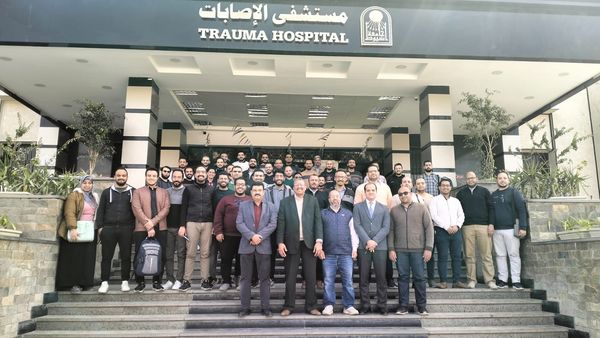
تم بحمد الله تعالى يوم الجمعة ٨ مارس ٢٠٢٤ بقاعات ا.د. عصام الشريف بمستشفى الإصابات عقد اليوم العلمى التدريبى لقسم جراحة العظام جامعة أسيوط تحت إشراف الجمعية الدولية السويسرية لعلاج الكسور. AO foundation
تحت عنوان كسور أعلى عظمة الفخذ فى كبار السن
AO In-hospital (best practice in Geriatric hip fractures)
وتنوعت المادة العلمية ما بين محاضرات وحلقات نقاشية شملت جميع جوانب علاج كسور أعلى عظمة الفخذ فى المرضى كبار السن على ثلاثة محاور
المحور الاول: رعاية المريض بعد الإصابة التدخل الجراحي وإعداده للجراحة فى أسرع وقت
المحور الثاني: سبل العلاج الجراجى بكسور أعلى عظمة الفخذ
المحور الثالث: رعاية ومتابعة المريض بعد العملية الجراحية
وحاضر في هذا اليوم العلمي والتدريبى ا.د. أسامة فاروق ، ا.د. حسام ابوبيه ، د. محمد كمال عبد الناصر و د. مصطفى ثابت الأساتذة بقسم العظام جامعة أسيوط وبلغ عدد المتدربين (٥٠) طبيبا من مستشفيات جامعه أسيوط و جامعة الازهر فرع أسيوط ومستشفيات وزارة الصحة.
Congratulation
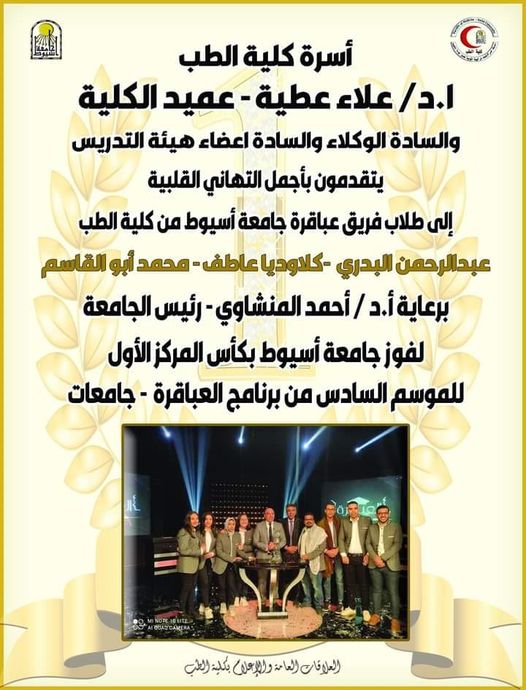
Congratulation
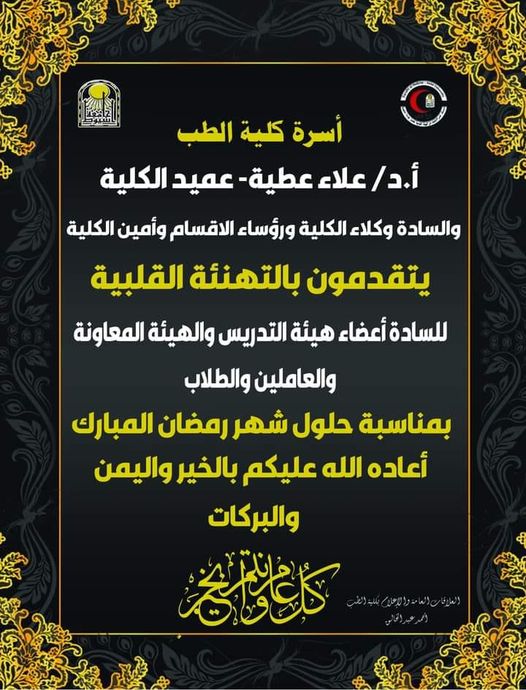
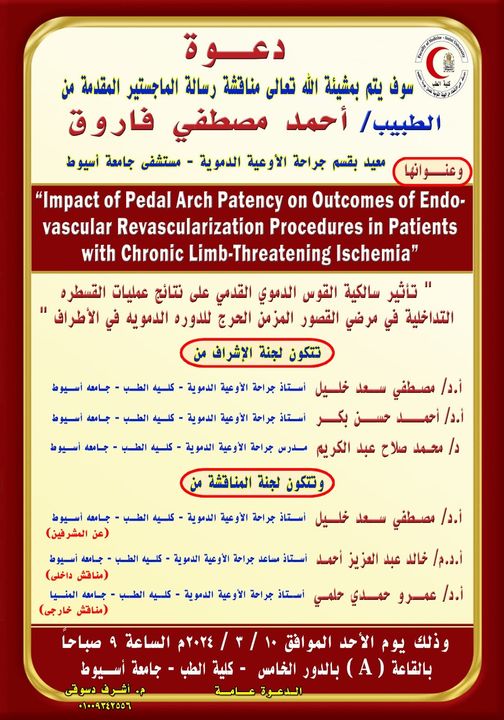
Seminar by Dr. Ahmed Mustafa Farouk - Teaching Assistant, Department of Vascular Surgery - Assiut University Hospital