
Flow Cytometry Analysis of DNA Ploidy and S-Phase Fraction in Salivary Gland Tumors of Egyptian Patients

Research Abstract
  • Aim: The aim of this study is to investigate the DNA ploidy and S-Phase Fraction (SPF) of some Salivary Gland Tumors (SGTs) in Egyptian patients and to investigate the correlation between these two biological parameters and the presumptive behavior of these neoplasms.
  • Methods: Flow cytometric analysis of DNA pliody and S-Phase Fraction (SPF) was done in 50 fresh tumor tissue sections of SGTs which diagnosed as 15 benign and 35 malignant tumors.
  • Results: 93.3% of the benign SGTs tumors were diploid, while only 34% of malignant tumors were diploid and 66% were aneuploid. The malignant SGTs had higher SPF than the benign tumors but with no significant difference. There was no significant correlation of ploidy status or SPF with the tumor grades of mucoepidermoid carcinomas.
  • Conclusion: DNA aneuploidy may be a key indicator for tumors activity and malignancy in SGTs, while the SPF has a minor role in the evaluation of SGTs activity.
Research Authors
Asmaa M. Zahran, Hussein Fakhry, Khaled A. Hussein, Mahmoud Abd El-Salam, Mohamed A. Mohamed, Safaa M. Tohamy and Ahmed M. Hussein
Research Date
Research Department
Research Journal
Clinics in Oncology
Research Pages
1393
Research Publisher
Remedy Publications LLC
Research Vol
3
Research Website
http://clinicsinoncology.com
Research Year
2018

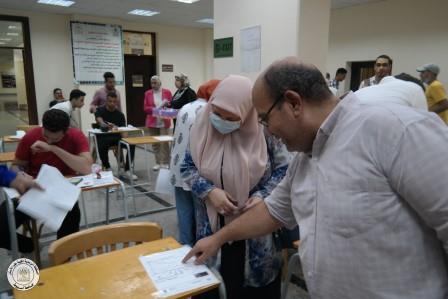
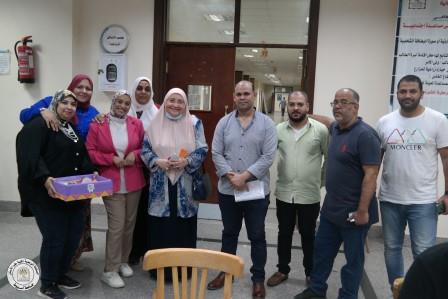
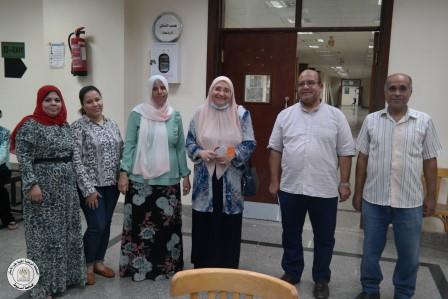
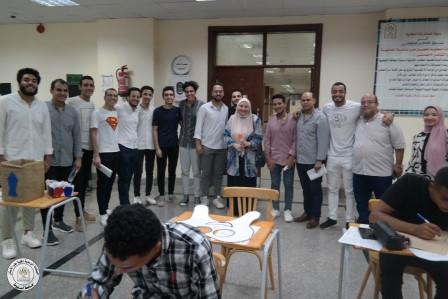
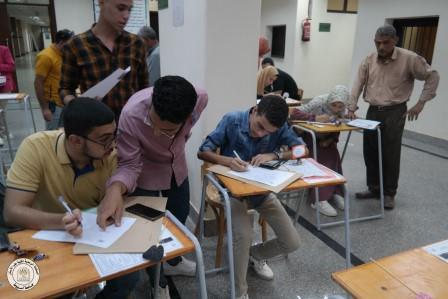
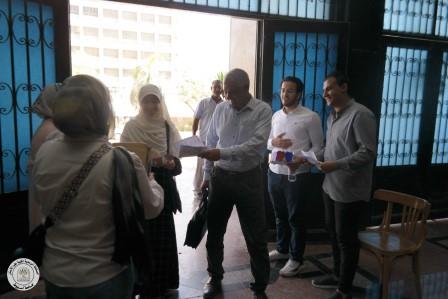
The monthly meeting of the Quality Assurance Unit was held on Wednesday 15/6/2022 in the presence of:

Prof. Dr. / Mohamed Abdel Majid Qatamesh (Dean of the College)

Prof. Ibrahim Ahmed Ismail (Director of the Quality Assurance Center at the university)

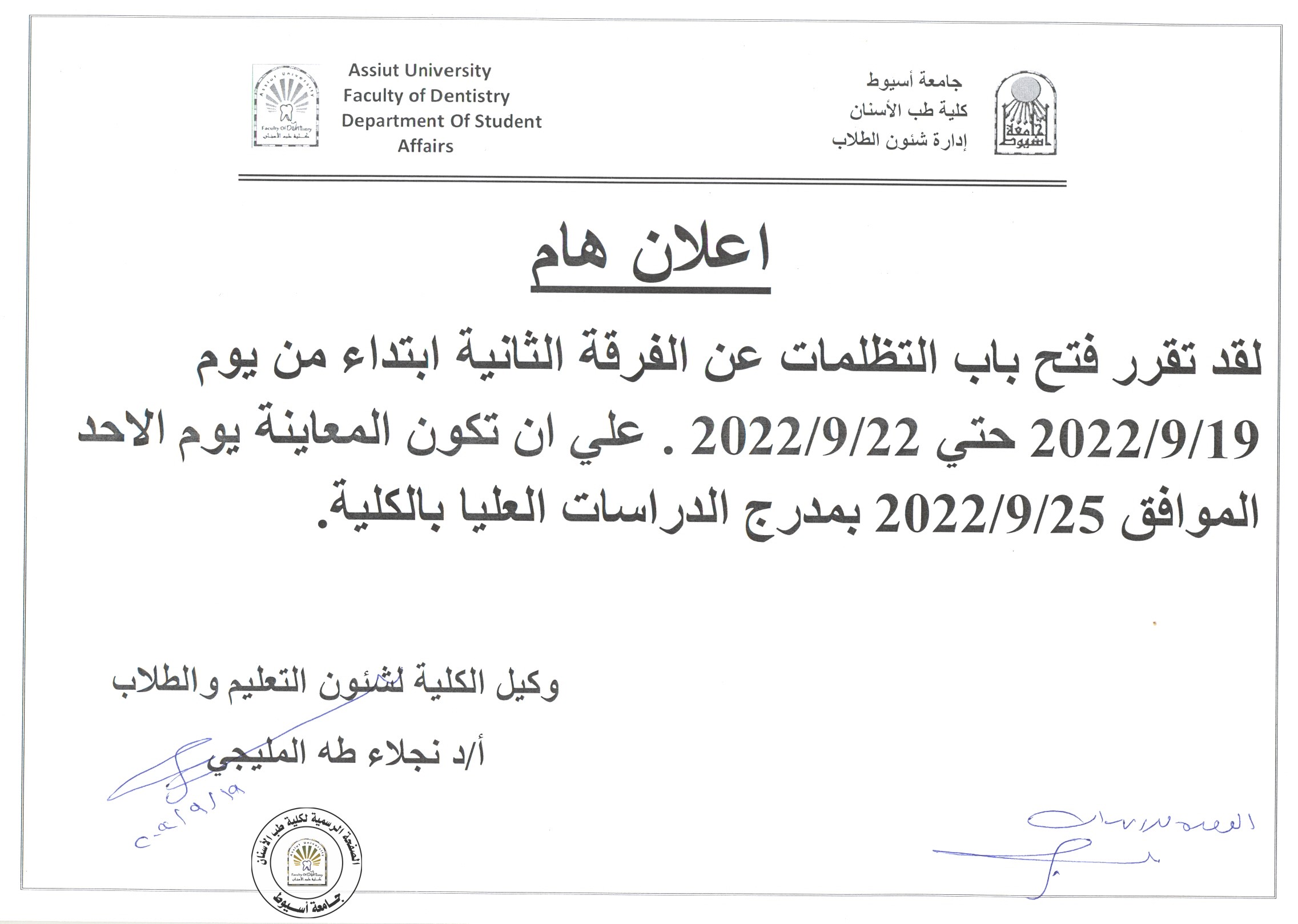
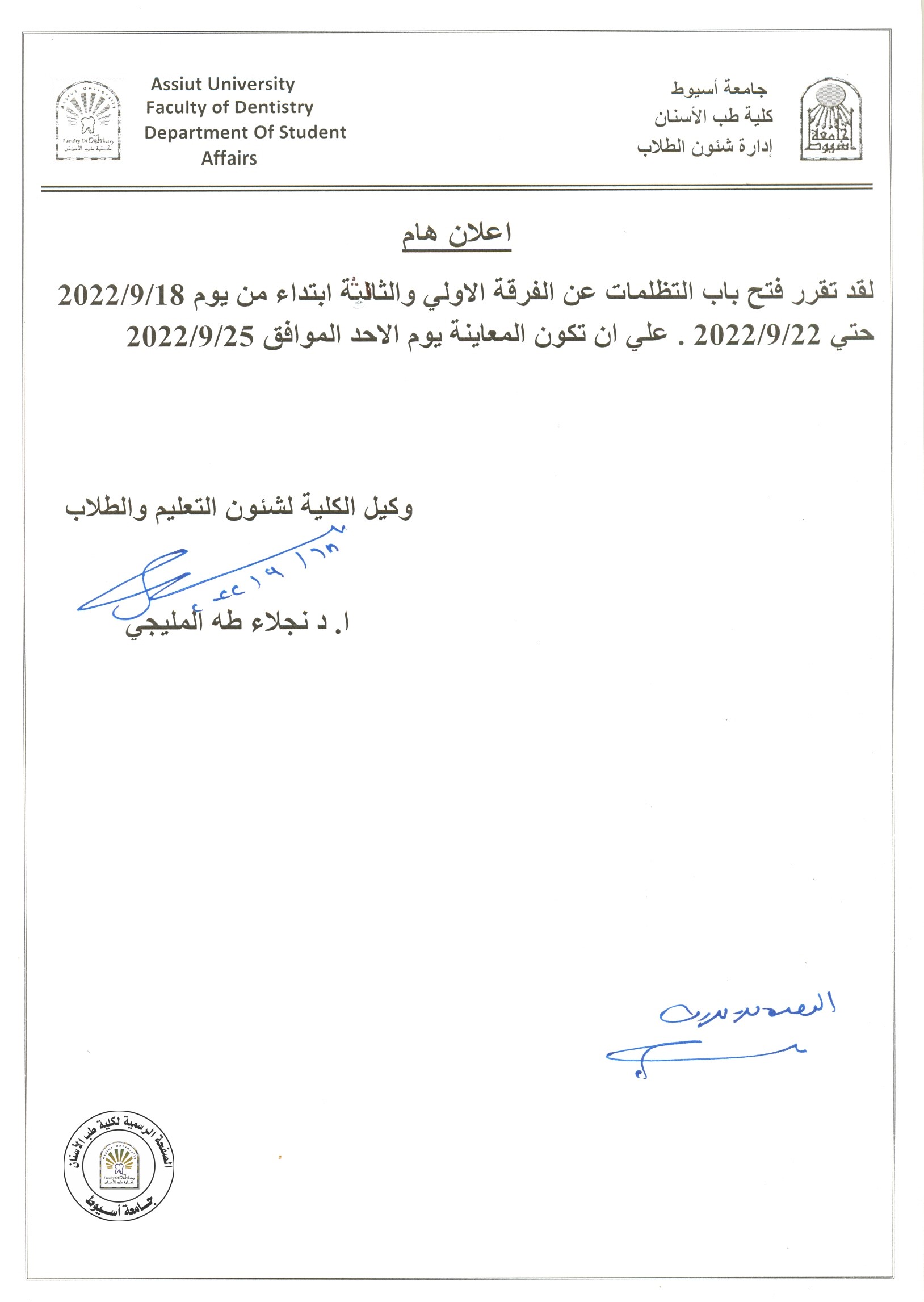
Prof. Naglaa Taha El-Meligy (Dean of the College for Education and Student Affairs)

Prof. Hebat Allah Jamal Al-Din Rashid (Dean of the College for Community Service and Environmental Development)

Dr. Al-Zahraa Ibrahim Al-Ghariani (Director of the Quality Assurance Unit)

Dr. Rana Mohamed Hashem (Deputy Director of the Quality Assurance Unit)

And the standards coordinators, in which they discussed what has been accomplished in the quality file and the extent of the college's readiness to conduct a simulation visit, as part of the necessary procedures to obtain accreditation and quality.

......


On Wednesday 15/6/2022 at twelve o'clock the meeting No. (4) of the College Council was held, in the presence of:

Prof. Dr. Muhammad Abdul Majeed Qatamish (Dean of the College),
Prof. Naglaa Taha El-Meligy (Dean of the College for Education and Student Affairs),
Prof. Hebat Allah Jamal Al-Din Rashid (Dean of the College for Community Service and Environmental Development Affairs),
Dr. Mohamed Nahed Attia (Hospital Director),
Mr. Al-Muntasir Hussain Ahmed (Secretary General of the College), and heads of departments to discuss the agenda.


Effect of Attachment Type, Maximum Occlusal Force, and Denture Deformation on Marginal Bone Loss of Two-Implant Overdentures: A Short-Term Clinical Trial

Research Abstract

Purpose: This study aimed to investigate the effect of attachment type, maximum occlusal force, denture deformation, and other confounding factors on marginal bone loss of two-implant overdentures after 1 year.

Materials and Methods: Ninety edentulous patients received two implants in canine areas of the mandible using the computer-guided flapless surgical technique. Three months later, overdentures were connected to the implants with bar, resilient telescopic, and resilient stud attachments. Marginal bone loss was evaluated using standardized digitized periapical radiographs. Maximum occlusal forces were evaluated using a digital bite-force meter. Denture base deformation (denture strains, μm) was evaluated using strain gauges bonded to the polished surface of the denture at the level of the attachments. Regression analysis was adopted to find the relation between marginal bone loss and the following confounders (age, sex, mandibular bone height, period of edentulism, number of previous dentures, attachment type, maximum occlusal force, and denture strains).

Results and Conclusion: Telescopic overdentures showed the highest marginal bone loss and maximum occlusal force, followed by bar overdentures, and stud overdentures demonstrated the lowest values. The highest denture strains were noted with bar overdentures, followed by telescopic overdentures, and stud overdentures showed the lowest strains. Age (P = .022), mandibular bone height (P = .023), number of previous dentures (P = .004), maximum occlusal force (P ≤ .001), and denture strains (P = .048) were significantly correlated with marginal bone loss. For every 1-year increase in age, there was a decrease in bone loss by 0.3%. For every 1-mm increase in bone height, there was an increase in bone loss by 1%. For every one increase in the number of worn dentures, there was a decrease in bone loss by 4.2%. For every 10-N increase in maximum occlusal force, there was an increase in bone loss by 6.4%. For every 10-μm increase in denture strains, there was an increase in bone loss by 0.21%. Sex, time of edentulism, and attachment type did not demonstrate a significant correlation with marginal bone loss. Int J Oral Maxillofac Implants 2022;37:391–399. doi: 10.11607/jomi.8982

Research Authors
Mohamad Hossam El-Din Helmy, BDS, MSc, PhD1 /Mohammed Elsokkary, BDS, MSc, PhD1 / Moustafa Abdou ELsyad, BDS, MSc, PhD2/Ramy Moustafa Moustafa Ali, BDS, MSc, PhD3
Research Date
Research Journal
The International Journal of Oral & Maxillofacial Implants
Research Pages
391-399
Research Publisher
QUINTESSENCE PUBLISHING CO, INC.
Research Rank
International
Research Vol
Volume 37
Research Year
2021

MARGINAL BONE HEIGHT CHANGES AROUND MAXILLARY AND MANDIBULAR IMPLANTS SUPPORTING ALL ON FOUR FIXED DETACHABLE PROSTHESIS. ONE-YEAR PROSPECTIVE STUDY

Research Abstract

ABSTRACT

Purpose of the study: The aim of the present study was to investigate the marginal bone height changes around maxillary and mandibular implants supporting all on four fixed detachable prosthesis after one year follow up

Materials and methods: six completely edentulous patients (4 males and 2 females) received new conventional maxillary and mandibular dentures and were asked to wear them for 3 months to enhance adaptation. Four implants were inserted in the maxillary (between the nasal sinuses) and mandibular (between the mental foramina) arch of each patient according to the All On four protocol. Implants were immediately loaded with provisional dentures after connection of multiunit abutments, and after 3 months of osseointegration temporary dentures were replaced by fixed ceramo-metal prosthesis. Vertical marginal bone loss (VBL) was evaluated at the time of fixed hybrid prosthesis insertion, 6 and 12 months later using standardized peri-apical radiographs.

Results: Maxillary anterior implants recorded significant higher VBL (P ≤ 0.005) than mandibular implants after 6 months and 12 months of prosthesis insertion. Also, the maxillary anterior implants showed significant VBL (P ≤ 0.005) than the posterior implants. For the posterior implants, no significant difference in VBL was observed between the maxillary and mandibular implants. For the mandibular implants, no significant difference in VBL between the anterior and posterior implants was observed.

Conclusion: Within the limitation of this short-term study, taking the small patient cohort into account, it could be concluded that maxillary anterior implants supporting all on four fixed hybrid prosthesis are at increased risk for marginal bone loss compared to maxillary posterior implants or mandibular implants.

Research Authors
Ahmad Fathalla Shawky, * Mohamad Hossam El- Din Helmy ** and Hebatalla Mahmoud El Afandy***
Research Date
Research Journal
EGYPTIAN DENTAL JOURNAL
Research Pages
3771:3780
Research Publisher
EGYPTIAN DENTAL JOURNAL
Research Rank
Local
Research Vol
Vol. 64
Research Year
2018

IMPLANT SUPPORTED MANDIBULAR OVERDENTURES WITH LOCATOR ATTACHMENTS IN PATIENTS WITH RESORBED MANDIBULAR RIDGES. A CROSS OVER STUDY OF PATIENT SATISFACTION AND ORAL HEALTH RELATED QUALITY OF LIFE

Research Abstract

ABSTRACT

Purpose: The aim of this cross over study was evaluation of patient satisfaction and oral health related quality of life (OHRQoL) for implant supported mandibular overdentures with locator attachments in patients with resorbed ridges

Materials and methods: Six participants (3 males and 3 females) with total maxillary and mandibular edentulism who complained from lack of retention of old mandibular dentures due to ridge resorption received new conventional dentures. After 3 months adaptation period, 4 implants were inserted between the 2 mental foramina of the mandible using one stage non submerged delayed loading approach. After 3 months of integration period, dentures were connected to the implants with Locator attachments. Patient satisfaction was measured using patient satisfaction questionnaires and oral health related quality of life was measured using oral health impact profile (OHIP-14). Measurements were made after 3 months of using conventional dentures (control group) and implant overdentures (study group).

Results: Regarding VAS questionnaires, test group showed significant higher general satisfaction, satisfaction compared to natural teeth, satisfaction with retention, stability, occlusion, speech, mastication, prosthesis is a part of patient, and lack of embarrassment compared to control group. Regarding OHIP-14, test group showed significant less pain and more comfort on eating, less self-consciousness, and less sensation of tense, more satisfaction with food and less interruption of meal, more ability to relax and less embarrassing, less irritation with other and more satisfaction with life generally and less difficulty in function well than control group

Conclusion: Implant supported mandibular overdentures with locator attachments are recommended for patients with atrophied mandibular ridges as they significantly improve patient satisfaction and quality of life compared to conventional dentures.

Research Authors
Shahinaz Sayed Mohamed Hassan * and Mohamad Hossam El-Din Helmy**
Research Date
Research Journal
EGYPTIAN DENTAL JOURNAL
Research Pages
671:681
Research Publisher
EGYPTIAN DENTAL JOURNAL
Research Rank
Local
Research Vol
Vol. 66,
Research Year
2020

POLY ETHER-ETHER KETONE VENEERED WITH COMPOSITE VERSUS PORCELAIN FUSED TO METAL FULL ARCH FIXED SCREW RETAINED PROSTHESIS FOR ATROPHIED MANDIBULAR RIDGES. ONE YEAR RANDOMIZED CLINICAL AND RADIOGRAPHIC TRIAL STUDY

Research Abstract

ABSTRACT

Purpose: to investigate outcomes of Poly ether-ether ketone veneered with composite and porcelain fused to metal Full arch fixed screw retained prosthesis for patients with atrophied mandibular ridges.

Material and methods: Eight (4 men and 4 women) edentulous patients complaining from mandibular ridge atrophy were randomly assigned into 2 groups; Group I included 4 patients who received 8 implants and porcelain fused to metal full arch fixed restoration, Group II included 4 patients who received 8 implants and Poly ether-ether (PEEK) fixed restoration veneered with composite resin teeth. All implants were inserted using computer guided flapless surgical approach and loaded by definitive restorations after 3 months of osseointegration. Clinical (plaque and gingival index, probing depth, implant stability) and radiographical (bone resorption using cone beam CT) evaluations were performed at time of prosthesis insertion, after 6 month and one year thereafter.

Results: The survival was 90.7% and 100% in group I and group II respectively. Plaque and gingival indices increased with time in metal group only and PEEK group showed significant lower plaque and gingival indices than metal group after 6 and 12 months. Probing depth and bone resorption showed an increase values with passage of time in both groups and PEEK group showed significant lower probing depths and bone losses than metal group. Implant stability did not differ between groups or observation times was noted

Conclusion: Within limitations short term randomized trial, it could be concluded that Poly ether-ether ketone veneered with composite full arch fixed screw retained prosthesis is advantageous than porcelain/metal restoration for patients with atrophied mandibular ridges as it showed favourable per-implant tissue health after one 12 months.

Research Authors
Ramy Moustafa Moustafa Ali * and Mohamad Hossam El-Din Helmy**
Research Date
Research Journal
EGYPTIAN DENTAL JOURNAL
Research Pages
2439:2449
Research Publisher
EGYPTIAN DENTAL JOURNAL
Research Rank
Local
Research Vol
Vol. 66
Research Year
2020

LOCATOR VS TELESCOPIC CROWN ATTACHMENTS FOR MAXILLARY IMPLANT OVERDENTURE. A WITHIN-SUBJECT STUDY OF CHEWING EFFICIENCY AND MAXIMUM BITE FORCE

Research Abstract

ABSTRACT

Aim: This within-subject study report to investigate masticatory efficiency and maximum bite force of Locator and telescopic crown attachments used to retain maxillary implant overdentures.

Materials and methods: Six edentulous patients (3 males and 3 females) received 4 implants in the anterior maxillary region between the maxillary sinuses using a standardized 2 stage surgical approach. Six months after osseointegration, the implants were loaded either by Locator or telescopic maxillary overdentures in a cross-over study design. Masticatory efficiency was performed using the 2-colored gum mixing ability test. The gum was chewed for 5, 10, 20, 30, and 50 cycles, and the images of the chewed gum were analyzed using a Photoshop program to calculate the unmixed fraction (UF). Also, maximum bite force was evaluated using a bite-force transducer. Chewing efficiency and maximum bite forces were evaluated 3 months after wearing each overdenture.

Results: The success rate was 100% in both groups. There was a trend for a decrease in UF (ie improved masticatory efficiency) with the increase in the number of masticatory cycles. Telescopic maxillary overdentures showed significantly lower UF (ie higher masticatory efficiency) and higher maximum bite force than Locator maxillary overdentures

Conclusion: Telescopic attachments are recommended for maxillary implant overdentures as it had improved masticatory efficiency and maximum bite force than Locator attachments

Research Authors
Mohamad Hossam El-Din Helmy* and Mohammed M. Elsokkary*
Research Date
Research Journal
EGYPTIAN DENTAL JOURNAL
Research Pages
2453:2463
Research Publisher
EGYPTIAN DENTAL JOURNAL
Research Rank
Local
Research Vol
Vol. 67
Research Year
2021

BIOLOGIC AND PROSTHETIC COMPLICATIONS WITH TWO VERSUS FOUR MINI-IMPLANTS SUPPORTING MANDIBULAR OVERDENTURES IN PATIENTS WITH KNIFE EDGE RIDGES. ONEYEAR RESULTS OF RANDOMIZED CONTROLLED CLINICAL TRIAL

Research Abstract

ABSTRACT

Purpose: The aim of this randomized clinical trial was to evaluate biologic and prosthetic complications with two versus four mini-implants supporting mandibular overdentures in patients with knife edge ridges. Materials and methods: Twelve edentulous participants (6 men and 6 women, mean age =58.47 years) were randomly assigned into 2 groups; Group 1(control); included six participants who received four mini dental implants equally distributed in the interforaminal area of the mandible. Group 2 (study); included six participants who received two mini dental implants the canine area of the mandible. For both groups mandibular dentures were connected to the implants by O-ring attachments. The incidence biologic and prosthetic complications (related to the implants/ attachments and to the overdentures) were measured from base line 12 months after overdenture insertion and compared between groups.

Results: The implant survival rate, peri-implantitis, pocket depth >3mm, bone loss >1mm, separation of the metal housing from the denture base, teeth fracture, overdenture fracture, and denture relinings did not significantly differ between groups. The 4-implant group showed significant higher pain, edema, peri-implant mucositis, teeth wear, and denture border adjustments than the two implant group. The 2-implant group showed significant higher abutment bending / fracture, O/ring wear/ distortion, and O/ring damage/replacement than the 4-implant group

Conclusion: Within the limits of this short term trial, 2 mini-implants may be a suitable alternative to 4-mini-implants when used to retain mandibular overdentures as it was associated with reduced pain, edema, peri-implant mucositis, teeth wear, and denture border adjustments. However, 2-mini-implants are associated with increased prosthetic complications related to attachments as abutment bending /fracture, O/ring wear/ distortion, and O/ring damage/replacement.

Research Authors
Ramy Moustafa Moustafa Ali* and Mohamad Hossam El-Din Helmy **
Research Date
Research Journal
EGYPTIAN DENTAL JOURNAL
Research Pages
3533:3545
Research Publisher
EGYPTIAN DENTAL JOURNAL
Research Rank
Local
Research Vol
Vol. 67
Research Year
2021
Subscribe to