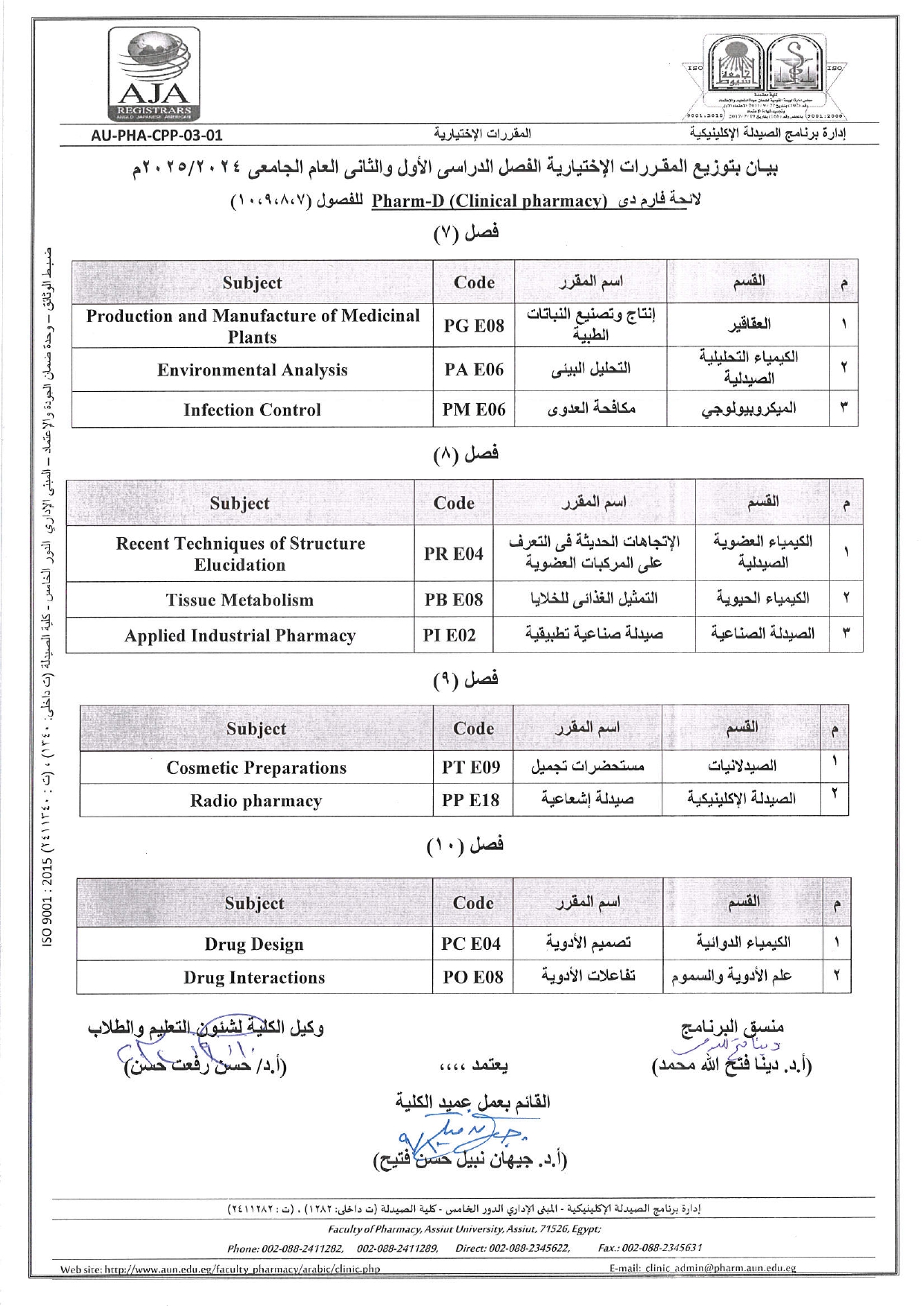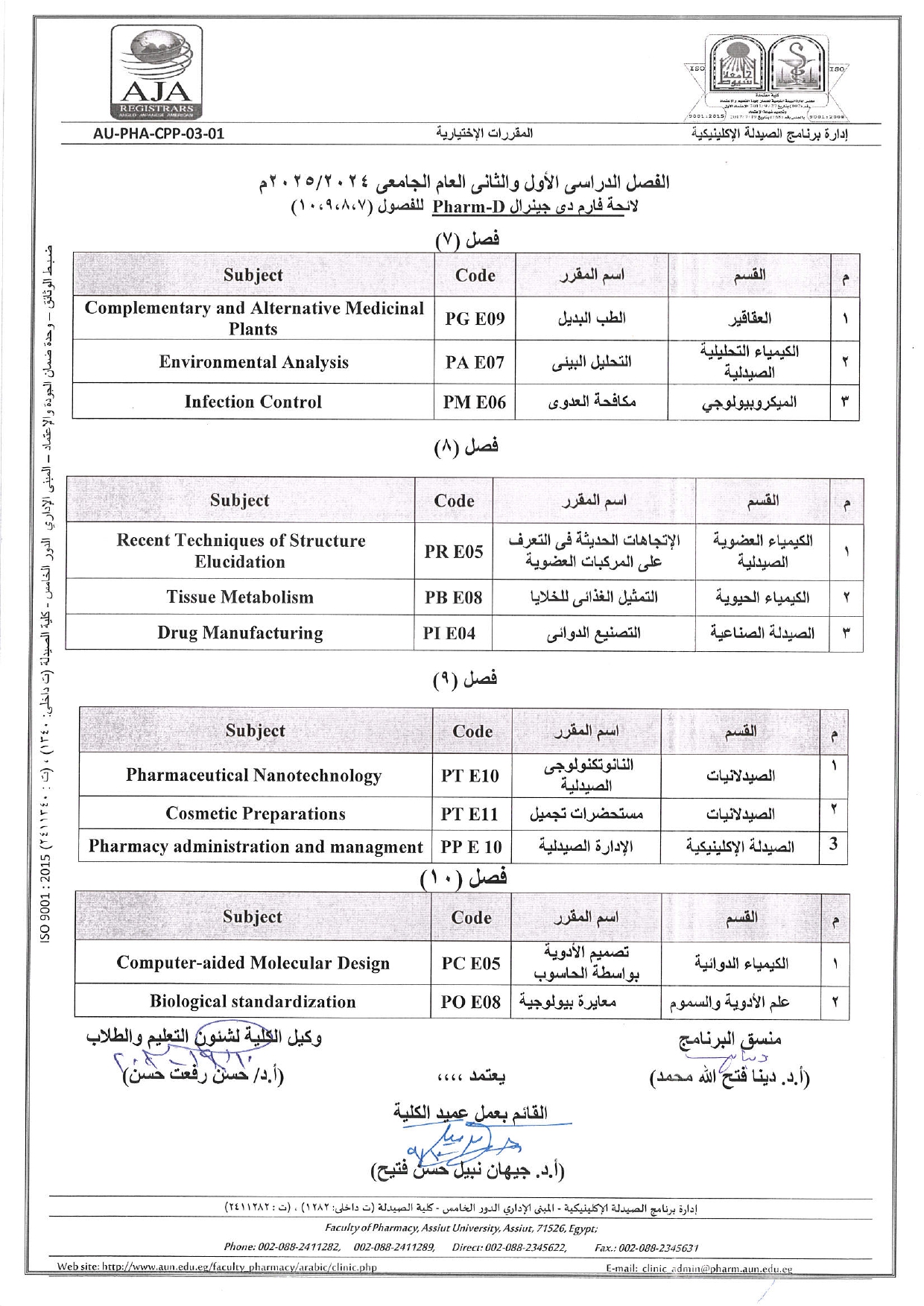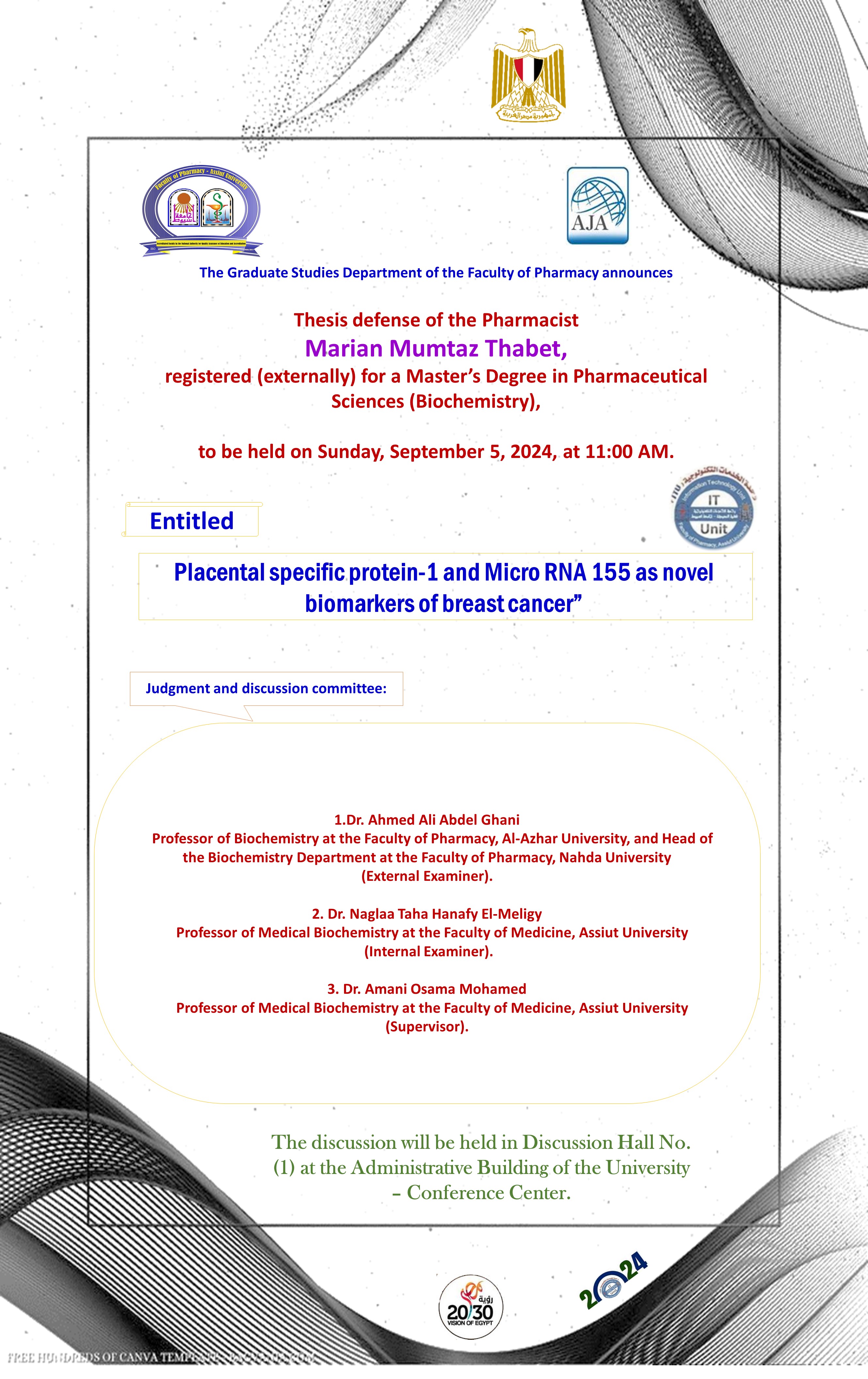



The Faculty of Pharmacy - Assiut University announces the holding of a symposium entitled “Equal Opportunities and Women’s Empowerment.”

Within the framework of cooperation between the university’s faculties and benefiting from the transfer of expertise, the Faculty of Pharmacy - Assiut University announces the holding of a symposium entitled (Equal Opportunities and Women’s Empowerment)

Lecturing by Dr. Abdel Hakim Radwan Saeed - Assistant Professor at the Faculty of Education - Assiut University

Please participate on Wednesday, June 12, 2024, at eleven in the morning.

In the celebration hall - ground floor - Building (B) of the faculty

news category
خبر عام

Pharmaceutical interventions for drug-related problems in the neonatal intensive care unit incidence, types, and acceptability

Research Abstract

Background: Drug-related problems (DRPs) are widespread in hospitalized neonates, but studies on the prevalence of DRPs in this population are limited. The presence of clinical pharmacists on multidisciplinary teams helps prevent and reduce DRPs. Aim: This investigation aimed to identify and classify the incidence of DRPs in the neonatal intensive care unit (NICU), to determine the determining factors associated with DRPs and to document clinical pharmacists' interventions, outcomes, acceptance rates and clinical significance. Method: A prospective descriptive hospital study was conducted from August to November 2023 at the NICU of Children's University Hospital, Assiut University, Egypt. DRPs were classified using the Pharmaceutical Care Network of Europe (PCNE) classification V9.1. Results: Three hundred sixteen neonates were included in the study, with a mean gestational age of 34 ± 4 weeks and a mean birth weight of 2.03 ± 0.85 kg. A total of 1723 DRPs occurred among 283 neonates (89.6%), an average of 5.5 ± 5.1 DRPs per patient. The main types were treatment effectiveness (P1) (799, 46.4%), followed by others (P3) (469, 27.2%), and treatment safety (P2) (455, 26.4%). The leading causes were dose selection (C3) (1264, 61.9%) and "other domain" (C9) (543, 26.6%). Of the 2149 interventions introduced by pharmacists, 98.8% were accepted and 93% were accepted, and fully implemented. As a result, 92% of the DRPs were resolved. Both length of hospital stay and number of medications were significantly associated with DRPs. Conclusion: DRPs are common in the NICU; this study demonstrated the crucial role of clinical pharmacists in identifying and resolving DRPs.

Research Authors
Norhan Attia Ahmed , Ehab Ahmed Fouad, Osama M El-Asheer, A S M Ghanem
Research Date
Research Department
Research Journal
Front Pharmaco
Research Member
Research Publisher
Frontiers
Research Vol
15
Research Website
doi: 10.3389/fphar.2024.1391657. eCollection 2024.
Research Year
2024

Editorial: Advances in metabolism and chemodiversity - focus - plant enzymes

Research Abstract

Plant enzymes are indispensable for plant metabolism and are critical determinants of the extensive chemodiversity observed in plants. These enzymes serve as primary catalysts in biosynthetic pathways, enabling the biosynthesis of a diverse range of secondary metabolites, such as alkaloids, terpenes, and phenolics. These metabolites are essential for the distinctive sensory qualities of plants, e.g., flavors, scents, and colors, and they also possess significant biological activities with promising applications in agriculture, medicine, and industry. Recent scientific investigations have been devoted to unraveling the intricate biochemistry of enzymes in photosynthetic organisms, elucidating their catalytic

Research Authors
Zhi-Yan Du, Yang Qu, Yang Qu, Zhenhua Liu, Zhenhua Liu, Mariam Gaid
Research Date
Research Image
Research Journal
Frontiers in Plant science
Research Member
Research Publisher
Frontiers
Research Rank
4.1
Research Vol
14
Research Website
https://doi.org/10.3389/fpls.2023.1227424
Research Year
2023

Comparative Bioremediation of Tetradecane, Cyclohexanone and Cyclohexane by Filamentous Fungi from Polluted Habitats in Kazakhstan

Research Abstract

Studying the fates of oil components and their interactions with ecological systems is essential for developing comprehensive management strategies and enhancing restoration following oil spill incidents. The potential expansion of Kazakhstan’s role in the global oil market necessitates the existence of land-specific studies that contribute to the field of bioremediation. In this study, a set of experiments was designed to assess the growth and biodegradation capacities of eight fungal strains sourced from Kazakhstan soil when exposed to the hydrocarbon substrates from which they were initially isolated. The strains were identified as Aspergillus sp. SBUG-M1743, Penicillium javanicum SBUG-M1744, SBUG-M1770, Trichoderma harzianum SBUG-M1750 and Fusarium oxysporum SBUG-1746, SBUG-M1748, SBUG-M1768 and SBUG-M1769 using the internal transcribed spacer (ITS) region. Furthermore, microscopic and macroscopic evaluations agreed with the sequence-based identification. Aspergillus sp. SBUG-M1743 and P. javanicum SBUG-M1744 displayed remarkable biodegradation capabilities in the presence of tetradecane with up to a 9-fold biomass increase in the static cultures. T. harzianum SBUG-M1750 exhibited poor growth, which was a consequence of its low efficiency of tetradecane degradation. Monocarboxylic acids were the main degradation products by SBUG-M1743, SBUG-M1744, SBUG-M1750, and SBUG-M1770 indicating the monoterminal degradation pathway through β-oxidation, while the additional detection of dicarboxylic acid in SBUG-M1768 and SBUG-M1769 cultures was indicative of the fungus’ ability to undertake both monoterminal and diterminal degradation pathways. F. oxysporum SBUG-M1746 and SBUG-M1748 in the presence of cyclohexanone showed a doubling of the biomass with the ability to degrade the substrate almost completely in shake cultures. F. oxysporum SBUG-M1746 was also able to degrade cyclohexane completely and excreted all possible metabolites of the degradation pathway. Understanding the degradation potential of these fungal isolates to different hydrocarbon substrates will help in developing effective bioremediation strategies tailored to local conditions.

Research Authors
Mariam Gaid* , Wiebke Jentzsch , Hannah Beermann , Anne Reinhard , Mareike Meister, Ramza Berzhanova, Togzhan Mukasheva, Tim Urich and Annett Mikolasch*
Research Date
Research Journal
Journal of Fungi
Research Member
Research Publisher
MDPI
Research Rank
4.2
Research Vol
10
Research Website
https://doi.org/10.3390/jof10060436
Research Year
2024

Characterization of the Mycoremediation of n-Alkanes and Branched-Chain Alkanes by Filamentous Fungi from Oil-Polluted Soil Samples in Kazakhstan

Research Abstract

For decades, researchers have focused on containing terrestrial oil pollution. The heterogeneity of soils, with immense microbial diversity, inspires them to transform pollutants and find cost-effective bioremediation methods. In this study, the mycoremediation potentials of five filamentous fungi isolated from polluted soils in Kazakhstan were investigated for their degradability of n-alkanes and branched-chain alkanes as sole carbon and energy sources. Dry weight estimation and gas chromatography–mass spectrometry (GC-MS) monitored the growth and the changes in the metabolic profile during degradation, respectively. Penicillium javanicum SBUG-M1741 and SBUG-M1742 oxidized medium-chain alkanes almost completely through mono- and di-terminal degradation. Pristane degradation by P. javanicum SBUG-M1741 was >95%, while its degradation with Purpureocillium lilacinum SBUG-M1751 was >90%. P. lilacinum SBUG-M1751 also exhibited the visible degradation potential of tetradecane and phytane, whereby in the transformation of phytane, both the mono- and di-terminal degradation pathways as well as α- and ß-oxidation steps could be described. Scedosporium boydii SBUG-M1749 used both mono- and di-terminal degradation pathways for n-alkanes, but with poor growth. Degradation of pristane by Fusarium oxysporum SBUG-M1747 followed the di-terminal oxidation mechanism, resulting in one dicarboxylic acid. These findings highlight the role of filamentous fungi in containing oil pollution and suggest possible degradation pathways.

Research Authors
Mariam Gaid, Doreen Pöpke, Anne Reinhard, Ramza Berzhanova, Togzhan Mukasheva, Tim Urich, Annett Mikolasch
Research Date
Research Journal
Microorganisms
Research Member
Research Publisher
MDPI
Research Rank
4.1
Research Vol
11
Research Website
https://doi.org/10.3390/microorganisms11092195
Research Year
2023

Novel Drugs Obtained via Biotransformation—In Memory of the Late Scientists Frieder Schauer and Peter Grunwald

Research Abstract

Isolated enzymes or whole microbial cells are environmentally friendly catalysts which can be used in aqueous solution at room temperature, atmospheric pressure, and moderate pH values and are therefore well suited for the green synthesis of novel drugs. Microbial enzymes transform numerous substances in a reaction-, region-, and stereospecific way and thus in many cases may meet the requirements of modern drug synthesis. Of particular practical value is the fact that they not only catalyze the reactions of their natural substrates but also convert other compounds. Biotechnological processes use whole cells and/or specific enzymes. Biosynthetic processes, which often require a cascade of individual enzyme reactions, are usually carried out with whole cells, whereas biotransformation reactions use either isolated enzymes or whole cells depending on the properties of the enzymes involved. When evaluating a process, the advantages and disadvantages of isolated enzymes and whole cells must be weighed against each other, though where possible, specific enzymes tend to be preferred so as to exclude side reactions catalyzed by cells. This Special Issue will provide an insight into strategies of biosynthesis and biotransformation of novel drugs. The latest proven enzyme-mediated routes, using single-step biotransformation or enzyme cascade synthesis, will be discussed.

Research Authors
Mariam Gaid and Annett Mikolasch
Research Date
Research Journal
Microorganisms
Research Member
Research Publisher
MDPI
Research Rank
4.1
Research Vol
11
Research Website
https://doi.org/10.3390/microorganisms11071734
Research Year
2023

The result of grievances (Pharmacognosy-1 course) for students of the first year of the National University for the practical exam

After examining the grievances submitted by

the students, Pharmacognosy-1 course for the practical exam and after Reviewing the correction of the paper and reviewing the summation shows the following:-

1 - The student, Amira Dawoud, gets one and half marks, so it becomes 31 marks.

2- The student / Aya Jamal Abdel Mohsen gets half mark, so it becomes 25 marks.

3-The student/Romani Hani Morris gets one mark, so it becomes 31 marks.

4-The student/ Rana Abdel-Aleem Mahmoud gets one mark, so it becomes 32 marks.

5- Student Renad Abdullah gets one mark, so it becomes 29 marks.

6- The student / Rawan Rashad gets one mark, so it becomes 33 marks.

7-The student/Ahmed Bahaa Muhammad gets half a mark, so it becomes 39 marks.

8 - The student / Ali Atef Ali gets one mark, so it becomes 34 marks.

9- Student Anasimon Ayman gets half mark, so it becomes 27 marks.


news category
خبر عام

Result of grievances (Pharmacognosy-1 course) for first year Pharm-D students for the practical exam

After examining the grievances submitted by the students (Pharmacognosy-1) for the practical exam, and after reviewing the correction of the paper and reviewing the summation, Show the following:-

1 - The student/ Israa Mustafa gets one mark,  so it becomes  36 marks.

2 - Student /Julia Michael gets half mark, so it becomes 36 marks.

3-The student/ Nada Mohamed Ahmed gets half mark, so it becomes 39 marks.

4-The student/Malak Alaa gets half mark, so it becomes 35 marks.

5 - Student/ Hajar Kamal Kamel has a half mark, so it becomes 34 marks

news category
إعلانات الطلاب
Subscribe to