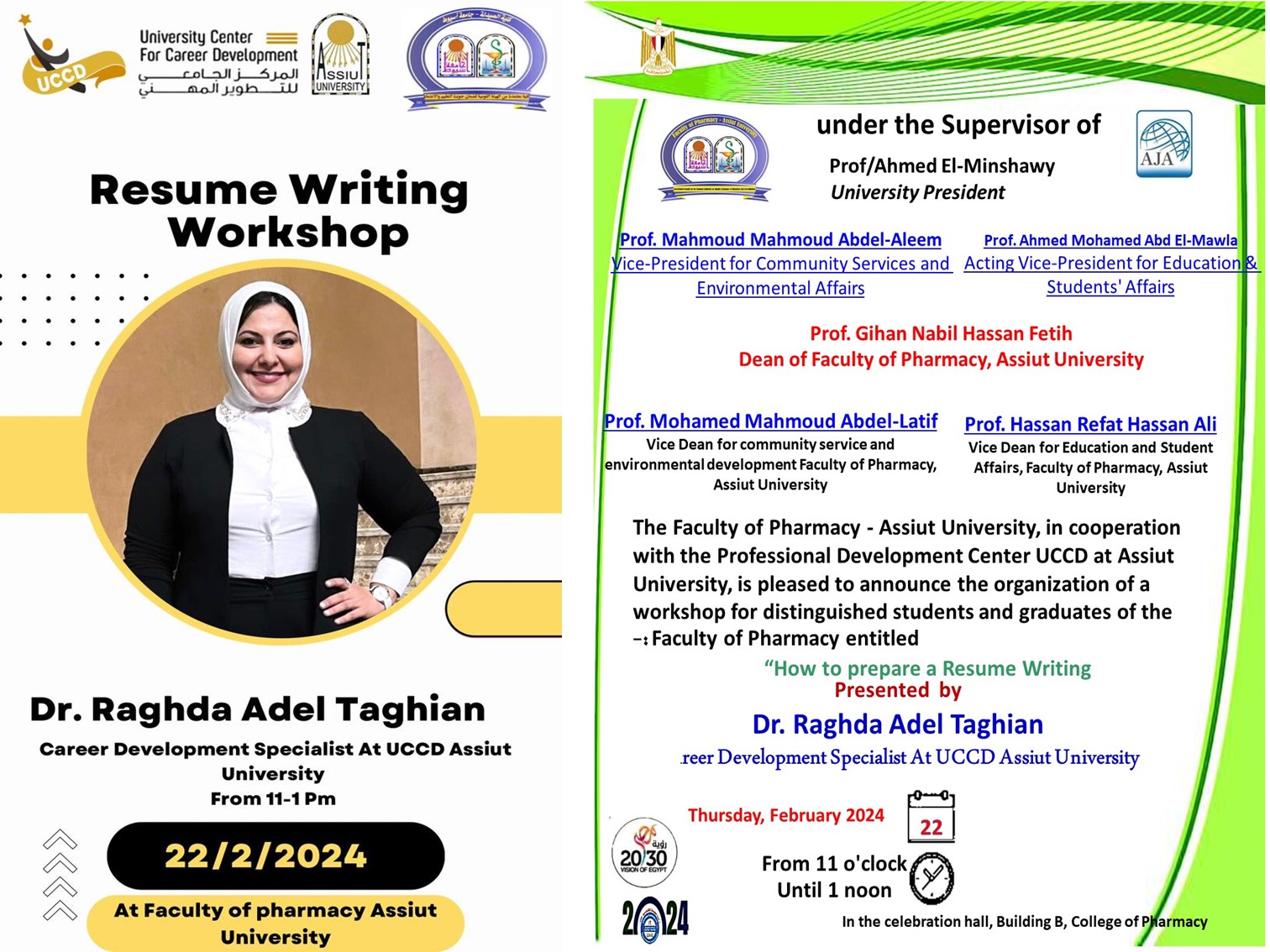
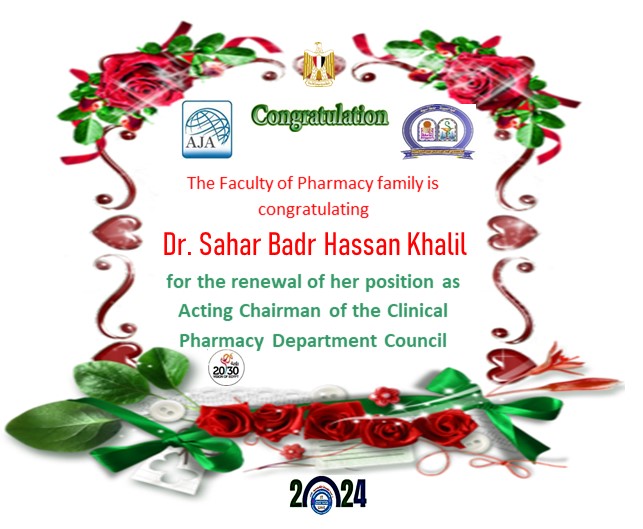
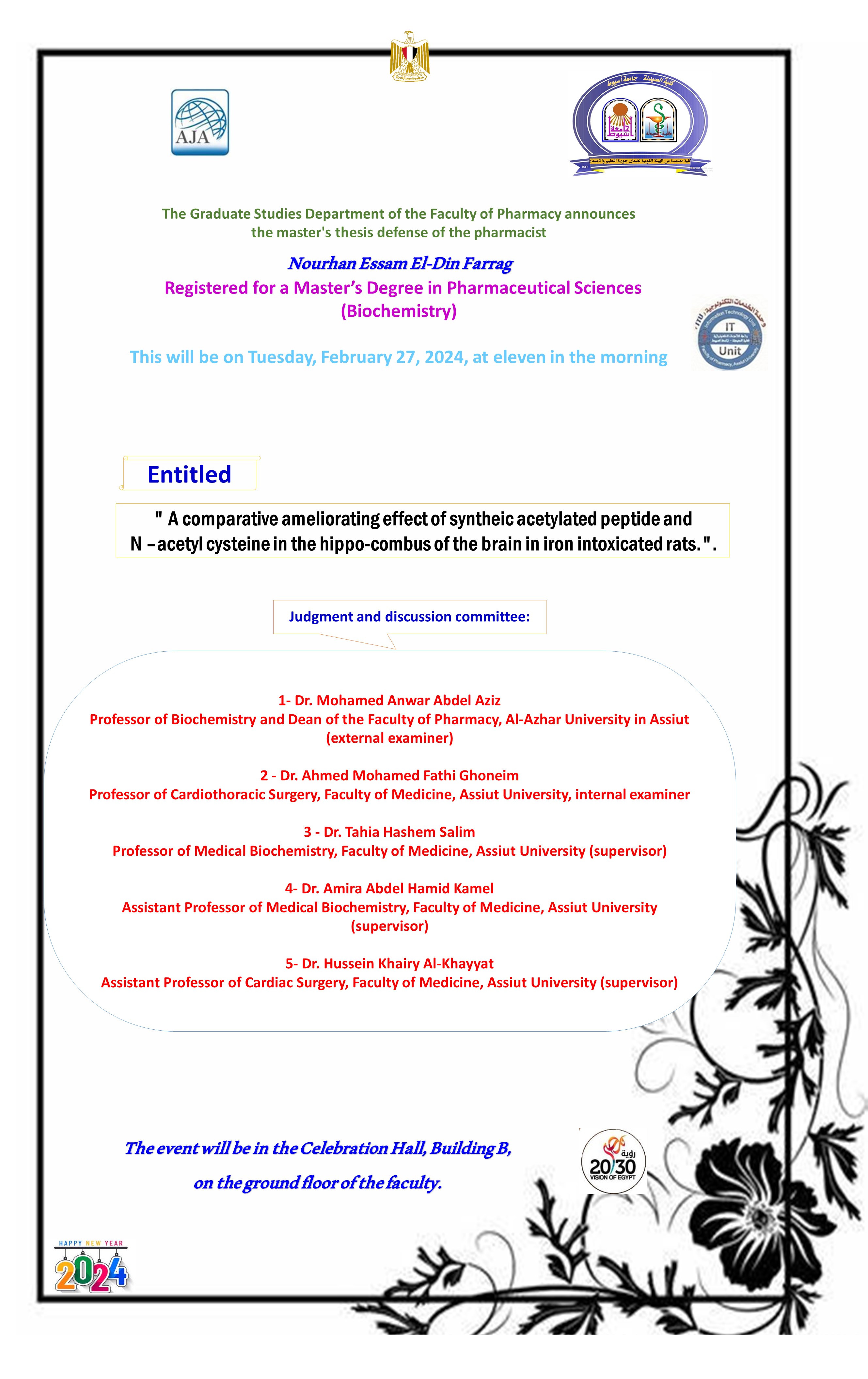
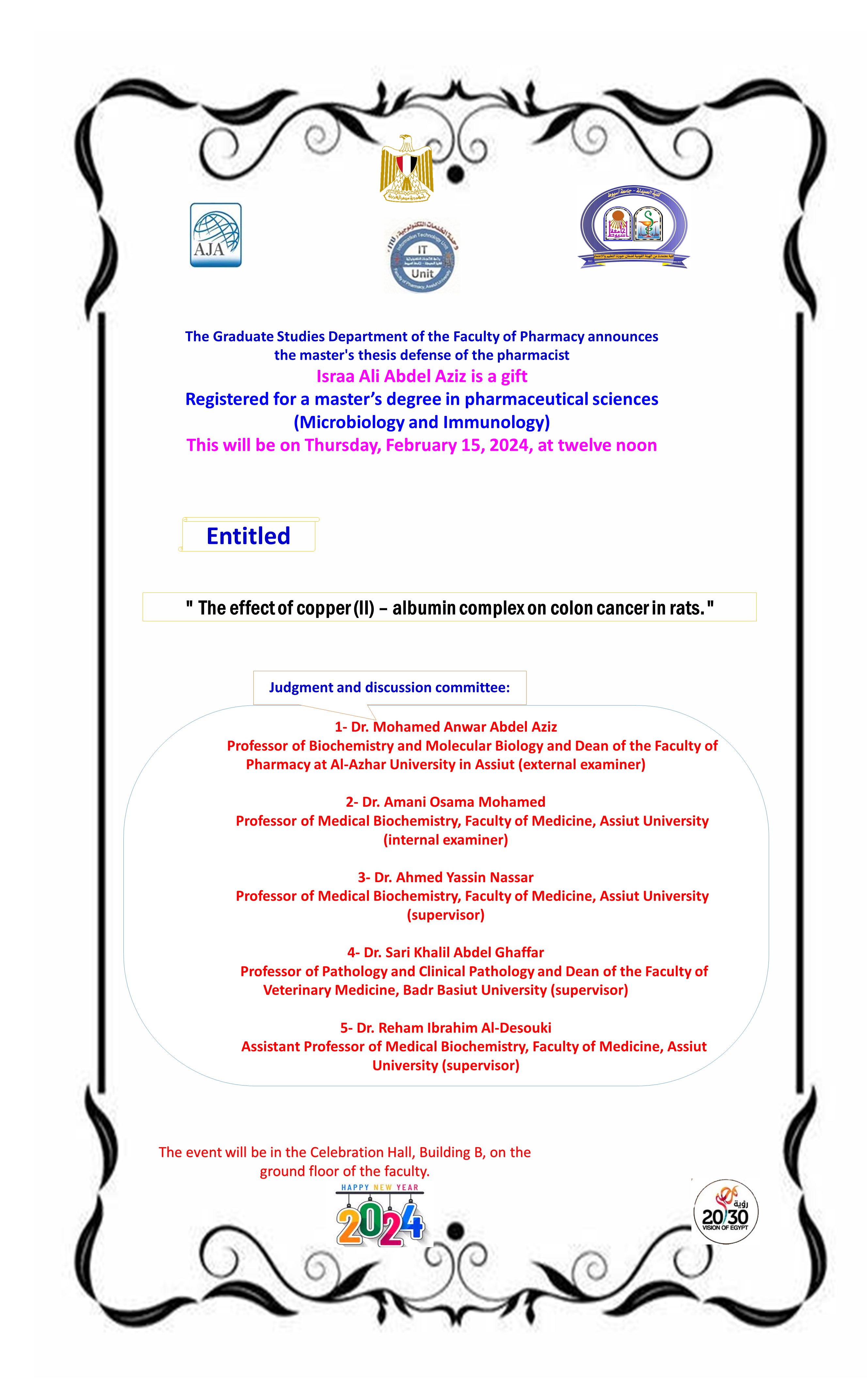
The Faculty of Pharmacy - Assiut University, in cooperation with the Professional Development Center UCCD at Assiut University, is pleased to announce the organization of a workshop for distinguished students and graduates of the Faculty of Pharmacy entit

Piperazine-2-carboxylic acid derivatives as MTDLs anti-Alzheimer agents: Anticholinesterase activity, mechanistic aspect, and molecular modeling studies

Research Abstract

Development of Multitarget-Directed Ligands (MTDLs) is a promising approach to combat the complex etiologies of Alzheimer’s disease (AD). Herein we report the design, synthesis, and characterization of a new series of 1,4- bisbenzylpiperazine-2-carboxylic acid derivatives 3-5(a-g), 7a-f, 8a-s, and their piperazine-2-yl-1,3,4-oxadiazole analogs 6a-g. In vitro inhibitory effect against Electrophorus electricus acetylcholinesterase (AChE) and butyrylcholinesterase (BChE) from Equine serum was evaluated using modified Ellman’s method, considering donepezil and tacrine as reference drugs. Lineweaver–Burk plot analysis of the results proved competitive inhibition of AChE and BChE with Ki values, in low micromolar range. The free carboxylic acid series 4a-g showed enhanced selectivity for AChE. Hence, 4c, 1,4-bis (4-chlorobenzyl)-piperazinyl-2-carboxylic acid), was the most active member of this series (Ki (AChE) = 10.18 ± 1.00 µM) with clear selectivity for AChE (SI ~ 17.90). However, the hydroxamic acids 7a-f and carboxamides 8a-s congeners were more potent and selective inhibitors of BChE (SI ~ 5.38 – 21862.5). Extraordinarily, 1,4-bis (2-chlorobenzyl)-piperazinyl-2-hydroxamic acid 7b showed promising inhibitory activity against BChE enzyme (Ki = 1.6 ± 0.08 nM, SI = 21862.5), that was significantly superior to that elicited by donepezil (Ki = 12.5 ± 2.6 µM) and tacrine (Ki = 17.3 ± 2.3 nM). Cytotoxicity assessment of 4c and 7b, on human neuroblastoma (SH-SY5Y) cell lines, revealed lower toxicity than staurosporine and was nearly comparable to that of donepezil. Molecular docking and molecular dynamics simulation afforded unblemished insights into the structure–activity relationships for AChE and BChE inhibition. The results showed stable binding with fair H-bonding, hydrophobic and/or ionic interactions to the catalytic and peripheral anionic sites of the enzymes. In silico predicted ADME and physicochemical properties of conjugates showed good CNS bioavailability and safety parameters. In this regard, compound (7b) might be considered as a promising inhibitor of BChE with an innovative donepezil-based anti-Alzheimer activity. Further assessments of the most potent AChE and BChE inhibitors as potential MTDLs anti-Alzheimer’s agents are under investigation with our research group and will be published later.

Research Authors
Aya M. Soliman , Hend A.A. Abd El-wahab , Hulya Akincioglu , ˙ Ilhami Gülçin , Farghaly A. Omar

Research Date
Research File
Research Journal
Bioorganic Chemistry
Research Publisher
Elsevier
Research Vol
142
Research Website
https://doi.org/10.1016/j.bioorg.2023.106916
Research Year
2024

Prednisolone loaded-cationic nanoemulsion formulation for uveitis management

Research Abstract

Uveitis is a sight-threatening complication that continues to be a major contributor to blindness. The etiology of
uveitis mostly depends on inflammatory activities. The mainstay of uveitis treatment is the topical use of corticosteroids, although their therapeutic efficiency is constrained by poor corneal penetration and retention.
Traditional eye drops are less potent when inflammation extends further into the eye. Nanoemulsions are efficient drug delivery systems for ocular applications owing to their many benefits, particularly sustaining drug
action and their capability to penetrate the deepest parts of the ocular structure and the aqueous humor. Herein, a novel preparation of prednisolone-laden cationic nanoemulsion was designed to prolong the precorneal drug retention time, thereby improving the bioavailability of prednisolone for uveitis treatment. Pseudoternary-phase illustrations were created via a water titration approach. A cationic surfactant (cetalkonium chloride) was used to test the effectiveness of a cationic nanoemulsion in extending the precorneal retention of prednisolone. The developed nanoemulsion formulae were assessed for their physicochemical characteristics, morphology, in vitro release profile, and ex vivo permeation patterns. In addition, the clinical investigation and the safety of the proposed formulation in a uveitis-induced experimental animal model were assessed. The proposed nanoemulsion
formulations displayed a spherical shape, a nanometer size range, a narrow size distribution, and
negative surface charge. The incorporation of cetalkonium chloride decreased the droplet diameter and shifted
the droplets’ surface charge to positive. The developed cationic nanoemulsions exhibited a sustained in vitro
drug release profile and enhanced flux through rabbits’ corneas compared to the same formulations without
adding cationic surfactant, and free prednisolone suspension (Pred forte® 1 %). Clinical studies showed that
using cationic nanoemulsion formulations significantly reduced the severity of uveitis in rabbits’ eyes throughout treatment period (three weeks) compared to drug suspension (Pred forte® 1 %). Prednisolone cationic nanoemulsion formulations did not cause an elevation in intraocular pressure (IOP) and any appreciable changes in the diameter of the rabbits’ pupils in the investigated animal groups. Also, there were no adverse effects on the cornea, retina/choroid, or iris/ciliary body, demonstrating the safety of the suggested nanoemulsion formulations. Therefore, the developed prednisolone cationic nanoemulsion system may offer a potential vehicle for ophthalmic drug delivery and enhanced management of uveitis.

Research Authors
Mohamed A. Attia, Nermin E. Eleraky, Khaled Abdelazeem, Mohamed A. Safwat
Research Date
Research Department
Research File
Research Journal
Journal of Drug Delivery Science and Technology
Research Publisher
Elsevier
Research Vol
92
Research Website
https://doi.org/10.1016/j.jddst.2024.105406
Research Year
2024

Announcement for students of the Faculty of Pharmacy, National University

It was decided to teach the Information Technology course to the students of the Faculty of Pharmacy, National University, for the second semester of the academic year 2023/2024. Lectures for students will be on Monday from 2 to 3 (Group 1) From 3 to 4 (group 2)

In Hall (9) of the Faculty of Computers and Information

news category
خبر عام

Meeting of the committee for community and environmental development at the Faculty of Pharmacy on Wednesday, February 14, 2024

God willing, a meeting of the committee for community and environmental development will hold on Wednesday, February 14, 2024 at 10:00 AM

In the office of Vice Dean for Community Services and Environmental Development Affairs.

news category
خبر عام
Subscribe to