 Do you have any questions?

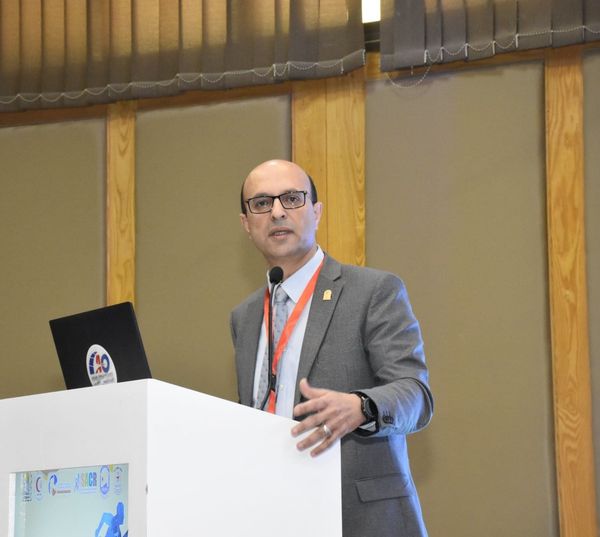
Conference on Oncology and Nuclear Medicine - in cooperation with the Colleges of Nursing and Pharmacy
Background: since its introduction into clinical practice, the use of laryngeal mask airway (lMa) has been dramatically increasing. We aimed to investigate the clinical performance of single use lMa classic, air-Q and i-gel at different
head and neck positions and during the operative procedure in pediatric elective day case surgery.
Methods: one hundred sixty-eight generally anesthetized spontaneously breathing children (2-9 years) were randomized to receive either lMa classic (n.=56), i-gel (n.=58) or air-Q (n.=54). the oropharyngeal leak pressure (olP),
exhaled tidal volume (TV), peak inspiratory pressure (PIP), ventilation score and fiberoptic glottis view score were assessed at neutral position then at maximum flexion, extension and left rotation. Afterwards, the ventilation and fiberoptic
view scores were assessed in neutral position at fixed time-points until end of surgery.
Results: Compared to neutral position, maximum neck flexion increased OLP (P=0.000) and compromised the ventilation leading to increased PIP, decreased TV, worsening of ventilation score and fiberoptic glottis view. OLP mildly
decreased with extension and left lateral rotation with mild effect on ventilation parameters (P<0.05). at all neck positions, the olP was higher (P=0.000) and ventilation parameters were better with i-gel (P=0.000). gradual worsening of
ventilation score and fiberoptic view grade was recorded intraoperatively with the three devices, with the least deterioration observed in i-gel group (P=0.000).
Conclusions: Having the highest increase in OLP at neck flexion, the I-gel LMA exhibited the best ventilation parameters and fiberoptic view grade at different head and neck positions and throughout the intraoperative period.
Rasagiline is a selective monoamine oxidase (MAO) B inhibitor which has been approved for treatment of Parkinson's disease (PD). This study was performed to evaluate rotenone neurotoxicity and the possible neuroprotective effect of rasagiline in mice. Thirty six male mice were used and divided into 3 equal groups. The first group, the control group, received only sunflower oil intraperitoneally (i.p.) once daily at a volume of 4 ml/kg for 49 days. The second group was given rotenone (2 mg/kg/day; i.p.) for 49 days. The third group was given rasagiline (1 mg/kg, i.p.) which was administered 30 min prior to rotenone (2 mg/kg/day; i.p.) for 49 days. Behavioral tests were performed a day prior to drug administration and then once weekly along the duration of drugs or vehicle administration. At the end of the 49 days all animals were sacrificed and their midbrain were subjected to immunohistochemical analysis for dopaminergic neurons staining for anti-TH antibodies. Midbrain tissues were also isolated for biochemical measurements. Rasagiline administration significantly improved the mice activity. Pretreatment with rasagiline significantly attenuated rotenone-induced midbrain DA loss. Moreover, rasagiline treatment also significantly prevented the loss of tyrosine hydroxylase immunoreactive neurons (TH-IR) within the substantia nigra pars compacta (SNpc). Furthermore, rasagiline inhibited the remarkable decrease in total antioxidant capacity as well as the increase in the Malondialdehyde level and nitric oxide generation induced by chronic rotenone administration. These results showed possible beneficial effect of rasagiline against the SNpc dopaminergic neurotoxicity induced by the chronic intraperitoneal administration of rotenone. This neuroprotective effect mediated even in part by the antioxidant properties of rasagiline.
References:
Background: Extract of leaves from the Stevia rebaudiana Bertoni have been used in the traditional treatment of diabetes in Paraguay and Brazil. Stevia is a natural, non-caloric sweetener that is rich in pharmacologically important glycosides. These glycosides have many potential benefits in the mangment of the complications of diabetes. The treatment of type 2 diabetes mellitus (T2DM) is currently unsatisfactory. Therefore, we investigated the possible effects of stevia on treatment of T2DM when concurrently given with common antidiabetic agents in a trial to provide a safe and effective therapeutic antidiabetic combination.
Methods: Type 2 diabetes mellitus was induced in albino rats by IP administration of 230 mg/kg of nicotinamide (NA) followed by 65 mg/kg of streptozotocin (STZ). Albino rats were divided into five groups including normoglycemic, diabetic and three diabetic groups in which, the first was treated with aqueous extract of stevia (300 mg/kg), the second was treated with metformin (250 mg/kg), and the third was treated with a combination of metformin and stevia extract with the same doses for the period of 21 days. The rats were dissected; blood samples, liver and kidney were further used for detecting biochemical and histopathological changes. BG, insulin, adiponectin, TG, cholestrol, HDL, ALT, AST, urea, creatinine, total protein and TNFα levels were measured in sera. MDA concentration was detected in the liver and kidney.
Results: The aqueous extract of stevia significantly reduced the BG, triglycerides, cholesterol, ALT, AST, urea and creatinine levels in treated rats compared with diabetic rats (p<0.05). In addition to this, stevia surprisingly, increased insulin and adiponectin levels and decrease TNFα Level in treated rats (p<0.05). stevia extract also reduced the MDA concentration in the hepatic and renal tissue. Furthermore, stevia compensated for the histopathological damage in diabetic rats. All of these changes were more significant when the stevia extract was combined with metformin.
Conclusion: It is concluded that the stevia alone and/or in combination with other antidiabetic agents can be a new putitive drug used for the treatment of type 2 diabetes mellitus. Moreover, the combination of stevia and metformin has synergistic positive effects on type 2 diabetes mellitus.
Aim of work:
1-Evaluation of amikacin serum level in pediatric cancer patients with fever, neutropenia and impact of this level on the efficacy and toxicity of Amikacin.
2-Comparison between once versus twice daily regimens of amikacin will be done to know which regimen is most effective and less toxic.
Patients and methodology:
Inclusion Criteria:
1-Pediatric patients aged from 1-12 years.
2-patients with hematological malignancies admitted to South Egypt Cancer Institute,
Exclusion Criteria:
1-patients below one year.
2-patients have renal or hearing dysfunction.
3-patients receive drugs which affect renal function.
Written informed consent was obtained from parents of the children. Patients with hematological malignancies admitted to South Egypt Cancer Institute,
50 pediatric patients were randomly assigned to receive 15 mg/kg amikacin (amikacin salphate vail) intravenously either once a day or divided in two equal doses every 12 h by 30 minute infusion, with maximum dose of 1 gm per day .
Amikacin serum concentrations will analyzed at Pharmacokinetic Laboratory , South Egypt Cancer Institute. Amikacin will be measured by means of homogeneous enzyme immunoassay using Viva Emit® assay (Siemens Healthcare Diagnostics,
Renal function and hearing function will be assessed by measuring serum creatinine (Nephrotoxicity was defined as the increase of 0.5 mg/dl [50 lmol/L] from baseline value.) and audiogram respectively before and after the treatment. Comparison between once versus twice daily regimens of amikacin will be done to know which regimen is most effective and less toxic.
Alzheimer’s disease is among the challenging diseases to social and healthcare systems because no treatment has been achieved yet. Although the ambiguous pathological mechanism underlying this disorder, ion channel dysfunction is one of the recently accepted possible mechanism. Hyperpolarization-activated cyclic nucleotide-gated (HCN) channels play important roles in cellular excitability and synaptic transmission. Ivabradine (Iva), an HCN blocker, is acting on HCN channels, and is clinically used for angina and arrhythmia. The current study aimed to investigate the therapeutic effects of iva against scopolamine (sco) induced dementia. To test our hypothesis, Sco and Iva injected rats were tested for behavioural changes, followed by ELISA and histopathological analysis of the hippocampus. Induced dementia was confirmed by behavioural tests, inflammatory cytokines and oxidative stress tests and histopathological signs of neurodegeneration, multifocal deposition of congo red stained amyloid beta plaques and the decreased optical density of HCN1 immunoreactivity. Iva ameliorated the scopolamine-induced dysfunction, the hippocampus restored its normal healthy neurons, the amyloid plaques disappeared and the optical density of HCN1 immunoreactivity increased in hippocampal cells. The results suggested that blockage of HCN1 channels might underly the Iva therapeutic effect. Therefore, Iva might have beneficial effects on neurological disorders linked to HCN channelopathies.
Alzheimer’s disease (AD) is a devastating neurodegenerative disease that shows multimodal symptoms such as progressive cognitive impairment along with changes in mood and behavior. The disease comprises various stages of severity, including pre-clinical AD, mild cognitive impairment (MCI), and AD dementia.
The present study is designed to explore the beneficial use of polyphenols from natural plants for management of AD, in comparison to conventional standard therapy. In addition, the potentiating effect of the herbal combination of ginkgo biloba and curcumin against scopolamine-induced AD-like alterations will be assessed. This will be accomplished by proposing six specific aims:
1- Demonstration of the effect of curcumin, GBE and their combination on cognitive performance (learning and memory) and on locomotor activity of scopolamine-demented rats (behavioral tests).
2- Evaluation of the effect of these compounds on oxidative stress in the hippocampus of these animals.
3- Investigation of the effect of these products on inflammatory biomarkers (cytokines) in the hippocampus of these animals.
4- Assessment of the accumulation of amyloid β-containing plaques in the hippocampus of animals treated with these compounds compared to non-treated animals.
5- Determination of the effect of these compounds on cholinesterase activity in the hippocampus of scopolamine-treated rats.
6- Examination of the histopathological changes in the hippocampus of treated animals compared to non-treated rats.
The CB1 cannabinoid receptor in brain mediates the behavioral effects of sedation, antinociception, short-term memory loss and muddled thinking. In animal studies, tobacco smoke as well as nicotine induce the activity of several enzymes, including CYP2E1, CYP2A1/2A2 and CYP2B1/2B2, in the brain, but whether this effect is clinically significant is unknown. This study examined the effects of prior exposure to tobacco smoke as well as nicotine on the behavioral effects of cannabinoid and aminoalkylindole agonists (delta-9-tetrahydrocannabinol, CP55244 and WIN55212-2) in male mice and rats. METHODS: Mice (male A/J strain, 5 weeks old ;N=70) and male Sprague-Dawley rats, 5 weeks old (N = 70) were exposed to tobacoo smoke in metabolic cages for 45 days. In addition, separate groups of animals (N=30) were injected daily with nicotine (the psychoactive component in tobacco, 1 mg/kg, i.p.) or vehicle for 45 days On test day, animals were injected with delta-9- tetrahydrocannabinol, CP55244 and WIN55212-2 (0.5, 2.0, or 5.0 mg/kg, i.p.) or vehicle The animals were evaluated regarding their performance in: 1. Open field method to test spontaneous locomotor activity. 2. Morris water maze test . 3. Radial-arm maze test. 4. Rota-rod test 5. Hot-plate and tail-Flick tests 6. Social interaction test. RESULTS: Chronic exposure to tobacco smoke and nicotine pretreatment
attenuated some of the behavioral effects induced by delta-9-tetrahydrocannabinol, CP55244 and WIN55212-2, which can be summarized as follows: (a) prior exposure to tobacoo smoke and nicotine attenuated the effect of the tested drugs on locomotor acvtivity, sedation but with no significant effect on social interaction. (b) prior exposure to tobacoo smoke and nicotine attenuated the effect of the tested drugs on pain and short-term memory. (c) Tobacoo smoke was somewhat more effective than nicotine in these tests, may be due to the presence of other active constituents in tobacoo smoke.
CONCLUSIONS: The ability of chronic tobacoo smoke and nicotine prior exposure to produce long-lasting changes that alter the effects of acute drug administration suggests that chronic tobacoo smoke and nicotine may induce neuroplastic changes that influence the subsequent response to cannabinoid drug exposure.
Background: Succinylcholine has a fast onset, short duration of action, and is considered the choice for rapid sequence intubation. However, it produces muscle stiffness and postoperative myalgia (POM) as adverse effects. We hypothesized that the antioxidant selenium might affect POM incidence and severity. Objectives: The study aimed to investigate the antioxidant effect of selenium (against free radicals’ release) in minimizing the frequency of succinylcholine-related POM, measured by the 4-point myalgia score. The severity of fasciculations and the postoperative analgesic profile were recorded. The correlation between fasciculations and POM was also observed. Study Design: A prospective randomized controlled double-blind clinical study. Setting: Assiut University Hospitals. Methods: The current study included 80 adult patients scheduled for sinuscopies and randomly assigned into 2 equal groups. Two hours before the induction of general anesthesia, patients in the control group received oral placebo tablets, while patients in the selenium group received oral selenium 200 µg. The primary outcome of this trial was the POM score at 24 hours. Secondary outcomes included the intensity of fasciculations, Numeric Rating Scale (NRS), rescue analgesic consumption, and adverse effects of the studied drugs. Results: Myalgia scores were significantly decreased after selenium administration throughout the follow-up period (P = 0.023). No significant difference was reported regarding the incidence or degree of fasciculations (P = 0.511). A mild correlation was noticed between fasciculations and POM with r = 0.176 and P < 0.061. The NRS values were significant between groups at 6 hours after the procedure. There were significant differences (P < 0.05) regarding postoperative supplement analgesia, time to the first rescue analgesia, and the mean total number of analgesic claims. Significant differences were recorded for potassium levels only 30 minutes and creatine kinase levels at 6 and 24 hours postoperatively. Limitations: This study was applied on a single surgical category and other types of surgical procedures may have an effect on outcomes. Additional larger sample size studies and various doses of selenium may help to validate our results. Selenium is quite a significant element of the enzymatic antioxidant process through glutathione peroxidase. We did not measure the glutathione peroxidase level in blood. Conclusions: Oral selenium effectively reduced the succinylcholine-induced postoperative myalgia. It prolonged the time to first required analgesia and decreased the analgesic consumption throughout the whole study period without affecting the hemodynamics or any serious adverse effects.