
Cutaneous, Non-genital Warts: Updates on Clinico-epidemiological Features of an Endemic Disease

Research Abstract

Abstract: Background: Warts are one of the most common diseases encountered in dermatologic practice worldwide. It is caused by a DNA virus called Human Papillomavirus. Different clinical types of warts have been described, each with a characteristic clinical picture. Data on warts from developing countries are limited.

Objective:

The present study aimed to provide information about the epidemiological and clinical profile of non-genital, cutaneous warts through a tertiary care hospital.

Patients and Methods:

A cross-sectional study was conducted. A sample of 301 patients who complained of cutaneous, non-genital warts was included between October 2021 and February 2022. The history and examination of each participant documented the major demographic and clinical data.

Results:

Our results demonstrated that 65.1% of patients were males, 77.6% had a rural residence, and 37.5% were aged 15-24. The students/children category constituted 35.2% of participants, plantar warts were detected in 45.8%, and the foot was the site of warts in 53.8% of patients. A positive correlation was found to be significant between the duration of warts and the age of patients as well as their total number.

Conclusion:We concluded that males and younger age groups were more commonly affected by warts. Plantar wart was the most common clinical type, and the foot was the most affected anatomical site by warts. An increase in the total number of warts in a patient can probably cause a prolongation in their total disease duration. Disease durations were also found to increase with the increasing patient age.
Research Authors
MD1 Marwa M. Mekkawy, MD1*, Shimaa A. Elghazally, MD2, Ayman M. Mahran
Research Department
Research Journal
Journal of Current Medical Research and Practice
Research Website
https://journals.ekb.eg/article_415577.html
Research Year
2025

Topical silymarin cream as a novel therapy versus salicylic acid peels in acne vulgaris: a split-face clinical trial

Research Abstract

Background

Acne vulgaris is a common dermatological condition that greatly impacts patients’ self-confidence. Ongoing research is conducted to explore new treatment modalities. Silymarin owns special characteristics that qualify it as a possible treatment for acne vulgaris.

Objective

We evaluated the efficacy and safety of silymarin cream as a new therapeutic option against salicylic acid peels in the treatment of mild to moderate acne vulgaris.

Methods

A split-face, comparative, Quasi-experimental clinical trial included 30 patients with acne vulgaris. Salicylic acid 30% peels were applied as an office procedure to one half of the face every 2 weeks for 3 months. Topical silymarin 1.4% cream was prescribed as a home treatment, twice daily, to the other half of the face for 3 months. The results were evaluated using the Global Acne Grading System (GAGS), photographic evaluation, and patient self-assessment scale …

Research Authors
Dalia Abdel-Aziz Atallah, Aya Yousef Badran, Alaa Gamal Makhlouf, Marwa Mohammad Mekkawy
Research Date
Research Department
Research Journal
Journal of Cutaneous Medicine and Surgery
Research Website
https://journals.sagepub.com/doi/full/10.1177/12034754231211568
Research Year
2024

Minimally Invasive Mitral Valve Surgery versus Median Sternotomy: The Assiut Heart Hospital Experience

Research Authors
A Farouk, N Hafez, GAY Nassar, AM Mandour, M Osman, MF Abdelhafez
Research Date
Research Journal
The Egyptian Journal of Hospital Medicine 91 (1), 5310-5313
Research Member
Research Year
2023

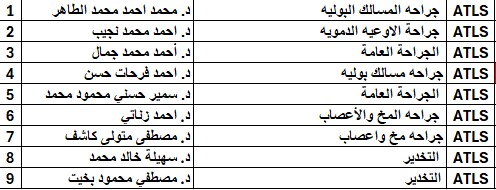
Attention doctors interested in the ATLS course - Cardiopulmonary Resuscitation Center

Attention doctors interested in the ATLS course - Cardiopulmonary Resuscitation Center

السادة الأطباء الراغبين فى الحصور على دورة ATLS الرجاء تسجيل البيانات لدى مركز الإنعاش القلبي الرئوي لتحديد موعد الدورة عند اكتمال العدد المطلوب ، علما بأن السادة الأطباء المذكورين هم فقط من قاموا بالتسجيل

1


Molecular characterization of histidine and tyrosine decarboxylating Enterococcus species isolated from some milk products

Research Abstract

Background

Fermented foods can cause adverse effects on human health because of the biogenic amines (BAs) accumulating through amino acid decarboxylation. This study investigated the presence of BAs including tyramine and histamine in 240 samples of some cheese and fermented milk samples using high-performance liquid chromatography. Another aim of this study is to isolate and identify Enterococcus spp. as the most important and frequent BA producer in the examined samples. The isolated Enterococcus spp. was investigated phenotypically for their capacity to produce amino acid decarboxylase enzyme using decarboxylase microplate assay, and genotypically through molecular detection of some genes encoding amino acid decarboxylation (tyrdc and hdc). Biogenic amines producing enterococci were then investigated for their antimicrobial resistance, biofilm production as well as their virulence determinants.

Results

Tyramine and histamine could be detected in 86.7 and 87.9% of the investigated samples with 52.9% being contaminated with Enterococcus spp. Significant correlation between the incidence of Enterococci enterococci and BAs formed in the examined samples (P < 0.0001). tyrdc and hdc genes were detected in 85 and 5% of amino acid decarboxylating Enterococcus spp., respectively. A high percentage of Enterococcus isolates (57.5%) were multidrug-resistant and resistance against penicillin was widespread among isolates followed by tetracycline, vancomycin, erythromycin and linezolid. Also, 77.5% of the isolates were capable of forming biofilms and a highly significant correlation (P < 0.0001) was found between biofilm formation and multidrug resistance. The results showed that the rates of most virulence genes gelEespaceasa1, and cylA were 77.5. 47.5, 47.5, 35 and 7.5%, respectively, while the hyl gene was not detected in any isolates.

Conclusion

The study highlights the significant presence of BAs (TYM and HIS) in cheese and fermented milk samples, with a strong correlation between enterococci contamination and TYM production. The high prevalence of tyramine-producing Enterococcus species poses a notable public health concern especially with the high prevalence of multidrug-resistant, biofilm production and virulence in BAs producing Enterococcus spp. in dairy products, emphasizing the urgent need for improved antimicrobial stewardship among food producers and veterinarians to mitigate the risk of transferring resistant strains to humans.

Research Authors
Obeid Shanab, Faten Fareed, Ahmed Y. Nassar, Hanan H. Abd-Elhafeez, Ahmed Shaban Ahmed & Mona A. El-Zamkan
Research Date
Research Department
Research Journal
BMC Microbiology
Research Member
Research Publisher
BMC Microbiology
Research Vol
234 (2025)
Research Website
https://bmcmicrobiol.biomedcentral.com/articles/10.1186/s12866-025-03940-6
Research Year
2025

Effect of Structured Education Booklet on Self-efficacy, Self-care practices and Health-Related Quality of Life in Adults with Sickle Cell Disease

Research Abstract

Background: Sickle Cell Disease (SCD) is a chronic disorder that has an impact on a patient’s quality of life. A structured education booklet has the potential to affect self-efficacy, self-care practices and subsequently better quality of life. Aim: To investigate the effect of structured education booklet on self-efficacy, self-care practices and health related quality of life in adult patients with sickle cell disease.Design: Pre experimental one group (pretest-posttest) design. Top of FormBottom of FormSetting: Inpatient and outpatient clinic, Clinical Hematology Unit, Department of Internal Medicine Assiut University Hospital. Study subjects: Purposive sample of forty adult patients with sickle cell disease of both sexes were included in the study and followed up for 3 months. Data collection tools: (I) structured interviewing questionnaire, (II)Sickle Cell Self-Efficacy Scale, (III) Self-care practices assessment sheet (a-Jeanerette Self-care Assessment Tool, b-The 24-item Appraisal of Self-care Agency Scale) and (IV)Adult Sickle Cell Quality of Life Measurement Information System. Results: The mean score of self-efficacy (14.25±2.78Vs.30.22±3.37), self-care practices measured as self-care actions (20.2±1.4Vs. 27.55±1.65), perceived self-care ability (65.9±4.1 Vs. 97.25±11.3), and health-related quality of life improved significantly when compared to the pre-structured education (p < 0.001**). Conclusion: Structured education booklet improved patient’s self-efficacy, self-care practices, hence improving QOL in SCD patients. Recommendation: The study findings underscore the significance of implementing structured education booklet as an integral component of management of individuals with sickle cell disease as a means of enhancing self-efficacy, care practices and health-related quality of life.

Research Date
Research Department
Research Journal
ASNJ
Research Pages
293-305
Research Publisher
Assiut University, Faculty of Nursing
Research Vol
Volume 12, Issue 46
Research Website
DOI: 10.21608/ASNJ.2024.315472.1893
Research Year
2024

Corrigendum: Higher proportion of non-classical and intermediate monocytes in newly diagnosed multiple myeloma patients in Egypt: A possible prognostic marker

Research Abstract

In the published article, Zahran AM, Nafady-Hego H, Moeen SM, Eltyb HA, Wahman MM, Nafady A. Higher proportion of non-classical and intermediate monocytes in newly diagnosed multiple myeloma patients in Egypt: A possible prognostic marker. Afr J Lab Med. 2021; 10 (1), a1296. https://doi. org/10.4102/ajlm. v10i1. 1296, there was an error on page 3 under the'Results' section. The mean age of the MM patients should be 63.5 as per Table 1 instead of 6.35. The first paragraph under the'Results' section is updated to:

Research Authors
Asmaa M Zahran, Hanaa Nafady-Hego, Sawsan M Moeen, Hanan A Eltyb, Mohammed M Wahman, Asmaa Nafady
Research Date
Research Department
Research Journal
African Journal of Laboratory Medicine
Research Pages
1-1
Research Publisher
AOSIS Publishing
Research Vol
Volume 11, Issue 1
Research Website
https://scholar.google.com/scholar?oi=bibs&cluster=17344901474684546979&btnI=1&hl=en
Research Year
2022
Subscribe to

