



Important Announcement for College Students: The registration link is now available to access student welfare services and activities, including university dormitory housing.
Important Announcement for College Students: Registration link now available to access Student Welfare services and activities – Faculty of Computers and Information Student Union.

Important Announcement for College Students: Registration is now open to access Student Welfare services and activities—specifically student financial aid.

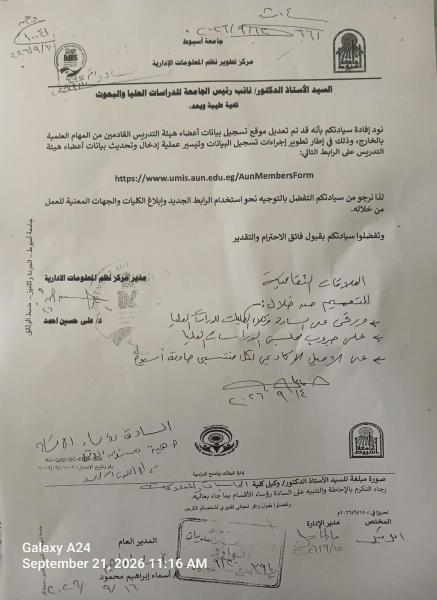
Updating the data of faculty members returning from academic assignments abroad.
Announcement of participation in the story-writing talent program

Announcement regarding participation in acting

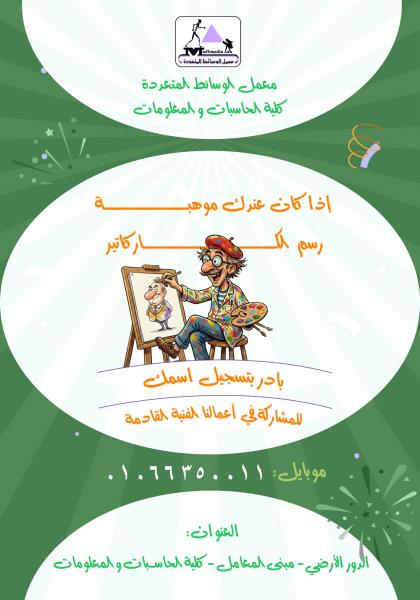
Announcement of participation in the caricature drawing talent showcase.
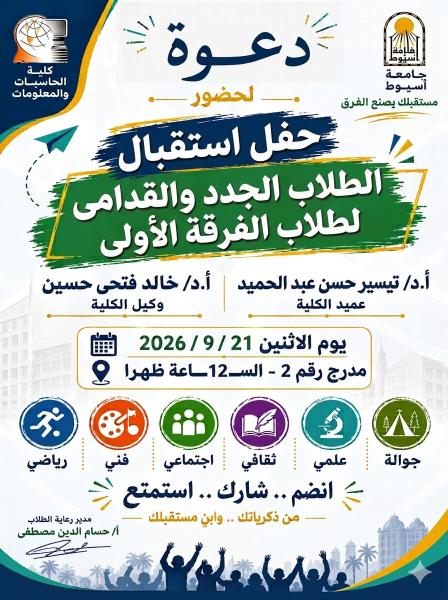
Announcement of the reception for new and returning students.
Important Announcement for Our New Students

Under the patronage of Prof. Dr. Tayseer Hassan Abdel-Hamid (Dean of the Faculty)
and Prof. Dr. Khaled Fathy Hussein (Vice Dean for Education and Student Affairs),
The Faculty of Computers and Information announces the opening of applications for its specialized credit-hour programs for the 2026–2027 academic year.