

Midterm Exams Schedule for Fourth Year Students (Old System) 2022-2023
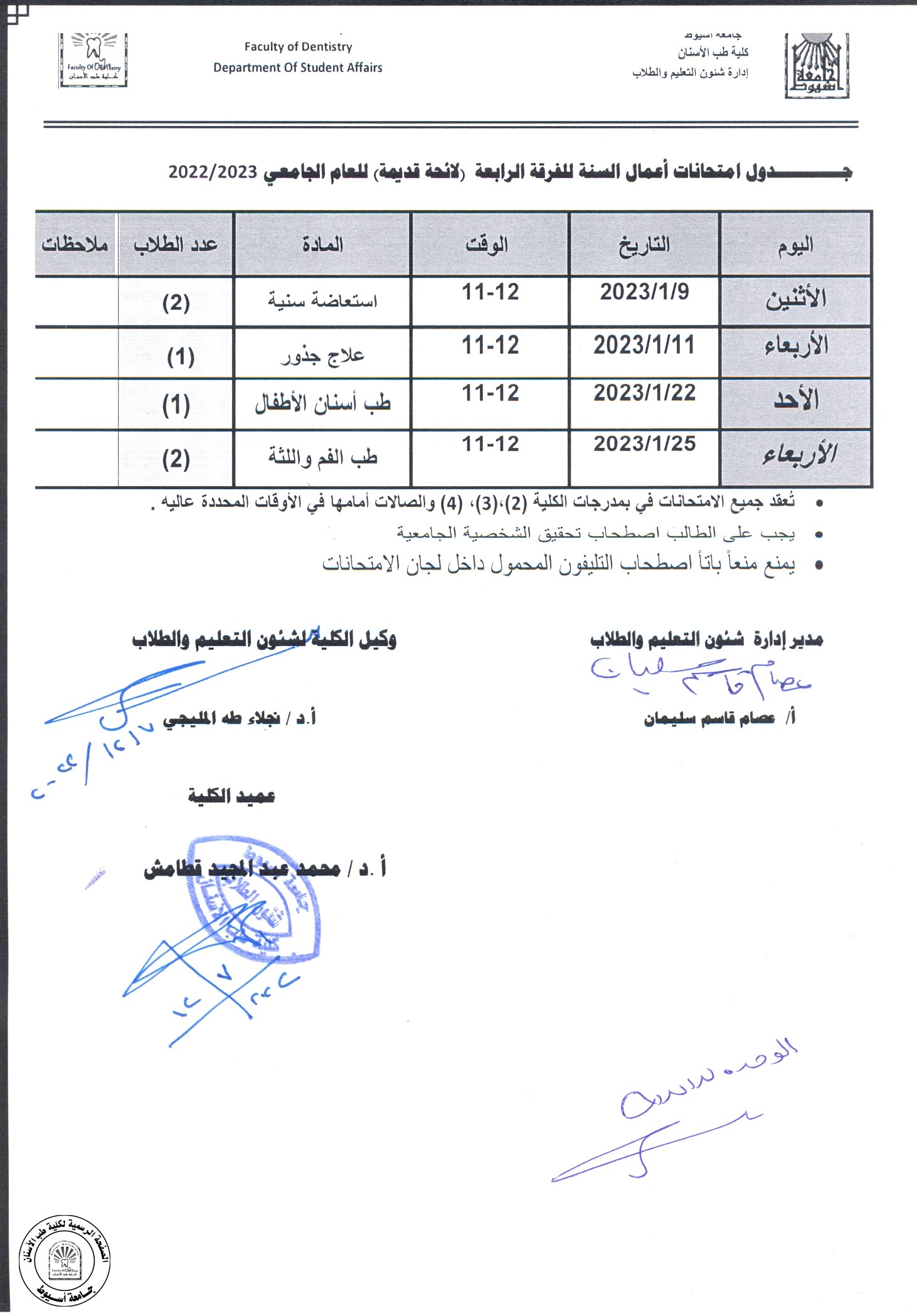
Midterm exams schedule for fourth year students (old system) 2022-2023. Kindly read the provided announcement.
Midterm exams schedule for fourth year students (old system) 2022-2023. Kindly read the provided announcement.
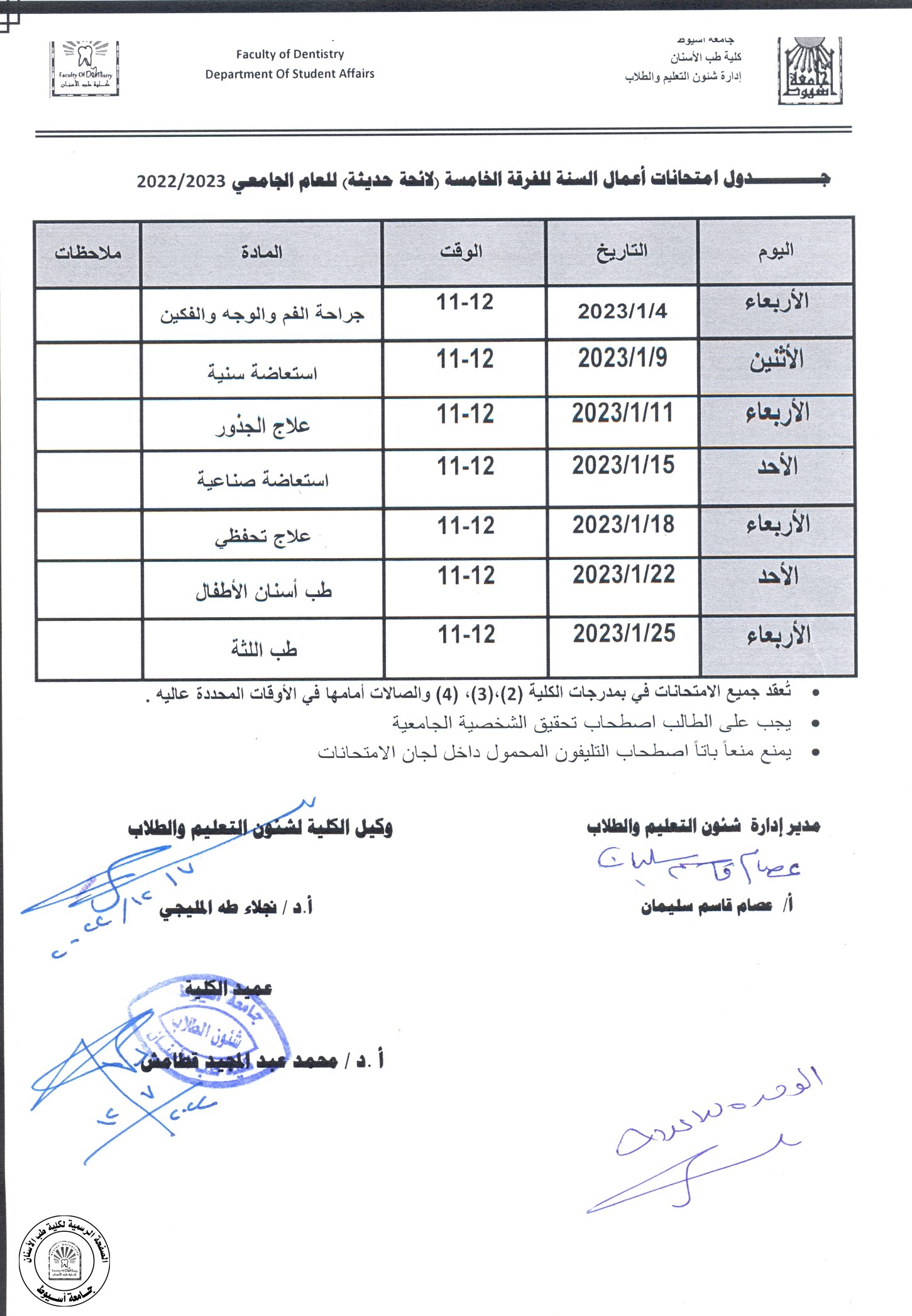
Midterm exams schedule for fifth year students (new system) 2022-2023. Kindly read the provided announcement.
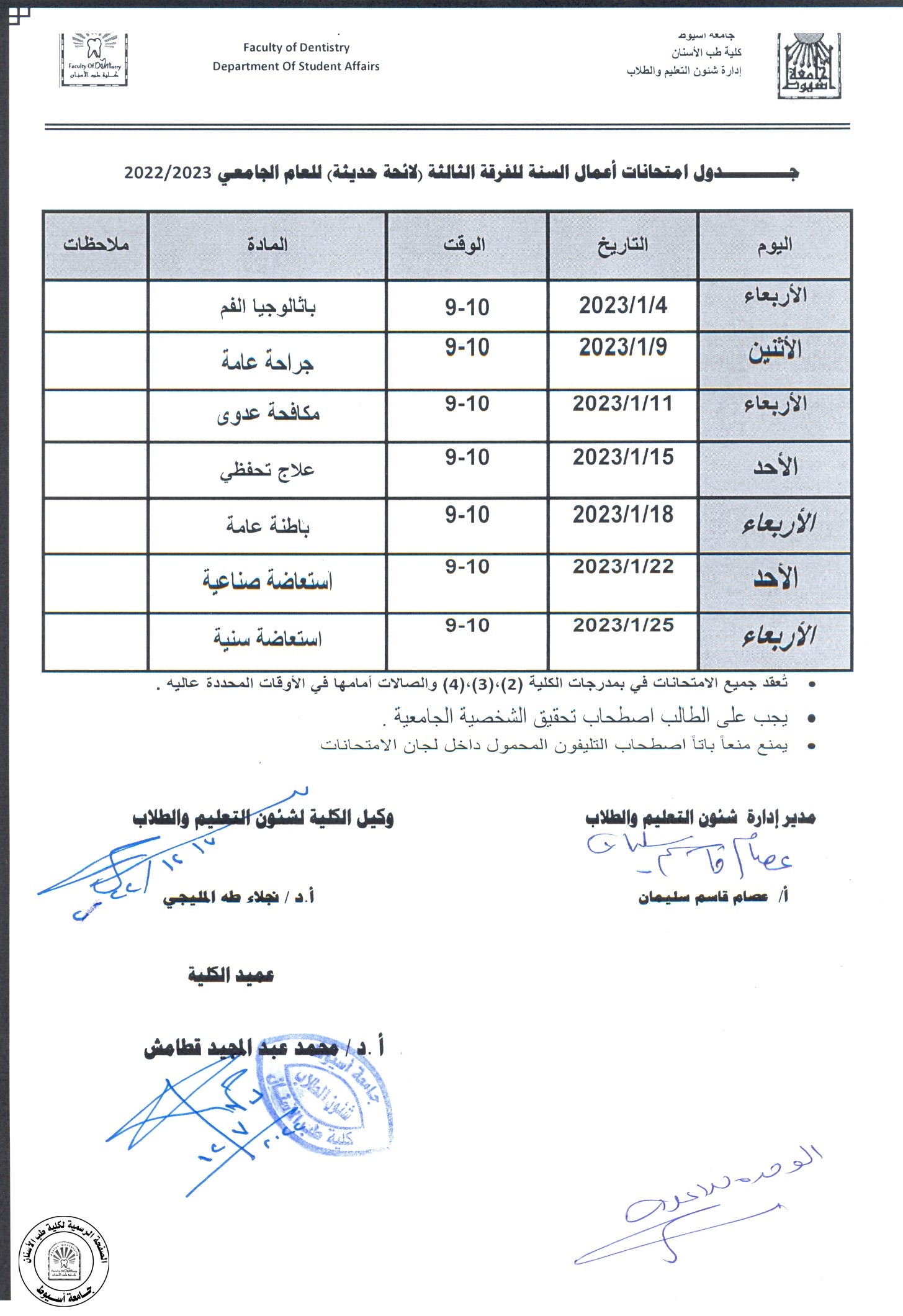
Midterm exams schedule for third year students (new system) 2022-2023. Kindly read the provided announcement.
Background: Fluoride-releasing restorative materials act as fluoride reservoirs delivering fluoride to
nearby tooth structures and absorbing fluoride from surrounding or external sources. This trait is
desirable in caries prevention and eradication.
Objectives: The aim of this study was to compare the
fluoride release and recharge capability of a novel glass hybrid material(Equia Forte Fil) with and
without a resin coat (Equia Forte Coat).
Materials and Methods: The sample consisted of 68 freshly
exfoliated or extracted (for orthodontic purposes) sound primary molars. Standardized buccal class V
cavities were prepared in all teeth and then restored with Equia Forte Fil according to manufacturer’s
instructions. The samples were randomly allocated into two groups (n=34). Group I
[Experimental](n=34): teeth restored with Equia Forte Fil in addition toEquia Forte Coat. Group II
[Control](n=34): teeth restored with Equia Forte Fil only. The samples were immersed in 5ml artificial
saliva and fluoride release was evaluated on the 1st, 3rd, 7th, 14th, 21st and 28th days using fluorine ion-
specific electrode. After 28 days, each group was further divided into 2 subgroups (n=17). Subgroup A
[Experimental (n=17): Treated with Enamel Pro Varnish. Subgroup B[Control](n=17): received no
fluoride treatment. The amount of fluoride re-release was measured at the same time intervals. Data was
analyzed using Independent t test, Repeated measures ANOVA with post hoc Bonferroni test. R
Significance level was set at P≤0.05.
Results: There was a statistically significant difference
(P≤0.0001) in fluoride release and recharge between the 2 groups, where Group IIdrastically released
more fluoride. Time had a significant effect on fluoride release within subgroups IA and IIA on
specific days, as the amount of fluoride progressively decreased throughout the study.As for
subgroups IB and IIB data was constant.
Conclusions: The application of the nano-filled resin coat
had a dramatic effect in reducing fluoriderelease and recharge capabilities of Equia Forte Fil.
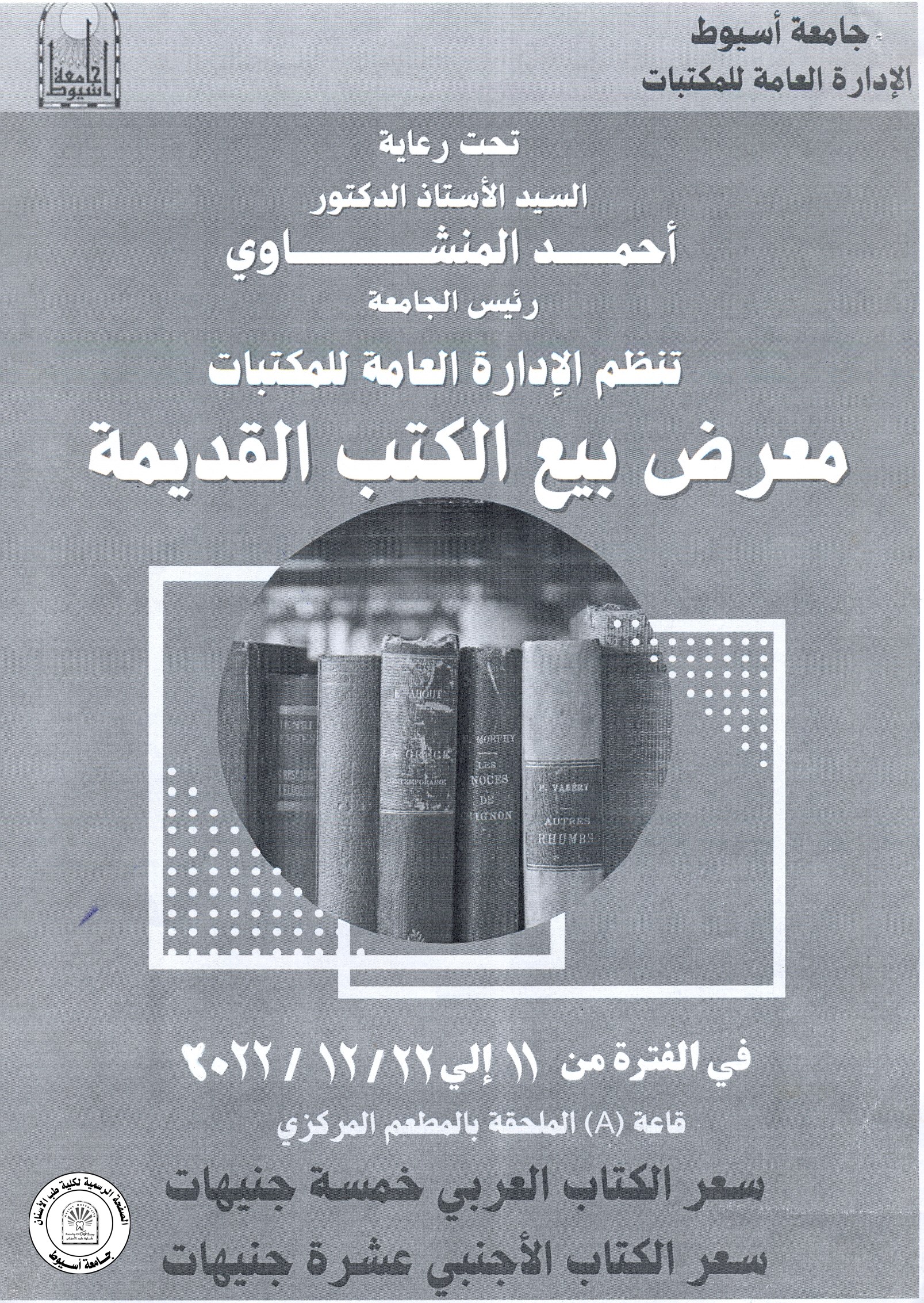
Assiut University is holding a vintage book fair for staff members, employees, and students from 11 to 22 December 2022 in hall A in the central restaurant. Arabic books are set to 5 L.E. and English books for 10 L.E.
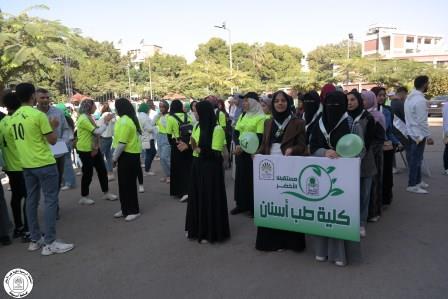
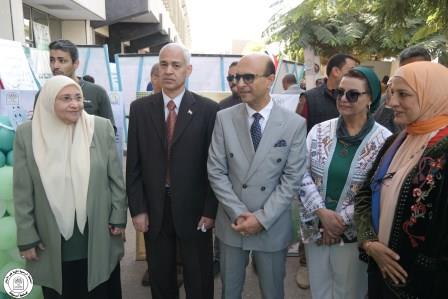
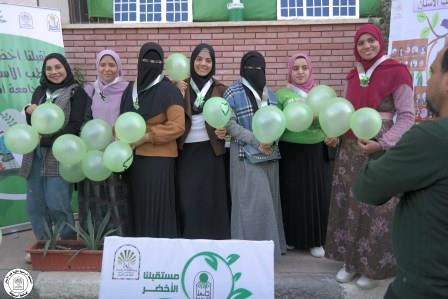
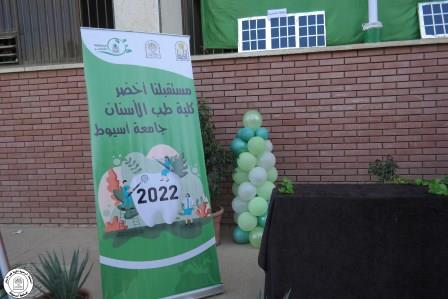
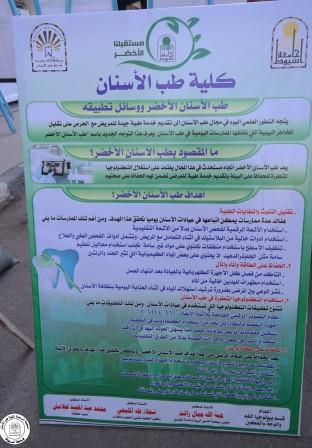
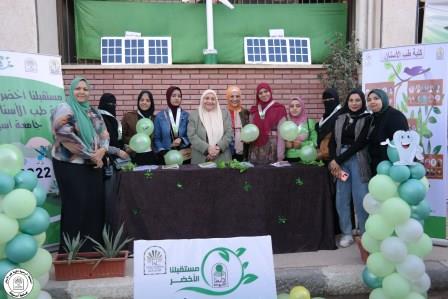
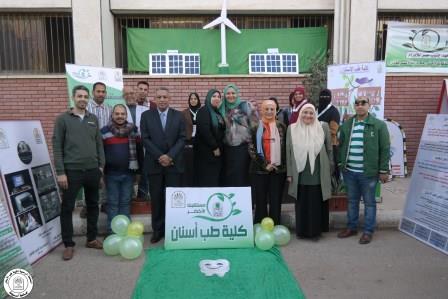
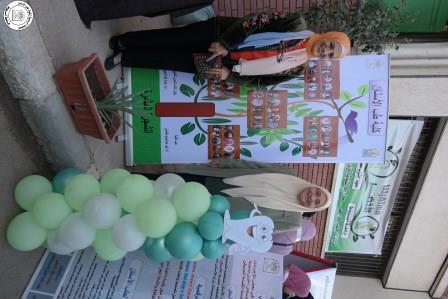
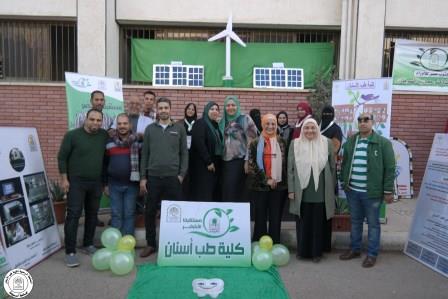
The Faculty of Dentistry participated in “November Climate Month” event that was held on Wednesday 30-12-2022 in Assiut Stadium. The faculty also set an environmental exhibition that keeps pace with the event and its activities under the auspicious of Prof/ Naglaa El-Meligy the Vice Dean for Education and Student Affairs, Prof Heba Rashed Vice Dean for Community Services and Environmental Development, Mr./ Montaser Hussein Ahmad (General Secretary), head of public relations office, and head of youth welfare with some dentistry students.
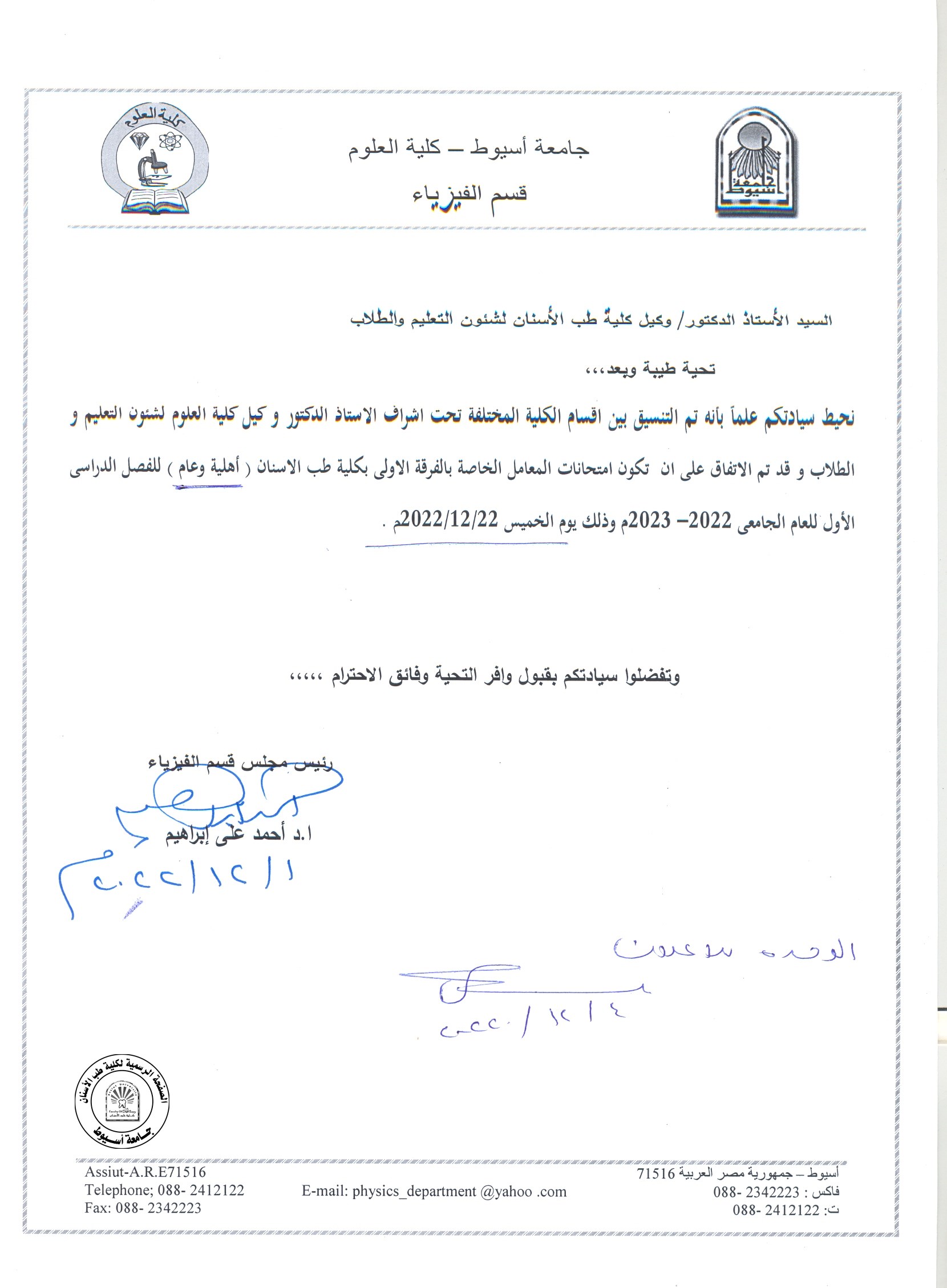
Physics department in the faculty of science will set its lab examinations for 1st year dentistry students in public and national Assiut universities for the first term on Thursday 22-12-2022.
Abstract
Background: Oral squamous cell carcinoma (OSCC) is the pathological type of oral cancer. Chemotherapy has become increasingly effective in OSCC therapy. Of these agents, Doxorubicin (Dox) is the most efficient cytotoxic agent but is prevented by cardiac toxicity. Several experimental results demonstrated the use of a combination of low-toxic secondary metabolites, such as polyphenols, to reduce the required dose of cytotoxic agents in cancer treatment.
Objective: The study aims to analyze the influence of Dox alone and its combination with pyrogallol (PG), a phenolic extract on the tongue SCC-25-cell, and to evaluate possible apoptotic pathways in the SCC-25 cells.
Methods: Image morphometric analysis for the estimation of nuclear area factor (NAF) and Evaluation of caspase-3 fold change by Real-Time PCR.
Results: The data recorded showed a significant decrease in the mean values of NAF of SCC-25 cells treated with different concentrations of Dox and its combination with PG. While, the combination revealed the least in the mean values of NAF when compared to control cells. Also, the combination induced apoptosis by simultaneous up-regulation of caspase-3.
Conclusions: The combined use of Dox and PG may increase the effectiveness of treatment and reduce negative side effects.
Abstract
Background: Oral squamous cell carcinoma (OSCC) is one of the most prevalent oral cancers, despite rapid improvement in chemotherapy, radiotherapy, and targeted gene therapy used in conjunction with mainstay surgery, the OSCC prognosis remains low. Previous studies have demonstrated anti-proliferative activity of polyphenols in cancer cells, Pyrogallol (PG) one of natural polyphenols, with cytotoxicity and apoptogenic effects on neoplastic and transformed cells, but not in normal cells.
Objective: This study aims to investigate the effect of PG on tongue squamous cell carcinoma SCC-25 cells and evaluate possible apoptotic pathways on SCC-25 cells. Methods: Cytotoxicity was measured by MTT assay. Mode of cell death was determined using Image morphometric analysis and Estimation of caspase-3 by Real Time PCR.
Results: MTT results showed that SCC-25 cells were sensitive to PG with an IC50 value of 19.17 ug/ml. Image morphometric analysis showed a decrease in the mean values of Nuclear Area Factor (NAF) of SCC-25 cells treated with Different concentrations of PG when compared to control cells. In addition, PG induced apoptosis by simultaneous up-regulation of capase-3.
Conclusions: Different concentrations of PG have a cytotoxic effect on SCC-25 cells. PG was also found to be an effective anti-carcinogenic agent with less toxicity.
ABSTRACT
Ameloblastoma is the most frequent odontogenic tumor and is considered a benign, but locally invasive neoplasm with variable clinico-pathological expression. Syndecan-1 is a cell surface proteoglycan that binds cells to the extracellular matrix and is expressed in various types of ameloblastoma. The aims of this study were to evaluate and compare syndecan-1 expression within the various types of ameloblastomas and to find a correlation between this expression and the biological behavior of variants. Immunohistochemical studies were performed for syndecan-1 in 30 ameloblastomas. Follicular ameloblastoma showed the statistically significantly highest mean area percent (32.10%). This was followed by plexiform ameloblastoma which showed lower mean area percentage value (22.02%). Ameloplastic carcinoma showed the statistically significantly lowest mean area percent (11.59%). The present results suggested the down regulation of syndecan-1 expression indicated decreased cell adhesion and higher cell proliferation.