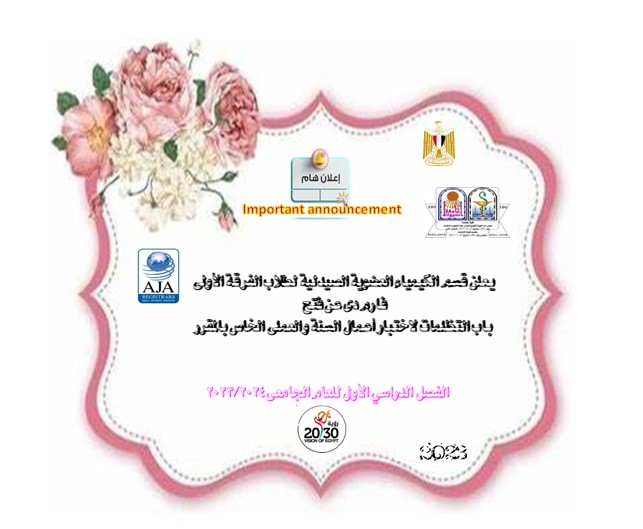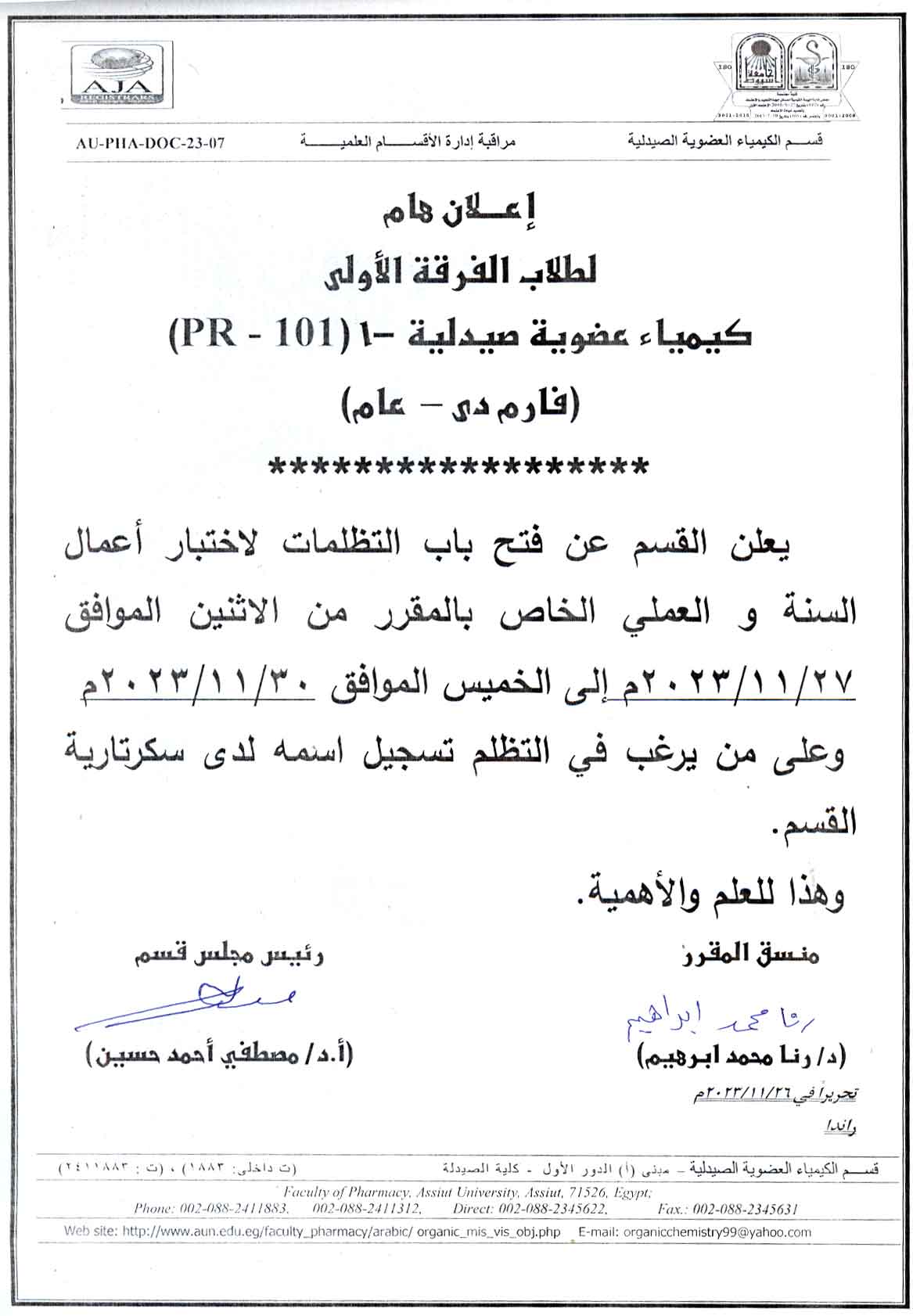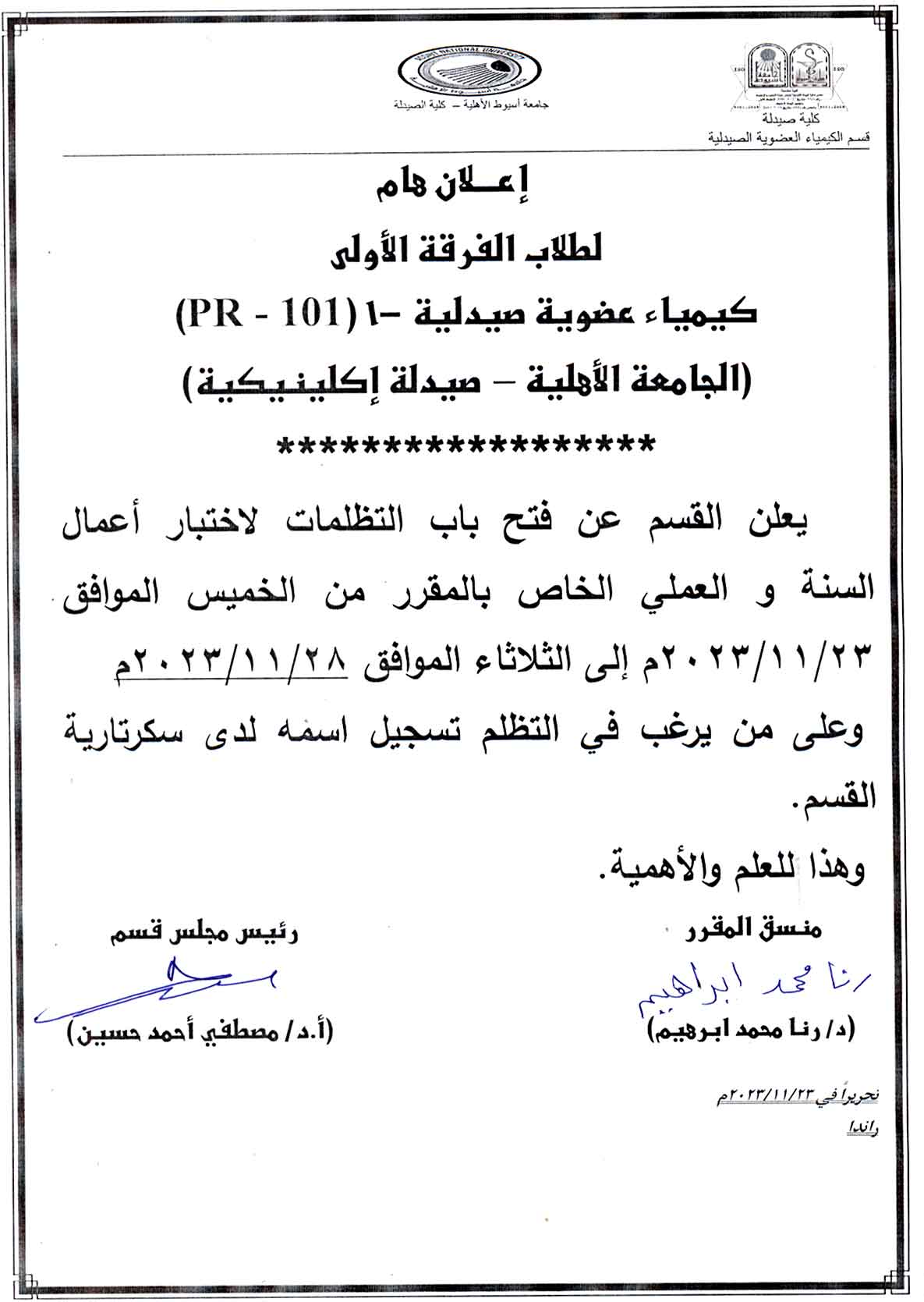

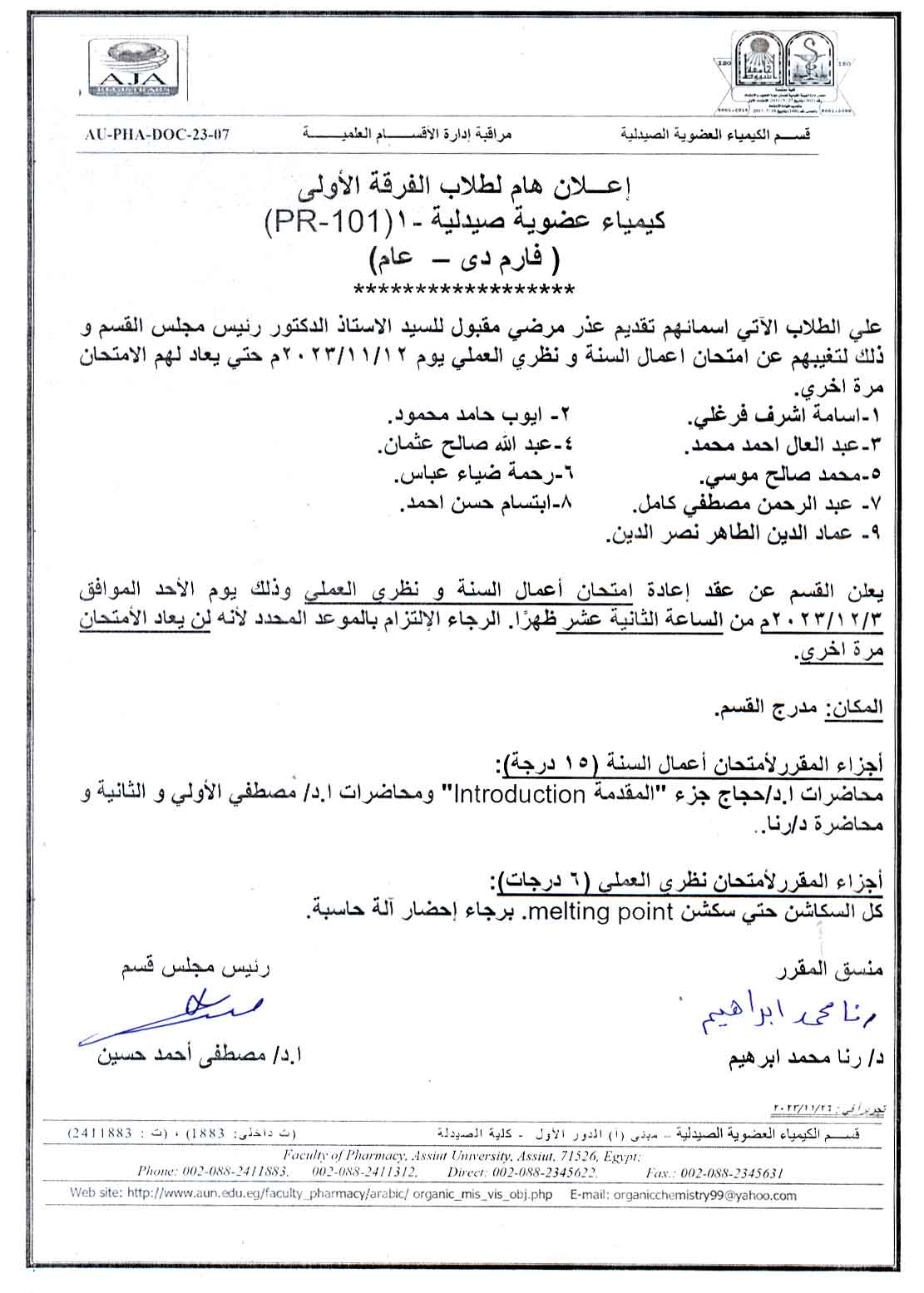
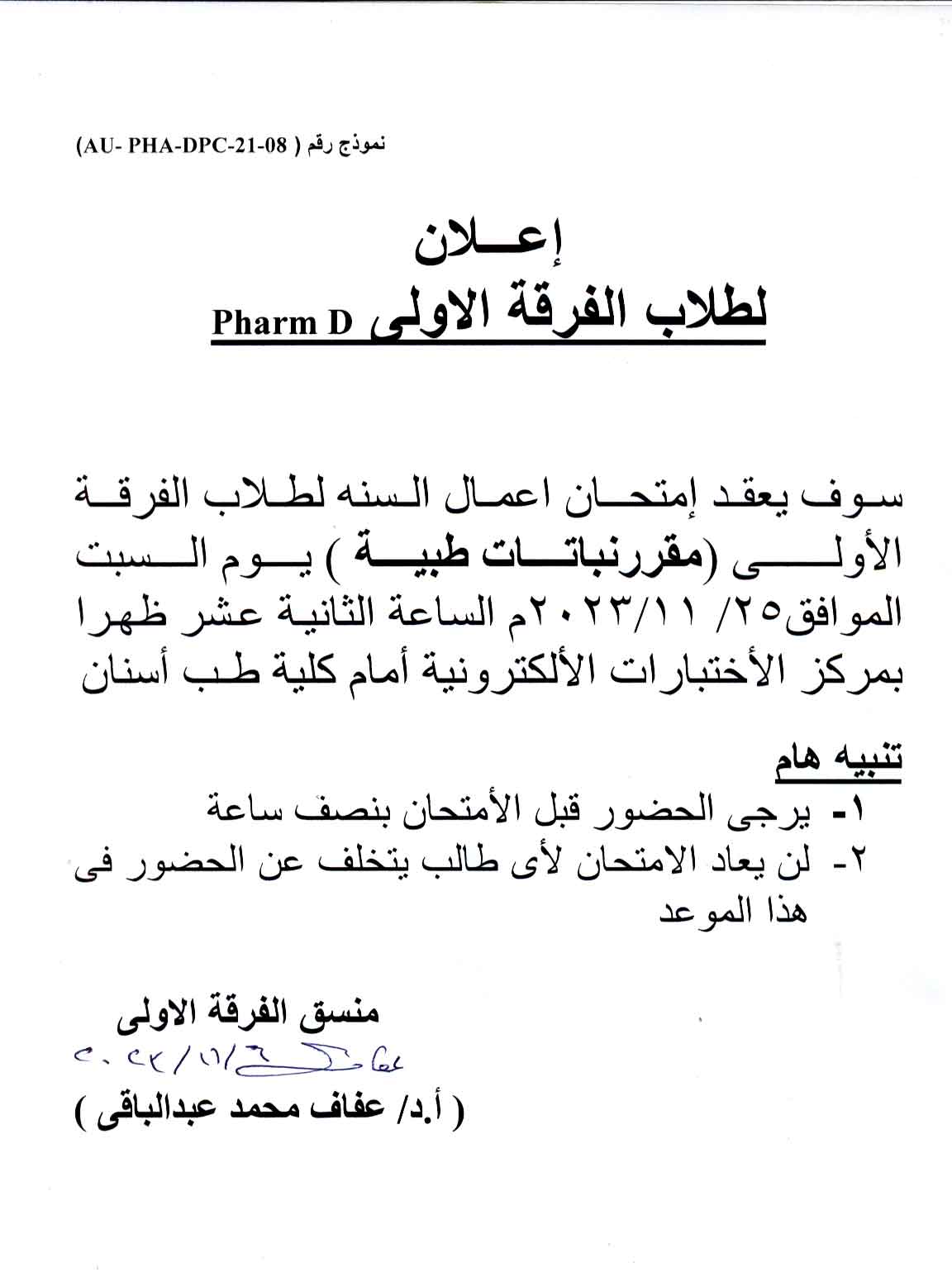
Important announcement for first year PharmD students

news category
قسم الكيمياء العضوية

 Do you have any questions? (088) 2080369 - 2345622 Pharmacy_QAAU@pharm.aun.edu.eg
اضغط
?
قائمة بأسماء الطلاب وارقام الجلوس لمقرر " لغة انجليزية" برنامج بكالوريوس الصيدلة
توزيعة الطلاب الفرقة الأولى فارم دى بكالوريوس الصيدلة
|
الصالة |
المعمل |
من |
إلى |
|
صالة (ج) |
معمل 2 |
1 |
60 |
|
معمل 5 |
61 |
إلى الأخر |
ملحوظة:- يرجى التواجد بالمركز قبل الامتحان بوقت كافي والالتزام بتوزيع المعامل المحدد لكل طالب
اضغط
?
قائمة بأسماء الطلاب وارقام الجلوس لمقرر " مصطلحات طيبة" برنامج بكالوريوس الصيدلة
توزيعة الطلاب الفرقة الأولى فارم دى بكالوريوس الصيدلة
|
الصالة |
المعمل |
من |
إلى |
|
صالة (ج) |
معمل 2 |
1 |
60 |
|
معمل 5 |
61 |
إلى الأخر |
ملحوظة:- يرجى التواجد بالمركز قبل الامتحان بوقت كافي والالتزام بتوزيع المعامل المحدد لكل طالب

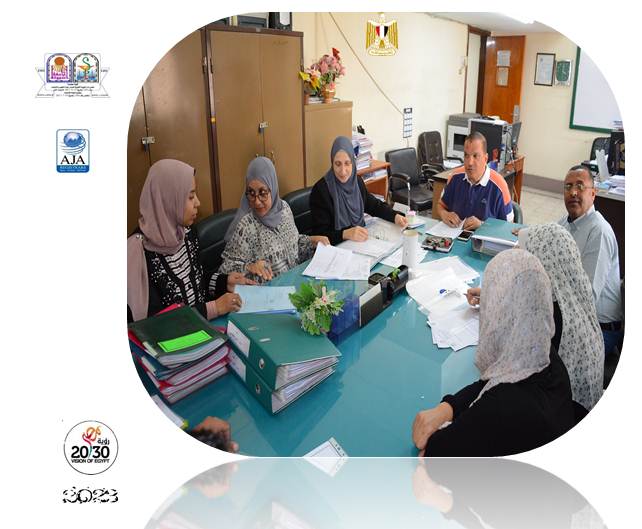
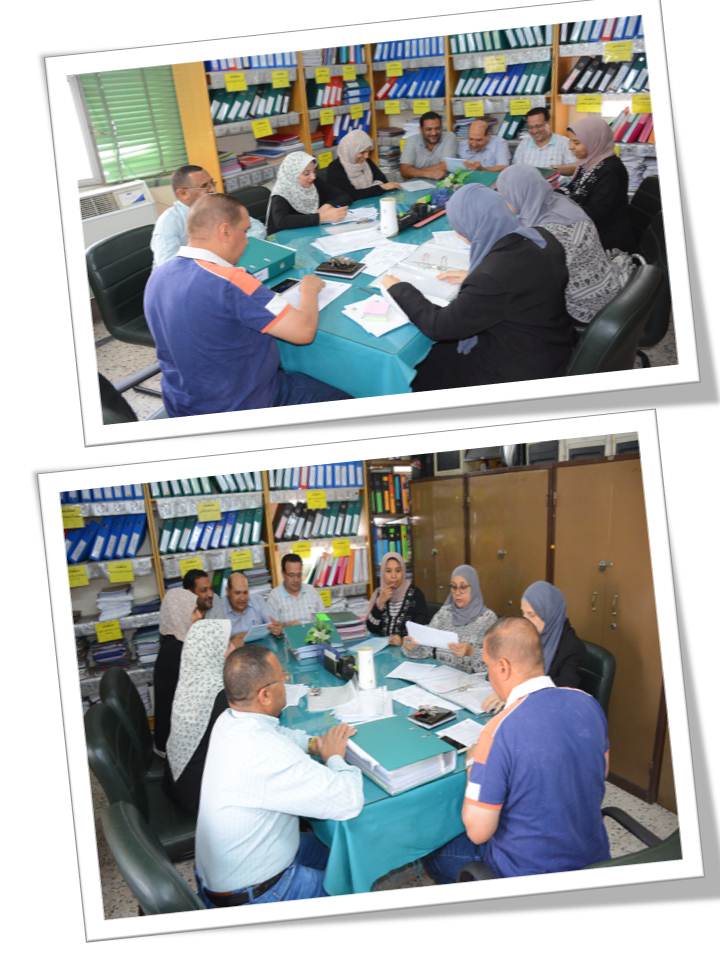
Under the patronage of Professor Dr. Ahmed El-Menshawy - President of the University, And Professor Dr. Ahmed Mohamed Abdel Mawla - Dean of the Faculty and Acting Vice President of the University for Education and Student Affairs, Under the supervision of Professor Dr. Hassan Refaat Hassan - Vice Dean of the Faculty for Education and Student Affairs The Director of the Quality Assurance Unit at the Faculty met with the Assiut University Award for Quality and Excellence Award team at the Faculty of Pharmacy in preparation for the visit of the University Quality and Excellence Team on Monday and Tuesday, November 20-21, 2023. The team reviewed the files and prepared the required files for the team’s field visit. This took place on Sunday, November 19, 2023, at the Quality Assurance and Accreditation Unit.
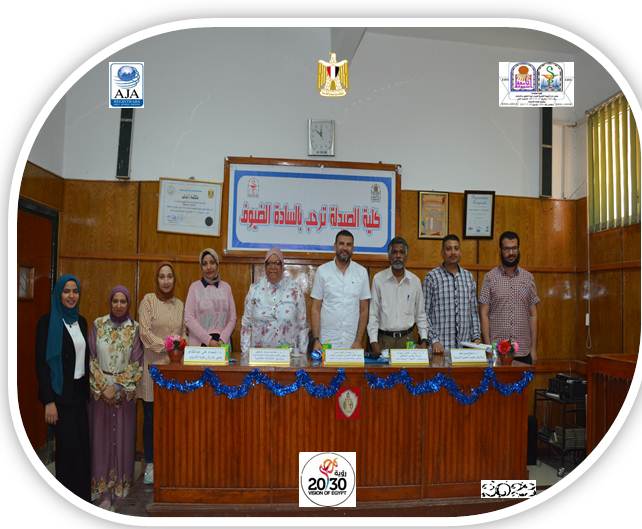
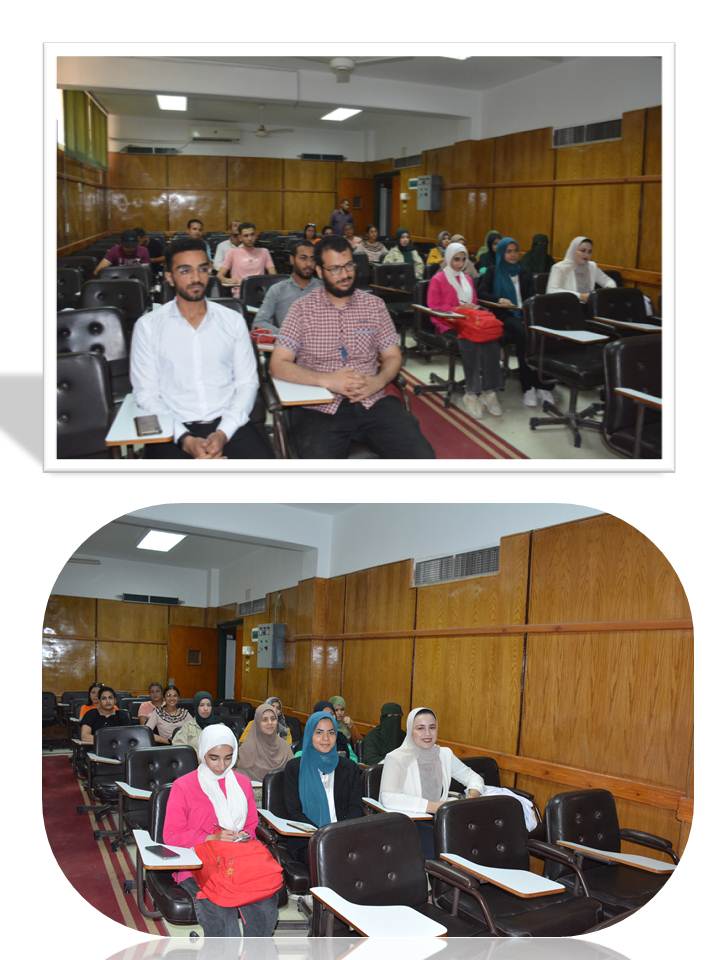
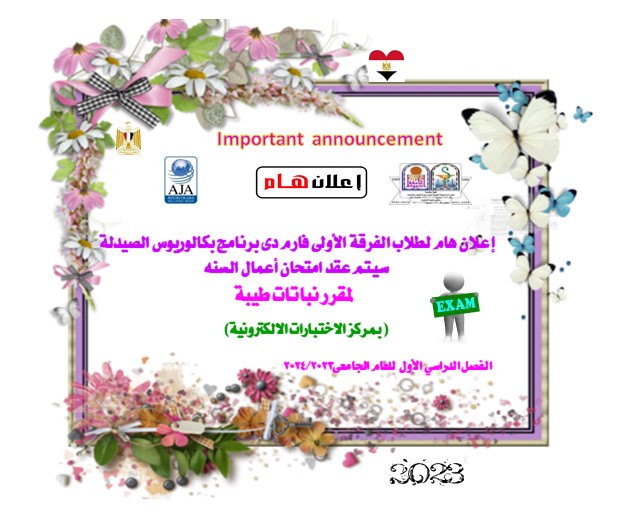
Under the patronage of Mr. Prof. Dr. Ahmed El-Menshawy - President of the University, and Prof. Dr. Ahmed Mohamed Abdel Mawla - Dean of the Faculty and Acting Vice President of the University for Education and Student Affairs, and under the supervision of Prof. Dr. Hassan Refaat Hassan - Vice Dean of the Faculty for Education and Student Affairs and Chairman of the Jury Committee, The Youth Welfare Department at the College of Pharmacy organized a competition to select the ideal student for the academic year 2023/2024 in the presence of Prof. Dr. Hisham Mohamed Tawfiq - Chairman of the Industrial Pharmacy Department Council, Student Activities Coordinator at the Faculty and member of the arbitration committee, and Prof. Dr. Yasser Ghallab Gouda - Professor in the Department of Pharmacognosy, Advisor to the Social Committee and Member of the Board, Prof. Dr. Hajjaj Hassan Muhammad - Professor in the Department of Pharmaceutical Organic Chemistry and Member of the Board, Dr. Shaima Ali Abdel Zaher, Director of the Youth Welfare Department, and Mr. Muhammad Makhlouf Ali - Activity Officer, where the students applying for the competition With their own presentation, the following students were promoted: The first winner is the student: Basmala Hatem Abdullah - the fifth year, and the student / Amr Othman Muhammad - the fourth year, the second is the student: Yara Mahmoud Ahmed - the fifth year, and the third is the student: Fatima Al-Zahraa Khaled Gomaa - the third year. This took place on Tuesday, 11/14/2022, in the faculty's celebration hall.
اضغط
?
قائمة بأسماء الطلاب وارقام الجلوس لمقرر " نباتات طبية" برنامج بكالوريوس الصيدلة
توزيعة الطلاب الفرقة الأولى فارم دى بكالوريوس الصيدلة
|
الصالة |
المعمل |
من |
إلى |
|
صالة (ج) |
معمل 2 |
1 |
60 |
|
معمل 5 |
61 |
إلى الأخر |
ملحوظة:- يرجى التواجد بالمركز قبل الامتحان بوقت كافي والالتزام بتوزيع المعامل المحدد لكل طالب

اضغط
?
قائمة بأسماء الطلاب وارقام الجلوس لمقرر " نباتات طبية " برنامج الصيدلة الاكلينيكية
توزيعة طلاب فصل (1) برنامج الصيدلة الاكلينيكية
|
الصالة |
المعمل |
من |
إلى |
|
صالة (ج) |
معمل 1 |
1 |
إلى الأخر |
ملحوظة:- يرجى التواجد بالمركز قبل الامتحان بوقت كافي والالتزام بتوزيع المعامل المحدد لكل طالب