
The novel potential therapeutic utility of montelukast in alleviating autistic behavior induced by early postnatal administration of thimerosal in mice

Research Abstract

BACKGROUND AND AIM: Thimerosal (THIM) is a mercury-containing preservative widely used in many biological and medical products including many vaccines. It has been accused of being a possible etiological factor for some neurodevelopmental disorders such as autistic spectrum disorders (ASDs). In our study, the potential therapeutic effect of montelukast, a leukotriene receptor antagonist used to treat seasonal allergies and asthma, on THIM mice model (ASDs model) was examined.

Methodology: Newborn mice were randomly distributed into three groups: (Group 1) Control (Cont.) group received saline injections. (Group 2) THIM-treated (THIM) group received THIM intramuscular (IM) at a dose of 3000 μg Hg/kg on postnatal days 7, 9, 11, and 15. (Group 3) Montelukast-treated (Monte) group received THIM followed by montelukast sodium (10 mg/kg/day) intraperitoneal (IP) for 3 weeks. Mice were evaluated for growth development, social interactions, anxiety, locomotor activity, and cognitive function. Brain histopathology, alpha 7 nicotinic acetylcholine receptors (α7nAChRs), nuclear factor kappa B p65 (NF-κB p65), apoptotic factor (Bax), and brain injury markers were evaluated as well.

Results: THIIM significantly impaired social activity and growth development. Montelukast mitigated THIM-induced social deficit probably through α7nAChRs upregulation, NF-κB p65, Bax, and brain injury markers downregulation, thus suppressing THIM-induced neuronal toxicity and inflammation.

Conclusion: Neonatal exposure to THIM can induce growth retardation and abnormal social interactions similar to those observed in ASDs. Some of these abnormalities could be ameliorated by montelukast via upregulation of α7nAChRs that inhibited NF-κB activation and significant suppression of neuronal injury and the associated apoptosis.
Research Authors
Lobna A Abdelzaher, Ola A Hussein, IEM Ashry
Research Department
Research Pages
129-150
Research Publisher
Springer US
Research Vol
41
Research Year
2021

Valproate attenuates hypertonic glycerol-induced rhabdomyolysis and acute kidney injury

Research Abstract

Background and aim: The current study investigated the effects of treatment with 300 mg/kg valproic acid on rhabdomyolysis and acute kidney injury induced by intramuscular injection of hypertonic glycerol in rats.

Methods: Four groups of male wistar rats: control and hypertonic glycerol, valproic acid and valproic acid + hypertonic glycerol treated groups were used. Blood urea nitrogen, serum creatinine, creatinine kinase (CK) and CK MB, myoglobin and renal reduced glutathione (GSH) levels were measured. Histopathological examination of the kidneys was carried out to evaluate the degree of renal injury in each group. The expression of interleukin-1 beta "IL-1β" in renal tissue was detected using immunohistochemistry.

Results: Hypertonic glycerol administration led to severe renal tubular damage with a significant elevation of blood urea nitrogen, serum creatinine, creatinine kinase, CK MB and myoglobin levels and overexpression of IL-1β compared to control group. Valproic acid administration attenuated both the muscle injury and the acute kidney injury induced by hypertonic glycerol, estimated through a significant reduction of creatinine kinase, myoglobin, and serum creatinine. Valproic acid administration caused a significant increase in GSH in the hypertonic glycerol + valproic acid group compared to the hypertonic glycerol group. A significant decrease in tubular necrosis grade, and expression of IL-1β in hypertonic glycerol + valproic acid group compared to the hypertonic glycerol group was observed.

Conclusion: This study demonstrates, for the first time to the best of our knowledge, that valproic acid could ameliorate the rhabdomyolysis and the related acute kidney injury in rats.

Research Authors
Mohammad Salem Hareedy, Lobna A Abdelzaher, Dalia M Badary, Sulaiman Mohammed Alnasser, Ahmed M Abd-Eldayem
Research Date
Research Department
Research Journal
Néphrologie & Thérapeutique
Research Pages
160-167
Research Publisher
Elsevier Masson
Research Vol
17
Research Year
2021

Astaxanthin alleviates oxidative stress insults-related derangements in human vascular endothelial cells exposed to glucose fluctuations

Research Abstract

Glycemic fluctuations may play a critical role in the pathogenesis of diabetic complications, such as cardiovascular disease. We investigated whether the oxycarotenoid astaxanthin can reduce the detrimental effects of fluctuating glucose on vascular endothelial cells. Human umbilical venous endothelial cells were incubated for 3 days in media containing 5.5mM glucose, 22 mM glucose, or 5.5mM glucose alternating with 22 mM glucose in the absence or presence of astaxanthin or N-acetyl-L-cysteine (NAC). Constant high glucose increased reactive oxygen species (ROS) generation, but such an effect was more pronounced in fluctuating glucose. This was associated with up-regulated p22(phox) expression and down-regulated peroxisome proliferator activated receptor-γ coactivator (PGC-1α) expression. Astaxanthin inhibited ROS generation, p22(phox) up-regulation, and PGC-1α down-regulation by the stimuli of glucose fluctuation. Fluctuating glucose, but not constant high glucose, significantly decreased the endothelial nitric oxide synthase (eNOS) phosphorylation level at Ser-1177 without affecting total eNOS expression, which was prevented by astaxanthin as well as by the anti-oxidant NAC. Transferase-mediated dUTP nick end labeling (TUNEL) showed increased cell apoptosis in fluctuating glucose. Glucose fluctuation also resulted in up-regulating gene expression of pro-inflammatory mediators, interleukin-6 and intercellular adhesion molecule-1. These adverse changes were subdued by astaxanthin. The phosphorylation levels of c-Jun N-terminal kinase (JNK) and p38 were significantly increased by glucose fluctuations, and astaxanthin significantly inhibited the increase in JNK and p38 phosphorylation. Taken together, our results suggest that astaxanthin can protect vascular endothelial cells against glucose fluctuation by reducing ROS generation.

Research Authors
Lobna A Abdelzaher 1 , Takahiro Imaizumi, Tokiko Suzuki, Kengo Tomita, Michinori Takashina, Yuichi Hattori
Research Department
Research Journal
Life sciences
Research Pages
24-31
Research Publisher
Pergamon
Research Vol
150
Research Year
2016

Anti-Inflammatory Profile of Levosimendan in Cecal Ligation-Induced Septic Mice and in Lipopolysaccharide-Stimulated Macrophages

Research Abstract

Objectives: The calcium sensitizer levosimendan is used in treatment of decompensated heart failure and may also exhibit anti-inflammatory properties. We examined whether treatment with levosimendan is substantially beneficial in mice with cecal ligation and puncture-induced polymicrobial sepsis, and its arbitration mechanism was explored in the mouse macrophage cell line RAW264.7.

Design: Laboratory and animal/cell research.

Setting: University research laboratory.

Subjects: BALB/c mice (8-10 wk old) and mouse macrophage cell line RAW264.7 cells.

Interventions: Levosimendan (0.5 μg/kg/min) was administered to mice through an osmotic pump that was implanted into the peritoneal cavity immediately following surgery. In RAW264.7 cells, levosimendan was added to the culture medium 30 minutes before lipopolysaccharide.

Measurements and main results: When levosimendan was continuously administered to cecal ligation and puncture-induced septic mice, a significant improvement of left ventricular function was found without any change in heart rate, and hypotension was significantly mitigated. Furthermore, levosimendan conferred substantial protection against sepsis-associated inflammation in mice, as indicated by reduced lung injury and decreased blood proinflammatory and chemotactic cytokine levels. These beneficial effects of levosimendan led to a significant improvement of survival in mice after cecal ligation and puncture. In endotoxin-stimulated RAW264.7 macrophages, treatment with levosimendan and pimobendan suppressed overproduction of proinflammatory and chemotactic cytokines. Levosimendan and pimobendan were without effect on activation of the nuclear factor-κB, mitogen-activated protein kinase, and Akt pathways. Instead, levosimendan and pimobendan prevented high mobility group box 1 release from the nucleus to the extracellular space in macrophages. This was associated with inhibition of the Rho kinase signaling pathway. The elevated serum high mobility group box 1 levels in cecal ligation and puncture-induced septic mice were also inhibited by continued administration of levosimendan and pimobendan.

Conclusions: We define a novel mechanism for the anti-inflammatory action of levosimendan and suggest that the pharmacological profiles of levosimendan as both an inotrope and an anti-inflammatory agent could contribute to its clinical benefit in patients with sepsis with heart problems.

Research Authors
Qiang Wang, Hiroki Yokoo, Michinori Takashina, Kimimasa Sakata, Wakana Ohashi, Lobna A Abedelzaher, Takahiro Imaizumi, Takuya Sakamoto, Kohshi Hattori, Naoyuki Matsuda, Yuichi Hattori
Research Department
Research Journal
Crit Care Med
Research Pages
e508–e520
Research Publisher
Wolters Kluwer
Research Vol
43
Research Year
2015

Terms of acceptance of theses and research

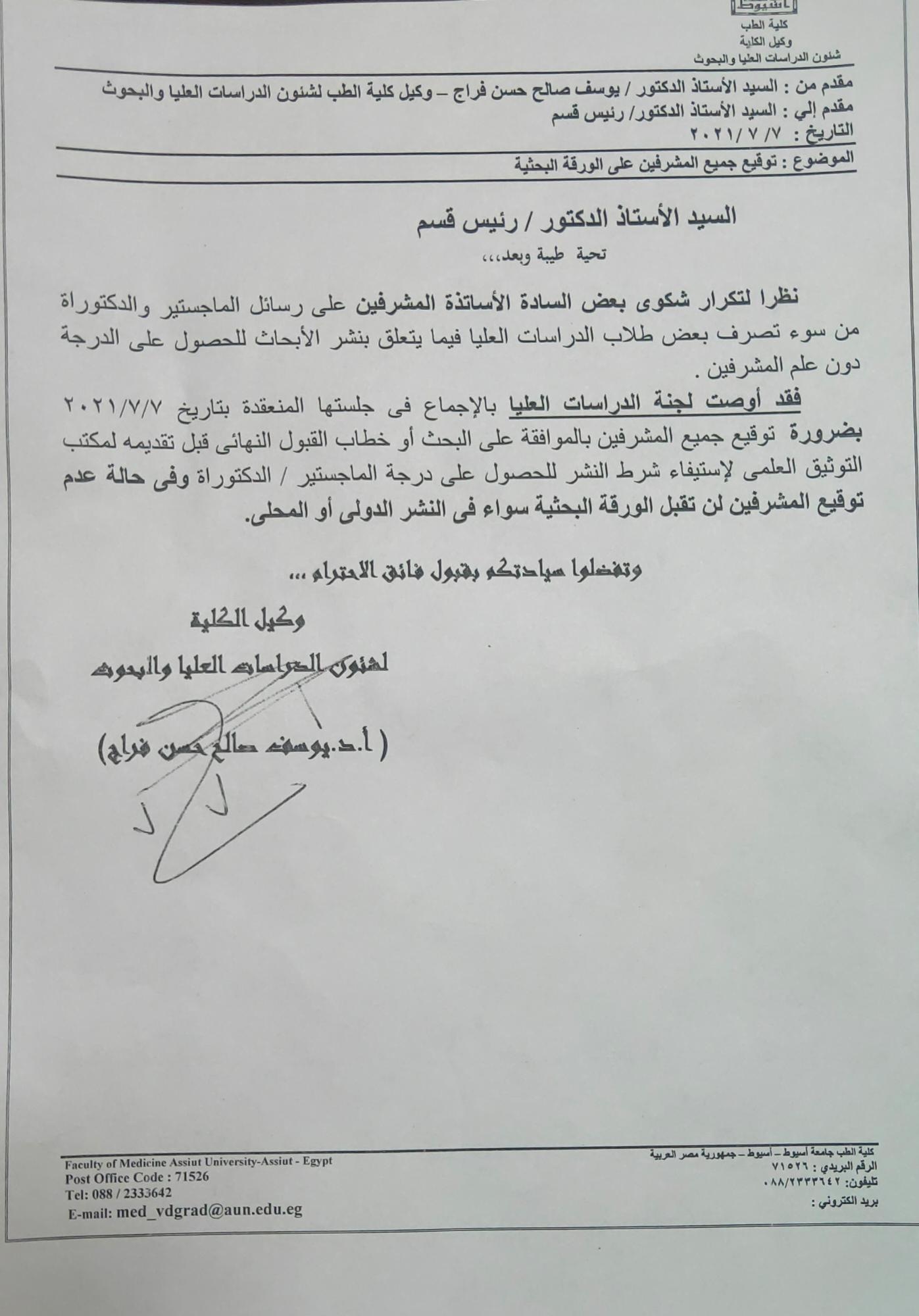
  • أوصت بجنة الدراسات العليا بالإجماع فى جلستها المنعقدة بتاريخ 7/7/2021 بضرورة توقيع جميع المشرفين على البحث أو خطاب القبول النهائى قبل تقديمة لمكتب التوثيق العلمى لإستيفاء شرط النشر للحصول على درجة الماجستير / الدكتوراة وفى حالة عدم توقيع المشرفين لن تقبل الورقة البحثية سواء فى النشر الدولى أو المحلى .


Oligonol inhibited the NADPH oxidase activity and preserved the insulin signal in endothlial cells under diabetic conditions

Research Authors
Hiroki Yokoo, Kumiko Taguchi, Kengo Tomita, Michinori Takashina, Qiang Wang, Lobna A Abdelzaher, Yuichi Hattori
Research Department
Research Journal
JOURNAL OF PHARMACOLOGICAL SCIENCES
Research Pages
163P-163P
Research Publisher
JAPANESE PHARMACOLOGICAL SOC
Research Vol
121
Research Year
2013

The Ca2+ sensitizer levosimendan mitigates septic inflammation

Research Authors
Hiroki Yokoo, Qiang Wang, Lobna A Abdelzaher, Michinori Takashina, Wakana Ohashi, Kimimasa Sakata, Takahiro Imaizumi, Takuya Sakamoto, Yuichi Hattori
Research Department
Research Journal
JOURNAL OF PHARMACOLOGICAL SCIENCES
Research Pages
105P-105P
Research Publisher
JAPANESE PHARMACOLOGICAL SOC
Research Vol
124

Glucose fluctuations induce ROS-mediated eNOS dysfunction in human vascular endothelial cells: Effect of astaxanthin

Research Authors
Takahiro Imaizumi, Lobna A Abdelzaher, Tokiko Suzuki, Kengo Tomita, Michinori Takashina, Yuichi Hattori
Research Journal
JOURNAL OF PHARMACOLOGICAL SCIENCES
Research Pages
S245-S245
Research Publisher
JAPANESE PHARMACOLOGICAL SOC
Research Vol
130
Research Year
2016

The effect of antioxidant and iron chelator on metabolic bone turnover in ovariectomized rats

Research Abstract

Background Osteoporosis affects women severely, especially in older ages after menopause. It may lead to bad drawbacks that may be prone to considerable pathological conditions, for example, fracture and sever pain.
Objective This study aims to identify the effect of antioxidant and iron chelator on metabolic bone turnover in ovariectomized rats.
Materials and methods The rats were divided into five groups: negative control, positive control, desferal-treated, vitamin E-treated, and desferal+vitamin E-treated groups. Determination of serum estrogen, ferritin, alkaline phosphatase (ALP), tumor necrosis factor-α (TNF-α), and osteocalcin was done at the end of experiment. Moreover, morphology of bone in female rats was evaluated at the end of experiment.
Results Ovariectomy led to decrease in serum estrogen level and increase in serum levels of ferritin, ALP, TNF-α, and osteocalcin. On the contrary, usage of desferal and vitamin E led to decrease in serum levels of ferritin, ALP, TNF-α, and osteocalcin. Regarding histological picture of bone, our results showed abnormal structure of the bone of the untreated group vs improved histological picture of the treated groups.
Conclusion The female rats that were subjected to ovariectomy and experienced osteoporosis showed improvement in their bone by using desferal and vitamin E alone or in combination.

Keywords: bone remodeling, desferal, ovariectomy, vitamin E

Research Authors
Mohamed E El-Refaey, Yasser M Ashour, Lobna A Abdelzaher, Maher A Shabaan
Research Department
Research Pages
85-91
Research Publisher
Medknow Publications
Research Vol
19
Research Year
2021

Effect of amlodipine and L-carnitine on bone metabolism in ovariectomized rats

Research Abstract

Background Amlodipine as a calcium channel blocker has anti-inflammatory effect through overaugmentation of nitric oxide production and antioxidant effect by reduced superoxide radicals and increased level of superoxide dismutase. l-carnitine has anti-inflammatory action through reaction with acyl group that is accumulated in anoxic cells and antioxidant effect through decreasing the superoxide anion production.
Aim The aim was to evaluate the possible ameliorating effect of amlodipine (AML) and L-Carnitine (L-C) combination on osteoporotic bony changes in ovariectomized (OVX) rats versus each drug separately. A total of 50 adult female albino rats (weighting 100–125 g) of local strain were chosen as an animal model for this study. The animals were randomly divided into five groups. Each group comprised ten rats: group 1, negative control; group 2, OVX rats, positive control; group 3, AML-treated OVX rats; group 4, L-C-treated OVX rats, and group 5, AML and L-C-treated OVX rats. Bony changes were examined through evaluating markers of bone turnover, such as alkaline phosphatase and osteocalcin; femoral metaphyseal histomorphology; and serum proinflammatory cytokines, such as tumor necrosis factor-α, expression.
Results alkaline phosphatase, osteocalcin, and tumor necrosis factor-α were significantly elevated in positive control group, which was associated with marked deterioration of bone microarchitecture. Treatment with AML and L-C combination significantly mitigated inflammation and histopathological osteoporotic changes compared with each of AML and L-C drugs separately.
Conclusion AML and L-C combination could have a synergistic role in management of radical osteoporosis in OVX rats over each drug separately.

Research Authors
Ahmed FA Ghany, Yasser M Ashour, Nawal B Aly, Lobna A Abdelzaher, Ahmed S Mahmoud
Research Department
Research Journal
Al-Azhar Assiut Medical Journal
Research Pages
92-99
Research Publisher
Medknow Publications
Research Vol
19
Research Year
2021
Subscribe to

