Dexamethasone Versus Magnesium Sulfate As An Additives to Bupivacaine in Ultrasound Guided Supraclavicular Brachial Plexus Blockade

Research Abstract


September 2016 • Volume 123 • Number 3 Supplement

DEXAMETHASONE VERSUS MAGNESIUM SULFATE AS AN ADDITIVES TO BUPIVACAINE IN
ULTRASOUND GUIDED SUPRACLAVICULAR BRACHIAL PLEXUS BLOCKADE
R. A. Hamed1, N. M. Osman1, W. S. Hassan1,*, S. M. Omar1
1Anaethesia and Pain Management, Assuit University Hospital, Assuit, Egypt
Background & Objectives: comparing the effect of adding dexamethasone and magnesium
sulfate to bupivacaine in ultrasound guided supraclavicular brachial plexus blockade. The primary
endpoints were the onset of sensory and motor block and quality of analgesia and the
secondery end points were duration of analgesia and motor block.
Materials & Methods: Ninety patients scheduled for elective surgeries on the upper limb
under ultrasound guided supraclavicular brachial approach. patients were randomly allocated
using a standard randomization code, in a double blinded manner, into three groups; group one
(n=30) received 20 ml 0.5% plain bupivacaine, group two (n=30) received 18 ml bupivacaine
0.5% + 2 ml (8mg) dexamethasone, group three (n=30) received 18 ml bupivacaine 0.5% +
200 mg magnesium sulfate.
The following parameters were studied: Onset of sensory block, onset of Motor blockade,
haemodynamic and respiratory data, Analgesia time,and Duration of motor and sesory blocks
Results: There was no significant difference in the demographic data and surgical characteristics
in the three groups. The sensory block onset time in minutes was earlier in group 2
(dexamethasone) as compared to group 1 and 3; 8.20±2.09 versus 16±3.48 (P< 0.05) and
8.20±2.09 versus 12.70 ± 2.92(P< 0.05) respectively, also the sensory block onset was earlier
in group 3 (magnesium) than group 1 (control) 12.70 ± 2.92 versus 16±3.48 (P< 0.05).
Also onset of motor blockade in minutes was earlier in group 2 than in group 1 and 3; 1.50
± 2.09 versus 13.10 ± 3.34 (p< 0.05) and 12.75 ± 3.43 respectively, while the difference in
motor block onset was clinically insignificant between group 1 and 3(P> 0.05). As regard duration
of analgesia in minutes it was significantly longer in group 2 than group 1 and 3 1104.00
± 289.16 versus 313.50 ± 103.68 and 558.00 ± 48.08 respectively, also analgesia duration
was significantly prolonged in group 3 than group 1(P< 0.05). the motor power was significantly
prolonged for group 2 than group 1 and 3; 563.00 ± 69.29 versus 136.50 ± 28.34 and
214.50 ± 36.92 respectively, and also the motor power return was delayed in group 3 than
group 1(P< 0.05).
Conclusion: both of them proved to prolong the duration of block and the analgesia time, both
of them fasten the sensory block onset time, but dexamethasone is significantly more effective
in prolonging the analgesia duration and the block duration. dexamethasone shorten the
motor block onset time while magnesium does not enhance the motor block onset time.
Disclosure of Interest: None declared
DOI: 10.1213/01.ane.0000492692.50087.95

Research Date
Research Journal
anesthesia and analgesia suplement
Research Member

Suppression effect of thyme and carvacrol nano-emulsions on Aspergillus fumigatus isolated from patients in the intensive care unit of Assiut

Research Abstract
 
Description
Background and Aim: Aspergillus fumigatus is a zoonotic fungus that causes several diseases in humans ranging from allergic reaction to fatal disseminated invasive infection, especially in immunocompromised patients. This study aimed to investigate the incidence of invasive A. fumigatus in patients admitted to the intensive care unit (ICU) of Assiut University Hospital, highlight the factors associated with their infection, and determine the antifungal effect of thyme nano-emulsion (TNE) and carvacrol nano-emulsion (CNE) on isolated A. fumigatus strains.
Materials and Methods: Mycological culture method and scanning electron microscopy (SEM) were used in the identification of A. fumigatus in 630 blood samples collected from 210 patients. TNE and CNE at five concentrations (1%, 2%, 4%, 6%, and 8%) and average sizes of 90.3 and 75.6 nm, respectively, were characterized by transmission electron microscopy. Their effect on A. fumigatus isolate growth was evaluated by the well-diffusion method and SEM, which was used for the detection of the degenerative effect of A. fumigatus ultrastructure.
Results: A. fumigatus was detected in 54 of 210 (25.7%) patients in the ICU. Advanced age and chronic diseases were considered important risk factors for invasive aspergillosis, especially in patients with more than 1 clinical disease. TNE and CNE showed an inhibitory effect on A. fumigatus isolates, which significantly increased with high concentrations. The respective values for TNE at concentrations of 6% and 8% were 6±0.41 mm and 15±0.67 mm. CNE completely inhibited A. fumigatus growth at concentrations of 4%, 6%, and 8%, while mean …
Research Date
Research Journal
International Journal of One Health
Research Member

Fentanyl versus dexamethasone or both as adjuvants to bupivacaine in an ultrasound-guided paravertebral block in patients undergoing modified radical mastectomy

Research Abstract
Background
This study aimed to compare the effect of dexamethasone added to fentanyl and bupivacaine with the effect of either dexamethasone or fentanyl alone when combined with bupivacaine. in the thoracic paravertebral block (TPVB).
Methods
Sixty female patients (aged 18-60 years), scheduled for modified radical mastectomy were enrolled. Patients received preoperative unilateral paravertebral block using 0.3 ml/kg of 0.5% bupivacaine combined with 8 mg dexamethasone (Group I), 1 μg/kg fentanyl (Group II), or 8 mg dexamethasone+ 1 μg/kg fentanyl (Group III). The study drugs were diluted with normal saline 0.9% up to 25ml volume. The primary outcome was the time to first postoperative analgesics request, Secondary outcomes were total analgesic consumption, verbal rating pain scale (VRS) over the first 24 hours postoperatively, hemodynamic parameters, and adverse effects.
Results
The time to first analgesic request for intravenous (IV) nalbuphine was longer in group II (15.75±0.9 h, P< 0.001) than group I (10.45±1.1 h, P< 0.001), while no patients requested it in group III (P< 0.001). The total analgesic consumption of IV nalbuphine was lower in group II (8.6±3.5 mg, P= 0.04) than group I (11.3±2.1 mg), with a significant difference between group II and III (P< 0.001). From the 8th till the 24th hours postoperatively, patients in group III showed the significantly lowest median VAS scores, followed by patients in group II (P< 0.001) and lastly patients in group I. There were no significant adverse effects.
Conclusions
 
Research Journal
Minerva Anesthesiol

Elevated hippocampal mGlut2 receptors in rats with metabolic syndrome-induced-memory impairment, possible protection by vitamin D.

Research Abstract

Background

Metabolic syndrome patients are commonly prone to major health problems as cardiovascular diseases, diabetes mellitus, chronic kidney disease, cancer and neuropsychological complications including dementia.

Objectives

This research investigates mechanisms linking metabolic syndrome to cognitive impairment and possible impact of vitamin D supplementation.

Methods

Forty male Wistar rats were divided into 4 groups. Control, metabolic syndrome (20% fructose solution in drinking water for 12 weeks, vitamin D supplemented (500 IU/kg/day) and metabolic syndrome supplemented with vitamin D. Animals were assessed for spatial memory, hippocampal expression of SNAP 25, VAMP and mGlut2 receptor and hippocampus histological examination. Animals with metabolic syndrome showed prolonged acquisition and retention latencies in morris water maze, decreased hippocampal expression of …

Research Authors
Enas A. Hamed. Zienab Alrefaie, Soad S. Ali
Research Date
Research Department
Research Journal
Brain Research Bulletin
Research Member
Research Pages
108-117
Research Vol
180
Research Year
2022

Influence of chemically and biosynthesized silver nanoparticles on in vitroviability and infectivity of Trichinella spiralismuscle larvae

Research Abstract

ABSTRACT. Trichinellosis  is  a  serious  worldwide  parasitic  zoonosis. The  available  therapy  for  the  treatment  of
Trichinella spiralisis not satisfactory. Therefore, the recovery of effective treatment is required. This work aimed at
evaluating of the in vitro effect of silver nanoparticles (AgNPs) on muscle larvae of Trichinella. The present study
investigated the larvicidal properties of chemical and myrrh AgNPs on muscle larvae (ML) of T. spiralis. The used
AgNPs were chemically prepared using NaBH4
as reducing agentand biosynthesized using methanolic myrrh extract.
Characterization  of  synthesized  AgNPs  was  monitored  via UV-vis  spectrophotometry,  Fourier  transform  infrared
spectroscopy and transmission electron microscopy (TEM) studies. The ML incubated with AgNPs at concentrations
ranged from 1 μg/ml to 20 μg/ml. Chemical and biosynthesized AgNPs revealed marked larvicidal effect against ML of
Trichinella. Additionally, this in vitro study showed degenerative changes affecting the cuticle of AgNPs treated ML.
The  effectiveness  of AgNPs  on  the  infectivity  of TrichinellaML  was  also  assessed.  The  results  showed  complete
inhibition of the infectivity of ML exposed to sublethal doses of chemical and myrrh prepared AgNPs when used to
infect animal models. This is the first report where myrrh synthesized AgNPs have been tested for their anthelminthic
activity against Trichinellain an in vitromodel.
Keywords: Trichinella spiralis, muscular larvae, silver nanoparticles, infectivity, viability

Research Authors
Ahmed Kamal dyab
Research Date
Research Department
Research Journal
Annals of Parasitology
Research Member
Research Pages
591–602
Research Publisher
Polish Parasitological Society
Research Rank
international Impact factor 0.77
Research Vol
67(4)
Research Website
https://www.annals-parasitology.eu
Research Year
2022

Training on the electronic examination system through the zoom platform

تم تحديد غدا الاثنين ٣ يناير ٢٠٢٢ الساعة ٣ عصرا موعداً للتدريب علي منظومة الامتحانات الالكترونيه من خلال منصة zoom

ahmed yassin is inviting you to a scheduled Zoom meeting.

Topic: ahmed yassin's Zoom Meeting Assiut (group2)

Time: Jan 3, 2022 03:00 PM Cairo

Join Zoom Meeting

https://us04web.zoom.us/j/74212859877...

Meeting ID: 742 1285 9877

Passcode: xqu6Gv

Scientific meeting, Department of Ophthalmology - Monday, January 3, 2022

تحت رعاية

أ. د/علاء عطية عميد كلية الطب ورئيس مجلس إدارة المستشفيات الجامعية،

 أ. د/ إيهاب فوزي المدير التنفيذي للمستشفيات الجامعية ،

أ. د/ محمد سيد سعد رئيس القسم

يسر قسم طب وجراحة العيون

بدعوتكم إلى الإجتماع العلمى بقسم طب وجراحة العيون وذلك يوم الإثنين 3 يناير 2022 إن شاء الله.

مكان الإجتماع:

المستشفى الجامعى قسم العيون الدور السابع. قاعة أ.د إسماعيل أحمد وصفى (قاعة مجلس القسم).

جدول الإجتماع:

Treatment of congenital lacrimal drainage obstruction. Lecture by

د /احمد عبد الناصر

Unilateral optic disc swelling in a child. Case presentation by

ط /محمد مخلف

Proptosis. Case presentation by

ط / هبه شلتوت

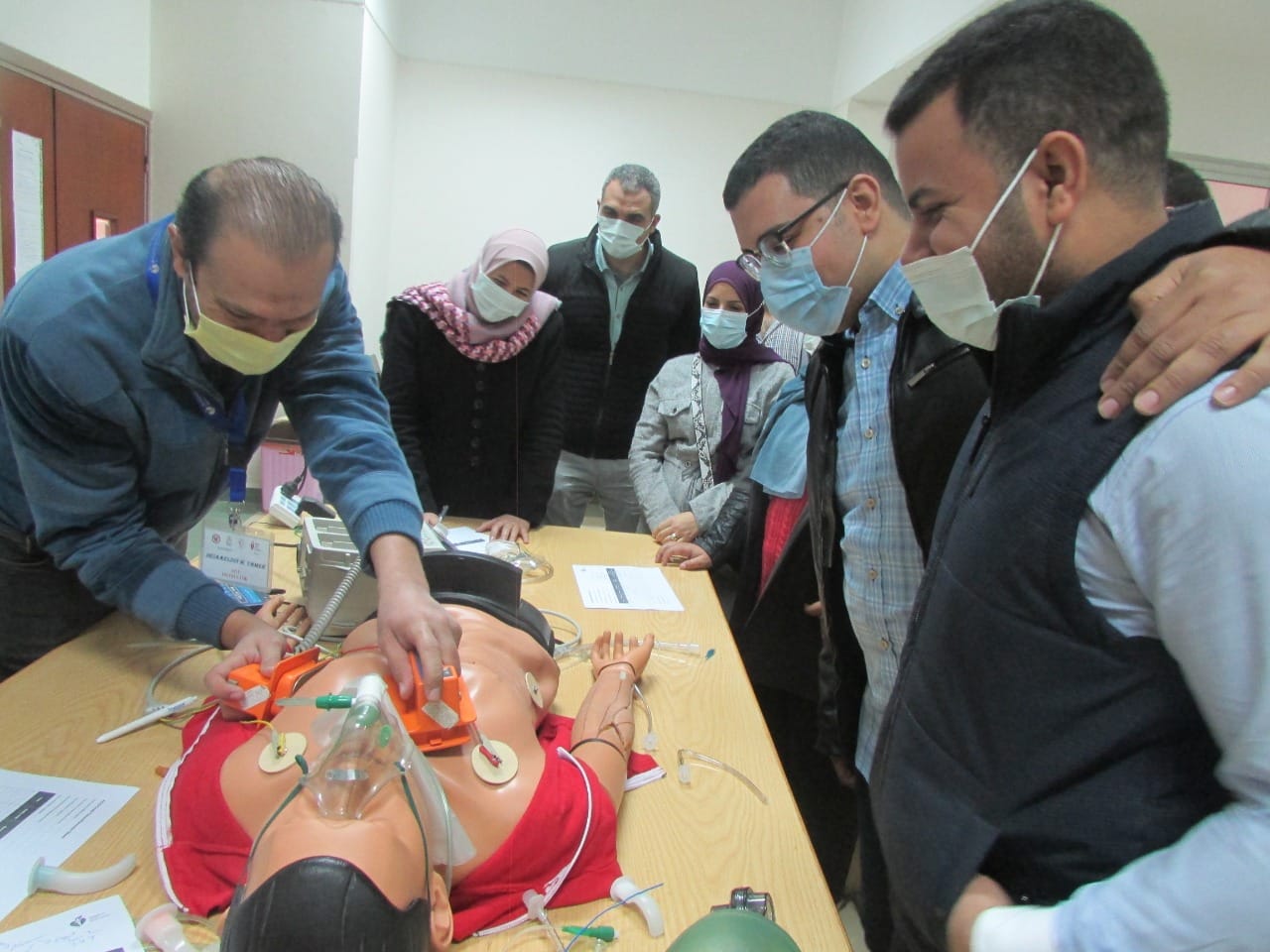
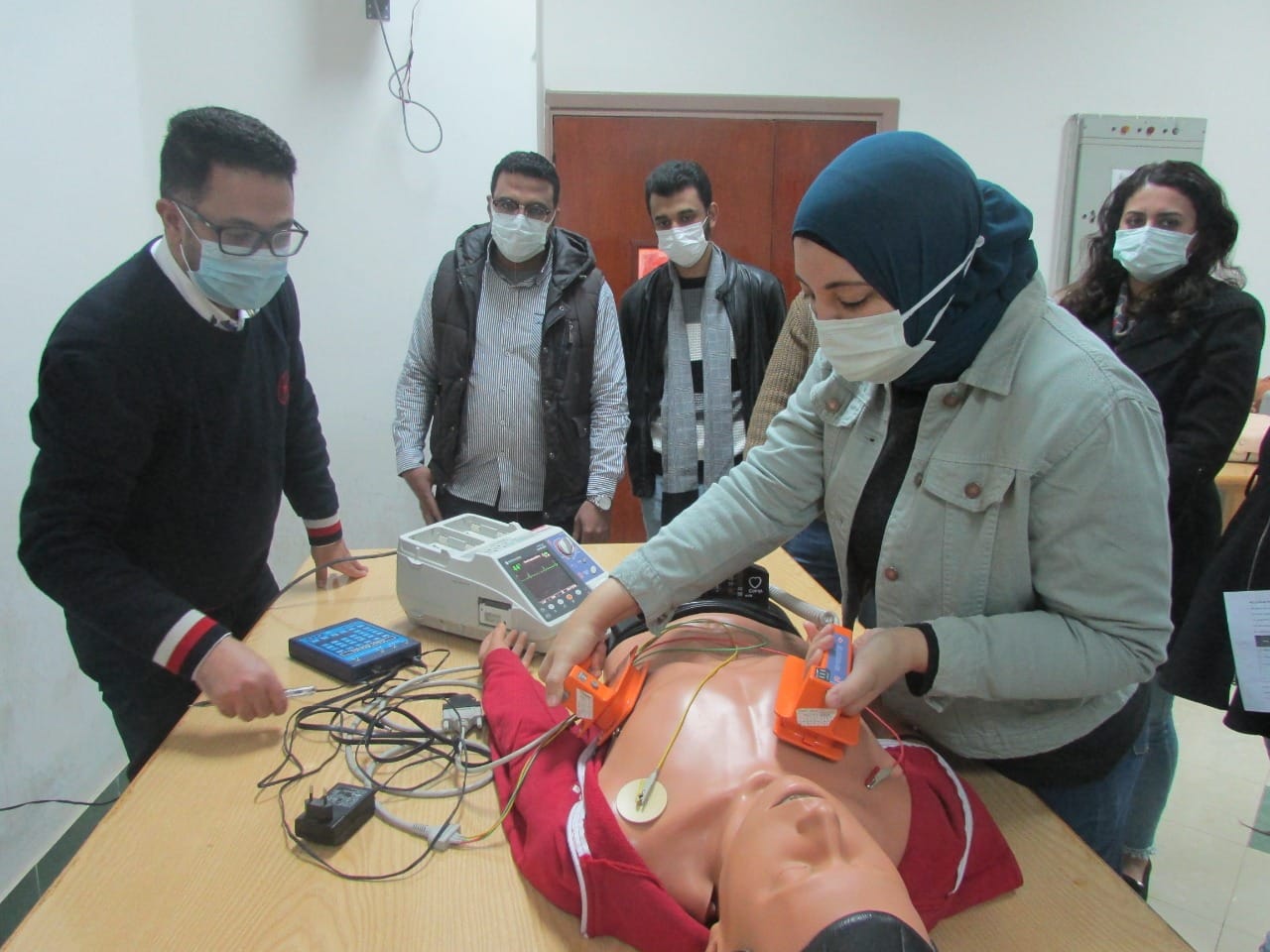
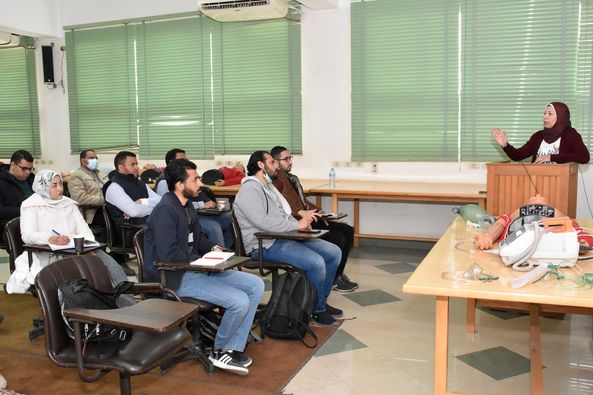
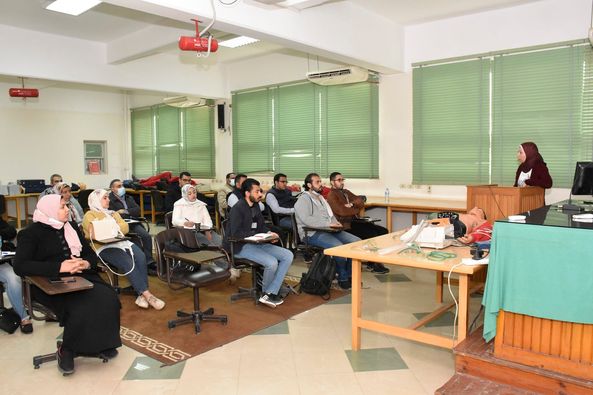
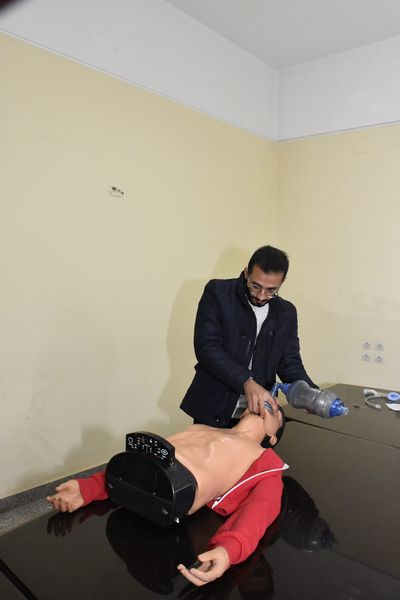
Advanced CPR course for adults - Pulmonary Resuscitation Center - Dr. Mohamed Fathy

تحت رعاية

أ. د/علاء عطية عميد كلية الطب ورئيس مجلس إدارة المستشفيات الجامعية ،

د/ محمد فتحي استاذ مساعد التخدير والعناية المركزة ومدير مركز الإنعاش الرئوي


تم عقد دورة الإنعاش القلبي الرئوي المتقدم للكبار

المعتمدة دوليا من الجمعية الأمريكية للقلب بالتعاون مع مؤسسة عملية الإبتسامة مصر ،

وذلك يوم الخميس الموافق  6 يناير 2022

2345


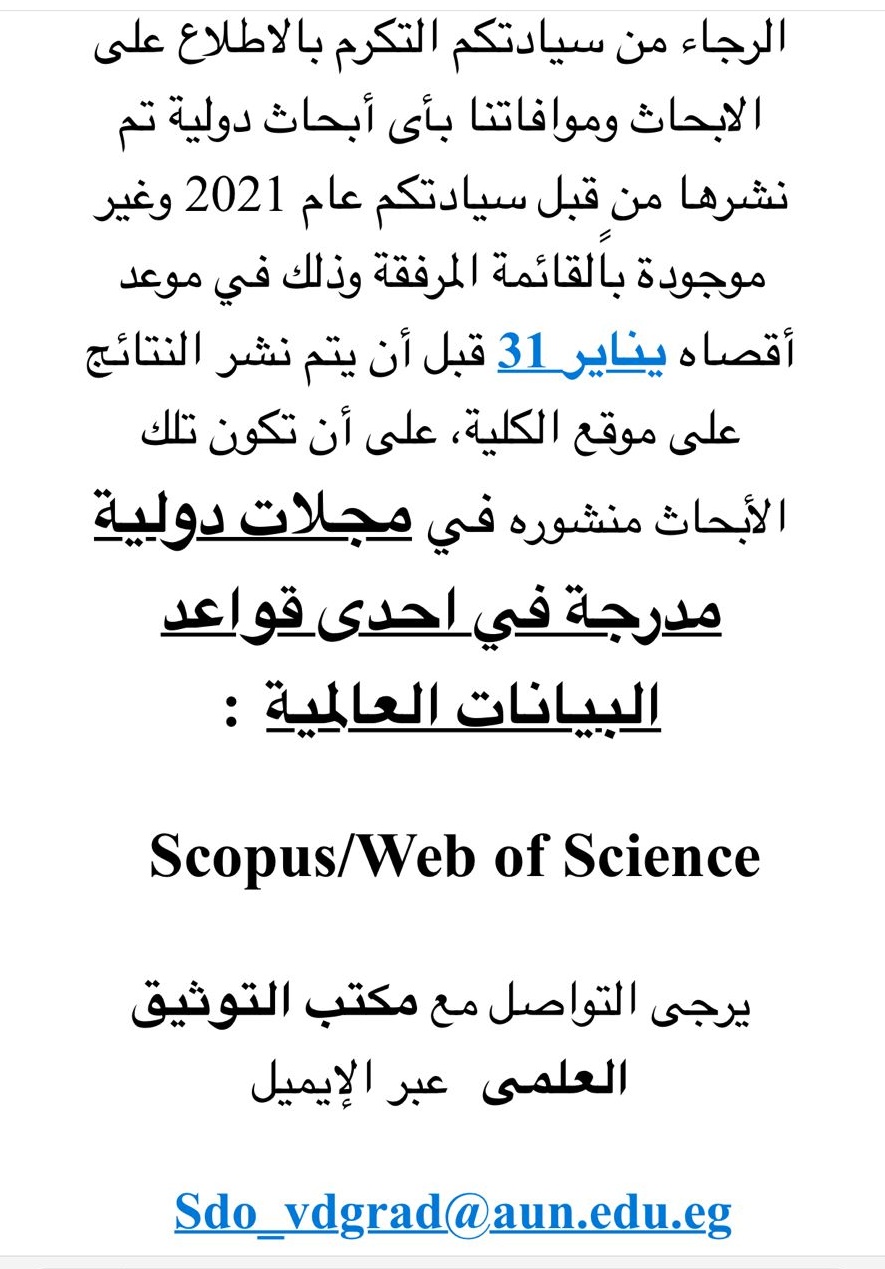
Important alert regarding internationally published research - Office of the Prof. Dr. / Vice Dean for Postgraduate Studies and Research

الأفاضل أعضاء هيئه التدريس الرجاء التوجه الي مكتب التوثيق العلمي - التابع لمكتب وكيل الكليه للدراسات العليا للتأكد من أبحاثكم المنشورة دولياً هذا العام ، أو التواصل من خلال الإيميل : sdo_vdgrad@aun.edu.eg

sdo_vdgrad@aun.edu.eg

في موعد اقصاه 31/1 ، قبل رفع الابحاث بموقع الكليه


Subscribe to