 Do you have any questions?

Predictors of successful weaning : Tissue Doppler Echocardiography versus oxidative stress markers
Research Date
Research Department
Research Journal
Egyptian journal of chest Diseases and tuberculosis
Research Member
Metallic Biliary Drain age;Endoscopic ultrasound versus percutaneous approach after failed endoscopic retrograde cholangiopancreatography for distal biliary stricture
Research Date
Research Department
Research Journal
Egyptian journal of surgery 2021
Research Member
Workshop - Thyroid Gland - Department of Internal Medicine
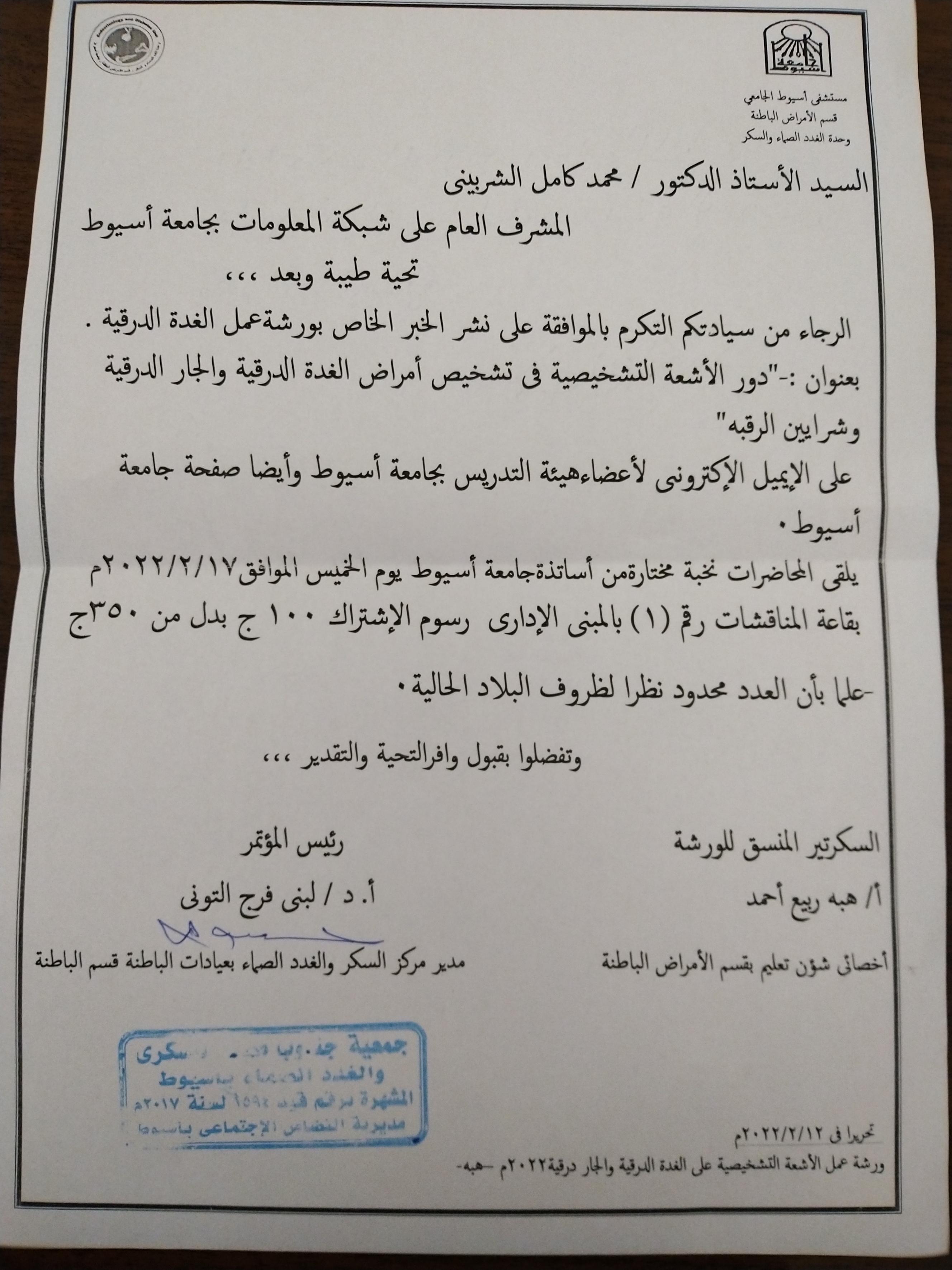
Diabetic Foot Conference - Department of Internal Medicine
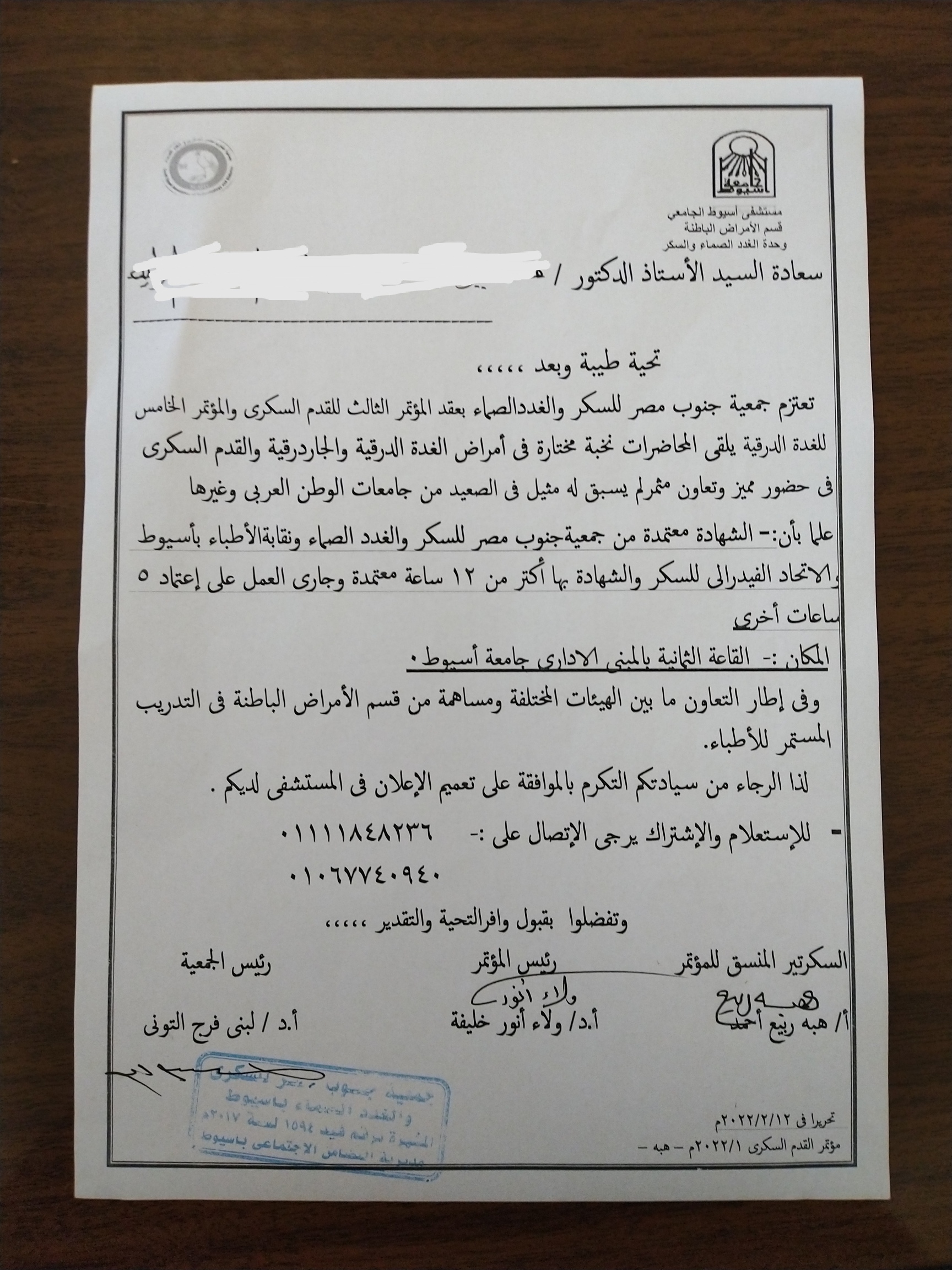
Conference on Oncology and Nuclear Medicine - in cooperation with the Colleges of Nursing and Pharmacy
Device stability and quality of ventilation of classic laryngeal mask airway versus air-Q and i-gel at different head and neck positions in anesthetized spontaneously breathing children
Research Abstract
Background: since its introduction into clinical practice, the use of laryngeal mask airway (lMa) has been dramatically increasing. We aimed to investigate the clinical performance of single use lMa classic, air-Q and i-gel at different
head and neck positions and during the operative procedure in pediatric elective day case surgery.
Methods: one hundred sixty-eight generally anesthetized spontaneously breathing children (2-9 years) were randomized to receive either lMa classic (n.=56), i-gel (n.=58) or air-Q (n.=54). the oropharyngeal leak pressure (olP),
exhaled tidal volume (TV), peak inspiratory pressure (PIP), ventilation score and fiberoptic glottis view score were assessed at neutral position then at maximum flexion, extension and left rotation. Afterwards, the ventilation and fiberoptic
view scores were assessed in neutral position at fixed time-points until end of surgery.
Results: Compared to neutral position, maximum neck flexion increased OLP (P=0.000) and compromised the ventilation leading to increased PIP, decreased TV, worsening of ventilation score and fiberoptic glottis view. OLP mildly
decreased with extension and left lateral rotation with mild effect on ventilation parameters (P<0.05). at all neck positions, the olP was higher (P=0.000) and ventilation parameters were better with i-gel (P=0.000). gradual worsening of
ventilation score and fiberoptic view grade was recorded intraoperatively with the three devices, with the least deterioration observed in i-gel group (P=0.000).
Conclusions: Having the highest increase in OLP at neck flexion, the I-gel LMA exhibited the best ventilation parameters and fiberoptic view grade at different head and neck positions and throughout the intraoperative period.
Research Date
Research Department
Research File
Paper Fiberoptic.pdf
(623.35 KB)
Research Journal
Minerva anestesiologica
Research Member
Research Pages
286-294
Research Vol
86
Research Year
2020
Effect of Rasagiline on Rotenone-Induced Neurotoxicity in Mice
Research Abstract
Rasagiline is a selective monoamine oxidase (MAO) B inhibitor which has been approved for treatment of Parkinson's disease (PD). This study was performed to evaluate rotenone neurotoxicity and the possible neuroprotective effect of rasagiline in mice. Thirty six male mice were used and divided into 3 equal groups. The first group, the control group, received only sunflower oil intraperitoneally (i.p.) once daily at a volume of 4 ml/kg for 49 days. The second group was given rotenone (2 mg/kg/day; i.p.) for 49 days. The third group was given rasagiline (1 mg/kg, i.p.) which was administered 30 min prior to rotenone (2 mg/kg/day; i.p.) for 49 days. Behavioral tests were performed a day prior to drug administration and then once weekly along the duration of drugs or vehicle administration. At the end of the 49 days all animals were sacrificed and their midbrain were subjected to immunohistochemical analysis for dopaminergic neurons staining for anti-TH antibodies. Midbrain tissues were also isolated for biochemical measurements. Rasagiline administration significantly improved the mice activity. Pretreatment with rasagiline significantly attenuated rotenone-induced midbrain DA loss. Moreover, rasagiline treatment also significantly prevented the loss of tyrosine hydroxylase immunoreactive neurons (TH-IR) within the substantia nigra pars compacta (SNpc). Furthermore, rasagiline inhibited the remarkable decrease in total antioxidant capacity as well as the increase in the Malondialdehyde level and nitric oxide generation induced by chronic rotenone administration. These results showed possible beneficial effect of rasagiline against the SNpc dopaminergic neurotoxicity induced by the chronic intraperitoneal administration of rotenone. This neuroprotective effect mediated even in part by the antioxidant properties of rasagiline.
Research Date
Research Department
Research Member
Neuroprotective Effects of Pramipexole on Rotenone-Treated Mice
Research Abstract
Abstract
Pramipexole, an agonist for dopamine (DA) at D2/D3-receptors, has been used to treat both early and advanced Parkinson’s disease (PD). The present study was to evaluate the neuroprotective effect of pramipexole (PPX) in a DA neuron degeneration model of PD induced by rotenone. Thirty six male mice were used and divided into 3 equal groups. The first group, the control group, received only sunflower oil intraperitoneally (i.p.) once daily at a volume of 4 ml/kg for 49 days. The second group was given rotenone (2 mg/kg/day; i.p.) for 49 days. The third group was given pramipexole (1 mg/kg, i.p.) which was administered 30 min prior to rotenone (2 mg/kg/day; i.p.) for 49 days. Behavioral tests were performed a day prior to drug administration and then once weekly along the duration of drugs or vehicle administration.At the end of the 49 days all animals were sacrificed and their midbrains were subjected to immunohistochemical analysis for dopaminergic neurons staining for anti-TH antibodies. In addition midbrain tissues were obtained for biochemical measurements. Behavioural test showed improvement of mice activity in the pramipexole group.Immunohistochemistry results revealed that the rotenone-induced loss of TH-immunopositive neurons (DA neurons) in the SNpc was inhibited by the pramipexole treatment. Biochemical measurements demonstrated that PPX treatment significantly reversed the rotenone-induced decrease in midbrain DA level. In addition pramipexole attenuate the decrease in total antioxidant capacity as well as the increase in the malondialdehyde level and nitric oxide generation induced by chronic rotenone administration. These results suggest a possible beneficial effect of pramipexole against the PD-like disorder induced by the chronic intraperitoneal administration of rotenone. This neuroprotective effect mediated even in part by the antioxidant properties of pramipexole.
References:
- Bayles K.A., Kim E.S. Improving the functioning of individuals with Alzheimer’s disease: emergence of behavioral interventions. Journal of Communication Disorders 2003 ; 36 : 327–343.
- Evans D.A., Funkenstein H., Albert M.S., Scherr P.A., Cook N.R., Chown M.J., Prevalence of Alzheimer's disease in a community population of older persons: Higher than previously reported. Journal of the American Medical Association 1989; 262 : 2551–2556.
- Gallagher M., Colombo PJ. Ageing: the cholinergic hypothesis of cognitive decline. Current Opinion in Neurobiology 1995; 5: 161-168.
- Jeste D.V., Meeks T.W., Kim D.S., Zubenko G.S. Research agenda for DSM-V: Diagnostic categories and criteria for neuropsychiatry syndromes in dementia. Journal of Geriatric Psychiatry and Neurology 2006;19:160–171.
- Lehericy S., Hirsch E. C., Cervera-Pierot P., Hersh L. B., Bakchine S., Piette F., Duyckaerts C., Hauw J.J., Javoy-Agid F. Agid Y. Heterogeneity and selectivity of the degeneration of cholinergic neurons in the basal forebrain of patients with Alzheimer’s disease. J. Comparative Neurology 1993 ; 330 : 15–31.
Research Date
Research Department
Research Member
The potential utility of aqueous extract of stevia rebaudiana Bertoni in adjunct with metformin in treating diabetes mellitus
Research Abstract
Background: Extract of leaves from the Stevia rebaudiana Bertoni have been used in the traditional treatment of diabetes in Paraguay and Brazil. Stevia is a natural, non-caloric sweetener that is rich in pharmacologically important glycosides. These glycosides have many potential benefits in the mangment of the complications of diabetes. The treatment of type 2 diabetes mellitus (T2DM) is currently unsatisfactory. Therefore, we investigated the possible effects of stevia on treatment of T2DM when concurrently given with common antidiabetic agents in a trial to provide a safe and effective therapeutic antidiabetic combination.
Methods: Type 2 diabetes mellitus was induced in albino rats by IP administration of 230 mg/kg of nicotinamide (NA) followed by 65 mg/kg of streptozotocin (STZ). Albino rats were divided into five groups including normoglycemic, diabetic and three diabetic groups in which, the first was treated with aqueous extract of stevia (300 mg/kg), the second was treated with metformin (250 mg/kg), and the third was treated with a combination of metformin and stevia extract with the same doses for the period of 21 days. The rats were dissected; blood samples, liver and kidney were further used for detecting biochemical and histopathological changes. BG, insulin, adiponectin, TG, cholestrol, HDL, ALT, AST, urea, creatinine, total protein and TNFα levels were measured in sera. MDA concentration was detected in the liver and kidney.
Results: The aqueous extract of stevia significantly reduced the BG, triglycerides, cholesterol, ALT, AST, urea and creatinine levels in treated rats compared with diabetic rats (p<0.05). In addition to this, stevia surprisingly, increased insulin and adiponectin levels and decrease TNFα Level in treated rats (p<0.05). stevia extract also reduced the MDA concentration in the hepatic and renal tissue. Furthermore, stevia compensated for the histopathological damage in diabetic rats. All of these changes were more significant when the stevia extract was combined with metformin.
Conclusion: It is concluded that the stevia alone and/or in combination with other antidiabetic agents can be a new putitive drug used for the treatment of type 2 diabetes mellitus. Moreover, the combination of stevia and metformin has synergistic positive effects on type 2 diabetes mellitus.
Research Date
Research Department
Research Member