
Different Phenotypic Methods for Detection of Beta Lactam Resistance in Escherichia coli

Research Abstract

Background: Beta- lactam resistant Escherichia coli is a major cause of both nosocomial and community-acquired infections. It is essential to detect the beta lactam resistance for proper antibiotic therapy and to limit the spread the infection. Objectives: The study was designed to review the rates of extended-spectrum β-lactamases (ESBL), metallo beta lactamases (MBL) beta lactamase and AmpC production among E.coli isolates and to assess the best phenotypic method for detection of the resistance. Methodology: This study included 200 isolates obtained from patients admitted to different departments in Assiut university hospital .Screening and phenotypic confirmatory tests for resistance were done. Results: The Percentages of B –Lactamase enzymes in 5o isolates of E.coli were 6 (12%) isolates not resistant by screening with antibiotic sensitivity tests, 3 (6%) isolates were negative by the gold standard phenotypic tests, 12 (24%) were ESBL alone, 2 (4%) were ESBL and AmpC, 10 (20%) were AmpC alone, 8 (16%) were ESBL and Carbapenemases and 9 (18%) were carbapenemases alone. The combined disk test showed high sensitivity and specificity in detection of ESBL and MB, For AmpC detection; the disk approximation test showed higher sensitivity and specificity than boronic acid in detection of AmpC. Conclusion: The rate of Beta lactamases production in E.coli is seriously increased, the ESBL showed the highest percentage among E.coli isolates. The phenotypic confirmatory tests showed high sensitivity and specificity and proved to be reliable methods for detection of the beta lactamase resistance, genotypic tests are recommended to be a gold standard tests to increase the specificity of the phenotypic tests.
Research Authors
Hebat-allah G. Rashed,Asmaa O. Ahmed, Alaa K. Moawad
Research File
alaa research.pdf (473.75 KB)
Research Journal
Egyptian Journal of Medical Microbiology
Research Pages
19-26
Research Vol
Volume 28
Research Year
2019

EPIDEMIOLOGICAL AND CLINICAL MANIFESTATIONS OF BLOOD PARASITIC INFECTIONS IN CATTLE IN ASSIUT GOVERNORATE EGYPT

Research Abstract

ABSTRACT
This research paper presents the epidemiological data and clinical manifestations of blood parasitic infections in cattle. A total of 130 blood samples were collected from animals exhibiting clinical signs suggestive of blood parasitic infection. Microscopic examination of blood smears revealed an overall infection rate of 46.2% among the examined cattle. Theileria sp. infections were found to be the most prevalent, with an overall prevalence of 40%. Babesia sp. infections had a lower overall prevalence of 6.2%, Microscopic examination also highlighted the intracellular localization of Theileria and Babesia parasites within red blood cells. The infected red blood cells exhibited morphological changes, appearing enlarged and distorted compared to unaffected cells. The study analyzed the risk factors for Theileria sp. and Babesia sp. infections in cattle, specifically focusing on age and gender. The prevalence of Theileria sp. infection was highest in cattle less than one year, with no significant difference observed among different age groups or genders. Similarly, there was no significant difference in Babesia sp. infection rates based on age or gender. These results provide valuable insights into the epidemiology and clinical manifestations of blood parasitic infections in cattle. The findings can contribute to the development of effective control and prevention strategies, highlighting the importance of regular surveillance and management practices in mitigating the impact of these infections on cattle health and productivity.
Keywords: Microscopic examination, Blood smears, Theileria sp., Babesia sp., Risk factors

Research Authors
AHMED KAMAL DYAB
Research Date
Research Department
Research Journal
Assiut Veterinary Medical Journal
Research Member
Research Pages
6-18
Research Publisher
Assiut University
Research Rank
WOS
Research Vol
70
Research Website
www.aun.edu.eg
Research Year
2024

Overview of endocrine hypertension in children

Research Abstract

Among the secondary causes of pediatric hypertension, endocrine causes account for a relatively small proportion of all children with hypertension. An accurate diagnosis of endocrine hypertension offers clinicians the chance to achieve an optimal treatment with either specific pharmacologic treatment or surgery. Excess catecholamine, glucocorticoids, and mineralocorticoids, congenital adrenal hyperplasia, thyroid dysfunction, growth hormone deficiency, diabetes mellitus, and obesity-associated hypertension are the major endocrine disorders leading to pediatric hypertension.

Research Authors
Kotb Abbass Metwalley, Hekma Saad Farghaly
Research Date
Research Department
Research Journal
Progress in Pediatric Cardiology
Research Pages
1-5
Research Publisher
Elsevier
Research Vol
68
Research Year
2023

Graves’ disease in children: an update

Research Abstract

Graves’ disease (GD) is the most common cause of hyperthyroidism in children. A common GD symptom is a goiter. The usual biochemical profile in children with GD is a decreased thyroid hormone stimulating hormone (TSH) level and high free thyroxine (FT4) and free triiodothyronine (FT3) concentrations. The presence of thyroid receptor antibodies (TRAb) is the most important specific immunological sign for diagnosing GD. The treatment choices for pediatric GD are anti-thyroid drugs (ATDs), radioiodine, and thyroidectomy, but the risks and benefits of each modality are different. Management recommendations include the first-line use of a prolonged course of ATDs for at least 3 years and potentially 5 years or more. Rituximab and Teprotumumab are new novel alternative medications for the treatment of adult patients with GD and Graves’ orbitopathy respectively, but evidence of the efficacy and safety of …

Research Authors
Kotb Abbass Metwalley, Hekma Saad Farghaly
Research Date
Research Department
Research Journal
Clinical Medicine Insights: Endocrinology and Diabetes
Research Publisher
SAGE Publications
Research Year
2023

Development of sedative dexmedetomidine sublingual in situ gels: in vitro and in vivo evaluations

Research Abstract

Intravenous dexmedetomidine (DEX) is currently approved by the FDA for the sedation of intubated patients in intensive care units to reduce anxiety and to augment postoperative analgesia. Bradycardia and hypotension are limitations associated with the intravenous administration of DEX. In this study, DEX sublingual in situ gels were developed and assessed for their pH, gelling capacity, viscosity, mucoadhesion and in vitro drug release. The optimized gelling system demonstrated enhanced mucoadhesion, superior gelling capacity, reasonable pH and optimal rheological profile. In vivo, compared to the oral solution, the optimal sublingual gel resulted in a significant higher rate and extent of bioavailability. Although the in situ gel had comparable plasma levels to those observed following intravenous administration, significant amelioration of the systemic adverse reactions were attained. As demonstrated by the hot plate method, a sustained duration of analgesia in rats was observed after sublingual administration of DEX gel compared to the intravenously administered DEX solution. Furthermore, no changes in systolic blood pressure and heart rate were recorded in rats and rabbits, respectively, after sublingual administration of DEX. Sublingual administration of DEX in situ gel provides a promising approach for analgesia and sedation, while circumventing the reported adverse reactions associated with intravenous administration of DEX.

Research Authors
Ayat A Allam, Nermin E Eleraky, Nadeen H Diab, Mahmoud Elsabahy, Sahar A Mohamed, Hala S Abdel-Ghaffar, Nivin A Hassan, Samia A Shouman, Mervat M Omran, Sahar B Hassan, Noura G Eissa
Research Date
Research Journal
Pharmaceutics
Research Pages
220
Research Publisher
MDPI
Research Rank
International
Research Vol
14 (2)
Research Year
2022

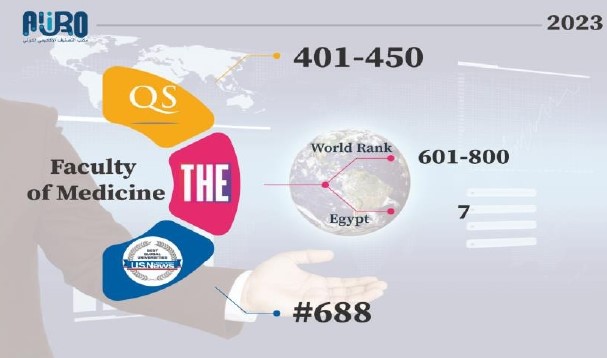
Assiut University Faculty of Medicine tops international rankings

Assiut University Faculty of Medicine tops international rankings

يسّر كلية الطب أن تعلن عن إنجازاتها المتميزة في أحدث التصنيفات الدولية
ي مرموق في مجالي وبحث تعليم للجامعات، مؤكد ًة على مكانتها الرائدة كمركز الطب.
تألقت كلية الطب جامعة أسيوط في التصنيفات العالمية، حيث احتلت المرتبة 401-
450على مستوى العالم في تصنيف QS العالمي ، بينما حلت في المرتبة 601-
800عالمًيا و السابعة على مستوى مصر في تصنيفات تايمز للتعليم العالي
وإضاف ًة News US كلية الطب جامعة أسيوط في المرتبة .(THE (إلى ذلك، صنفت
688 # في قائمتها ألفضل الجامعات العالمية.
هذه اإلنجازات تعكس الجهود المشتركة ألعضاء هيئة التدريس، والموظفين، 
والطالب، والخريجين الذين يسعون باستمرار إلى تحقيق التميز في التعليم والبحث
العلمي وتقديم الرعاية الصحية.
وفي هذه المناسبة، نعبر عن فخرنا وامتناننا لكل من ساهم في نجاح كلية الطب
بجامعة أسيوط، ونتطلع إلى مواصلة رحلتنا نحو مستويات أعلى من التميز والتأثير
في السنوات القادمة

Assessment of Intra-operative and Early Post-operative Complications of Laser in–situ Keratomileusis

Research Abstract

Several Laser in-situ keratomileusis (LASIK) complications have been identified over the years. Reporting complications of LASIK surgery will help refine the approach to their management. LASIK was introduced in the late 1980s with the development of the ophthalmic excimer laser [1, 2]. To avoid the disadvantages of photorefractive keratectomy (PRK), LASIK was introduced [3]. LASIK rapidly increased in popularity and became the predominant form of refractive surgery in the late 1990s and continues till today [4]. Correcting different refractive errors, including myopia, hyperopia, and astigmatism, is the main aim of all laser refractive procedures. LASIK has been used to treat many degrees of myopia with promising results, and there are great expectations for treating farsightedness. Compared to PRK, LASIK is advantageous in causing minimal postoperative discomfort, rapid restoration of visual clarity and stability of refractive changes, less frequent opacification, and better ability to correct high levels of myopia. Intraoperative complications, although infrequent, include Microkeratome-related flap complications (flap buttonhole, free cap, and incomplete, short, or irregular flaps), corneal perforation, corneal epithelial defect, conjunctival bleeding, subconjunctival hemorrhage, and interface debris [6]. Post-operative Complications include inaccurate correction, visual aberrations, flap striae (macrostriae -microstriae) [6], flap dislocation, dry eye, diffuse lamellar keratitis (DLK), pressure-induced stromal keratitis (PISK), infectious keratitis [7], and epithelial ingrowth [8].

Research Authors
Abdelrahman Mohamed Saad, Tarek Ahmed Mohamed, Khaled Abdelazeem, Dalia Mohammed El-Sebaity
Research Date
Research Department
Research Journal
Journal of Current Medical Research and Practice
Research Pages
43-84
Research Publisher
Faculty of Medicine, Assiut University
Research Vol
9
Research Website
https://jcmrp.journals.ekb.eg/article_346796.html
Research Year
2024

Relation between Intelligence Quotient (IQ) and Velopharyngeal Dysfunction in Repaired Cleft Palate Patient

Research Abstract

Background

In children born with cleft (lip and) palateresonance and articulation disorders are often observed as aresult of structural deviations of the sound production mechanism.Even after palatal closure, compensatory articulationand resonance disturbance may persist, despite advances insurgical treatment of congenital orofacial clefts [1].

Material & Methods

This is a cross-sectional study thatwas conducted upon 70 patients with repaired cleft palate ofdifferent grades in Plastic Surgery Department Assiut UniversityHospital. Data was collected from May 2016 to December2018.

Results

The study enrolled 70 children with cleft palateand underwent palatoplasty; out of them 18 (25.7%) patientsdeveloped velopharyngeal dysfunction (VPI). 66% of patientwith velopharyngeal insufficiency has below average IQ.

Research Date
Research Journal
Egyptian journal of plastic surgery
Research Member
Research Year
2020

Anchored Urethral Glanular Advancement Technique” as a Simple New Technique for Distal Penile Hypospadias

Research Abstract

Background: 

Despite the continued refinement of numerous hypospadias repair techniques, there is no completely satisfactory technique in terms of complications and cosmesis. Through our experience in hypospadias surgery, we developed a new simple technique named “anchored urethral glanular advancement (AUGA)” and the current study is trying to evaluate this technique in the treatment of more proximal degrees of anterior hypospadias than the reported before with selective criteria and modified technique steps to reach more proximal degrees.

Materials and Methods: 

This is a prospective case series study on 43 patients with hypospadias from April 2019 to December 2021. Cases with glanular, coronal, subcoronal and distal penile hypospadias and revision cases with the same postoperative meatus positions were included.

Results: 

Hypospadias objective scoring evaluation score was between 11 and 16 with a mean of 14.56 ± 1.29. The majority of patients (83.7%) had reported no complications.

Conclusion: 

The AUGA technique is a simple rapid single-stage technique for distal forms of hypospadias.

Research Authors
Ali Ahmed Hasan, Mohamed Elyounsi, Mohamed El-Shazly
Research Date
Research Department
Research Journal
Turkish Journal of Plastic Surgery
Research Year
2023

Light microscopical and parasitological analyses revealed the beneficial effects of silver nanoparticles and various myrrh extracts against Trichinella spiralis infection

Research Abstract

Abstract
Trichinella spiralis infection is a food-borne zoonotic disease caused by nematodes
that dwell in the tissues, presenting a significant public health concern. This study
aimed to evaluate the effectiveness of different treatments including silver nanoparticles
(AgNPs), myrrh biosynthesized AgNPs “AgNPs synthesized using plant-based
green technologies”, myrrh extract, and myrrh essential oil, as alternative treatments
against T. spiralis infection. Parasitological, histopathological, and cytotoxicity assessments
were conducted to investigate the effects of various concentrations of these
treatments in reducing the populations of adult worms and larvae during both the
intestinal and muscular phases of T. spiralis-infected mice. The results showed that
the highest antihelminthic efficacy against the intestinal phase of T. spiralis was
achieved by myrrh extract (86.66%), followed closely by AgNPs (84.96%) and myrrh
AgNPs (82.51%) at higher concentrations (800 mg/kg for myrrh extract, 40 μg/mL
for AgNPs, and 40 μg/mL for myrrh AgNPs). While the group treated with myrrh
essential oil showed the lowest percentage of adult reduction (78.14%). However, all
treatments demonstrated comparable effects in reducing the larvae population in the
muscle phase. Histopathological examination of the tissues revealed compelling evidence
of the effectiveness of AgNPs, particularly when prepared with myrrh. Additionally,
a comprehensive assessment of the cytotoxicity of AgNPs indicated low
toxicity levels. This study supports that AgNPs synthesized using plant-based green
technologies hold therapeutic potential for the treatment of T. spiralis infectionThese findings present a promising avenue for the development of novel antiparasitic
drugs that are both effective and safe.

Research Authors
Nahed A. Elossily1 | Salwa M. Abd-ELrahman2 | Abeer A. Khedr3 | Ahmed K. Dyab1 | Abeer E. Mahmoud1 | Shaymaa M. Mohamed4 | Ahmed M. Abd Elrahman5 | Fahd M. Alsharif6 | Reem M. Alsaadawy7 | Ramy K. A. Sayed8 | Mervat M. Khalifa1
Research Date
Research Department
Research Journal
Microsc Res Tech.
Research Pages
1-10
Research Publisher
Wiley
Research Rank
international Q1
Research Vol
1
Research Website
wileyonlinelibrary.com/journal/jemt
Research Year
2024
Subscribe to

