Assiut University celebrates the graduation of the 47th batch of law students.
https://www.facebook.com/photo/?fbid=822556186772189&set=pcb.822558736771934
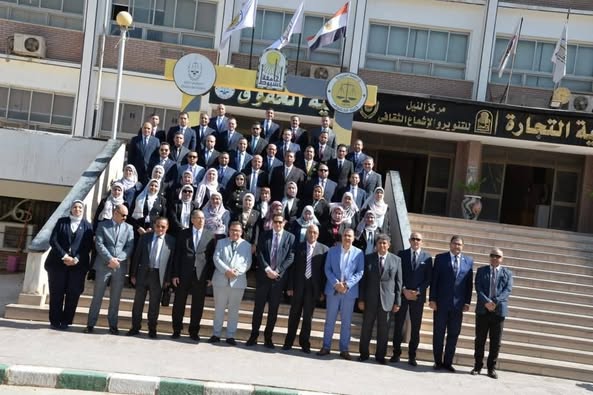
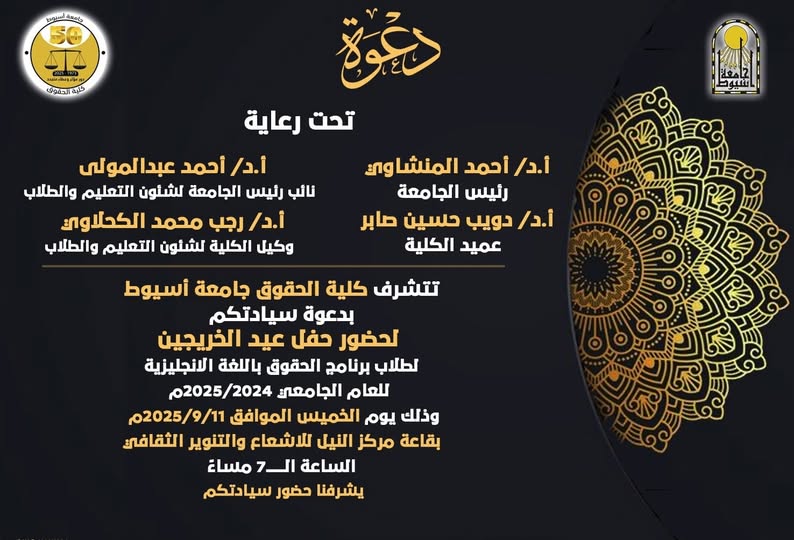
On Saturday, September 6, Assiut University hosted a grand graduation ceremony for the 47th batch of students from the Faculty of Law. The ceremony was held under the patronage of Dr. Ahmed El-Menshawy, President of the University, and under the supervision of Dr. Ahmed Abdel Mawla, Vice President for Education and Student Affairs; Dr. Douib Hussein Saber, Dean of the Faculty and Legal Advisor to the President of the University; and Dr. Ragab Mohamed El-Kahlawy, Vice Dean for Education and Student Affairs.
The ceremony was attended by Dr. Moamer Rateb, Vice Dean for Community Service and Environmental Development; Dr. Ahmed Soliman Abdel Rady, Vice Dean for Graduate Studies and Research;
Dr. Mohamed Abdel Aleem El-Hammamy, Director of the English Language Program; Dr. Ashraf Gaballah, Director of Youth Welfare; Professor Emad Ramadan, Secretary General of the Faculty; and Professor Hossam El-Hafnawy, Director of Public Relations. The ceremony was also attended by department heads, faculty members, administrative leaders, and staff from the Faculty and the University.
Dr. Ahmed El-Minshawy, President of Assiut University, congratulated the 47th batch of students from the Faculty of Law and their parents, emphasizing that this day represents the culmination of their combined efforts throughout their years of study. He praised the support and care provided by the parents, as well as the knowledge and guidance provided by the faculty's professors, in preparing a new generation of legal professionals capable of serving the nation and upholding the values of justice.
In his speech, Dr. Ahmed Abdel Mawla congratulated the graduates and their families, praising the efforts of the faculty's professors who have clearly supported their students with knowledge and guidance until they graduated. He wished them a future filled with success and the highest positions in service to the nation.
Dr. Douib Hussein Saber also expressed his sincere congratulations to the faculty's professors, graduates, and their parents, emphasizing that the graduates must uphold the banner of justice and practice their profession with precision and mastery, based on the fact that the rule of law is a fundamental pillar of security, stability, and progress. He emphasized that the faculty continues to develop its academic, research, and cultural capabilities. He extended his thanks to the university administration, headed by Dr. Ahmed El-Minshawy, for their continued support of the college, and to all the guests at the ceremony who shared the students' joy.
In his speech, Dr. Ragab Mohamed El-Kahlawy expressed his pride and happiness in sharing this pivotal moment in his graduates' academic journey. He emphasized that their graduation from a prestigious university like Assiut University represents the beginning of a new phase of challenges and successes. He extended his thanks to the university administration, the college administration, and its staff for their supportive efforts.
Graduate Sayed Hassan Sayed, the top graduate of the class, and graduate Ahmed Essam Kamal, president of the college's Student Union, also delivered speeches expressing their gratitude to the university and college administration for the financial and moral support they provided throughout their years of study. They also extended their thanks and gratitude to the parents for their constant support of their children until graduation day.
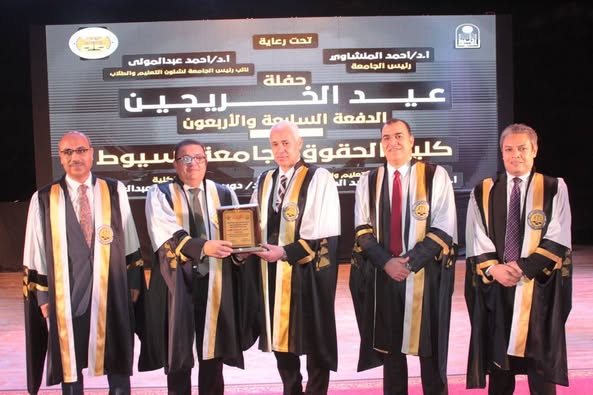
The ceremony included a distinguished artistic performance by the "Sahar Al Janoub" choir, led by maestro Nasr El Din Ahmed. The event concluded with the honoring of the graduates and the presentation of certificates of appreciation. The college shield was also presented to Professor Dr. Ahmed El Menshawy, President of the University, and Dr. Ahmed Abdel Mawla, Vice President of the University.