Cone-beam computed tomography analysis of primary root canals transportation and dentin loss after instrumentation with two-pediatric rotary files

Research Abstract

Abstract

Background: This in vitro study aims to compare rotary fles (Fanta and Zuanba) with manual K fles according to the amount of dentin removed and canal transportation in primary mandibular second molars by CBCT images.

Methods: This experimental study was conducted on 60 extracted human second primary molars. That were divided into three groups according to root canal preparation group "I" instrumented with manual K-fles, group "II" instrumented with rotary Fanta fles, and group "III" instrumented with rotary Zuanba fles. After root canal preparation, teeth were scanned before and after mechanical preparation with CBCT scanner. Then the amount of dentin removed was determined at three levels, including the coronal, middle and apical levels. Data were statically analysed using the Kruskal–Wallis test.

Result: No statistically signifcant diference in the amount of dentin removed were noted between the manual and the rotary groups at the coronal and apical RC levels (P=0.420) and (P=0.819) respectively but signifcant diference was noted at the middle third (P=0.043). Regarding RC transportation, no signifcant diference was noted among the three groups with the exception of the apical RC level (P=0.043).

Conclusion: Although no signifcant diferences were noted between rotary and manual fles, the rotary fles showed better performance.

Research Authors
Yasmine Ahmed Mortada Abd El fatah1 , Nagwa Mohamed Ali Khattab2 , Yasser Fathi Gomaa3 and Ahmad Abdel Hamid Elheeny
Research Date
Research Journal
BMC Oral Health
Research Pages
-
Research Publisher
BMC Oral Health
Research Rank
International
Research Vol
22
Research Website
https://bmcoralhealth.biomedcentral.com/articles/10.1186/s12903-022-02245-8
Research Year
2022

EFFECTIVENESS OF GLASS CARBOMER CEMENT IN CLASS II RESTORATIONS IN PRIMARY MOLARS (ARANDOMIZED CONTROLLED CLINICAL TRIAL)

Research Abstract

ABSTRACT

Introduction: Nanofilled glass ionomer cementemerged as a new generation of dental materials, which mineralizes gradually into fluorapatite to improve the compressive strength and wear resistanceof class II restorations in primary molars. The purpose of this study wasto evaluate clinically the effectiveness of glass carbomer cement with surface coatas class II restorations in primary molars in comparison to both of Ketac N 100 glass ionomer cement with surface coat and conventional glass ionomer cement with surface coat (Equia Fill).

Materials and methods: This randomized controlled clinical trial includeda sample of 117 children were selected with an age range of 4-7 years, having class II carious primary molars scoring 3, 4 or 5 (ICDAS II).They were randomly equally allocated into three groups according to the restorative material used. Group I (test): teeth were restored with glass carbomer cement, Group II( test):teeth wererestored with Ketac N 100 glass ionomer cement and Group III (control):teeth wererestored with (Equia Fill). Clinical evaluation was performed at baseline, 6 and 12 months.

Results: Nano filled GICs( Ketac N & glass carbomer cement) showed significant higherretention rate and durabilitythan Equiafill GIC at three examination times (baseline, 6 and 12 months)P<0.0001.Regarding theeffect of the restorations on periodontal health there were statistically significant difference between the three study groups at baseline and 6 months P<0.0001. No statistically significant differenceswere found between three study groups at 12 months P =0.02.

Conclusion: Nanofilled GICs were more effective in restoring class II cavities in primary molars as well ashaving better consequential effect on the periodontal health compared to the conventional GICs.

Research Authors
*Amr Hassan Ali Hassan Fattouh
Research Date
Research Journal
International Journal of Recent Advances in Multidisciplinary Research
Research Pages
8049-8054
Research Publisher
International Journal of Recent Advances in Multidisciplinary Research
Research Rank
International
Research Vol
9
Research Website
www.ijramr.com
Research Year
2022

MICROLEAKAGE EVALUATION OF GLASS CARBOMER CEMENT WITHAND WITHOUT SURFACE COAT IN PRIMARY MOLARS (IN VITRO STUDY)

Research Abstract

ABSTRACT

Aim: To evaluate the microleakage of the glass carbomer cement with and without protective surface coat in primary molars and to compare it to conventional glass ionomer cement.

Materials and Methods: Forty sound primary molars were included in the study. They were divided into two groups (n=20) according to the restorative material tested. Group A (experimental group): Teeth were restored using glass carbomer cement, and group B (control group): Teeth were restored using conventional glass ionomer cement. Then each group was further subdivided into two sub-groups according to the presence of surface coat. After teeth restoration, they were immersed in methylene blue solution for 24 hours then they were sectioned longitudinally into two equal halves and tested for microleakage.

Results: There was a statistically significant difference between the microleakage scores of glass carbomer cement with surface coat (sub-group A1) and without protective surface coat (sub-group A2) in favor of sub-group A1. However, there was no statistically significant difference between the microleakage scores of conventional glass ionomer cement with surface coat (sub-group B1) and without protective surface coat (sub-group B2). By comparing the 4 sub-groups, sub-group A1 showed the lowest microleakage score, while sub-group A2 showed the highest score with statistically significant difference.

Conclusion: Surface coat when added to the glass carbomer cement yields less microleakage than the unsealed glass carbomer and conventional GIC.

Research Authors
Amr Hassan* ; Magda El Tekeya **; SehamA Hanafy *** and Dalia AM Talaat ****
Research Date
Research Journal
EGYPTIAN DENTAL JOURNAL
Research Pages
515:524
Research Publisher
EGYPTIAN DENTAL JOURNAL
Research Rank
Local
Research Vol
62
Research Website
https://edj.journals.ekb.eg/article_92736.html
Research Year
2016

Up Awareness of undergraduate dental students in Upper Egypt faculties about COVID 19 viral infection

Research Abstract

ABSTRACT

Aim: Coronavirus disease (COVID-19) was first to appear in Wuhan, China, in 2019. Being highly contagious, it started to spread rapidly throughout the entire world causing fear and anxiety among all nations with a very high mortality rate. Dentists are considered at an extremely substantial risk to be infected among all health care workers because they are working in close contact with their patients and also because of being regularly exposed to the aerosols, droplets and saliva splashing out of the patients’ mouth.

Subjects and Methods: This study was based on a questionnaire to assess the knowledge of the graduating dental students about the signs and symptoms of (COVID-19) infection and also to evaluate their awareness about the precautions and infection control measures required during the dental treatment to keep them safe and control the spread of the disease. A well-constructed and validated questionnaire was formed and its link was sent to dental students in all year grades at different universities in Upper Egypt. The data were collected, tabulated, and statistically analyzed by SPSS (Statistical Package for Social Sciences).

Results: Result showed significant valued regarding that the dental students have a good understanding of COVID-19 and the precautions.

Conclusion: As a result, it was concluded that the dental students have a good understanding of COVID-19 and the precautions that must be taken to provide adequate dental treatment for patients during the pandemic.

Research Authors
Zein Abdou Shatat email 1; Mohammed Nahed Attia2; Ahmed Abdel Monem Abdel Emam3; Mostafa Mahmoud Youssef4
Research Date
Research Department
Research File
Research Journal
AL-AZHAR Assiut Dental Journal
Research Pages
269:278
Research Publisher
AL-AZHAR Assiut Dental Journal
Research Rank
Local
Research Vol
5
Research Website
https://aadj.journals.ekb.eg/article_267328.html
Research Year
2022

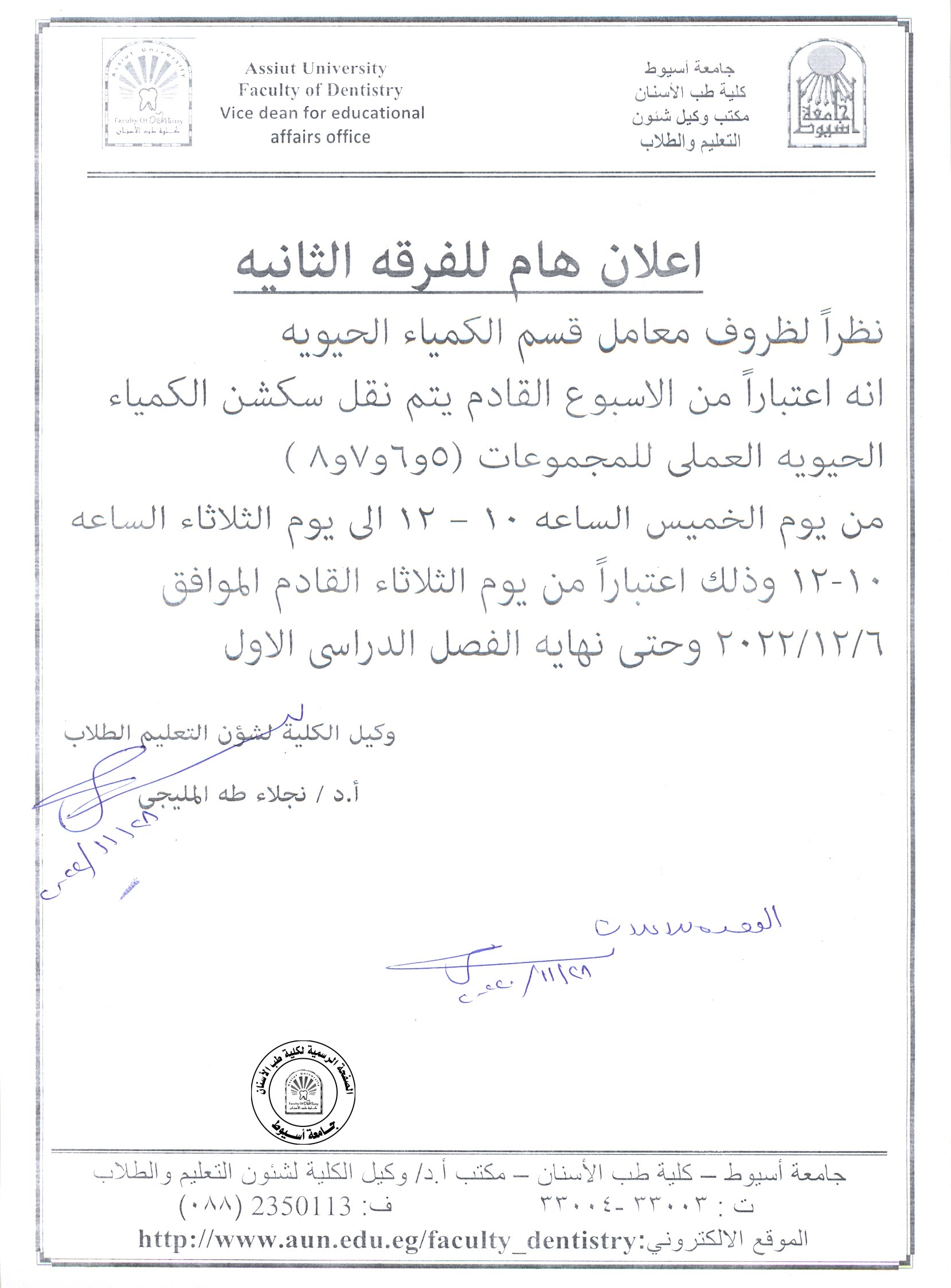
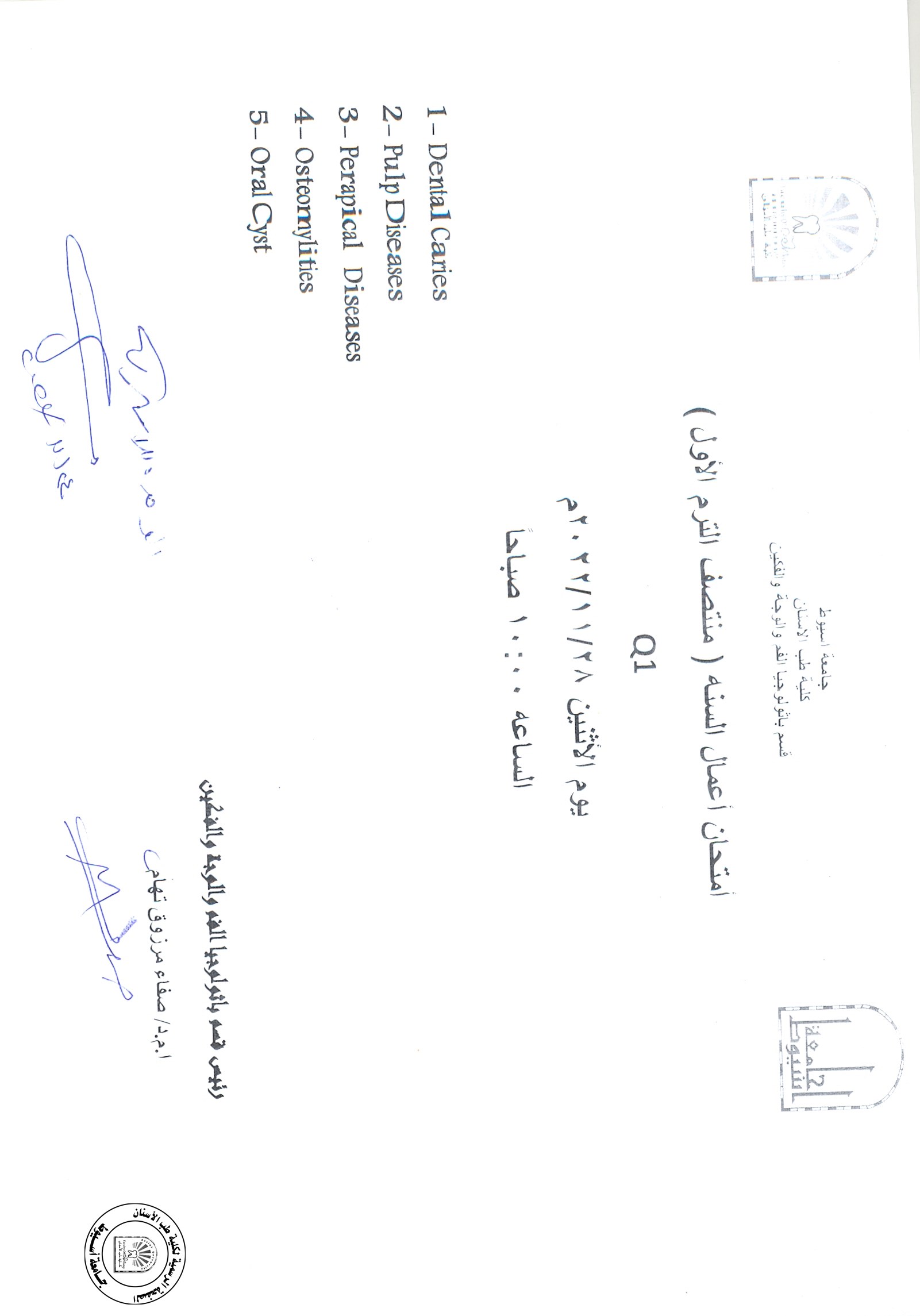
Topics of Oral Pathology Mid-Term Exams

000

The oral pathology mid-term exam will be set on Sunday 28-11-2022 at 10 o’clock.

The topics of the exam will be as follows:

  1. Dental Caries
  2. Pulp Diseases
  3. Preapical Diseases
  4. Osteomyelitis
  5. Oral Cyst
Subscribe to