
December 7, 2025
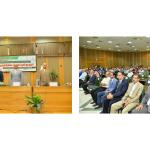
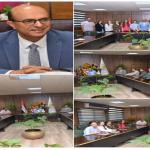
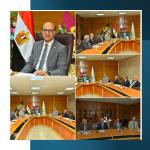
The Community Service and Environmental Development Sector at Assiut University held its first meeting to review the sector’s executive plan for the 2024/2025 academic year, within the framework of the University’s Strategic Plan (2024–2029).
Professor Ahmed El-Minshawy, President of Assiut University, emphasized that strategic plans play a vital and fundamental role in guiding the work of the Community Service and Environmental Development Sector. He noted that these plans are directly linked to achieving Egypt’s Vision 2030 and the Sustainable Development Goals, underscoring the importance of systematic planning and continuous evaluation.
Professor Mohamed Ahmed Adawy, Vice President of Assiut University for Community Service and Environmental Development Affairs, met with members of the executive plan follow-up team and stressed the necessity of identifying the gap between what has already been implemented and what was originally planned within the executive plan. He also highlighted the critical importance of evaluating the first year of the strategic plan to ensure proper alignment and progress during the remaining years.
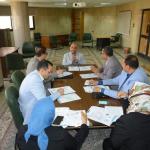
During the meeting, Dr. Omar Saeed, Committee Coordinator, reviewed the objectives and overarching goals of the executive plan derived from the University’s Strategic Plan (2024–2029). He emphasized the need to ensure full alignment between operational activities and the sector’s broader strategic objectives. It was affirmed that the primary goal at this stage is to develop an immediate and comprehensive action plan to review completed activities and verify the actual achievement of the targeted strategic goals during the first year of implementation.
The committee also discussed, in the presence of Professor Khaled Fathy, Vice Dean of the Faculty of Computers and Information for Education and Student Affairs; Dr. Mohamed Mostafa Hamad, Professor at the Faculty of Education; and Dr. Mostafa Qayed, Lecturer at the Faculty of Commerce, the urgent need for accurate quantitative data and clearly defined performance indicators to assess success across the axes of environmental development, community partnership, and institutional responsibility.
The meeting further emphasized that the review process must include identifying the causes of any delays or deviations from the planned course, as well as developing proactive solutions to address them.
Committee Recommendations:
- Submission of Detailed Progress Reports: Requiring all concerned departments and units to submit concise, data-supported progress reports outlining what has been achieved for each objective during the first year.
- Identification of Performance Gaps: Summarizing and analyzing submitted reports to clearly identify objectives that have not reached the required completion rates.
- Reprioritization of Activities: Compiling a list of the most critical uncompleted activities from the first year and incorporating them as top priorities in upcoming quarterly action plans to ensure overall strategic progress.
- Monthly Follow-Up Meetings: Recommending the convening of fixed monthly meetings for the committee over the next three months, instead of seasonal meetings, to closely monitor corrective action plans and swiftly address performance gaps.
- Enhancing Internal Communication: Emphasizing the activation of effective communication mechanisms among implementation entities to ensure continuous coordination and prevent duplication of efforts or information gaps.