
December 9, 2025
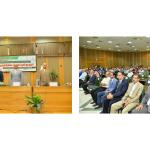
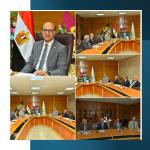
Under the patronage of Professor Ahmed El-Minshawy, President of Assiut University, the Faculty of Early Childhood Education organized a seminar entitled “Data Protection in the Digital Age: Awareness, Law, and Security” on Tuesday, December 9, in cooperation with the National Council for Women – Assiut Branch.
The seminar was held under the supervision and attendance of Professor Mohamed Ahmed Adawy, Vice President of Assiut University for Community Service and Environmental Development Affairs; Professor Reham El-Meligy, Dean of the Faculty; and Dr. Lamyaa Kedwany, Vice Dean for Community Service and Environmental Development Affairs. The seminar was delivered by Dr. Marwa Kedwany, Rapporteur of the National Council for Women in Assiut, and Ms. Islam Atef, Lawyer at the Complaints Office of the National Council for Women in Assiut.
The event was attended by Dr. Manal Anwar, Vice Dean of the Faculty for Graduate Studies and Research, along with department heads, faculty members, teaching assistants from various faculties, and a large number of students.
Professor Ahmed El-Minshawy affirmed the University’s commitment to its societal role in addressing the challenges of the digital age, noting that data protection has become an essential component of the culture of awareness that the University seeks to instill among its students and affiliates. He added that cooperation with the National Council for Women in Assiut comes within the framework of unifying efforts to promote safe digital knowledge and provide students with the legal and behavioral awareness necessary for responsible interaction with modern technology.
Professor Mohamed Ahmed Adawy emphasized that Assiut University places increasing importance on spreading digital awareness in light of the rapid global developments in information technology. He noted that maintaining safety in the digital space has become an urgent necessity in both personal life and the workplace, adding that adopting safe digital practices—such as securing devices, regularly updating passwords, and responding appropriately to cyber threats—contributes to building a more aware and secure digital society.
For her part, Dr. Reham El-Meligy stated that the seminar falls within the University’s and the Faculty’s efforts to enhance digital awareness and protect personal data, particularly in light of the growing risks facing young people, especially female students, in the digital environment. She also warned against online fraud and electronic scams, advising students to safeguard their personal data and images and to seek support from competent authorities if exposed to any form of cyber extortion.
Dr. Lamyaa Kedwany stressed the importance of the seminar in raising awareness among University members about best practices for data protection and privacy preservation, particularly with the widespread digital transformation across Egyptian universities and various aspects of daily life.
During her presentation, Dr. Marwa Kedwany reviewed the roles and activities of the National Council for Women in Assiut and its efforts to raise awareness among students regarding internet risks and personal data protection. She explained that the Council is a governmental body dedicated to promoting and empowering women’s rights economically, politically, and socially, and that it regularly organizes workshops and awareness programs to educate girls and women on digital privacy, electronic fraud methods, and how to deal with cyber blackmail or digital threats.
Ms. Islam Atef addressed the issue of cyber violence, defining it as aggressive behavior directed by an individual against a person or group through the use of technology. She outlined the causes behind the spread of cyber violence and its various forms, including blackmail, threats, defamation, and cyberstalking—forms that particularly affect female university students and women in general. She also discussed Law No. 175 of 2018 on Combating Information Technology Crimes, highlighting ways to avoid cyber violence, methods for securing personal accounts, and the role of the family and society in reducing the misuse of technology.