
December 7, 2025
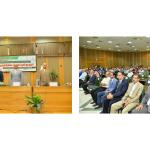
Under the patronage of Professor Ahmed Al-Manshawy, President of Assiut University, the fourth edition of the technology conference DevFest Assiut ’25 officially opened on Sunday, December 7, 2025. The event is organized by Google Developer Groups (GDG) Assiut in cooperation with Assiut University and Badr University, and was attended by Professor Ahmed Abdel-Mawla, Vice President of Assiut University for Education and Student Affairs, and Professor Mohamed Ahmed Adawy, Vice President for Community Service and Environmental Development.
The conference is held under the supervision of Professor Taisser Hassan Abdel-Hamid, Dean of the Faculty of Computers and Information at Assiut University, and Professor Abdul Rahman Haidar, Dean of the Faculty of Artificial Intelligence at Badr University. The organizing committee is co-chaired by Eng. Abdul Rahman Eyad, Assistant Lecturer at the Faculty of Artificial Intelligence, Badr University, and Eng. Omar Salah, Assistant Lecturer at the Faculty of Computers and Information, Assiut University.
The opening ceremony was attended by Professor Khaled Fathy, Vice Dean of the Faculty of Computers and Information for Education and Student Affairs at Assiut University, and Eng. Ayman Eyad, Director of the Information Technology Institute (ITI) Branch at Assiut University, along with a large gathering of faculty members and teaching assistants, technology developers and professionals, senior executives from IT companies, as well as school students from Assiut Governorate and students and graduates of Assiut University.
Professor Ahmed El-Minshawy emphasized that DevFest Assiut ’25 represents a vital platform for fostering innovation, spreading technological culture among students and developers, and strengthening links with the labor market and its real needs. He affirmed the University’s commitment to empowering youth with modern technical skills and keeping pace with the latest developments in artificial intelligence and programming, thereby enhancing their competitiveness locally and internationally and reinforcing the University’s role in preparing an innovative and entrepreneurial generation.
In his opening remarks, Professor Ahmed Abdel-Mawla welcomed the organizers and participants, stressing Assiut University’s keenness to expand cooperation with development partners from industry and the business sector to identify labor-market needs and present modern ideas and programs in line with Egypt’s national vision and higher education strategy—particularly in innovation, youth capacity building, and technical and professional skills development. He encouraged students and graduates to benefit from the conference activities and engage with participating companies to showcase their skills and experiences as a step toward effective integration into the labor market.
For his part, Professor Mohamed Ahmed Adawy praised Assiut University’s leading role in promoting technological culture and introducing youth to cutting-edge technologies by providing a competitive environment that brings together companies and entrepreneurs to identify and invest in young talent. He noted that the conference contributes to launching initiatives that enhance youth capabilities and enable them to integrate into the future labor market, wishing continued success to Assiut University and GDG Assiut.
Professor Taisser Hassan Abdel-Hamid explained that DevFest Assiut ’25 features, over two days, a wide range of workshops and specialized sessions covering topics such as AI trends, effective artificial intelligence, web programming fundamentals, implementing AI-based software solutions, machine learning in cloud computing through Google services, as well as sessions on freelancing opportunities, cybersecurity, web application security, and career readiness skills.
Professor Abdul Rahman Haidar noted that the conference is the largest of its kind in Upper Egypt, attracting developers, students, and professionals to discuss the latest technologies in artificial intelligence, application development, and software engineering. He emphasized that participants share a common goal of empowering youth and enabling them to contribute effectively to community development, expressing his hope that attendees would benefit from the expertise of specialists in information technology, programming, and artificial intelligence.