
December 2, 2025
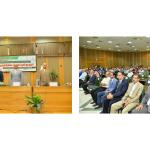
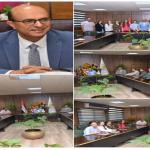
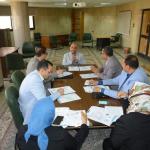
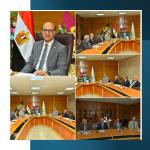
Assiut University held today a community consultation session for the Environmental Impact Assessment (EIA) of the new hazardous medical waste incineration complex at its University Hospitals in the Western Desert hinterland. The session was held under the auspices of Professor Ahmed El-Minshawy, President of Assiut University, with the participation of Professor Mohamed Adawy, Vice President for Community Service and Environmental Development, and under the supervision of Professor Alaa Attia, Dean of the Faculty of Medicine and Chairman of the Board of University Hospitals.
The session was attended by Dr. Shehata El-Daba, Engineering Advisor to the University President; Dr. Mohamed Mahmoud, Environmental Supervisor at the University Hospitals; directors of university hospitals; deans of faculties; officials from the Ministry of Health, the Environmental Affairs Agency, and the Directorate of Health Affairs; as well as specialists from the General Administration of Solid Waste in Assiut Governorate, Occupational Health and Safety departments at university hospitals, and other relevant stakeholders.
Professor El-Minshawy emphasized the university’s commitment to enhancing the role of Assiut University Hospitals in providing advanced medical and therapeutic services to the residents of Upper Egypt. He highlighted that the hospitals represent an extension of the university’s mission in community service and adhere to the highest standards of occupational safety and health to protect patients, staff, and the broader community.
The university president stressed the importance of the environmental dimension in hospital operations, noting the ongoing efforts to develop medical waste management systems that safeguard the environment and minimize health risks. He underscored that such initiatives align with international standards and Egypt’s Vision 2030 for environmental and public health sustainability.
Professor El-Minshawy also highlighted the pivotal role of the university hospitals in building the capacities of medical and therapeutic staff through continuous training and education, while providing a safe and sustainable work environment, reflecting the university’s social responsibility toward local and regional communities and ensuring comprehensive, high-quality medical services.
Professor Mohamed Adawy underlined the session’s importance from environmental, societal, ethical, and security perspectives. He explained that community consultation sessions provide genuine opportunities for dialogue and exchange of perspectives among all stakeholders, serving as a fundamental step in establishing sound waste management policies and promoting environmental sustainability. He added that the world is witnessing a significant shift toward environmental awareness, which Assiut University is committed to embracing through projects that comply with international standards and support sustainable development goals.
Professor Adawy also emphasized the university’s dedication to fulfilling its environmental and social responsibilities, praising the central role of Assiut University Hospitals in delivering advanced medical services to Upper Egypt and the need to enhance medical waste management systems to ensure the safety of patients, staff, and the community.
Professor Alaa Attia stated that the consultation session represents an important milestone for collaborative work among various stakeholders. He noted that the project aims to achieve the safe disposal of medical waste while generating positive environmental outcomes for community health. He highlighted that the university hospitals, with over 4,000 beds, produce a substantial volume of medical waste, and the new facilities respond to this need while complementing the existing waste management system, reinforcing the university’s efforts to protect the environment and safeguard public health.
The session also included discussions on potential environmental impacts during both the construction and operational phases of the project. The EIA study provided a comprehensive description of the proposed site, including its geographic location, climate, agriculture, population, industry, and the legal and regulatory framework. It evaluated expected environmental impacts such as noise, air and water quality, soil and groundwater effects, visual impact, occupational health and safety, hazardous and non-hazardous waste, and traffic impacts during construction.
Additionally, the session reviewed potential environmental, social, and economic benefits of the project, alongside an overview of the incinerators to be installed at the new complex.
At the conclusion of the session, participants emphasized the importance of coordinated efforts among all stakeholders to ensure the implementation of environmental protection measures, achieve a balance between development and environmental preservation, and comply with standards to safeguard public health and sustain environmental resources.
Assiut University Holds Community Consultation Session to Assess Environmental Impact of New Hazardous Medical Waste Incineration Complex at University Hospitals.